
Gum Disease Treatment in Marlborough
Protect Your Teeth. Protect Your Health.
Gum disease is a major cause of adult tooth loss. It's also one of the most preventable conditions in dentistry — caught early, at the gingivitis stage, it's reversible. We screen for it at every visit, not just when someone asks.
Led by Dr. Ambereen Fatima, DDS FICOI · FAAIP
All PPO plans accepted · In-network with Delta Dental, BCBS of MA, Guardian, Humana, and select Cigna and Altus plans Free benefits check →
Led by Dr. Ambereen Fatima, DDS FICOI · FAAIP

Had a great experience with my deep cleaning at Innova Smiles! The doctors and staff were very patient, friendly, and professional throughout the visit. Highly recommend them for their excellent care and service!
Nazreen Banu
Google Review
Comprehensive Screening
We check your gums at every visit and measure your gum pockets in full at least once a year, following American Academy of Periodontology guidance.
Gentle Deep Cleaning
Ultrasonic and hand scaling remove tartar above and below the gum line.
Gum-Heart Health Connection
We explain how gum health links to heart health, diabetes, and pregnancy.
Personalized Maintenance
Your follow-up plan is tailored to your risk level and history.
Credentials and recognition





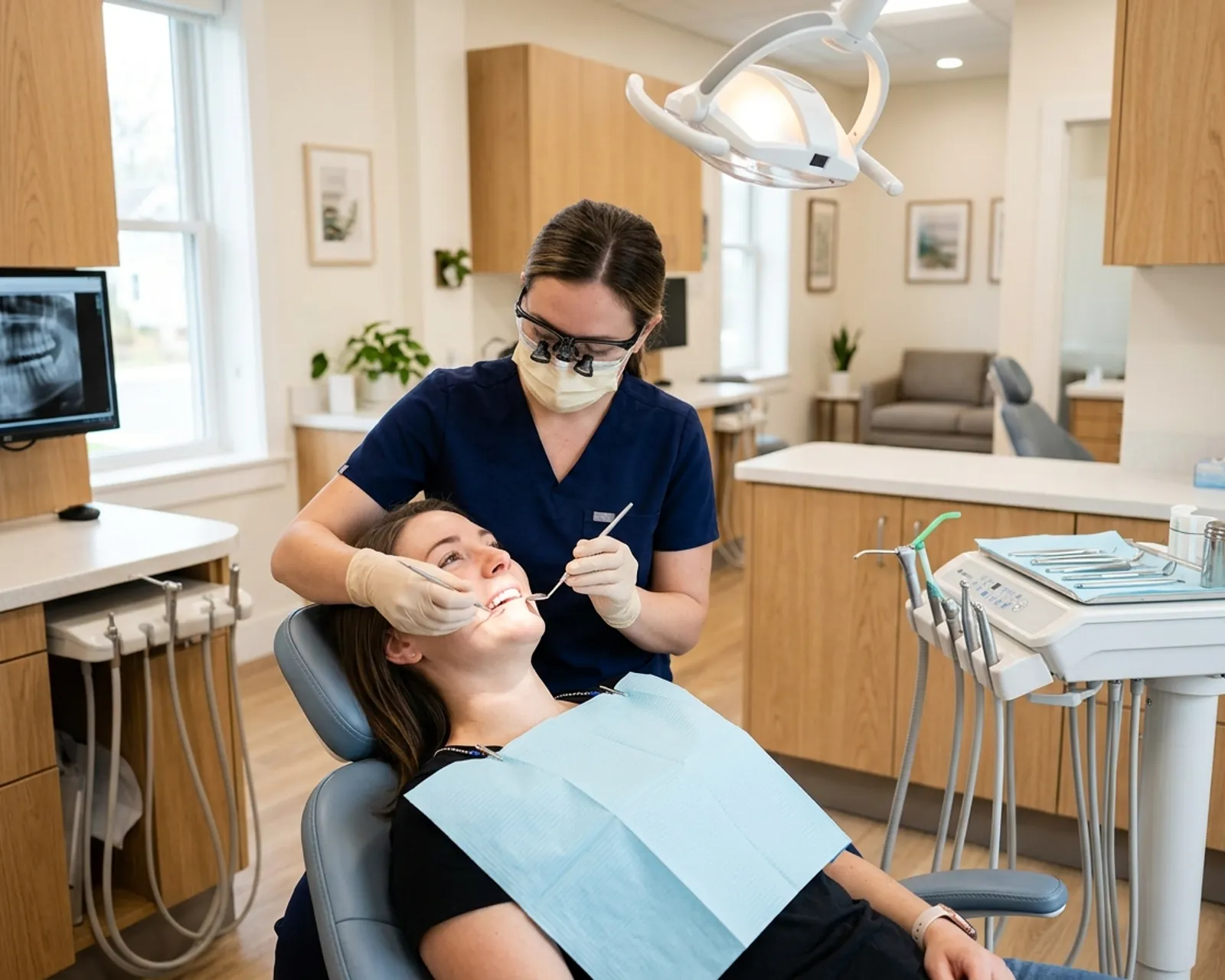
Gum disease treatment (periodontal therapy) is the care for gingivitis and periodontitis: a professional cleaning for early gingivitis, scaling and root planing below the gumline for periodontitis, then periodontal maintenance, usually every three months to start. At Innova Smiles in Marlborough, MA, Dr. Ambereen Fatima, DDS and our licensed hygienist check your gums at every visit, measure gum pockets in full at least once a year, and perform scaling and root planing under local anesthetic, usually in one or two visits.
Medically reviewed by Dr. Ambereen Fatima, D.D.S. — FICOI · FAAIP · practicing in the US since 2013 · Last reviewed · Meet Our Team
Why Patients Choose Innova Smiles
In their own words, what patients value about their care.
Paying for Treatment
How Patients Pay for Gum Disease Treatment
Pick the line that sounds like you. Whichever it is, you see the plan and the written cost before we start.
“I have dental insurance”
“I don’t have insurance”
“I’d rather pay monthly”
“I want to know the cost first”
What your gum disease treatment fee includes (per quadrant)
- Scaling and root planing (deep cleaning)
- Local anesthesia for comfort
- The gum re-check 6–12 weeks later is billed separately, like a regular checkup
Your first cleaning appointment includes a full periodontal evaluation at no extra charge. Without dental insurance, patients managing gum disease can join the Gum Health Membership: up to four periodontal maintenance visits, two exams, all necessary X-rays and one emergency exam a year, with 20% off other treatment.
No obligation. You receive a written estimate before any treatment.
*0% APR financing is through Cherry, a third-party lender, not Innova Smiles, and is subject to credit approval; not all applicants qualify. Plans run up to 24 months in equal payments, the first due at purchase. Cherry's 0% APR plans carry no deferred interest; if an account becomes delinquent, interest may apply going forward, never retroactively. Your cost and payment depend on your treatment plan and approved offer, and are confirmed in writing at your consultation.

Your gum treatment dentist
Treated Here by Dr. Fatima and Our Hygienist
Dr. Ambereen Fatima · Owner & Lead Dentist
- DDS
- FICOI
- FAAIP
- Education
- DDS, NYU College of Dentistry
- Fellowships
- FICOI · FAAIP (implants)
- In practice
- Since 2013
- Who treats you
- The same dentist at every visit: Dr. Fatima (our hygienist does deep cleanings and maintenance)
Your Gum Disease Treatment Journey
From initial assessment to long-term health maintenance, here is exactly what our periodontal care process looks like.
- Step 1
Periodontal Diagnosis
Pocket depth measurements and X-rays paint a complete picture of your gum and bone health at every level.
- Step 2
Gentle Deep Cleaning
Anesthetized scaling removes hardened calculus from below the gum line, the foundation of effective gum therapy.
- Step 3
Root Planing
Root surfaces are smoothed to remove toxins and create a healthy surface for gum tissue reattachment.
- Step 4
Ongoing Maintenance
Maintenance visits, usually every three months to start, monitor healing, reinforce home care, and help prevent recurrence.
The Four Stages of Gum Disease
Early detection is everything. The earlier gum disease is caught, the more conservative, and affordable, the treatment.
Dentists formally stage periodontitis (Stages I–IV, 2017 AAP/EFP classification) mainly by attachment and bone loss. As a pocket-depth guide: Stage I up to 4 mm, Stage II up to 5 mm, Stages III–IV 6 mm or deeper. Stage III can include the loss of up to four teeth to gum disease, and Stage IV the loss of five or more, or the need for complex rehabilitation of the bite. The four stages below are a simplified, patient-friendly guide.
Read the full guide to the stages of gum disease and what each one looks like
Gum Disease Is a Whole-Body Issue
The American Dental Association notes that some studies indicate severe gum disease may be associated with several other health conditions, though the link is not conclusive.
- Pregnancy: Untreated gum disease during pregnancy is associated with preterm birth and low birth weight.
- Gums that bleed when brushing or flossing
- Red, swollen, or tender gum tissue
- Persistent bad breath that does not improve with brushing
- Gums that appear to be pulling away from teeth
- Teeth that feel loose or have shifted
- Pain when chewing
- Pus between teeth and gums
Heart Health
Gum disease is associated with heart and blood-vessel disease, even after accounting for shared risk factors such as smoking. The American Heart Association’s review found an association, not proof that gum disease causes heart disease.
Diabetes
Diabetes raises the risk of gum disease, and research suggests that severe gum disease can make blood sugar harder to control.
Receding Gums and Bad Breath: When They Point to Gum Disease
Receding gums and bad breath that will not go away are two signs you can notice yourself, and both can come from gum disease. Neither tells you the cause on its own. At a periodontal exam, your gum pockets are measured and your X-rays read, and Dr. Fatima explains what is causing them and what will help.
Receding Gums
Gum disease is one cause of receding gums; brushing too hard, grinding, thin gum tissue and the position of a tooth are others. Gum that has receded does not grow back on its own, so treatment aims to stop it going further: scaling and root planing when gum disease is the cause, a soft brush and gentle pressure when brushing is.
If the recession is advanced or keeps going, a gum graft can cover the exposed root. Dr. Fatima tells you at the exam whether you need one; when specialist expertise would better serve your care, we coordinate referral or co-management with you.
Bad Breath That Won’t Go Away
Everyone’s mouth holds bacteria that cause bad breath. Bad breath that won’t go away can be a warning sign of advanced gum disease, according to the American Dental Association. Bacteria collect in deep pockets between the gum and tooth, below the gumline, and scaling and root planing removes the tartar and bacteria from there, so bleeding and bad breath caused by gum disease usually ease as the gums heal. Dry mouth, which some medications cause, and smoking can also cause bad breath, so tell us about your medications and whether you smoke.
Gum Disease Treatment in Marlborough, MA
Periodontal (gum) disease is a major cause of adult tooth loss (American Dental Association), and it is largely preventable with early detection and treatment. At Innova Smiles, following American Academy of Periodontology guidance, we measure your gum pockets in full at least once a year and check your gums at every visit to see whether a full measurement is needed sooner, and digital X-rays are selected based on your history and findings.
What Is Scaling and Root Planing, and What to Expect
Scaling and root planing (SRP), commonly called a “deep cleaning,” is the standard non-surgical treatment for periodontitis. Unlike a routine cleaning that focuses above the gum line, SRP removes calculus from below the gum line and smooths root surfaces to remove bacterial toxins, creating a clean foundation for gum tissue to reattach and heal.
Under local anesthetic, we use ultrasonic and hand scalers to remove calculus deposits from root surfaces below the gumline, removing the deposits that drive ongoing bone loss. Scaling and root planing is done in one or two appointments; when it takes two, each visit treats one side of the mouth. Mild soreness for 1–2 days afterward is normal; over-the-counter pain relief is typically all that is needed.
When your exam shows it is needed and you have approved the written estimate, scaling and root planing can begin at that same visit. After active treatment, we transition patients to a structured periodontal maintenance program, usually every three months to start, to prevent disease recurrence and monitor bone levels with digital X-rays selected based on your history and findings.
In deeper pockets, when your exam shows it is indicated, Dr. Fatima may place a locally delivered antibiotic (Arestin, minocycline microspheres) alongside scaling and root planing. Its FDA label describes it as an adjunct to scaling and root planing for reducing pocket depth, and the ADA’s 2015 guideline rates the evidence for it as low-certainty, so it adds to a deep cleaning and never replaces one.
Innova Smiles is located at 340 Maple St, Suite 100, Marlborough, MA 01752, serving patients from Hudson, Framingham, Northborough, Southborough, Shrewsbury, Westborough, and all of MetroWest. Call us at (508) 481-0110 to schedule your periodontal evaluation.
Professional Gum Treatment vs. Ignoring the Signs
Gum disease progresses silently. Here is what happens when you get treatment early versus waiting until symptoms become severe.
Progression
- Professional Treatment
- Often stopped or reversed at the gingivitis stage
- Ignoring Symptoms
- Advances from gingivitis to periodontitis (irreversible)
Tooth Loss Risk
- Professional Treatment
- Minimal, early treatment preserves teeth
- Ignoring Symptoms
- High, periodontitis is a major cause of adult tooth loss
Bone Health
- Professional Treatment
- Further bone loss can usually be stopped; bone already lost needs a regenerative procedure to grow back
- Ignoring Symptoms
- Ongoing bone destruction requiring grafting later
Systemic Health
- Professional Treatment
- Lower inflammation markers in short-term studies
- Ignoring Symptoms
- Ongoing infection; associated with heart disease, stroke and diabetes complications in studies
Treatment Complexity
- Professional Treatment
- Deep cleaning (scaling & root planing) — 1–2 visits
- Ignoring Symptoms
- Surgery, bone grafts, extractions, implants, months of treatment
Cost
- Professional Treatment
- Early treatment is usually covered in part as a periodontal benefit
- Ignoring Symptoms
- Delaying care leads to significantly higher costs for surgery and restoration
Comfort
- Professional Treatment
- Local anesthetic, with topical numbing first
- Ignoring Symptoms
- Chronic pain, bleeding, bad breath, receding gums
After Your Periodontal Treatment: Healing & Maintenance
The good news: gum disease is highly manageable with treatment and consistent maintenance. Here’s how to maximize your results and protect your long-term gum health.
After Scaling & Root Planing
- •If you were numbed, your lips and gums may stay numb for a few hours. After that, your gums may feel tender or achy for a day or two. Some light bleeding when you brush is common for the first few days and should steadily lessen
- •Unless your doctor has told you not to, most adults can take ibuprofen 400 mg together with acetaminophen 500 mg, up to every 8 hours, no more than 3 doses in 24 hours (the aftercare guide lists who should check first); if your gums are sore, rinse gently with warm salt water (½ tsp salt in 8 oz water) as needed for the first week or two, or as we direct
- •For the first day or two, while your gums are tender, choose soft foods and avoid very hard, crunchy or spicy foods
- •When your case calls for it, Dr. Fatima may add a prescription antimicrobial rinse or an antibiotic in deeper pockets; follow its instructions
- •Teeth can also be more sensitive to cold for a few weeks; this usually fades on its own, and a toothpaste for sensitive teeth can help
- •Your gums may appear to "shrink" as swelling resolves; this is healthy, not a problem
Resuming Your Oral Hygiene Routine
- •Begin gentle brushing the day of treatment, soft bristles, light pressure
- •Floss gently 24 hours after treatment; blood is normal at first
- •After 1 week: resume normal brushing and flossing intensity
- •A Waterpik/water flosser is excellent for gum disease maintenance, use at low pressure initially
- •Interdental brushes (between teeth) are highly recommended for periodontal patients
- •Tongue cleaning helps reduce overall bacterial load
Periodontal Maintenance Is Not Optional
- •A 2015 systematic review found the evidence for any one fixed interval weak, but in the two studies that reported it, tooth loss rose as the gap between maintenance visits neared a year (Farooqi et al.).
- •Periodontal maintenance (most patients start every three months) is different from a routine cleaning
- •We check your gums at every visit and measure your pockets in full at least once a year to track whether infection is returning
- •Guidelines recommend tailoring the interval from 3 up to 12 months to how stable your gums are and to risk factors like smoking or diabetes; if your gums stay healthy at your re-checks, we may lengthen the time between visits, up to every six months
- •Systemic health matters: managing diabetes, quitting smoking, and stress reduction all improve gum health
- •Notify us of any new medications, many affect gum tissue
When to Call Us Immediately
- • Bleeding that does not stop after 15–20 minutes of gentle pressure
- • Bleeding when you brush that is not clearly improving after about a week
- • Any swelling, a fever, increasing pain, or a "pimple" on the gum (gum boil)
- • Loose teeth that feel different than before treatment
- • Severe sensitivity that makes eating very difficult
- • Any concerns about your healing progress
During office hours, call us at (508) 481-0110; when we're closed, the line books appointments 24/7. Go to the ER or call 911 for heavy bleeding that won't slow down, difficulty breathing or swallowing, facial swelling that extends to the eye, the neck, or the floor of the mouth, or a temperature of 100.4°F (38°C) or higher together with facial swelling.
Maintain Your Gum Health Long-Term
What to expect with periodontal therapy: by the numbers
Typical visits and follow-up timing; Dr. Fatima confirms your own timeline.
- How many visits is scaling and root planing?
- Most cases finish in 1–2 visits.
- First follow-up timing?
- Usually 6 to 12 weeks after your deep cleaning, once your gums have healed.
- Ongoing maintenance cadence?
- Periodontal maintenance cleanings after the initial therapy, usually every three months to start.
- Insurance coverage?
- Scaling and root planing is usually covered in part as a periodontal benefit; we check your benefits once you book and return your forms.
Times vary by case complexity. These are typical ranges for the procedure; Dr. Fatima confirms your own timeline at your consultation.
What the Research Says
Published studies on this treatment, each summarized from the paper’s own abstract and linked to its PubMed record, including where the evidence is limited.
About 4 in 10 U.S. adults aged 30 and older (42% of those with natural teeth) had periodontitis in the CDC's 2009–2014 national survey
Scaling and root planing improved gum attachment by about 0.5 mm on average (moderate certainty), in an ADA expert-panel meta-analysis
In short
- Gums are checked at every visit and pockets measured in full at least once a year; depths of 4 mm or more signal active disease and call for scaling and root planing rather than a standard cleaning.
- Scaling and root planing is done under local anesthetic in one or two visits, often one side of the mouth at a time; mild soreness for a day or two afterward is normal. Most patients need one to four quadrants; your exam determines how many.
- We re-check your gums once they have healed, usually 6 to 12 weeks after your deep cleaning, to see how they have responded and plan next steps. After deep cleaning, most patients start with gum-maintenance visits every three months. Guidelines recommend tailoring this from 3 up to 12 months to how stable your gums are and to risk factors like smoking or diabetes; if your gums stay healthy at your re-checks, we may lengthen the time between visits, up to every six months.
- Severe periodontitis may be referred to a periodontist for surgery, with supportive care continuing here.
- Scaling and root planing is usually covered in part as a periodontal benefit; benefits are checked once your forms come back, and you receive a written estimate before treatment.
- Parking is free, the ground-floor office is fully accessible, and our team speaks English, Spanish and Portuguese.
Gum Disease FAQs
What causes gum disease?
Gum disease (periodontal disease) is primarily caused by the buildup of bacterial plaque along and below the gumline. If plaque is not removed with daily brushing and flossing, it hardens into tartar (calculus), which can only be removed professionally. The bacteria release toxins that trigger an immune response, causing inflammation, bone loss, and tissue destruction. Risk factors that worsen gum disease include smoking, diabetes, certain medications, genetic predisposition, hormonal changes (pregnancy), and infrequent dental care.
What are the stages of gum disease?
Gum disease progresses through distinct stages. Gingivitis is the earliest and fully reversible stage, gums are red, swollen, and bleed easily, but no bone loss has occurred. Mild periodontitis involves the beginning of bone and connective tissue loss. Moderate periodontitis causes deeper pockets between teeth and gums, accelerating bone loss. Severe periodontitis (advanced) leads to significant bone loss, loose teeth, and risk of tooth loss. Caught at the gingivitis stage, gum disease can be reversed before any bone is lost.
What is the treatment for gum disease?
Treatment depends on the stage of the disease. Gingivitis is treated with a professional cleaning and improved home hygiene. Periodontitis is treated with scaling and root planing, a deep cleaning that removes tartar and bacteria from below the gumline and smooths the root surfaces so the gum tissue can reattach.
More advanced cases may require antimicrobial therapy or surgical intervention. After active treatment, most periodontal patients start with maintenance visits every three months to prevent recurrence, and the interval is then tailored to how stable the gums are.
Does dental insurance cover gum disease treatment?
Usually in part. Most dental plans cover part of periodontal treatment, including scaling and root planing, as a periodontal benefit after your deductible, because it treats disease rather than being cosmetic. Coverage levels vary by plan. Periodontal maintenance visits (most patients start every three months) are billed under their own code, not as a routine cleaning; how often your plan pays for them, and at what rate, is part of the benefits check.
We check your benefits once you book and return your forms, and give you a written estimate before treatment. Before a deep cleaning or a gum graft, we can also send your plan a predetermination; plans state these estimates are not a guarantee of payment.
How do I know if gum disease is coming back?
Periodontal disease is a chronic condition that must be actively managed. Warning signs of recurrence include gums that bleed when you brush or floss, gums that appear red or swollen, teeth that feel loose or have shifted, increased sensitivity at the gumline, persistent bad breath, and gum tissue that is visibly receding. Attending your periodontal maintenance visits, usually every three months to start, is the most effective way to monitor healing and catch recurrence early before bone loss progresses.
Can gum disease affect my overall health?
Possibly. Studies associate severe gum disease with heart disease, stroke, diabetes complications and preterm birth, but the American Heart Association's review found an association, not proof that gum disease causes heart disease. Treating gum disease lowers markers of inflammation in short-term studies; whether that protects the heart is not proven.
Do I need a periodontist for gum disease treatment?
Not to start. Dr. Fatima, a general dentist, and our hygienist check your gums at every visit, measure your gum pockets in full at least once a year, and perform scaling and root planing and periodontal maintenance here in Marlborough. A periodontist is a dentist with advanced training in gum disease. When specialist expertise would better serve your care, we coordinate referral or co-management with you.
My gums bleed when I brush. Is that gum disease?
It can be: gingivitis, the earliest stage of gum disease, is the most common cause. Brushing too hard, starting to floss and blood thinners can also make gums bleed. Book a periodontal exam if the bleeding has not stopped after about two weeks of careful brushing and flossing; our guide to bleeding gums covers the other causes.
Do I really need a deep cleaning, or will a regular cleaning do?
It depends on what your exam measures. Gum pockets of 4 mm or more, especially ones that bleed when measured, usually point to periodontitis; scaling and root planing cleans below the gumline where a regular cleaning does not reach. Gingivitis without deep pockets can be reversed with a professional cleaning and better home care.
Is a gum boil a sign of gum disease?
Sometimes. A gum boil is an infection draining through the gum. A deep gum pocket can cause one, and so can an infected tooth or a tooth that had a root canal before. Dr. Fatima finds the source with an exam and X-rays, then treats it: a deep cleaning, a root canal or, if the tooth cannot be saved, an extraction.
Related Articles
In-depth guides to help you make confident, informed decisions.
Gum Disease Treatment in Marlborough & MetroWest MA
Our dental office is at 340 Maple St, Suite 100, Marlborough, MA 01752, serving patients throughout the MetroWest region.