
Gentle Tooth Extractions in Marlborough, MA
Same-Day Appointments
Searching for "pull teeth near me"? A tooth that hurts, a wisdom tooth that’s impacted, or a broken tooth that can’t be saved — we get you in fast and out comfortable. When a case needs it, CBCT 3D imaging maps the nerve and root before we begin.
Led by Dr. Ambereen Fatima, DDS FICOI · FAAIP
Walk-ins: please call first · CBCT 3D imaging on-site · premium topical numbing
Led by Dr. Ambereen Fatima, DDS FICOI · FAAIP
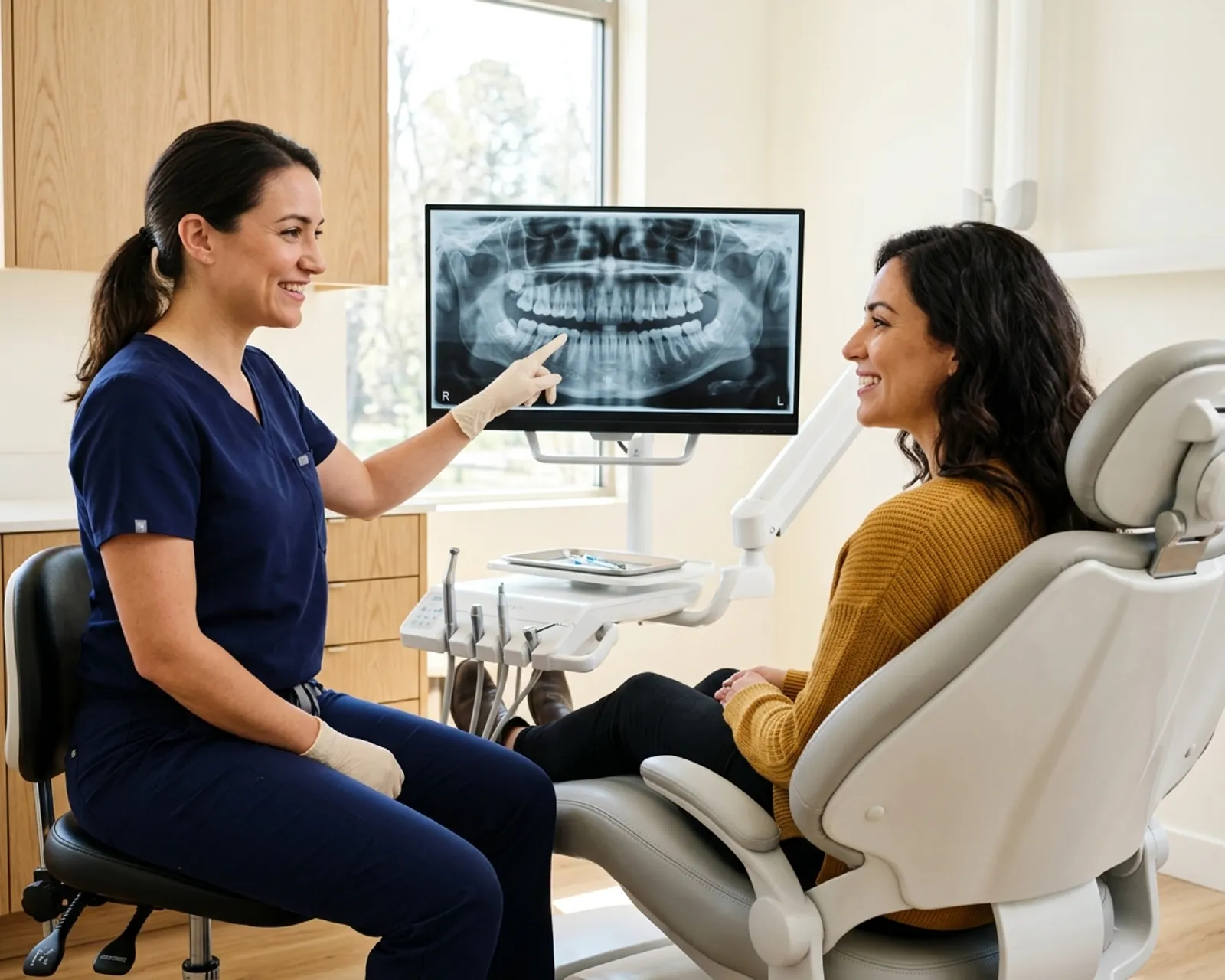
My 9-year-old son needed an emergency tooth extraction, and his current dentist referred us to a surgeon—but the earliest appointment wasn’t available for weeks, and we couldn’t understand why full anesthesia was even being suggested for something so urgent.
Sadia Kazimi
Google Review
Credentials and recognition




A tooth extraction removes a tooth that cannot be saved: one broken below the gum, loosened by gum disease, or an impacted wisdom tooth. At Innova Smiles in Marlborough, MA, Dr. Ambereen Fatima, DDS performs simple and surgical extractions under local anesthesia and can place a bone graft in the socket for a future implant. Same-day appointments are often available, and you receive a written estimate before treatment.
Medically reviewed by Dr. Ambereen Fatima, D.D.S. — FICOI · FAAIP · practicing in the US since 2013 · Last reviewed · Meet Our Team
Warren’s story
“I would recommend Dr. Fatima to anybody.”
“I had a crown put in, I’ve had a tooth removed, and I’ve had fillings taken care of, and it’s pain-free and very effective, and I would recommend Dr. Fatima to anybody.”
Warren T. Bebeau — Extraction, Crown & Fillings Patient
Why Patients Choose Innova Smiles
In their own words, what patients value about their care.
Paying for Treatment
How Patients Pay for Tooth Extraction
Pick the line that sounds like you. Whichever it is, you see the plan and the written cost before we start.
“I have dental insurance”
“I don’t have insurance”
“I’d rather pay monthly”
“I want to know the cost first”
What your tooth extraction fee includes (per tooth)
- Local anesthesia for complete comfort
- Simple or surgical extraction
- Gauze and written aftercare instructions
- A next-day phone call to see how you're doing
No obligation. You receive a written estimate before any treatment.
*0% APR financing is through Cherry, a third-party lender, not Innova Smiles, and is subject to credit approval; not all applicants qualify. Plans run up to 24 months in equal payments, the first due at purchase. Cherry's 0% APR plans carry no deferred interest; if an account becomes delinquent, interest may apply going forward, never retroactively. Your cost and payment depend on your treatment plan and approved offer, and are confirmed in writing at your consultation.
Your Extraction Experience at Innova Smiles
From the first call to a healed socket, here is what each step looks like and what we tell you along the way.
- Step 1
Comprehensive Evaluation
Digital X-rays, oral exam, and a review of your health history. We confirm whether extraction is the right choice and present alternatives when possible.
- Step 2
Comfort-First Procedure
Premium topical numbing gel and precise local anesthesia are designed so you feel pressure rather than sharp pain. We move at your pace.
- Step 3
Clear Aftercare Instructions
Written post-op instructions and a follow-up call the next day.
- Step 4
Smile Restoration Planning
Before the tooth comes out, we review your replacement options (dental implant, bridge or partial denture) and whether a bone graft should go in the socket; the replacement itself starts once the site has healed.
When Is a Tooth Extraction Necessary?
We always try to save your natural tooth first. But when a tooth cannot be restored, a timely extraction protects the rest of your mouth and sets the stage for a healthy replacement.
When decay or infection has destroyed too much tooth structure to restore with a crown or filling.
Wisdom teeth that are trapped in the jawbone or growing at angles that cause pain, damage to the neighboring tooth, or recurring infection.
Severe periodontal disease that has caused bone loss leaving a tooth too loose to save.
Creating space for teeth to move into proper alignment when the jaw is too crowded.
Teeth cracked vertically below the gumline cannot be repaired and must be removed to prevent infection.
In rare cases where root canal therapy cannot save a severely infected tooth, extraction is the safest option.
Save the Tooth or Extract It? How We Decide
For a tooth that can be repaired, extraction is never our first recommendation. Here is how we evaluate whether a tooth can be saved or whether removal is the healthier path forward.
Crack / Fracture
- Save (Root Canal / Crown)
- Above the gumline, crown or bonding can restore it
- Extract & Replace
- Vertical root fracture typically requires extraction. Dr. Fatima evaluates your options, with 3D CBCT imaging when needed
Decay
- Save (Root Canal / Crown)
- Enough healthy structure for a crown after decay removal
- Extract & Replace
- Decay extends below bone level, no foundation for restoration
Infection
- Save (Root Canal / Crown)
- Contained infection treatable with root canal therapy
- Extract & Replace
- Widespread infection with bone loss or risk of sepsis
Gum Disease
- Save (Root Canal / Crown)
- Early-stage with manageable bone loss
- Extract & Replace
- Severe bone loss, tooth is loose and non-functional
Wisdom Teeth
- Save (Root Canal / Crown)
- Fully erupted, functional, and cleanable, keep and monitor
- Extract & Replace
- Impacted, causing crowding, or prone to recurring infection
Cost Consideration
- Save (Root Canal / Crown)
- Preserving a tooth is typically the more cost-effective long-term option
- Extract & Replace
- Replacing the tooth afterward, for example with an implant, adds to the cost
Long-Term Outlook
- Save (Root Canal / Crown)
- A preserved natural tooth with a crown often serves 10–15 years or longer
- Extract & Replace
- Implant replaces the tooth; in a large review about 96% were still in place after 10 years
Every case is unique. Dr. Fatima evaluates each situation, using 3D CBCT imaging when a case needs it, before recommending extraction.
Our commitment: For a damaged tooth, we recommend extraction only when a filling, crown or root canal cannot save it. When extraction is the right call, we make it as comfortable and stress-free as possible.
Comfort & Gentle Care
Gentle, Stress-Free Care for Tooth Extractions
If you feel anxious about visiting the dentist or have delayed treatment, you are not alone. Dr. Fatima and our team plan each step of your visit to keep you comfortable, calm, and in control.
Gentle Numbing
Premium topical numbing gel is applied before any injection, and we take the numbing process at an unhurried pace.
You Control the Pace
Raise your hand at any moment and we pause immediately. We proceed only when you feel completely ready.
Zero-Shame Policy
No lectures about missed cleanings or past delays. We focus solely on your comfort and oral health today.
Soothing Amenities
Noise-canceling headphones and weighted blankets are yours for the whole visit.
Simple vs. Surgical Extraction
The type of extraction you need depends on your tooth's position, condition, and root structure. Both procedures are performed in our Marlborough office with the same careful, gentle approach; deeply impacted teeth are removed here or referred to an oral surgeon, depending on what the scan shows.
Simple Extraction
For teeth that are fully erupted and visible in the mouth.
A simple extraction involves a tooth that is fully erupted and visible above the gum line. Using local anesthesia, the tooth is loosened with a dental elevator and gently removed with forceps. Most simple extractions require no incision and heal quickly.
- Performed under local anesthesia
- About 30 to 60 minutes in the chair for one tooth, including numbing
- Gentle loosening with specialized instruments
- Most people are back to work or school within a day or two
Surgical Extraction
For impacted, broken, or partially erupted teeth requiring more precision.
Impacted wisdom teeth, severely broken teeth, and other impacted teeth fall into the surgical category, requiring small incisions, possible bone removal, and sutures.
- Local anesthesia with premium topical numbing
- Small incision to access the tooth
- Tooth may be sectioned for easier removal
- Most people are back to their routine by about day 5; soft foods recommended
Wisdom Tooth Removal
Wisdom teeth, your third molars, are the last teeth to erupt, typically in your late teens or early twenties. Because modern jaws often lack space for them, they frequently become impacted (trapped beneath the gumline), leading to pain, infection, crowding, and damage to neighboring teeth.
At Innova Smiles, we evaluate every wisdom tooth individually, with digital X-rays and, when the roots sit close to the nerve or sinus, 3D CBCT imaging to map the tooth, root curvature and nerve before we begin. Not every wisdom tooth requires removal, but when it does, our team performs the extraction with precision anesthesia, premium topical numbing, and thorough post-operative care to keep you comfortable throughout recovery.
Signs Your Wisdom Teeth May Need Removal
Don't wait until the pain becomes severe
- Pain or pressure at the back of your jaw
- Swollen, red, or tender gum tissue near the back teeth
- Jaw stiffness or difficulty fully opening your mouth
- Recurring infections (pericoronitis) in the tissue over a partially erupted tooth
- A cyst or follicle forming around an impacted tooth
- Decay in a wisdom tooth that can't be easily cleaned
Wisdom teeth usually erupt between ages 17–25
Impacted wisdom teeth can damage adjacent healthy teeth
Early removal (late teens/early 20s) means faster healing
Not all wisdom teeth need removal, we evaluate each case individually
Tooth Extraction Aftercare — What to Do
Following these steps carefully supports healing and lowers the risk of complications like dry socket.
Bite on Gauze
Bite firmly on folded damp gauze for 30 minutes. If bleeding hasn't slowed after 30 minutes of steady pressure, call us. If we're closed, go to the nearest emergency room.
Ice & Rest
For the first 24 hours, hold a cold pack wrapped in a cloth against your cheek for 10–20 minutes at a time. It may ease soreness.
Soft Foods Only
Stick to soft foods (yogurt, smoothies eaten with a spoon, mashed potatoes) for the first day or two and chew on the other side. Avoid hard or crunchy food near the site for about a week.
Avoid Straws & Smoking
For at least the first 24 hours, avoid drinking through a straw, and avoid smoking or vaping for as long as you can; smoking is linked to roughly three times the risk of dry socket.
Gentle Rinsing
After 24 hours, rinse with warm salt water 2–3 times daily to keep the area clean.
Follow-Up Care
Call us if pain eases and then gets worse around day 2 to 3, often with a bad taste: it can be a dry socket.
Call Us Immediately If You Experience:
- Pain that eases and then gets worse around day 2 to 3, often with a bad taste (possible dry socket)
- A temperature of 100.4°F (38°C) or higher, chills, or pus
- Bleeding that hasn't slowed after 30 minutes of steady pressure on folded damp gauze
- Swelling that gets worse after day 3
During office hours, call us. When we're closed, the line books appointments 24/7, but bleeding that hasn't slowed after 30 minutes of steady pressure can't wait for an appointment: go to the nearest emergency room, and if you take a blood thinner, tell them which one. Go to the ER or call 911 for heavy bleeding that won't slow down, difficulty breathing or swallowing, facial swelling that extends to the eye, the neck, or the floor of the mouth, or a temperature of 100.4°F (38°C) or higher together with facial swelling. Call 911 if you feel dizzy, faint or confused, or your skin is pale and clammy.
Replace Your Extracted Tooth
After an extraction, replacing the missing tooth helps preserve bone, reduce shifting, and protect your bite. Dental implants are often the preferred long-term option because they look natural and closely mimic tooth function. For patients missing multiple teeth, dentures offer a comfortable, affordable alternative.
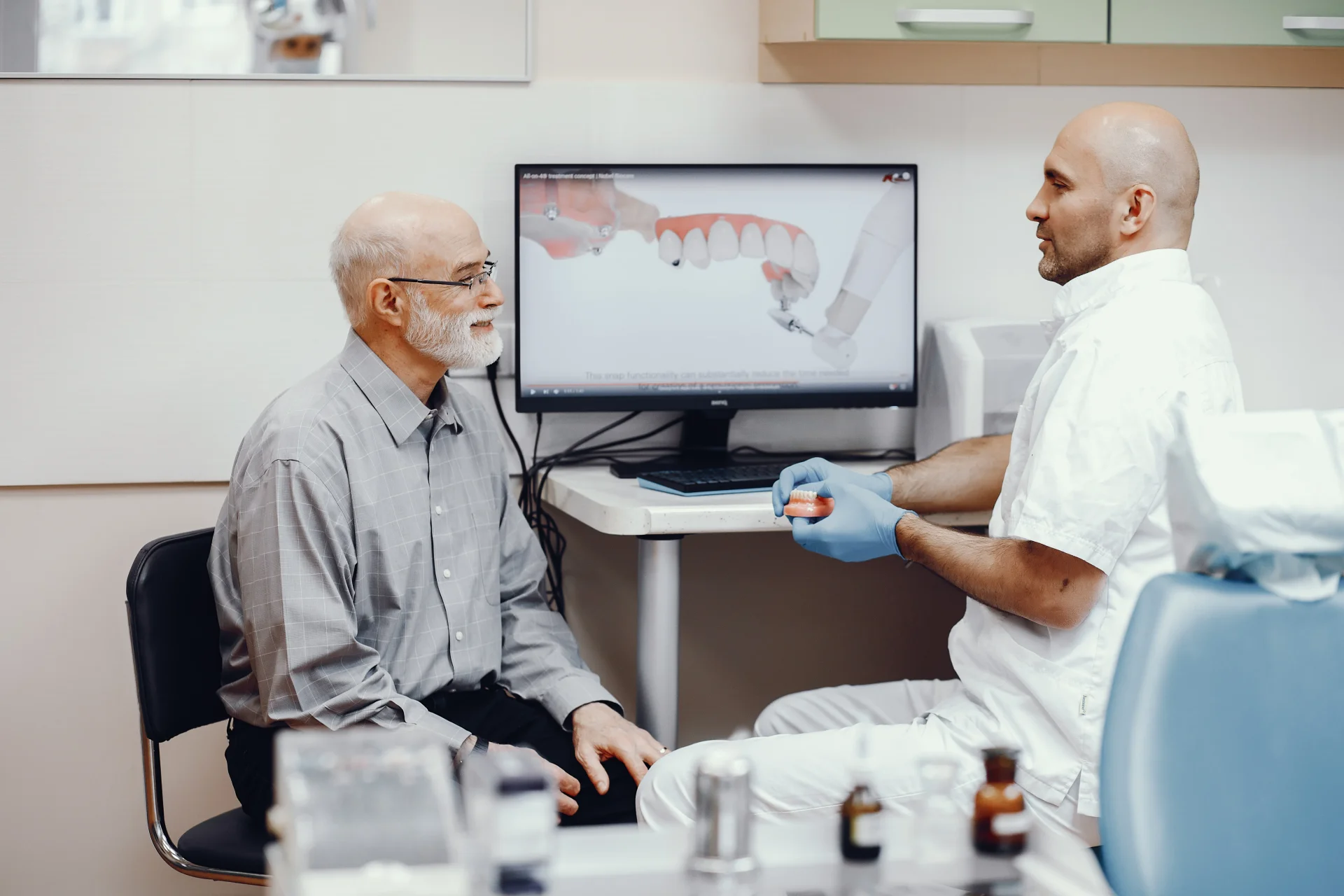
Before, During, and After an Extraction
What to Expect During Your Extraction
Tooth extractions are one of the most routine procedures in dentistry, yet many patients feel anxious beforehand. Here's what actually happens:
For one tooth, plan on about 30 to 60 minutes in the chair, including numbing; a straightforward tooth often takes only a few minutes to remove. Surgical extractions (particularly impacted wisdom teeth) take longer depending on tooth position and root complexity, but our team works efficiently without ever rushing.
Dry Socket — Prevention and Treatment
After an extraction, a blood clot forms in the socket to protect the underlying bone and nerves during healing. Dry socket (alveolar osteitis) occurs when this clot is dislodged or dissolves prematurely, exposing the bone. Pain that eases and then gets worse around day 2 to 3, often with a bad taste, can be a dry socket.
It follows about 1 to 5 in 100 routine extractions and more often after surgical wisdom-tooth removal. Smoking is linked to roughly three times the risk, and the risk is also higher if you have had dry socket before. If it happens, call us: we treat it by gently cleaning the socket and placing a soothing dressing.
The first 24 hours after extraction are the most critical for healing. For at least the first 24 hours, avoid drinking through a straw, and avoid smoking or vaping for as long as you can; smoking is linked to roughly three times the risk of dry socket. Avoid spitting forcefully and vigorous rinsing for the first 24 hours too. Stick to soft foods for the first day or two and keep your head elevated when sleeping.
Life After Tooth Extraction
Recovery after extraction is faster than most patients expect.

Fast Recovery
Most people are back to routine activities within 48–72 hours with proper aftercare.

Relief from Pain
Extraction eliminates the source of infection or overcrowding, bringing lasting comfort and a healthier mouth.

A Healthier Smile Ahead
Whether replacing with an implant or simply healing, your smile is on the path to long-term health.
What to expect with tooth extraction: by the numbers
Typical ranges for time, visits, and recovery from our routine cases.
- How long does a typical extraction take?
- For one tooth, plan on about 30 to 60 minutes in the chair, including numbing; a straightforward tooth often takes only a few minutes to remove.
- What's the recovery timeline?
- Simple extractions: routine activities within 48–72 hours. Surgical: back to routine by about day 5, full recovery in about two weeks.
- Follow-up timeline?
- You'll go home with gauze and written instructions, and we'll call you the next day to see how you're doing. If anything isn't healing as expected, we'll bring you back in.
- Care window after extraction?
- Soft foods for the first day or two, nothing hard or crunchy near the site for about a week; over-the-counter pain management as needed.
Times vary by case complexity. These are typical ranges for the procedure; Dr. Fatima confirms your own timeline at your consultation.
What the Research Says
Published studies on this treatment, each summarized from the paper’s own abstract and linked to its PubMed record, including where the evidence is limited.
After an extraction the jaw ridge loses 29–63% of its width and 11–22% of its height within about six months
In randomized trials on teeth other than molars, filling the socket with bone graft material after extraction limited ridge shrinkage compared with extraction alone, preserving about 1.9 mm of width and 2.1 mm of height on the cheek side
In short
- For one tooth, plan on about 30 to 60 minutes in the chair under local anesthesia, including numbing; surgical and wisdom-tooth removals can take longer depending on the tooth’s position.
- Dr. Ambereen Fatima, DDS performs simple and surgical extractions here, mapping the roots and nerve on 3D CBCT imaging when a case needs it.
- Extraction is recommended only after a root canal, crown or other repair cannot save the tooth; the decision is made at the exam, not before.
- A bone graft can be placed in the socket at the same visit to preserve bone for a future implant, and replacement options are reviewed before the tooth comes out.
- Most dental insurance plans cover part of an extraction; we check your benefits once you book and return your forms, and same-day appointments are often available.
Tooth Extraction FAQs
Does tooth extraction hurt?
During the extraction, you should feel pressure, not sharp pain. We apply premium topical numbing gel before the anesthetic injection to make the numbing process easier. Local anesthesia is used to thoroughly numb the area before treatment begins. After the procedure, mild soreness is normal for 24 to 48 hours and is often managed with over-the-counter pain relievers like ibuprofen.
You'll go home with gauze and written instructions, and we'll call you the next day to see how you're doing. If anything isn't healing as expected, we'll bring you back in. Call (508) 481-0110 to discuss your specific situation and comfort options.
How long does recovery take after tooth extraction?
After a simple extraction, most people return to routine activities within 48 to 72 hours, and many are back at work or school within a day or two. After a surgical extraction, most people are back to their daily routine by about day 5. After wisdom teeth removal, many people return to light daily activities within a day or two.
For wisdom teeth, plan on about 2–3 days off work or school, longer for more difficult removals or physically demanding jobs. Most people feel close to normal within about 5–7 days, and full recovery takes about two weeks. The jawbone takes several weeks to heal completely, and up to about four months after a large tooth such as a molar. Following our aftercare instructions carefully helps your recovery go smoothly.
What is dry socket and how do I avoid it?
Dry socket (alveolar osteitis) occurs when the blood clot that forms in the extraction site is dislodged or dissolves before the socket heals, exposing the underlying bone to air and bacteria. Pain that eases and then gets worse around day 2 to 3, often with a bad taste, can be a dry socket. It follows about 1 to 5 in 100 routine extractions and more often after surgical wisdom-tooth removal.
If a dry socket develops, we gently clean the socket and usually place a soothing dressing in it. You may need to come back every 2–3 days for it to be checked or changed until the pain settles, often 2 to 4 visits in total. The pain usually eases a lot within the first few days of treatment.
To lower the risk: for at least the first 24 hours, avoid drinking through a straw, and avoid smoking or vaping for as long as you can; smoking is linked to roughly three times the risk of dry socket. Avoid spitting and vigorous rinsing for the first 24 hours too. If pain gets worse around day 2 to 3, call us.
How do I know if I need an extraction or a root canal?
We always try to save your natural tooth first, a root canal is almost always preferable to extraction when feasible. Root canal therapy is appropriate when the tooth structure is intact enough to support a crown after infection removal.
Extraction becomes necessary when the tooth is cracked below the gumline, has severe decay that cannot be restored, the bone support is too compromised to save the tooth, or a root canal has failed and retreatment cannot save the tooth. We will review your X-rays and tooth structure to give you an honest recommendation.
When can I eat normally after tooth extraction?
Stick to soft foods for the first day or two and chew on the other side: yogurt, smoothies (eaten with a spoon), mashed potatoes and pudding. Avoid hard or crunchy food near the site for about a week. Gradually reintroduce normal foods as comfort allows.
Avoid very hot foods for the first 24 hours, and skip alcohol and strenuous exercise for at least 48 hours, longer if Dr. Fatima advises for your procedure. Most patients return to a normal diet within a week, though some tenderness at the site may persist for a couple of weeks.
Do I need to replace an extracted tooth?
With the exception of wisdom teeth, most missing teeth should eventually be replaced. An empty socket can allow neighboring teeth to shift and tilt into the gap, alter your bite, and contribute to progressive bone loss in the jaw.
A dental implant is often the strongest replacement option because it helps preserve bone and is designed to function naturally. Dental bridges and partial dentures are also available options. We review these options with you before the extraction, and the replacement itself begins once the site has healed enough.
Ready to Schedule?
Same-day emergency extractions are often available. Call now or book online.
Book Extraction Consult(508) 481-0110Related Articles
In-depth guides to help you make confident, informed decisions.
Tooth Extraction & Wisdom Teeth in Marlborough & MetroWest MA
Our dental office is at 340 Maple St, Suite 100, Marlborough, MA 01752, serving patients throughout the MetroWest region.