
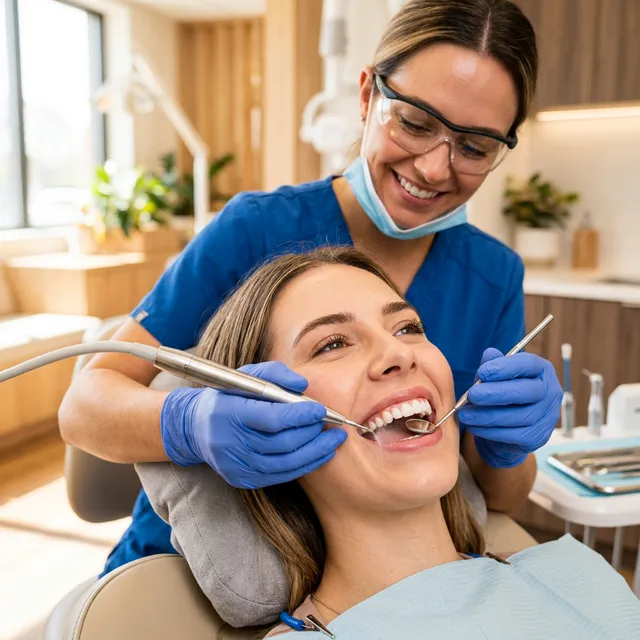
Featured Answer: What is a deep cleaning of the teeth, and when do you need one?
Deep cleaning teeth — known clinically as Scaling and Root Planing (SRP) — is recommended when periodontal probing reveals pocket depths of 4 mm or greater, bleeding on probing, and X-ray evidence of bone loss. Unlike a regular prophylactic cleaning that addresses plaque above and just below the gumline, SRP removes bacterial deposits deep beneath the gum tissue to halt disease progression and protect supporting bone. At Innova Smiles in Marlborough, MA, Dr. Fatima uses this therapy to help patients from Shrewsbury, Westborough, and across MetroWest restore their gum health before the disease advances further.
Regular Cleaning vs. Deep Cleaning: Understanding the Core Difference
The single most common question patients ask in our Marlborough office is some version of "do I really need a deep cleaning, or is the regular one fine?" It is a fair question, especially when you have been getting standard cleanings for years and someone suddenly tells you the situation has changed. The distinction is straightforward but important.
A regular prophylactic cleaning (prophy): CDT code D1110, is a preventive procedure designed for patients with healthy gums or mild gingivitis. Your hygienist removes plaque and calculus (hardened tartar) from the visible tooth surfaces, the spaces between teeth, and just slightly below the gumline. A prophy takes about 45 to 60 minutes and is the cleaning most patients receive at their routine six-month checkups. It keeps healthy mouths healthy.
A deep cleaning, or Scaling and Root Planing (SRP): CDT codes D4341 and D4342, is a therapeutic procedure prescribed when periodontal disease has already taken hold. SRP goes well below the gumline, reaching into the periodontal pockets where bacterial colonies have formed and calculus has attached to root surfaces. This is not a more thorough version of a regular cleaning, it is a fundamentally different treatment addressing an active disease process.
A dental office that offers SRP when a prophy would suffice is overtreating. And an office that performs only a prophy when pockets measure 5 or 6 mm deep is undertreating, leaving active disease to progress silently. At Innova Smiles, Dr. Fatima bases the recommendation entirely on measurable clinical findings: pocket depths, bleeding on probing, bone levels on X-rays, and clinical attachment loss.
What Is Periodontal Disease?
Periodontal disease is a chronic inflammatory condition driven by pathogenic bacteria in subgingival biofilm (the bacterial colonies living beneath the gumline). These bacteria trigger an immune response that, over time, destroys the connective tissue and bone supporting your teeth. The process is often asymptomatic in its early and moderate stages, which is why the disease frequently goes undetected until significant damage has occurred.
The CDC's 2012 epidemiological study, the most comprehensive assessment of periodontal disease prevalence in the United States, found that 47.2% of adults aged 30 and older have some form of periodontitis, with that number rising to 70.1% in adults over 65. The American Academy of Periodontology (AAP) identifies periodontitis as the leading cause of tooth loss in adults, ahead of cavities.
Beyond the mouth, research published in the Journal of Periodontology and Circulation has established associations between chronic periodontal disease and cardiovascular disease, type 2 diabetes complications, adverse pregnancy outcomes (preterm birth, low birth weight), respiratory infections, rheumatoid arthritis, and cognitive health concerns. Treating gum disease is not just about saving teeth; it is a practical way to reduce oral inflammation as part of a broader health plan. For more on those systemic connections, see our post on the link between oral health and overall wellness.
How Periodontal Disease Progresses
Understanding the stages helps clarify why timing matters:
- Gingivitis: Gums are inflamed and bleed easily, but no bone loss has occurred yet. This stage is fully reversible with professional cleaning and improved home care. A prophy is the appropriate treatment.
- Mild periodontitis: Pockets measure 4–5 mm. Early bone loss is visible on X-rays. Bacteria have colonized below the gumline beyond what a prophy can reach. SRP is indicated.
- Moderate periodontitis: Pockets of 5–7 mm. Significant bone loss, possible tooth mobility. SRP with adjunctive therapies (local antibiotics, antimicrobial irrigation) is the standard approach.
- Severe periodontitis: Pockets exceeding 7 mm. Substantial bone destruction, tooth mobility, tooth migration. May require surgical intervention (flap surgery, bone grafting) in addition to SRP.
The critical takeaway: catching the disease at stage 1 or 2 is the difference between a nonsurgical deep cleaning and a surgical procedure. This is why those probing measurements at your regular checkups are so important, they are not just numbers on a chart.
Signs You Might Need SRP
Many patients in Framingham, Hudson, Sudbury, and throughout MetroWest are unaware they have periodontal disease because the early symptoms are easy to dismiss or normalize:
- Bleeding gums: Gums that bleed during brushing, flossing, or eating are not normal at any level. The British Dental Journal published a 2019 study showing that 39% of adults considered minor gum bleeding "normal." It is not. It is inflammation, and it is your body telling you that bacteria have gained a foothold.
- Persistent bad breath: Chronic halitosis that does not resolve with brushing, flossing, and mouthwash often indicates bacterial colonies below the gumline producing volatile sulfur compounds. See our post on bad breath causes and treatment for a full breakdown.
- Gum recession: Teeth that appear longer than they used to, or visible yellowish root surfaces where gum tissue has pulled away.
- Tooth sensitivity: Exposed roots from receding gums lack the protective enamel layer, causing sharp sensitivity to hot, cold, sweet, and acidic foods.
- Loose teeth or shifting bite: Advanced bone loss reduces the foundation supporting your teeth, causing mobility and changes in how your teeth come together.
- Pocket depths of 4 mm or greater: Healthy sulcus depths measure 1 to 3 millimeters with no bleeding. Depths of 4 mm or more with bleeding on probing confirm active disease.
- Pus between teeth and gums: Visible drainage (suppuration) is a sign of active infection requiring prompt treatment.
- Changes in your bite or denture fit: Shifting teeth can alter your occlusion, and underlying bone changes can affect how partial dentures seat.
If you recognize any of these signs, do not wait for your next scheduled visit. A 2017 study in the Journal of Dental Research demonstrated that each millimeter of attachment loss increases tooth loss risk by 30%. Early intervention is dramatically more effective and less costly than treating advanced disease.
How to Know Which Cleaning You Need
You cannot self-diagnose the difference. No amount of Googling or looking in the mirror will tell you whether you need a prophy or SRP. The only reliable method is a comprehensive periodontal evaluation that includes:
- Full-mouth probing: Six measurements per tooth (three on the cheek side, three on the tongue side) recorded in millimeters. This gives a complete map of pocket depths throughout your mouth.
- Bleeding on probing (BOP): The percentage of sites that bleed when probed. A BOP score above 10% suggests active inflammation.
- Clinical attachment level (CAL): Measures the distance from the cement-enamel junction (where enamel meets root) to the bottom of the pocket. CAL distinguishes true bone loss from pseudo-pocketing caused by gum swelling.
- Digital X-rays: Bitewing and periapical radiographs reveal bone levels around each tooth, calculus deposits on root surfaces, and other pathology not visible clinically.
At Innova Smiles, every new patient and every recall patient receives periodontal probing as part of their examination. It takes about five minutes and provides the objective data needed to recommend the right treatment.
What Happens During SRP: The Complete Procedure
Here is exactly what to expect if Dr. Fatima recommends Scaling and Root Planing:
Before Treatment: Diagnosis and Planning
- Digital X-rays and a full periodontal charting identify the specific areas and depths of disease. Some patients have generalized disease affecting all four quadrants; others have localized disease in only one or two areas.
- Medical history review. Certain conditions and medications affect treatment planning. Blood thinners may require coordination with your physician. Uncontrolled diabetes can impair healing. A history of joint replacement may necessitate prophylactic antibiotics (though guidelines from the ADA and AAOS have evolved — Dr. Fatima follows the current evidence-based recommendations).
Anesthesia Options
Comfort is a priority. SRP involves instrumentation below the gumline, and we want you to feel nothing during the procedure.
- Topical anesthetic: Applied to the gum tissue before injection to minimize the pinch of the needle.
- Local anesthesia (lidocaine or articaine): The standard for SRP. Thoroughly numbs the teeth, gums, and surrounding tissue in the treatment area. Most patients report feeling pressure but no pain.
- DentalVibe vibration anesthesia: Available for patients who are anxious about injections. Gentle micro-vibrations at the injection site help reduce needle discomfort, with no systemic effects and no driving restrictions.
- Comfort amenities: Noise-canceling headphones, weighted blankets, a hand-signal system, and a slower pace can help patients with dental anxiety. Learn more about our gentle care options.
The SRP Procedure Step by Step
- Scaling: Your hygienist or Dr. Fatima uses a combination of ultrasonic scalers and hand instruments (Gracey curettes, Columbia universals) to remove calculus, bacterial toxins, and biofilm from root surfaces below the gumline. The ultrasonic scaler uses high-frequency vibrations and a water spray to break apart calculus deposits; hand instruments then refine the cleaning in areas the ultrasonic cannot reach effectively.
- Root planing: After calculus is removed, the root surfaces are smoothed with fine-tipped curettes. Rough root surfaces harbor bacteria in microscopic grooves and crevices. Planing creates a smooth, clean surface that allows the gum tissue to reattach and heal against the root. A 2013 meta-analysis in the Journal of Clinical Periodontology found that thorough root planing reduced pocket depths by an average of 1.29 mm in moderate pockets and 2.16 mm in deep pockets.
- Irrigation: Antimicrobial rinses (typically chlorhexidine) are flushed into the pockets to reduce the bacterial load in treated areas.
- Local antibiotic placement (when indicated): For pockets that are particularly deep or resistant, Dr. Fatima may place Arestin (minocycline microspheres) directly into the pocket. This sustained-release antibiotic continues working for 21 days, targeting bacteria that mechanical debridement alone may not fully eliminate. Research in the Journal of Periodontology shows that SRP combined with Arestin produces an additional 0.5 to 0.7 mm of pocket depth reduction compared to SRP alone.
- Home care instructions: You receive specific guidance on brushing technique (modified Bass method), interdental cleaning tools (floss, interdental brushes, or water flosser depending on your anatomy), and any prescribed rinses.
Treatment is typically completed in two appointments, with one side of the mouth (two quadrants) treated per visit, spaced one to two weeks apart. Each appointment lasts 60 to 90 minutes. Some patients with mild localized disease may be treated in a single visit.
Recovery After SRP: A Day-by-Day Timeline
Recovery from deep cleaning is straightforward for most patients. Here is what to expect:
Day 1–2:
- Numbness wears off 2 to 4 hours after the appointment. Avoid eating on the treated side until sensation returns.
- Mild soreness and gum tenderness are normal. Take 400 to 600 mg ibuprofen as needed.
- Minor bleeding when brushing is expected. Do not rinse vigorously.
- Begin warm salt water rinses (half teaspoon of salt in 8 ounces of warm water) two to three times daily.
Day 3–7:
- Soreness fades significantly. Most patients return to normal eating by day three.
- Tooth sensitivity to hot and cold may increase temporarily as newly cleaned root surfaces are exposed. Use a desensitizing toothpaste (Sensodyne, Colgate Sensitive) and avoid extremely hot or cold foods for a week.
- Continue gentle brushing and flossing. Do not skip the treated areas, keeping them clean is essential for healing.
Week 2–4:
- Gums begin to tighten and reattach to the tooth surfaces. You may notice gums appear slightly receded, this is normal. The swollen, inflamed tissue was masking the true gum level, and as inflammation resolves, the gums settle to their healthy position.
- Sensitivity gradually decreases as the gum tissue adapts.
Week 4–8 (Re-evaluation):
- Dr. Fatima performs a follow-up periodontal evaluation to measure pocket depths. Successful SRP typically produces 1 to 2 mm of pocket depth reduction. Sites that do not respond adequately may need additional treatment, including localized antibiotics or referral for periodontal surgery.
Cost of Deep Cleaning vs. Regular Cleaning
At Innova Smiles, we verify your insurance benefits before scheduling SRP and provide a written cost estimate so there are no surprises. For patients without insurance, our membership plan includes a 20% discount on all treatments, and 0% financing through CareCredit and Cherry is available. For patients in Northborough, Southborough, and surrounding MetroWest communities, we can often begin treatment within one to two weeks of diagnosis.
Is Deep Cleaning Worth the Cost?
Consider what SRP prevents. The average cost of a single dental implant to replace a tooth lost to periodontal disease is $3,000 to $5,000. A three-unit bridge runs $2,500 to $4,500. A full-mouth SRP at $800 to $1,600 is an investment in keeping the teeth you have. A 2015 study in the Journal of Dental Research found that patients who received timely SRP and maintained their periodontal maintenance schedule retained 96.2% of their teeth over a 10-year follow-up period.
Maintenance After SRP: Why 3–4 Months, Not 6
This is the part that surprises most patients. After SRP, you do not go back to the standard six-month cleaning schedule. Research published in the Journal of Clinical Periodontology and endorsed by the AAP confirms that periodontal maintenance visits every three to four months are essential to prevent disease relapse.
Why? Pathogenic bacteria repopulate periodontal pockets within 9 to 11 weeks after SRP. A study by Mousques et al. in the Journal of Clinical Periodontology demonstrated that bacterial recolonization of treated pockets begins within days and reaches pre-treatment levels within approximately 3 months without professional intervention. The three-to-four-month maintenance interval disrupts this cycle before bacteria can cause new damage.
Periodontal maintenance (D4910) differs from a regular prophy in several ways:
- It includes periodontal probing and charting to monitor pocket depths at every visit
- It focuses on subgingival debridement in areas of persistent or recurring pockets
- It includes site-specific scaling where calculus has reformed
- It provides ongoing assessment of home care effectiveness
Skipping maintenance visits or stretching the interval to six months is one of the most common reasons periodontal disease returns. A landmark study by Wilson et al. found that patients who did not comply with the recommended maintenance schedule had a 5.6 times greater rate of tooth loss than compliant patients.
Risk Factors for Periodontal Disease
Understanding your personal risk factors helps explain why some people develop periodontal disease despite diligent brushing and flossing:
- Smoking and tobacco use: The AAP identifies smoking as the single greatest modifiable risk factor for periodontal disease. Smokers are 3 to 6 times more likely to develop periodontitis and respond less favorably to SRP treatment.
- Diabetes: Poorly controlled blood sugar impairs the immune response and accelerates periodontal destruction. The relationship is bidirectional; studies show that periodontal treatment can produce modest HbA1c improvements in some diabetic patients, including an average 0.4% reduction in one meta-analysis (Teeuw et al., Diabetes Care, 2010).
- Genetics: Up to 30% of the population has a genetic predisposition to periodontal disease, according to research published in Periodontology 2000. These individuals may develop aggressive disease despite good oral hygiene.
- Stress: Chronic psychological stress suppresses immune function and increases cortisol levels, impairing the body's ability to fight periodontal infection.
- Medications: Over 500 medications cause dry mouth as a side effect, reducing the protective role of saliva and increasing bacterial growth.
- Hormonal changes: Pregnancy, menopause, and oral contraceptive use can increase gum inflammation and susceptibility to disease.
- Clenching and grinding: Bruxism does not cause periodontal disease directly, but the excessive forces accelerate bone loss in teeth already affected by periodontitis. A night guard can reduce this secondary damage.
What If SRP Is Not Enough?
In most cases of mild to moderate periodontal disease, SRP combined with diligent maintenance successfully controls the condition. But for some patients, particularly those with deep pockets exceeding 6 to 7 mm, furcation involvement (bone loss between the roots of molars), or aggressive disease patterns, additional treatment may be needed:
- Flap surgery (osseous surgery): A periodontist surgically accesses the root surfaces for more thorough cleaning and reshapes the underlying bone to reduce pocket depths.
- Bone grafting: Synthetic or donor bone material is placed in areas of significant bone loss to promote regeneration.
- Guided tissue regeneration (GTR): A biocompatible membrane is placed between the bone and gum tissue to direct bone regrowth into the defect.
- Laser-assisted periodontal therapy: LANAP (Laser-Assisted New Attachment Procedure) uses a specific wavelength of laser to selectively remove diseased tissue while preserving healthy tissue.
Dr. Fatima evaluates treatment response at the 4-to-8-week re-evaluation and will discuss additional options if specific sites have not responded adequately to SRP.
Frequently Asked Questions
What is a deep cleaning of the teeth?
A deep cleaning of the teeth is a periodontal procedure called scaling and root planing (SRP). Unlike a regular cleaning, which polishes the tooth surfaces above and just below the gumline, deep cleaning teeth removes bacterial plaque and hardened tartar from deep below the gums and smooths the root surfaces so the gum can reattach. It is the standard treatment for gum (periodontal) disease once pockets reach 4 mm or deeper.
Does deep cleaning hurt?
With proper local anesthesia, many patients report pressure and vibration from the ultrasonic scaler rather than sharp pain. If you feel any discomfort, tell your hygienist; additional anesthesia can be administered immediately. Post-procedure soreness is usually mild and manageable with over-the-counter ibuprofen for most patients.
How long does SRP take?
Typically two appointments of 60 to 90 minutes each, with one side of the mouth treated per visit. Patients with localized disease affecting only one or two quadrants may need only a single appointment.
Can I eat after a deep cleaning?
Wait until the numbness wears off (2 to 4 hours) to avoid accidentally biting your cheek or tongue. Start with soft foods for the first day and avoid extremely hot, spicy, or crunchy foods for 48 hours. By day three, most patients are eating normally.
Will my teeth feel loose after SRP?
Some patients report their teeth feeling slightly looser for a few days after treatment. This can occur because swollen gum tissue that was tightly pressed around the teeth has now deflated as inflammation resolves. As the tissue heals and reattaches, this sensation resolves. If mobility persists or worsens, contact our office.
Is SRP the same as "scaling"?
Not exactly. Scaling refers specifically to the removal of calculus and biofilm. Root planing is the additional step of smoothing the root surfaces. SRP encompasses both steps as a combined procedure. Some offices may refer to it simply as "scaling" or "deep scaling," but the complete treatment includes both components.
What is the difference between plaque and tartar?
Plaque is the soft, sticky film of bacteria that constantly forms on your teeth, and you remove it at home by brushing and flossing. Tartar (also called calculus) is plaque that has hardened with minerals from saliva, often within a day or two, and it bonds so firmly to the tooth that only a dental professional can remove it. Tartar along and below the gumline is what drives gum disease, which is why professional cleanings, or a deep cleaning when tartar sits below the gums, matter.
Not sure if you need SRP? Call (508) 481-0110 or request a periodontal evaluation. Dr. Fatima will review your measurements, X-rays, and clinical findings and give you a straightforward recommendation based on evidence, not guesswork.
Related Articles
- Why Dental Cleanings Matter More Than You Think
- Gum Recession: Causes, Signs, and Treatment
- The Connection Between Gum Health and Heart Health
- Bad Breath (Halitosis): Causes, Treatment & When to See a Dentist
- The 4 Stages of Gum Disease: Early Signs, Risks, and Treatment
Related Services
Sources & Further Reading
- Effect of periodontal treatment on glycemic control of diabetic patients: a systematic review and meta-analysis — Diabetes Care (National Library of Medicine/NIH/NLM)