The Wild West of Dental Implant Training
Deciding to restore your smile and replace missing teeth with dental implants is one of the most significant, life-improving medical decisions you can make. It is a substantial investment of both your time and your hard-earned finances. However, when you begin searching for a skilled implant dentist in the MetroWest area (such as the 01752 and 01749 zip codes), you will encounter a startling truth regarding the dental industry: literally any licensed general dentist in the United States is legally permitted to place a dental implant.
The chasm between surgical legality and surgical mastery is vast.
Some general dentists begin actively drilling into their patients' jawbones after a two-day weekend continuing education (CE) course at a hotel conference room, where they practiced placing implants into plastic mannequin jaws or pig ribs. They may market themselves heavily online as "implant experts," but their actual surgical reps and complication-management skills are dangerously low.
Placing a titanium screw into live, highly vascularized human bone — inches away from major facial nerves and the maxillary sinus floor — is complex, unforgiving surgery. At Innova Smiles in Marlborough, we believe that MetroWest patients deserve full transparency regarding the actual qualifications of the individual holding the scalpel and the surgical drill.
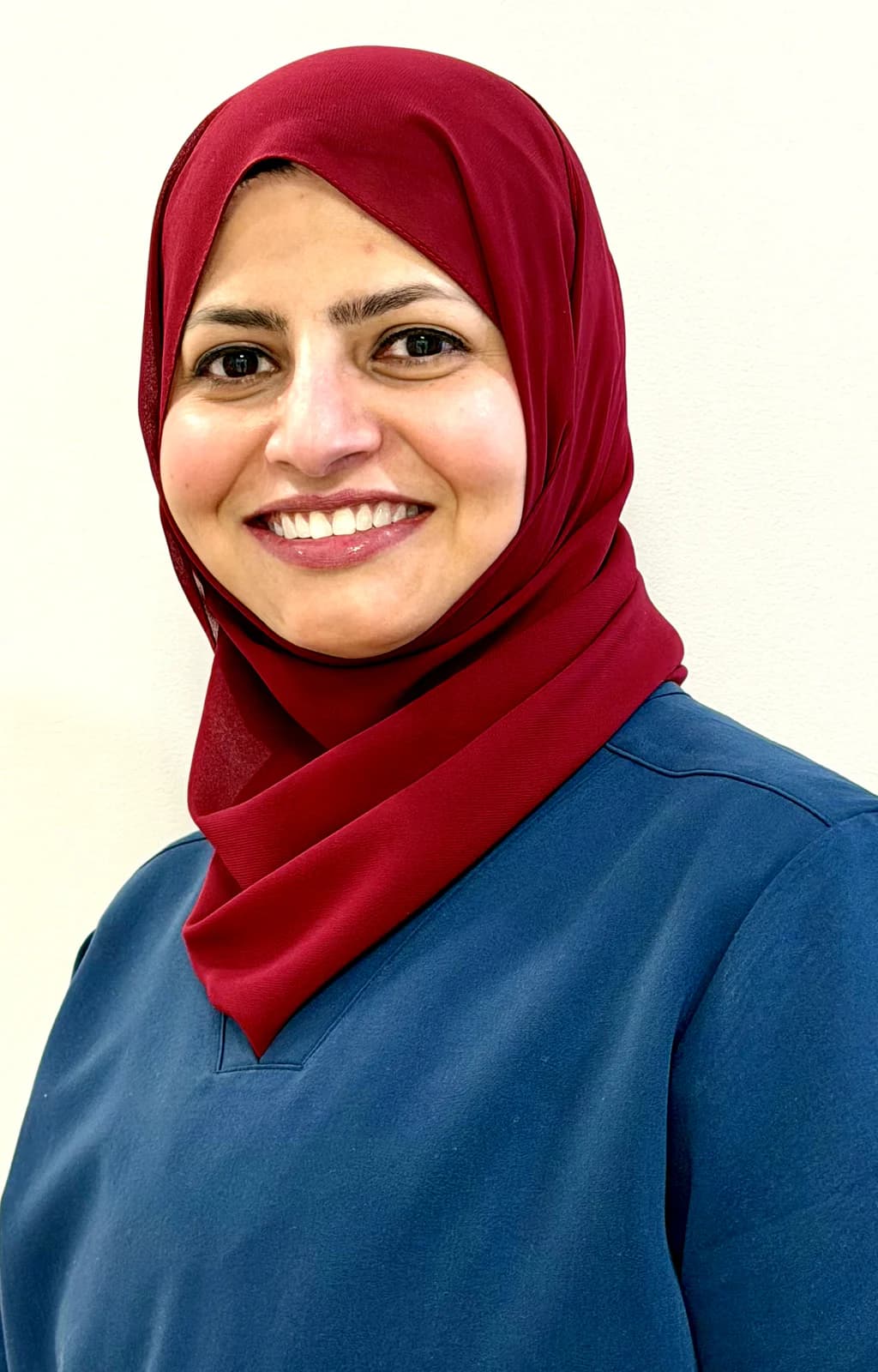
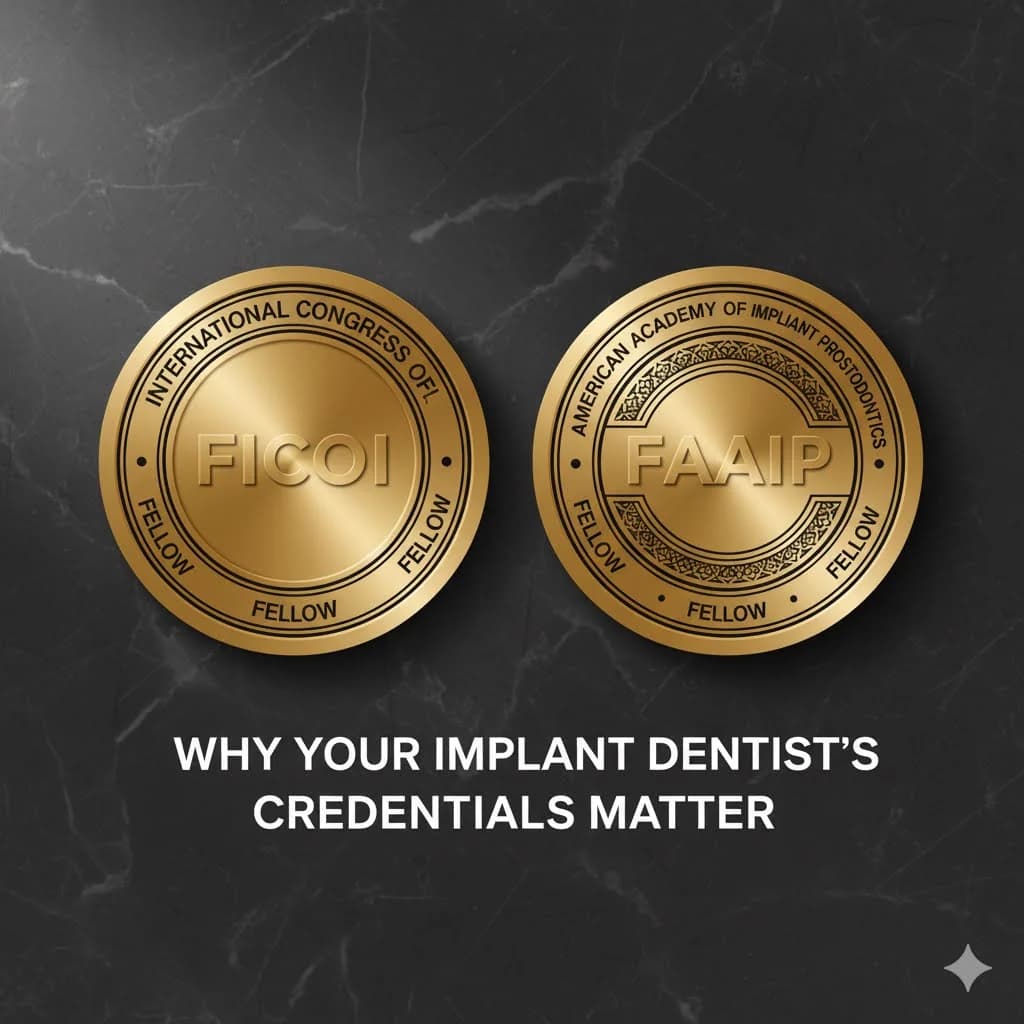
This guide explains why you should demand advanced credentials when selecting an implant provider, and why Dr. Ambereen Fatima's Fellowships — the FICOI and the FAAIP, alongside a Live Implant Training Institute fellowship — represent advanced, post-doctoral implant training in safety, precision, and aesthetic restoration.
Defining the Credentials: What are the ICOI and AAIP?
To understand the difference between a short implant course and fellowship-level training, it helps to know the two credentialing organizations behind her FICOI and FAAIP fellowships.
The ICOI: Surgical Excellence
If you are searching for the ficoi dentist meaning or the ficoi full form, the FICOI stands for Fellowship in the International Congress of Oral Implantologists. The International Congress of Oral Implantologists (ICOI) is the world’s largest implant dentistry organization with over 30,000 members worldwide, dedicated to the advancement of implant-based education, research, and surgical excellence.
Achieving a Fellowship within this organization (FICOI) requires a documented portfolio of clinical implant cases and a review process that evaluates surgical planning, case selection, and clinical judgment across different patient situations.
The AAIP: Prosthetic Planning
The American Academy of Implant Prosthodontics (AAIP) focuses on the other half of the implant equation: the actual "tooth" (the prosthetic crown or denture) that attaches to the titanium root.
A well-placed titanium implant still needs a carefully designed restoration. If the crown shape, bite, or cleanability is wrong, the result can feel uncomfortable, trap plaque, or fail sooner than expected. Achieving the faaip dental credential reflects additional training in implant biomechanics, occlusion, and restorative design.
The Fellowship Advantage for Marlborough Patients
It is rare for a general dentist to hold one of these Fellowships. It is almost unheard of for a single dentist to hold both.
By earning both her FICOI and FAAIP, Dr. Fatima has demonstrated mastery of both the invisible surgical foundation (the bone) and the visible architectural conclusion (the smile). For patients at Innova Smiles in Marlborough, this dual-mastery translates into several meaningful advantages:
1. Radically Decreased Risk of Surgical Failure
The most disastrous complication in implant dentistry is placing the titanium post too close to the inferior alveolar nerve in the lower jaw, causing permanent lip numbness, or accidentally puncturing the delicate sinus membrane in the upper jaw.
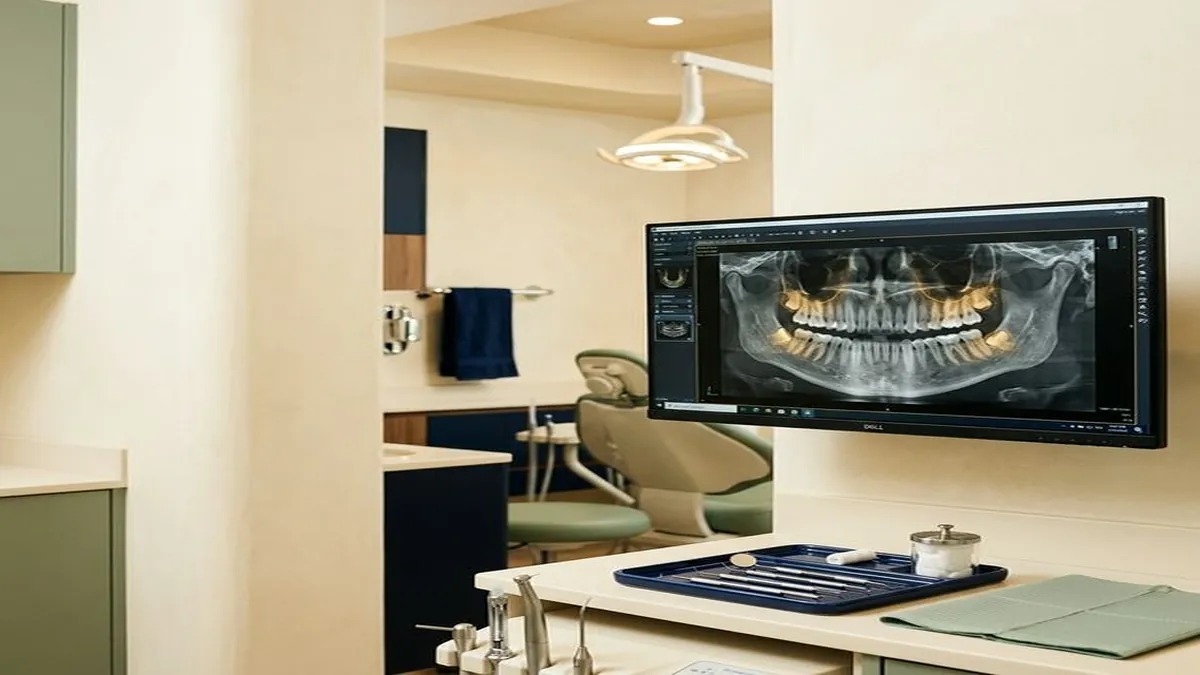
Because Dr. Fatima is intensely trained in advanced surgical planning, we do no "free-hand" guesswork at Innova Smiles. We use an advanced 3D CBCT (Cone Beam Computed Tomography) scanner. The CBCT constructs a high-definition, 360-degree digital map of your entire skull. Dr. Fatima analyzes the exact thickness of your jawbone, maps the precise location of every nerve, and digitally performs a "virtual surgery" on the computer screen before you ever enter the operatory. We then 3D-print a custom surgical guide that locks into your mouth, placing the implant with a high degree of precision, closely matching the angle and depth determined during our virtual planning. Our deep dive into guided implant surgery with CBCT explains the full technology workflow behind this approach.
This is the defining difference between hoping a surgery goes well and planning the case around a precise, prosthetically driven outcome.
2. The Comprehensive, "Under One Roof" Experience
In many traditional dental models, you are referred to an oral surgeon across town (who only places the screw) and then sent back to your general dentist (who only makes the crown). This disjointed approach often results in miscommunication, pointing fingers if the crown doesn't fit correctly, and higher fees from paying two separate offices.
At Innova Smiles, Dr. Fatima handles many implant cases under one roof. She plans the implant around where the final crown needs to sit, so the surgical and restorative phases work from the same plan. One team, one clear cost, one consistent standard of care.
3. Immediate Load and "Teeth in a Day" Capabilities
For patients in Marlborough suffering from failing, terminal dentition or the misery of loose, slipping traditional dentures, advanced training is essential for complex full-mouth rehabilitation.
Because of her FAAIP and FICOI training, Dr. Fatima is highly familiar with advanced full-arch protocols (such as All-on-4® or implant-supported overdentures). In appropriate cases, failing teeth can be removed, four to six implants placed in strong areas of the jawbone, and a temporary fixed bridge attached in a single visit. The final restoration follows after healing and integration.
The Invisible Threat: Peri-Implantitis and Bone Loss
A poorly placed implant might survive the initial healing phase (osseointegration), only to violently fail three to five years down the road.
Research published in the Journal of Dental Research shows that poor implant position or inadequate surrounding bone can increase the risk of bone loss around the implant. This may expose titanium threads to bacteria and contribute to peri-implantitis. According to the International Journal of Oral & Maxillofacial Implants, peri-implantitis affects an estimated 12-22% of implant patients, making proper initial planning and maintenance critical. Learn how to recognize the warning signs of dental implant failure before the problem becomes harder to treat.
Dr. Fatima's extensive fellowship training focused intensely on identifying whether you require advanced bone grafting or a sinus lift procedure prior to placement. At Innova Smiles, we would rather build the right foundation first than rush an implant into bone that is not ready to support it.
Redefining the Standard of Care in MetroWest
When you choose who will place your dental implants, do not settle for clever marketing or aggressive sales tactics focused purely on the final price tag. An implant failure is agonizing physically, emotionally, and financially, as correcting a botched surgery is exponentially more expensive than doing it perfectly the first time.
Your smile deserves the precision of a heavily credentialed expert. Your health deserves the safety of strictly guided, 3D CBCT surgery.
We invite you to experience modern implant dentistry done with full surgical rigor in a calm, focused clinical environment. Dr. Fatima will sit with you, walk through your 3D scans on a large monitor, explain what your unique anatomy requires, and answer every question without rushing you out the door. Our step-by-step guide to the dental implant consultation process walks you through exactly what happens at that first visit.
Frequently Asked Questions About Implant Credentials
Q: Can an oral surgeon place implants better than a fellowship-trained general dentist? Oral surgeons receive extensive surgical training during their residency, and many are excellent implant providers. The key distinction is continuity of care. An oral surgeon typically places the implant post but does not fabricate the final restoration, that falls to a separate restorative dentist or prosthodontist. When two providers share responsibility, the surgical placement and the prosthetic design may not align perfectly. Dr. Fatima's fellowship training in both implant surgery and implant prosthodontics means the same clinician who plans the final crown position also performs the surgery, so placement can be planned around the angle, depth, and trajectory needed for a strong prosthetic outcome. A 2021 study in the Clinical Oral Implants Research journal found that single-provider workflows had statistically lower rates of prosthetic complications compared to multi-provider models.
Q: How do I verify a dentist's fellowship credentials? Both the ICOI and AAIP maintain public directories on their websites. You can search by the provider's name and verify their fellowship status, the year it was conferred, and whether the credential remains active. Dr. Fatima's fellowships are listed on the ICOI and AAIP member directories and are displayed in our Marlborough office. Any credentialed dentist should be willing to show documentation upon request, if a provider is vague about their training when asked, that is a meaningful red flag.
Q: What is the success rate for implants placed with guided surgery versus freehand? A 2020 systematic review and meta-analysis published in the International Journal of Oral & Maxillofacial Implants compared guided and freehand implant placement across 2,238 implants. Guided surgery achieved a mean angular deviation of only 3.5 degrees from the planned trajectory, compared to 7.9 degrees for freehand placement. The survival rate for guided implants was 97.3% at five years, compared to 95.1% for freehand. While both numbers are high, the 2.2% difference becomes significant when you consider that a failed implant requires explantation, bone grafting, a six-to-twelve-month healing period, and a second surgical attempt, easily adding thousands of dollars in corrective costs.
Q: Does advanced credentialing make implants more expensive? Not necessarily. Our single-provider model at Innova Smiles often reduces total cost compared to the traditional two-office referral model, because you are not paying separate facility fees, separate consultation fees, and separate profit margins to two independent practices. The fellowship credentials represent Dr. Fatima's investment in her own training, they do not add a premium to your treatment fee. What they add is precision, safety, and the confidence that your case is managed by a clinician who has documented mastery of every phase of implant therapy.
The Numbers Behind Credential-Driven Outcomes
According to the ICOI's own fellowship audit data, dentists who achieve FICOI status have completed a minimum of 100 hours of implant-specific continuing education and submitted documentation of at least 20 successful surgical cases across varying complexity levels. The AAIP fellowship requires additional case submissions demonstrating prosthetic excellence, from single-tooth restorations to full-arch rehabilitations.
A 2019 cross-sectional study in the Journal of Prosthetic Dentistry surveyed complications among 4,200 implants placed by general dentists with varying levels of training. Providers with fellowship-level credentials reported a 2.1% complication rate over five years, compared to 7.8% among providers whose implant training was limited to short-form CE courses. The most common complications in the undertrained group were prosthetic misfit (crown did not seat properly), angulation errors requiring corrective surgery, and late-onset peri-implantitis from inadequate initial bone assessment.
For patients in Southborough, Sudbury, Westborough, and across MetroWest, choosing a fellowship-trained provider is the single most controllable factor in determining implant success.
If you are missing teeth, unhappy with a failing bridge, or completely exhausted by shifting dentures, contact the Innova Smiles team today. Call our Marlborough studio at (508) 481-0110 to schedule a thorough, no-pressure dental implant and 3D CBCT consultation.
Related Articles
Related Services
Sources & Further Reading
- Fully Guided Versus Half-Guided and Freehand Implant Placement: Systematic Review and Meta-analysis — International Journal of Oral and Maxillofacial Implants (PubMed/NIH)