
Featured Answer: Can a dental office really help with anxiety?
Yes. At Innova Smiles in Marlborough, MA, we combine a calm environment, clear communication, gentle techniques, and modern technology to reduce triggers and help you feel in control from start to finish. Patients from Framingham, Hudson, Southborough, and across MetroWest tell us that what sets our practice apart is the genuine effort we put into making every visit comfortable.
Dental Anxiety Is More Common Than You Think
Dental fear is one of the most widespread healthcare anxieties in the United States. According to the National Institute of Dental and Craniofacial Research (NIDCR), between 9 and 20 percent of Americans avoid dental visits due to anxiety or fear. A 2023 systematic review published in the British Dental Journal (Vol. 235, No. 3) estimated global dental anxiety prevalence at roughly 15 percent of the adult population, with higher rates among women, younger adults, and individuals who experienced traumatic dental procedures in childhood.
Past experiences involving pain, sensitivity, feeling rushed, or worry about costs can all contribute to dental avoidance. Some patients trace their fear to a single painful childhood extraction. Others developed anxiety after a procedure where they felt unheard or out of control. The trigger varies, but the emotional response is real, and it deserves to be taken seriously.
At Innova Smiles, our team meets you where you are, without judgment and without pressure. Your feelings are valid, and acknowledging them is the first step toward better care.
Understanding the Spectrum: Fear, Anxiety, and Phobia
Clinicians distinguish between three overlapping but distinct conditions:
- Dental fear is an emotional reaction to a specific known threat, such as needles or the sound of a drill. It is proportional and rational.
- Dental anxiety is a broader sense of unease or dread that builds before and during appointments, sometimes without a clearly identifiable trigger.
- Dental phobia (odontophobia) is intense, irrational fear that leads to complete avoidance. A study in BMC Oral Health (2020; 20:163) found that patients with dental phobia waited an average of 7.2 years between visits, significantly increasing their risk of emergency extractions and advanced periodontal disease.
Knowing where you fall on this spectrum helps Dr. Fatima tailor the right combination of behavioral, environmental, and pharmacological support for your visit. A patient with mild pre-appointment jitters needs a different approach than someone who has not seen a dentist in a decade.
The Cycle of Avoidance and Its Real Health Cost
When anxiety keeps you from the dentist, small problems that a routine cleaning could address quietly grow into larger issues. A tiny cavity becomes a toothache. Mild gingivitis progresses to periodontal disease. By the time symptoms force a visit, treatment is more involved, more expensive, and often more uncomfortable, which only reinforces the fear.
The clinical data confirms what we see in our Marlborough office every week. A 2021 analysis in the Journal of Dental Research (Vol. 100, No. 7) found that patients who skipped recommended six-month preventive visits were 2.4 times more likely to require emergency dental treatment within two years. Emergency visits are inherently more stressful: there is less time for rapport-building, the patient is already in pain, and the procedure is often more invasive than what an earlier intervention would have required.
A supportive first visit can break this cycle. If it has been a while since your last appointment, our new patient special is designed to ease you back in gently, with a no-pressure exam, digital X-rays, and plenty of time for questions.
Evidence-Based Anxiety Management Techniques
Dr. Fatima and our clinical team use a range of strategies backed by clinical research to help anxious patients feel at ease:
- Tell-show-do: Before anything touches your mouth, we explain what we are going to do, show you the instrument, and give you time to ask questions. A 2019 Cochrane review on psychological interventions for dental anxiety found that tell-show-do significantly reduced anxiety scores in both pediatric and adult populations.
- Stop signal: You are always in control. Raise your hand at any point and we pause immediately, no questions asked. Research published in Behaviour Research and Therapy (Vol. 82, 2016) demonstrated that perceived control over the pace of treatment is the single strongest predictor of reduced procedural anxiety in dental settings.
- Distraction tools: Noise-canceling headphones and ceiling-mounted screens let you focus on music, a podcast, or a show instead of the procedure. A randomized controlled trial in the International Journal of Paediatric Dentistry (2022; 32(4):512-520) found that audiovisual distraction reduced self-reported pain and anxiety by 30 to 40 percent compared to standard care.
- Pacing: We schedule longer appointment blocks for anxious patients so there is never a sense of being rushed. Feeling hurried is one of the top three anxiety triggers reported in patient satisfaction surveys, according to the Journal of the American Dental Association (JADA, 2020; 151(10):744-752).
- Positive reinforcement: We celebrate every visit, especially the ones that took courage to schedule. Building a positive association with dental care is a core principle of cognitive behavioral approaches to dental phobia.
Comfort Options for Greater Comfort
For patients whose anxiety goes beyond what behavioral techniques and comfort amenities can manage, Innova Smiles offers three tiers of support:
Tier 1: Premium Topical Numbing
Premium topical numbing gel is applied to the gum tissue before any injection. It helps reduce surface sensitivity so the first moment of local anesthesia feels easier to tolerate.
Tier 2: Gentle Numbing
The numbing step is paced around you rather than the clock. Premium topical numbing gel goes on first, and nothing follows until you are ready. You can keep your noise-canceling headphones on or a show playing on the screen, ask for a weighted blanket, and raise your hand at any point to pause — no explanation needed, and no judgment. You stay fully alert throughout.
Tier 3: Premium Local Anesthesia Protocol
We use the latest anesthetic techniques, including topical numbing gel applied two full minutes before any injection, buffered anesthetic solutions that reduce the sting of the solution itself, and slow, controlled delivery to minimize tissue pressure. For patients who need multiple injections, we stagger delivery so numbness builds progressively.
Dr. Fatima discusses comfort options during your initial consultation so you can choose the level of support that feels right for you. Many of our MetroWest patients combine premium topical numbing, noise-canceling headphones, and hand-signal control during procedures like root canals or implant placement.
What to Expect at Your First Visit
If you are an anxious patient visiting Innova Smiles for the first time, here is what the experience looks like:
- Warm welcome: Our front desk team greets you by name and gives you time to settle in. We offer coffee, espresso, juice, or water while you complete intake paperwork at your own pace.
- Conversation before the chair: Dr. Fatima meets with you in a consultation room, not the operatory. She asks about your concerns, your dental history, and your comfort preferences. This is the time to share anything that has caused past anxiety, including sounds, smells, needles, feeling reclined, or gagging.
- Gentle exam: We start with a visual exam and low-radiation digital X-rays, taking breaks whenever you need them. There is no scraping or probing at the first appointment if you are not ready for it.
- Collaborative treatment plan: Nothing is scheduled without your input and agreement. We explain options, costs, and timelines clearly so you can make informed decisions. If treatment is needed, we phase the plan to start with the least invasive steps.
- Follow-up on your terms: We let you choose your next steps and your preferred pace of treatment. Some patients schedule their next visit before they leave; others take a few days to process and call when ready. Both approaches are perfectly fine.
A Calming Environment by Design
Our Marlborough office was designed with patient comfort in mind, informed by research on how physical environments affect physiological stress responses. A study published in Health Environments Research & Design Journal (2020; 13(1):162-174) found that exposure to natural light, warm color palettes, and reduced clinical signage lowered salivary cortisol levels by up to 18 percent in dental patients compared to traditional clinical settings.
The operatories feature natural light from oversized windows, calming earth tones, and spa-inspired touches including hot towels for every patient, noise-canceling headphones, and weighted blankets for high-anxiety patients. We keep the clinical atmosphere minimal so the space feels more like a wellness visit than a medical appointment.
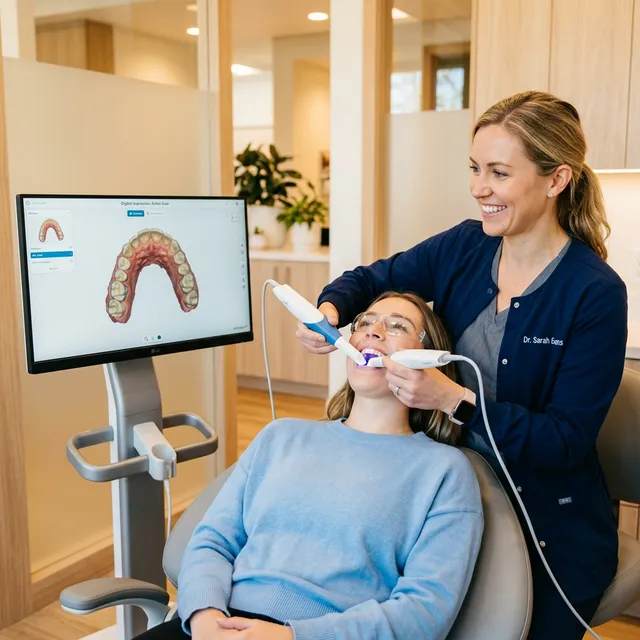
On the technology side, digital X-rays emit up to 80 percent less radiation than traditional film and produce instant results, eliminating the anxious wait for processing. Digital impressions replace the goopy, gagging trays that rank among the most-cited anxiety triggers in patient surveys. Our 3Shape TRIOS 5 scanner captures a full-arch digital impression in minutes.
Hear directly from patients who overcame their dental fears on our testimonials page.
Tips for Managing Dental Anxiety at Home
Preparing before your appointment can significantly reduce anxiety levels. These strategies are supported by cognitive behavioral research and recommended by the American Psychological Association for healthcare-related anxiety:
- Communicate your concerns in advance. Call (508) 481-0110 or email the office before your visit and let us know about your anxiety. We will note it in your chart and prepare accordingly, including scheduling extra time and having your preferred comfort amenities ready.
- Practice deep breathing. Slow, controlled breathing, inhale for four counts, hold for four, exhale for four, activates your parasympathetic nervous system and reduces the fight-or-flight response. A 2020 meta-analysis in Frontiers in Psychology (Vol. 11, Article 560567) confirmed that diaphragmatic breathing exercises performed for five minutes before a medical procedure reduced self-reported anxiety by an average of 36 percent.
- Bring a support person. A trusted friend or family member is welcome to sit with you in the operatory during your appointment. Social support has been shown to lower perceived pain and anxiety during medical procedures (Pain Management Nursing, 2019; 20(4):357-365).
- Avoid caffeine before your visit. Coffee and energy drinks can heighten nervousness and make you more sensitive to stimuli. The half-life of caffeine is five to six hours, so skipping your morning cup on appointment days makes a measurable difference.
- Schedule morning appointments. Many anxious patients find that early appointments reduce the time spent worrying throughout the day. Our first appointment slot is available Monday through Friday.
- Use guided imagery or progressive muscle relaxation. Before leaving home, spend five minutes mentally walking through a calm, successful dental visit. Tense and release each muscle group from your toes to your forehead. Both techniques are standard components of evidence-based dental anxiety programs.
When Anxiety Is Linked to a Past Traumatic Experience
For some patients, dental anxiety is connected to a specific traumatic event, either dental or non-dental. Post-traumatic stress responses can include flashbacks, hypervigilance, or a strong freeze response when reclined in a dental chair. A 2021 survey published in Clinical Oral Investigations (Vol. 25, No. 7) found that 18 percent of patients with severe dental phobia met screening criteria for PTSD.
If this applies to you, we want to know. Dr. Fatima has experience working with trauma-sensitive patients and can adapt the appointment structure accordingly. Modifications may include keeping the chair more upright, providing frequent verbal check-ins, avoiding overhead positioning, and scheduling shorter sessions with built-in recovery breaks.
We also support patients who are working with a therapist on dental phobia. If your psychologist or counselor has specific recommendations for your dental visits, we are happy to coordinate and integrate those strategies into your care plan.
Dental Anxiety in Children: Setting the Right Foundation
Parents across MetroWest frequently ask us how to prevent dental anxiety from developing in their children. The research is clear: early positive dental experiences are the strongest predictor of low dental anxiety in adulthood (European Archives of Paediatric Dentistry, 2018; 19(1):3-11).
Practical steps for families in Marlborough, Northborough, and Sudbury:
- Start dental visits by age one as recommended by the American Academy of Pediatric Dentistry (AAPD). Early visits are short, non-invasive, and build familiarity.
- Use neutral language at home. Avoid words like "shot," "drill," or "hurt" when discussing upcoming dental visits. Our team uses child-friendly vocabulary calibrated by age group.
- Read age-appropriate dental books together before the first visit. Stories that normalize the experience reduce uncertainty.
- Model calm behavior. Children pick up on parental anxiety. If you have your own dental fears, consider scheduling your appointment separately so your child's first impression of the dental office is positive.
For more on our approach to young patients, visit our children's dentistry page.
The Cost of Avoiding the Dentist
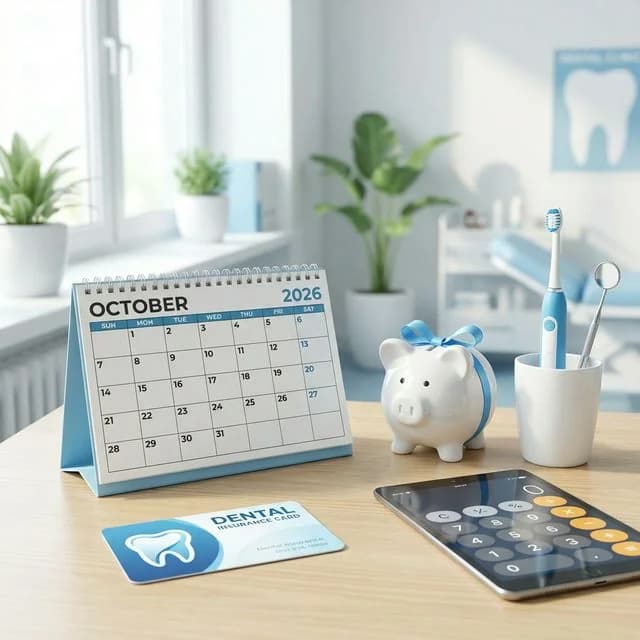
Beyond the clinical consequences, dental avoidance carries a real financial cost. Data from the Health Policy Institute of the American Dental Association (ADA HPI, 2023) shows that emergency dental visits cost three to five times more than the preventive visit that would have caught the problem early. For MetroWest families balancing household budgets, two cleanings a year at little or no out-of-pocket cost through insurance is a far better investment than an emergency root canal ($656–$1,858).
We are in-network with Delta Dental (Premier and PPO), Blue Cross Blue Shield of MA (Dental Blue PPO, Dental Blue 65 and Medicare HMO plans), Cigna and Altus (select plans), Guardian and Humana. Aetna, MetLife, UnitedHealthcare, Ameritas, United Concordia and Principal are out-of-network, but we file your claim and give you a written estimate first. For patients without insurance, our membership plan covers preventive visits and offers discounts on all other procedures with zero waiting periods.
For Our MetroWest Community
From Marlborough to Hudson, Southborough, Westborough, and Framingham, busy professionals and families along the I-495 corridor appreciate efficient, respectful care that fits their schedule without pressure. We understand that taking time out of a packed day for a dental visit is already a commitment, and we honor that by running on schedule, communicating clearly, and making every minute in the chair count.
If you have been putting off dental care because of anxiety, you are not alone, and you do not have to stay stuck in the avoidance cycle. One phone call is the first step. Our team will walk you through the process before you ever sit in the chair.
Helpful links
- Learn about our team and philosophy → About Us
- Explore routine prevention → Dental Exams & Cleanings
- Ready to talk? → Contact Innova Smiles
Prefer to speak to a person? Call (508) 481-0110. We will tailor your first visit so you feel comfortable and heard.
Related Articles
- How to Overcome Dental Anxiety
- New Patient Guide: Your First Visit
- What to Expect at Your First Visit