Featured Answer: What Is Hyperdontia?
Hyperdontia is the condition of having extra teeth beyond the normal count, more than the usual 20 primary (baby) teeth or 32 permanent (adult) teeth. These extra teeth are called supernumerary teeth. They can appear anywhere along the dental arch, may be normally shaped or small and cone-like, and often stay buried in the bone where only an X-ray reveals them. Most cases involve a single extra tooth, though some people have several. Whether an extra tooth needs treatment depends entirely on whether it is causing crowding, blocking other teeth, or creating cleaning problems. At Innova Smiles in Marlborough, MA, Dr. Fatima identifies extra teeth with digital imaging during routine exams and plans the least invasive way to protect your bite.
Types of Extra Teeth
Supernumerary teeth are grouped by where they sit and by what shape they take.
By location
- Mesiodens — the most common type, located in the midline of the upper jaw between the two front teeth. A mesiodens is a frequent reason the upper permanent front teeth fail to come in or develop a gap.
- Paramolar — an extra tooth beside the molars, usually small.
- Distomolar — an extra tooth positioned behind the last molar (sometimes called a "fourth molar").
- Supplemental tooth — a duplicate of a normal tooth, most often an extra lateral incisor.
By shape
- Conical (peg-shaped) — small and pointed; the most common shape for a mesiodens.
- Tuberculate — barrel-shaped, often with more than one cusp; these tend to stay impacted.
- Supplemental — shaped like a normal tooth in that part of the mouth.
What Causes Extra Teeth?
The precise cause of hyperdontia is not fully understood, but the strongest factor is genetics, extra teeth frequently run in families. Beyond simple inheritance, hyperdontia is more common in people with certain conditions, including:
- Cleft lip and palate
- Gardner syndrome
- Cleidocranial dysplasia
In most people, however, an extra tooth is an isolated developmental variation with no broader health meaning. According to the NIH, tooth development is a complex process, and occasional extra tooth buds are one of the ways it can vary.
Problems Extra Teeth Can Cause
Some extra teeth cause no trouble at all. Others create real problems that are easier to manage when caught early:
- Crowding of the normal teeth, throwing off the bite
- Blocked eruption — a buried extra tooth can stop a permanent tooth from coming in (common with a mesiodens and the upper front teeth)
- Displacement — pushing neighboring teeth out of alignment or opening a gap
- Cleaning difficulty, which raises the risk of tooth decay and gum disease
- Cyst formation around an impacted extra tooth in some cases
When an extra tooth causes any of these, treatment usually involves removing it and then realigning the bite.
How Hyperdontia Is Diagnosed
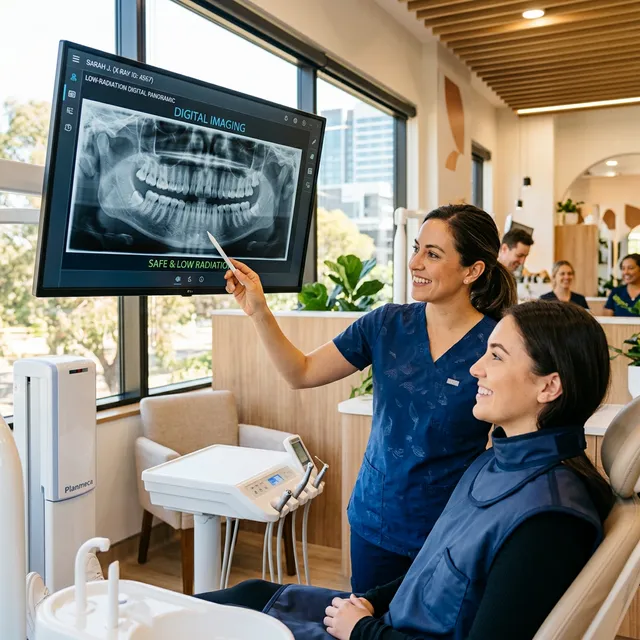
Many extra teeth never erupt into the mouth, so they are most often found on a dental X-ray taken during a routine exam, or on a 3D CBCT scan when more detail is needed for planning. The ADA notes that imaging is how dentists see teeth and structures that are not visible during a clinical exam. This is one reason routine X-rays matter, an impacted extra tooth blocking a child's front teeth is far easier to manage when found early.
Treatment Options for Hyperdontia
Treatment is matched to the specific extra tooth and the problem it is (or is not) causing.
Monitoring
An erupted extra tooth that is well-positioned, easy to clean, and not crowding anything can sometimes simply be watched over time with periodic exams and X-rays.
Extraction
When an extra tooth crowds the arch, blocks another tooth, or risks forming a cyst, removing it is the standard treatment. In children, removing a blocking mesiodens often lets the permanent front teeth erupt on their own.
Orthodontics afterward
Once the extra tooth is out, the remaining teeth may need to be guided into alignment with clear aligners or braces through our orthodontics care, especially if the extra tooth had pushed teeth apart or created a gap. For a missing or severely displaced normal tooth, replacement options such as a dental implant may be discussed.
Hyperdontia in Children
Extra teeth are often first spotted in childhood, when a permanent tooth is slow to come in or the front teeth develop an unexpected gap. Because a buried mesiodens can block the adult front teeth, children's dental visits with periodic imaging are the best way to catch it at the right time. Early, well-timed removal frequently allows the normal teeth to erupt without more complex treatment later.
Frequently Asked Questions
What is an extra tooth in the gum called?
An extra tooth is called a supernumerary tooth, and the condition of having one or more extra teeth is called hyperdontia. Extra teeth can appear anywhere in the dental arch, most commonly just behind the upper front teeth (a mesiodens). They may stay hidden in the gum or erupt alongside your normal teeth, and are usually found on a dental X-ray.
What causes hyperdontia (extra teeth)?
The exact cause is not fully understood, but genetics play the largest role, extra teeth often run in families. Hyperdontia is also more common in people with certain conditions such as cleft lip and palate, Gardner syndrome, and cleidocranial dysplasia. A single extra tooth in an otherwise healthy mouth is usually just a developmental quirk with no broader meaning.
Do extra teeth always need to be removed?
No. An extra tooth that has erupted cleanly, is not crowding other teeth, and is easy to clean can sometimes simply be monitored. Removal is recommended when the extra tooth blocks or displaces other teeth, causes crowding, prevents a normal tooth from erupting, or forms a cyst. Dr. Fatima bases the decision on X-rays and how the extra tooth affects the rest of the bite.
What is a mesiodens?
A mesiodens is the most common type of extra tooth. It sits in the midline of the upper jaw, between or behind the two front teeth. A mesiodens often stays buried in the bone and is found on an X-ray, but it can block the permanent front teeth from coming in or push them apart, which is why it is frequently removed in children.
Can hyperdontia cause problems if it is left alone?
It can. Extra teeth can crowd the arch, prevent normal teeth from erupting, push neighboring teeth out of alignment, make cleaning harder (raising the risk of decay and gum disease), and occasionally form cysts around an impacted extra tooth. This is why even a buried extra tooth is worth evaluating, so any problems are caught early.
How is hyperdontia treated?
Treatment depends on the extra tooth. Options range from monitoring a harmless one, to removing an extra tooth that is causing crowding or blocking other teeth, often followed by orthodontic treatment such as clear aligners or braces to align the remaining teeth. Dr. Fatima plans each case from digital imaging to choose the least invasive path that protects the bite.
Spotted an extra tooth on an X-ray, or a child's front teeth not coming in? Call (508) 481-0110 or request an evaluation. Dr. Fatima will image it, explain what it means, and recommend the least invasive plan.
Related Articles
- Wisdom Teeth Removal: Cost, Recovery & Expectations
- Overbite & Underbite: Causes, Types & How to Fix Them
- Tooth Extraction: What to Expect
- Your Child's First Dental Visit
Related Services
Sources & Further Reading
- Dental X-Rays (diagnostic imaging) — American Dental Association (MouthHealthy)
- Tooth Development and Eruption — National Institute of Dental and Craniofacial Research (NIH)