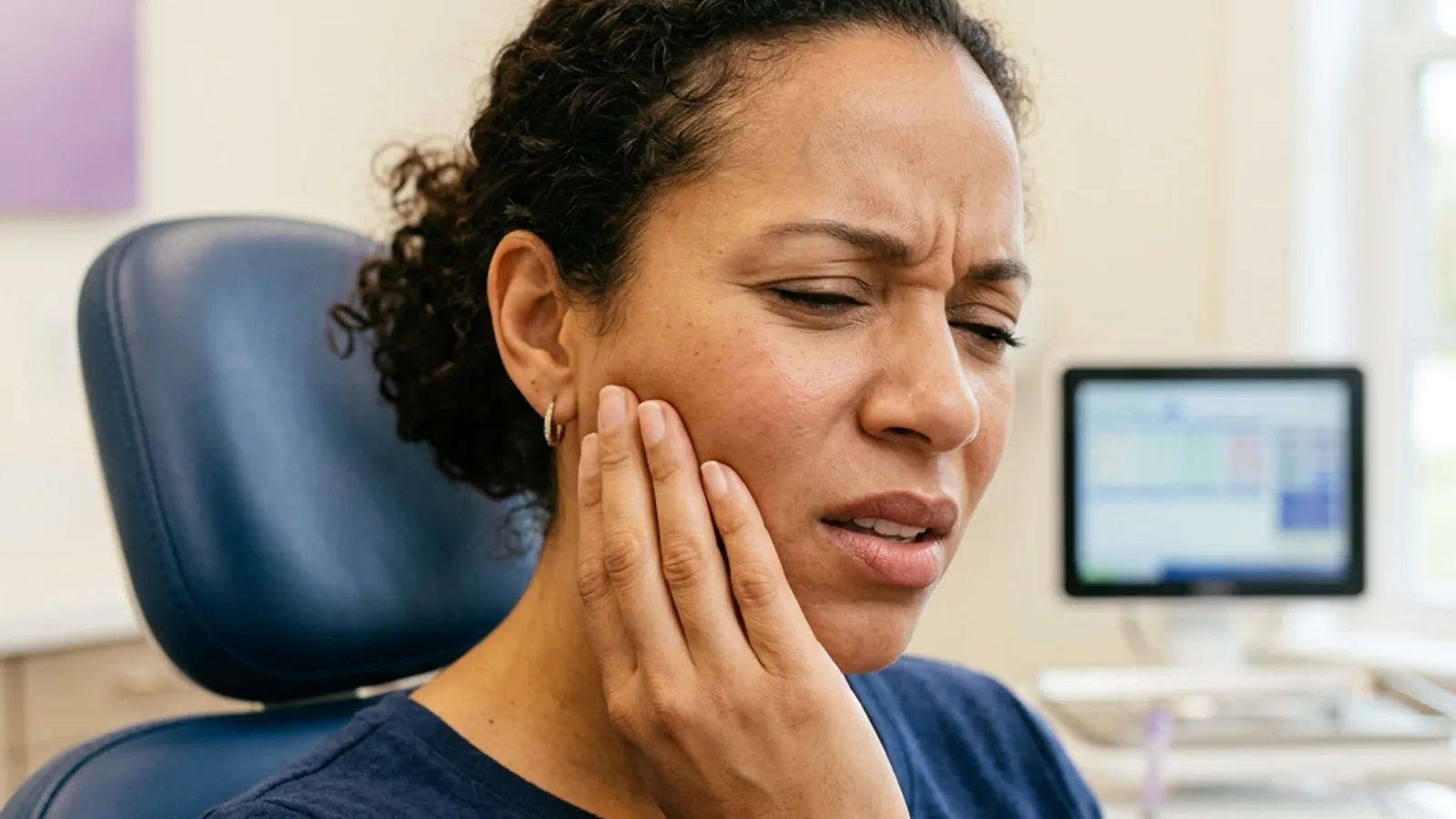

Featured Answer: Do TMJ exercises help jaw pain?
Yes — for muscle-related TMJ, gentle exercises can relax the jaw, improve how far it opens, and ease the tension headaches that often come with it. The key is gentle and consistent: slow, controlled movements a few times a day, never forcing through sharp pain.
A simple starter routine:
- Relaxed jaw position — rest your tongue lightly on the roof of your mouth, let your teeth come apart, and relax the jaw.
- "Goldfish" partial openings — with your tongue up, open the jaw halfway, slowly, a few times.
- Chin tucks — pull your chin straight back ("make a double chin") to improve posture and unload the jaw.
- Gentle resisted opening/closing — place a finger under your chin and open slowly against light resistance, then resist gently while closing.
Jaw pain or headaches that won't quit? Call (508) 481-0110 or book a TMJ evaluation. Persistent symptoms deserve a real diagnosis.
What TMJ Exercises Do (and When They Help)
The temporomandibular joints connect your jaw to your skull, and they're surrounded by muscles that can become overworked — usually from clenching, grinding, stress, or posture. When the problem is muscular, gentle exercises help by:
- Relaxing and lengthening tight jaw muscles
- Improving range of motion and reducing stiffness
- Retraining the jaw to rest in a neutral, unclenched position
- Easing the referred tension headaches that TMJ causes
Exercises are most useful for mild-to-moderate, muscle-driven cases. If your pain comes from inside the joint itself — locking, a fixed limited opening, or painful clicking — you need a professional evaluation, not just exercises.
TMJ Exercises You Can Do at Home
Do each slowly and gently. Stop any movement that sharply increases pain.
- Relaxed jaw rest. Tongue on the roof of the mouth, teeth apart, lips together. Hold and breathe. This is your jaw's healthy resting position — return to it through the day.
- Goldfish (partial opening). Tongue on the palate, one finger on the TMJ (in front of the ear) and one on the chin. Open halfway, slowly, six times. Repeat a few sets.
- Goldfish (full opening). Same setup, open fully and slowly, six times. Only as far as is comfortable.
- Chin tucks. Shoulders back, pull the chin straight back to make a "double chin." Hold three seconds, repeat ten times. Improves the head-and-neck posture that feeds TMJ.
- Resisted opening. Thumb gently under the chin, open the mouth slowly against light resistance, hold a few seconds.
- Resisted closing. Pinch the chin lightly between fingers and close against gentle resistance.
- Side-to-side and forward. With a thin object between the front teeth, move the jaw slowly side to side, then gently forward, to improve mobility.
TMJ Headaches: Why Your Jaw Causes Head Pain
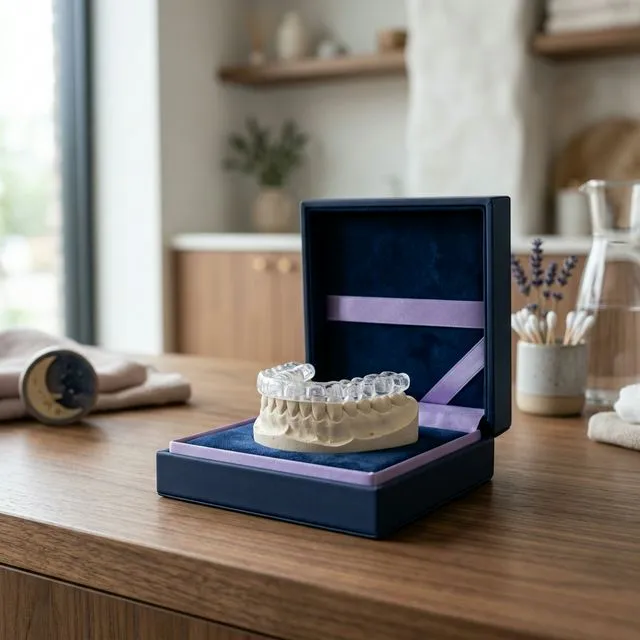
If you wake with a dull headache at the temples or get them after stressful days, your jaw may be the source. Clenching and grinding keep the jaw muscles contracted for hours, and that tension refers pain into the head — classic tension-type headaches. Relaxing the muscles during the day with the exercises above, and protecting the jaw at night with a custom night guard, often breaks the cycle. Stress is a common trigger; our guide on how stress affects oral health covers the connection.
Self-Care Beyond Exercises
Pair the exercises with simple habits:
- Soft diet during flare-ups; cut food into small pieces and skip gum and chewy/hard foods.
- Heat or cold — a warm compress relaxes muscles; ice can calm acute pain.
- "Lips together, teeth apart" — your teeth should only touch when eating. Catch daytime clenching.
- Posture — forward-head posture strains the jaw; the chin-tuck helps.
- Manage stress, which drives clenching and grinding.
When Exercises Aren't Enough: Professional TMJ Care
If a couple of weeks of consistent self-care don't help — or your jaw locks, clicks painfully, or you're grinding at night — it's time for an evaluation. At Innova Smiles we assess the joint, your bite, and signs of bruxism, then match treatment to the cause: a custom night guard, bite analysis, or TMJ therapy including muscle-relaxing injectable therapy for stubborn jaw muscle pain. More on the full range of options in our guide to jaw popping and TMJ treatment.
Frequently Asked Questions
Do TMJ exercises actually work? For many people with mild to moderate, muscle-related TMJ, gentle exercises help by relaxing the jaw muscles, improving mobility, and reducing clenching. They work best alongside other self-care and aren't a substitute for professional care if the problem is in the joint itself.
How long does it take for TMJ exercises to help? Some people feel looser within a few days, but meaningful change usually takes two to four weeks of consistent, gentle practice. If symptoms aren't improving in that window, have the joint and your bite evaluated.
Can TMJ cause headaches? Yes. Tense jaw muscles, often from clenching or grinding, refer pain into the temples and head — classic tension-type headaches. Relaxing the jaw and protecting it at night often reduces them.
What should I avoid if I have TMJ pain? Avoid gum, nail biting, hard or chewy foods, resting your chin on your hand, and wide yawning. Keep teeth slightly apart with lips together, and address nighttime grinding with a night guard.
When should I see a dentist for TMJ? See a dentist if jaw pain or headaches last more than two weeks, your jaw locks or won't open fully, clicking comes with pain, or you wake with sore teeth or jaws.
Get Lasting Relief From Jaw Pain
Exercises are a great first step, but recurring jaw pain and headaches usually have a fixable cause. Call (508) 481-0110 or book a TMJ evaluation and we'll find out what's driving it — and build a plan that actually lasts.
Related Articles
- Jaw Popping & TMJ: Causes and Treatment Options
- Teeth Grinding (Bruxism) & Night Guards
- How Stress Affects Your Oral Health
Related Services
Sources & Further Reading
- Mayo Clinic — TMJ Disorders: Diagnosis & Treatment
- NIDCR — TMJ Disorders
Sources & Further Reading
- TMJ Disorders: Diagnosis & Treatment — Mayo Clinic
- TMJ Disorders — National Institute of Dental and Craniofacial Research (NIDCR)