Featured Answer: What Treatments Are Available for TMJ Disorder?
TMJ treatments range from self-care strategies (ice, soft diet, jaw exercises) to custom occlusal splints (night guards), muscle-relaxing injectables placed in the masseter and temporalis muscles, physical therapy, and, in fewer than 5% of cases, surgical intervention. Most patients with TMJ disorder achieve significant relief through conservative, non-surgical treatment. At Innova Smiles in Marlborough, MA, Dr. Fatima assesses each patient's specific symptoms and jaw function to recommend an individualized treatment plan.
What Is TMJ/TMD?
The temporomandibular joint (TMJ) connects the lower jaw (mandible) to the skull (temporal bone) just in front of each ear. It is one of the most frequently used joints in the body, involved in chewing, speaking, swallowing, and even breathing. When this joint or the muscles that control jaw movement are dysfunctional, the resulting condition is called temporomandibular disorder (TMD), commonly referred to simply as "TMJ."
TMD is not a single diagnosis but a group of related conditions affecting the jaw joint, the surrounding muscles, and the structures of the face and neck. According to the National Institute of Dental and Craniofacial Research (NIDCR), TMD affects between 5% and 12% of the population and is the second most common musculoskeletal pain condition after lower back pain, accounting for approximately 17.8 million workdays lost per year in the United States.
Common Causes of TMJ Disorder
TMD typically has multiple contributing factors:
- Bruxism (teeth grinding and clenching): The most common cause. Nighttime grinding places enormous repetitive stress on the jaw joint and muscles, far exceeding the forces generated by normal chewing. Many patients grind their teeth without knowing it.
- Stress and anxiety: Psychological stress causes many people to unconsciously clench their jaw during the day and grind during sleep.
- Jaw injury or trauma: A direct blow to the jaw, whiplash, or prolonged mouth opening (such as during a lengthy dental procedure) can trigger TMD.
- Bite problems (malocclusion): When the upper and lower teeth do not fit together properly, the jaw joints and muscles must compensate, leading to strain.
- Arthritis: Osteoarthritis or rheumatoid arthritis can affect the TMJ like any other joint in the body.
- Disc displacement: The TMJ contains a small cartilage disc that cushions movement. If this disc slips out of position, it can cause clicking, locking, and pain.
- Hypermobility: Some individuals have naturally lax joint ligaments, making the TMJ prone to instability.
Recognizing TMJ Symptoms
TMD produces a wide range of symptoms that patients often don't immediately associate with their jaw:
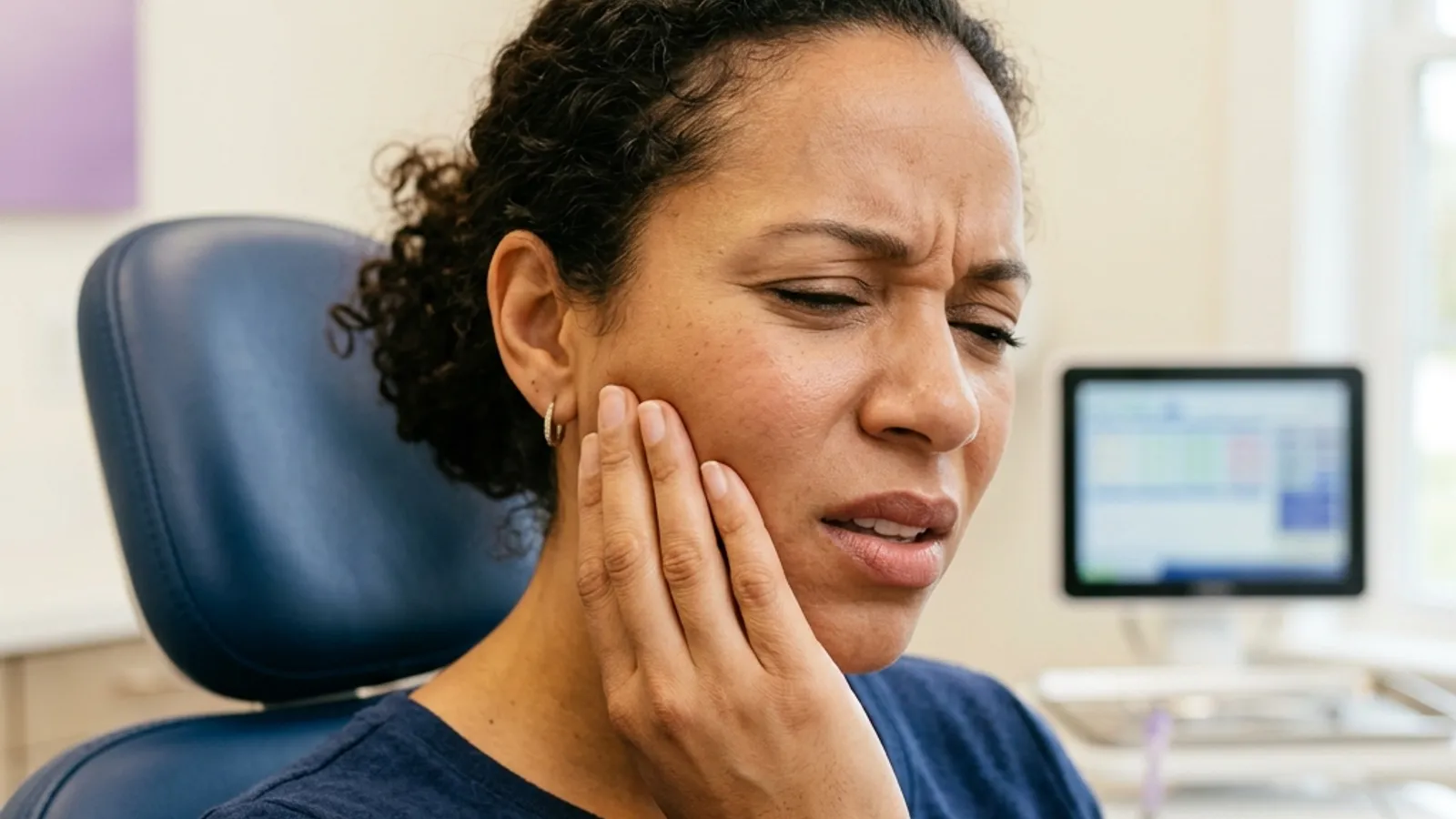
- Jaw pain or soreness: Most commonly in the morning (from overnight grinding) or after meals (from muscle fatigue)
- Clicking, popping, or grinding sounds when opening or closing the mouth
- Limited jaw opening: Difficulty opening wide, or the jaw deviating to one side when opening
- Locking: The jaw getting "stuck" open or closed
- Facial pain spreading into the cheeks, temples, or behind the eyes
- Headaches: Particularly tension-type headaches that concentrate in the temples or at the base of the skull
- Ear symptoms: Earache, tinnitus (ringing in the ears), or a sensation of fullness in the ear (without infection)
- Neck and shoulder pain: The muscles of the jaw, neck, and upper back are interconnected, and TMD tension frequently radiates downward
- Worn, chipped, or flattened teeth: A visible sign that bruxism is contributing to the condition
Treatment Option 1: Self-Care Strategies
For many patients with mild to moderate TMD, self-care measures provide meaningful relief and are always the appropriate starting point before advancing to clinical interventions.
Heat and ice therapy: Apply a warm compress or heating pad to the jaw for 10 to 20 minutes to relax muscle tension. For acute flare-ups with swelling or inflammation, use an ice pack wrapped in a cloth for 10 minutes at a time.
Soft diet: During flare-ups, reduce the load on the jaw by eating soft foods (yogurt, scrambled eggs, soup, mashed vegetables) and avoiding hard, chewy, or crunchy foods. Cut food into small pieces rather than biting into large portions.
Jaw exercises: Gentle, controlled jaw exercises, performed under the guidance of a dentist or physical therapist, can help restore normal range of motion, reduce muscle guarding, and improve joint mechanics. Examples include controlled opening exercises, lateral jaw movements, and chin tucks.
Posture correction: Forward head posture (common in people who spend long hours at a desk or looking at screens) places strain on the jaw and neck muscles. Correcting sitting posture can reduce TMJ symptoms.
Stress management: Because stress is a primary driver of jaw clenching and grinding, techniques including mindfulness, biofeedback, progressive muscle relaxation, and regular exercise can reduce the frequency and severity of TMD episodes.
Avoid aggravating habits: Chewing gum, biting nails, resting the chin on a hand, and clenching the jaw during concentration are common habits that worsen TMD symptoms and should be eliminated.
Treatment Option 2: Night Guards and Occlusal Splints
Custom-fitted occlusal splints, commonly called night guards, are the most widely used clinical treatment for TMD and bruxism. They are the appropriate next step when self-care alone provides insufficient relief.
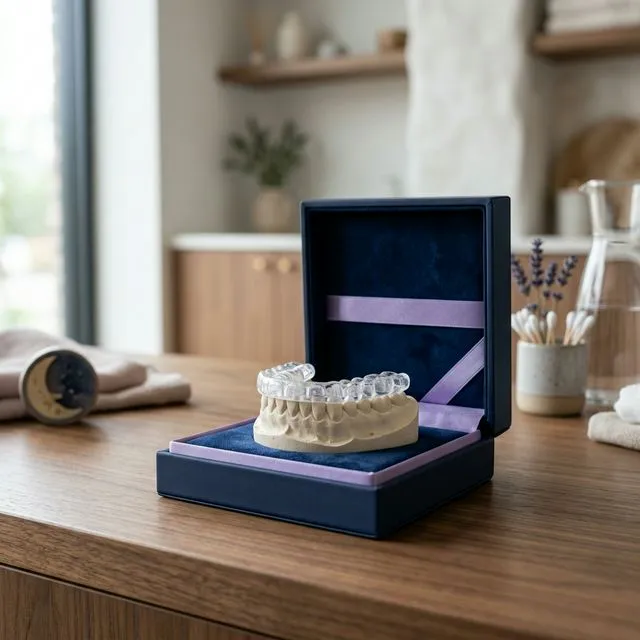
An occlusal splint is a precisely fitted acrylic device worn over the upper or lower teeth during sleep (and sometimes during the day as well). It works by:
- Cushioning the teeth to prevent grinding-related damage (chipping, cracking, enamel wear)
- Repositioning the jaw into a more relaxed, neutral position that reduces muscle tension
- Preventing maximum clenching force, the slight separation of the teeth by the splint disrupts the full engagement of the masseter muscle
- Allowing muscles to rest by eliminating the unconscious tooth contact that perpetuates the clenching cycle
A dentist-fabricated custom night guard is significantly more effective than over-the-counter options. Store-bought boil-and-bite guards are made from soft material that actually encourages some patients to clench more (not less), and they are not precisely fitted to your bite, which can cause soreness and additional jaw strain. Custom guards are made from firm acrylic fitted to a precise model of your teeth.
Cost range: A custom night guard at Innova Smiles runs $472–$943, compared to $20 to $50 for an over-the-counter alternative that is not fitted to your bite. Most dental insurance plans provide partial coverage, and we verify your benefits before fabricating a night guard.
Treatment Option 3: Therapeutic Muscle Relaxation for TMJ
A muscle-relaxing injectable placed in the masseter and temporalis muscles has become an increasingly popular and effective treatment for TMD. A systematic review in the Journal of Oral Rehabilitation found that these injections significantly reduce TMJ pain and improve maximum mouth opening, particularly for patients whose primary symptom is jaw muscle tension, headaches, and pain driven by bruxism.
How it works: The injectable blocks the nerve signals that trigger muscle contraction in the masseter, the powerful muscle at the side of the jaw responsible for biting force. By partially relaxing this muscle, the injection significantly reduces the intensity of unconscious clenching without affecting normal chewing function. The temporalis muscle (at the temples) can be treated as well when tension headaches are prominent.
Timeline: Most patients notice measurable reduction in jaw tension and morning headaches within 7 to 14 days of treatment. Full effect is typically achieved at 2 to 3 weeks.
Duration: A single session lasts approximately 3 to 6 months. With repeated treatments, many patients find they require less frequent injections over time as the muscle adapts to reduced workload.
Aesthetic benefit: For patients with a visually prominent masseter (a square jawline caused by muscle hypertrophy from chronic clenching), the treatment also gradually slims the lower face, a desirable cosmetic outcome for many patients.
Who is a good candidate: Therapeutic muscle relaxation is most appropriate for patients with muscle-driven pain and tension headaches. It complements rather than replaces a night guard, the splint protects the teeth while the injectable addresses the muscular source of the problem.
Cost range: This therapy runs $125–$1,500 per treatment plan — the top is our standard fee, the low end what a plan-covered patient typically pays. Some insurance plans cover it for TMJ when there is documented medical necessity; we can assist with prior authorization documentation.
Treatment Option 4: Physical Therapy
Physical therapy, performed by a therapist with specific training in craniofacial and temporomandibular conditions, addresses the muscular and postural components of TMD that night guards and injectables do not directly treat.
Techniques used in TMJ physical therapy include:
- Manual therapy to mobilize the jaw joint and reduce muscle guarding
- Myofascial release techniques for the masseter, temporalis, and pterygoid muscles
- Posture correction exercises targeting the cervical spine and upper back
- Ultrasound or TENS therapy for pain management
- Education on behavioral modifications and jaw habits
Physical therapy is particularly effective when TMD is associated with neck pain, forward head posture, or limited range of motion. It is frequently used in combination with a night guard and may reduce or eliminate the need for injections.
Treatment Option 5: When Is Surgery Needed?
According to the National Institute of Dental and Craniofacial Research (NIDCR), the overwhelming majority of TMD cases, approximately 90 to 95 percent, resolve with conservative treatment. Surgery is reserved for a small subset of patients with structural pathology of the joint that does not respond to non-surgical management.
Surgical options include:
- Arthrocentesis: A minimally invasive outpatient procedure in which the joint is flushed with sterile fluid to remove inflammatory byproducts and improve lubrication
- Arthroscopy: A small camera is inserted into the joint to diagnose and sometimes treat disc problems
- Open joint surgery: Indicated for severe disc displacement, bony ankylosis (joint fusion), or degenerative joint disease that has not responded to other treatments
Surgery carries the risks common to any surgical procedure and is not appropriate for most TMD patients. It should be considered only after thorough conservative treatment has been attempted and a definitive structural indication has been confirmed on imaging (MRI or CT scan).
Frequently Asked Questions About TMJ Treatment
Q: Why does my jaw pop or click when I open my mouth? Jaw popping or clicking usually means the small cushioning disc inside the jaw joint has slipped slightly out of position, so the joint catches and releases as you open and close. Occasional popping with no pain and no locking is common and often needs no treatment. But popping that comes with pain, locking, limited opening, or headaches is a sign of a TMJ disorder worth evaluating, because it tends to worsen if the cause, often clenching or a bite problem, is not addressed.
Q: What exercises help TMJ and jaw pain? Gentle jaw exercises ease TMJ symptoms for many people. Common ones include slow relaxed opening and closing in front of a mirror, resting the tongue on the roof of the mouth while opening (the goldfish exercise), gentle side-to-side and forward jaw movements, and chin tucks that relax the neck and jaw muscles. Do them slowly a few times a day and stop if they increase pain. Exercises work best alongside treating the cause, such as a night guard for clenching, and Dr. Fatima can show you which movements fit your case.
Q: How do I know if my headaches are caused by TMJ disorder? TMJ-related headaches are typically bilateral (both sides), concentrated in the temples or behind the eyes, and worst upon waking, because nocturnal clenching peaks during the latter half of the sleep cycle. They tend to improve as the day progresses and the jaw muscles warm up. Migraines, by contrast, are often unilateral with accompanying nausea or visual aura. Tension headaches overlap significantly with TMJ headaches, which is why many TMD patients are initially misdiagnosed. A 2018 study in the Journal of Headache and Pain found that 56% of patients referred to headache clinics for chronic tension-type headaches also met diagnostic criteria for TMD, suggesting that the jaw was a primary or contributing factor.
Q: Will TMJ disorder go away on its own? Mild TMD episodes triggered by temporary stress or a single incident (such as chewing ice or biting something very hard) often resolve within two to four weeks with self-care alone. However, chronic TMD driven by ongoing bruxism, bite problems, or disc displacement typically does not self-resolve and tends to worsen without intervention. If your symptoms have persisted for more than four weeks, an evaluation is warranted.
Q: Can orthodontic treatment fix TMJ problems? In some cases, yes. When TMD is caused primarily by malocclusion, for example, a crossbite or severe deep bite that forces the jaw into an unnatural position, correcting the bite with clear aligners or braces can eliminate the underlying mechanical cause. However, orthodontic treatment takes months to years, so Dr. Fatima typically manages acute TMJ symptoms with a night guard and/or masseter injections first, then addresses the bite as a longer-term corrective strategy.
Q: Is TMJ therapy covered by dental or medical insurance? Coverage varies. Some medical insurance plans cover the injections for TMJ when documented as a treatment for chronic myofascial pain, particularly when conservative treatments (splint therapy, physical therapy) have been tried first and documented in your clinical record. Dental insurance rarely covers the muscle-relaxing injectable. At Innova Smiles, we provide the clinical documentation necessary for you to submit a medical insurance claim, and our team can assist with prior authorization paperwork. Out-of-pocket, TMJ therapy at our Marlborough office runs $125–$1,500 per treatment plan — the top is our standard fee, the low end what a plan-covered patient typically pays.
Q: Can children develop TMJ disorder? Yes, though it is less common than in adults. Children who grind their teeth, have significant bite discrepancies, or have experienced facial trauma can develop TMD symptoms. The American Academy of Pediatric Dentistry (AAPD) recommends conservative management in children, self-care strategies, behavioral modification, and soft splints if needed. A muscle-relaxing injectable is not appropriate for pediatric TMJ patients. Dr. Fatima evaluates jaw function in children during routine exams and refers to a pediatric TMJ specialist when advanced intervention is needed.
Getting a Diagnosis at Innova Smiles
If you are experiencing jaw pain, clicking, morning headaches, or any of the symptoms described in this article, an evaluation at Innova Smiles is the appropriate first step. Dr. Fatima assesses TMD through a comprehensive examination that includes:
- Review of your symptoms, history, and triggers
- Palpation of the jaw muscles and joint for tenderness and asymmetry
- Assessment of jaw opening range and movement patterns
- Evaluation of teeth for wear patterns consistent with bruxism
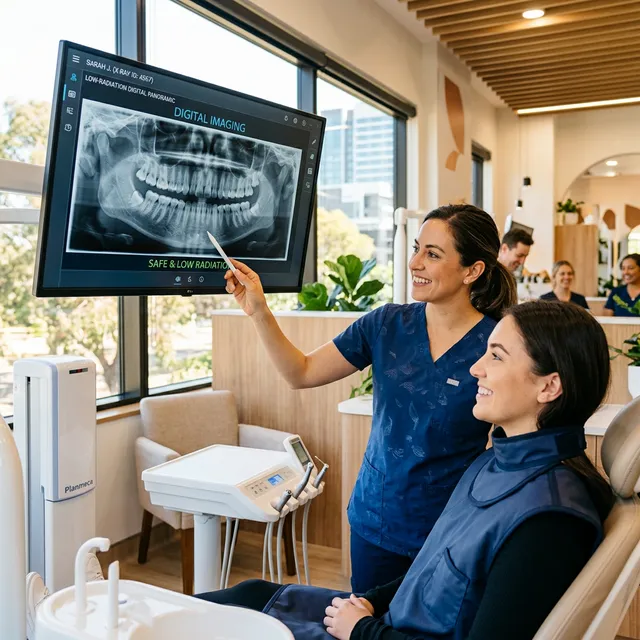
- Review of dental X-rays for signs of bone changes in the joint
Based on this assessment, she will recommend a treatment plan tailored to your specific presentation, whether that is a custom night guard, targeted TMJ-relief therapy, physical therapy referral, or a combination approach.
Innova Smiles is located at 340 Maple St, Suite 100, Marlborough, MA 01752, serving patients from Hudson, Framingham, Northborough, Southborough, Shrewsbury, Westborough, and Sudbury. Call (508) 481-0110 or book a TMJ evaluation online.
Jaw pain keeping you up at night? Call (508) 481-0110 or book a TMJ consultation.
Related Articles
- Dental Injectables for TMJ and Jaw Pain
- TMJ Injectable Therapy for Jaw Pain
- Teeth Grinding and Night Guards Guide
- Jaw Pain and Night Guards: TMJ Relief Guide
- Why Your Dentist Is Best for Facial Aesthetics
Related Services
How our pricing works
TMJ therapy & facial aestheticsOur fee range$125–$1,500
- The fee covers the procedure as planned at your exam. Anything your case adds is written into your estimate before treatment, never after.
- Some medical and dental plans cover therapeutic TMJ treatment when there is documented medical necessity; when yours does, you pay the plan's negotiated fee, which is what the low end of this range reflects. Without coverage, our membership plan takes a flat 20% off.
- 0% APR financing is available through CareCredit or Cherry, with nothing down.*
- No insurance? Our in-house membership plan (from $395/yr) includes your preventive care and takes a flat 20% off our standard fee for this treatment.
- The top of the range is our standard fee; the low end is what a patient whose plan covers the treatment typically pays before their share is applied.
- Your exact fee is confirmed in writing at your visit, after your exam and after we have checked your insurance — never a surprise afterward.
- Patients aged 65 and older get 10% off all dental treatments. Mention it when booking and we'll apply it automatically.
*0% APR financing is provided by third-party lenders (e.g. CareCredit, Cherry), not by Innova Smiles, and is subject to credit approval; not all applicants qualify. Your cost, term, and monthly payment depend on your treatment plan and approved offer, and are confirmed in writing at your consultation.