Featured Answer: How do I know if I grind my teeth at night?
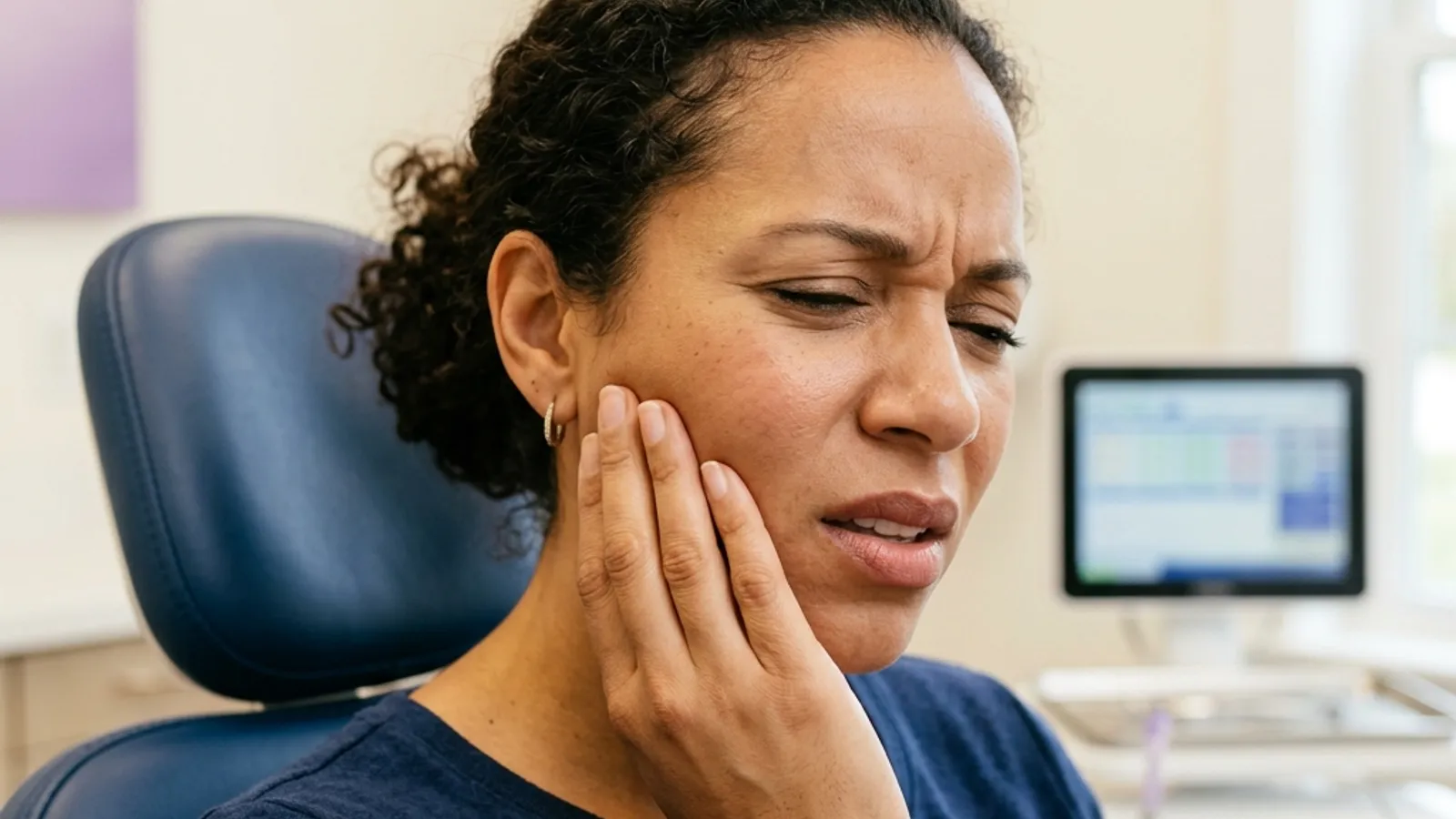
Most people who grind their teeth during sleep, a condition called sleep bruxism, are unaware they are doing it. Common signs include waking with jaw soreness or stiffness, morning headaches (especially in the temples), tooth sensitivity that has no other explanation, flat or worn tooth surfaces, and a partner who hears grinding sounds during the night. Your dentist can confirm bruxism by examining wear patterns on your enamel that are distinctive to grinding forces.
At Innova Smiles in Marlborough, Dr. Ambereen Fatima screens every patient for signs of bruxism during routine examinations, because the damage often accumulates silently for years before patients notice symptoms.
How to Tell If You Grind: Physical Signs Your Dentist Looks For
Beyond the symptoms you notice at home, bruxism leaves specific clinical signatures that Dr. Fatima screens for during every exam:
- Scalloped tongue edges: Indentations along the sides of the tongue caused by pressing it against the teeth during clenching episodes.
- Linea alba: A white horizontal line on the inside of the cheek at the biting plane, a friction mark from chronic clenching.
- Masseter hypertrophy: Enlargement of the jaw muscles from sustained overuse, sometimes visible as a squaring of the jawline.
- Wear facets: Flat, polished patches on the biting surfaces of teeth that do not match normal chewing wear.
- Abfraction lesions: V-shaped notches at the gumline caused by flexural stress on enamel during grinding.
These signs can be present years before you experience pain, which is why routine dental exams are the earliest detection system for bruxism.
Understanding Bruxism: More Common Than You Think
Bruxism, the involuntary clenching or grinding of teeth, is one of the most prevalent and underdiagnosed conditions in dentistry. According to a 2023 systematic review published in the Journal of Oral Rehabilitation, sleep bruxism affects approximately 13% of adults when defined by polysomnographic (sleep study) criteria, but prevalence rises to 22–31% when self-reported symptoms and clinical signs are included. Awake bruxism, clenching during the day, often in response to stress, concentration, or anxiety, may affect an additional 20% of the population.
The American Academy of Sleep Medicine classifies sleep bruxism as a sleep-related movement disorder. It shares risk factors with other sleep conditions including obstructive sleep apnea, restless leg syndrome, and insomnia. Understanding that bruxism is a medical condition, not a bad habit, is the first step toward effective treatment.
Why People Grind: The Main Contributors
Bruxism is multifactorial, meaning it rarely has a single cause. Research has identified several intersecting risk factors:
Stress and Anxiety
The most frequently cited trigger for both awake and sleep bruxism is psychological stress. A 2021 study in Clinical Oral Investigations found that individuals reporting high perceived stress were 3.6 times more likely to exhibit clinical signs of bruxism. The hypothalamic-pituitary-adrenal (HPA) axis, the body's central stress response system, appears to drive increased muscle tension in the jaw during periods of chronic stress.
The MetroWest corridor is home to professionals in demanding fields, technology, healthcare, finance, where high-stress lifestyles are common. Dr. Fatima frequently sees patients from Framingham, Sudbury, and Westborough whose bruxism correlates directly with work-related stress, and addressing the stress component is an important part of the overall treatment plan.
Sleep Disorders
Sleep bruxism is closely associated with disrupted sleep architecture. Patients with obstructive sleep apnea (OSA) are significantly more likely to grind their teeth, possibly because micro-arousals during apneic events trigger jaw muscle activity. A 2022 study in Sleep Medicine Reviews reported that up to 50% of OSA patients exhibit concurrent bruxism. If you grind your teeth and also snore, feel excessively tired during the day, or wake gasping, a sleep apnea evaluation should be part of your workup.
Medications and Substances
Certain medications are known to cause or worsen bruxism. Selective serotonin reuptake inhibitors (SSRIs), commonly prescribed for depression and anxiety, have been associated with bruxism in multiple case series. Stimulant medications (used for ADHD), excessive caffeine intake, alcohol consumption, and recreational drug use (particularly MDMA and cocaine) are also established risk factors.
Malocclusion and Bite Discrepancies
While older theories emphasized the role of bite alignment in bruxism, current research suggests that malocclusion is a contributing factor rather than a primary cause. However, bite discrepancies can direct grinding forces to specific teeth, accelerating localized damage. Orthodontic treatment with clear aligners may reduce this component in some patients.
Genetics
Bruxism runs in families. Twin studies suggest a hereditary component, and first-degree relatives of bruxers are significantly more likely to grind their teeth. While you cannot change your genetics, knowing your family history helps your dentist monitor for early signs.
The Damage Timeline: What Bruxism Does to Your Teeth
The forces generated during bruxism are extraordinary. During normal chewing, the jaw produces forces of approximately 20–40 pounds per square inch (psi). During bruxism, forces can exceed 250 psi, six times the functional chewing force. These forces are delivered repetitively for hours during sleep, night after night.
Early Stage (Months to 1–2 Years)
- Enamel wear: Flat, shiny spots appear on biting surfaces. Cusp tips become rounded or blunted.
- Tooth sensitivity: As enamel thins, the underlying dentin becomes exposed, causing sensitivity to hot, cold, and sweet stimuli.
- Morning jaw soreness: The masseter muscles (the primary chewing muscles) become fatigued from sustained overnight activity.
- Tension headaches: Chronic temporal headaches upon waking are a hallmark of sleep bruxism. A 2020 meta-analysis in Cephalalgia found that bruxers are 3 times more likely to experience chronic headaches.
Moderate Stage (2–5 Years)
- Enamel loss of 1–2 mm: Teeth become visibly shorter. Fillings may fracture or fall out under repeated stress.
- Microcracks and craze lines: Vertical cracks appear in enamel, weakening the tooth structure and increasing fracture risk.
- TMJ symptoms: The temporomandibular joint may develop clicking, popping, or limited range of motion due to the chronic overloading of joint structures.
- Gum recession: Excessive lateral forces can cause teeth to flex at the gumline (abfraction), contributing to V-shaped notches near the gums and recession.
Advanced Stage (5+ Years Untreated)
- Tooth fractures: Teeth may crack vertically (requiring extraction), split, or fracture below the gumline.
- Need for crowns, root canals, or implants: Severely worn or fractured teeth often require restorative dentistry, crowns to rebuild structure, root canals when fractures reach the nerve, or implant-supported replacements to replace teeth lost to grinding damage.
- TMJ degeneration: Chronic overloading may lead to osteoarthritic changes in the temporomandibular joint, with chronic pain and functional limitations.
- Loss of vertical dimension: Severe wear shortens the teeth and collapses the bite, making the face appear prematurely aged and requiring complex full mouth restoration to rebuild proper occlusion.
Custom Night Guards vs. Over-the-Counter Guards
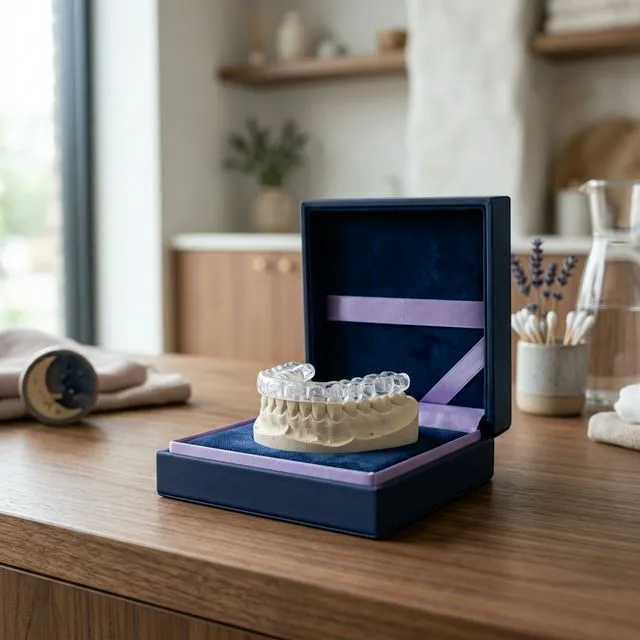
A night guard (occlusal splint) is the primary protective intervention for sleep bruxism. It creates a physical barrier between the upper and lower teeth, distributing grinding forces across a smooth surface and preventing direct tooth-to-tooth contact. However, not all night guards are created equal.
Custom-Fabricated Night Guards
Custom night guards are made from a precise digital or physical impression of your teeth and fabricated in a dental laboratory. At Innova Smiles, Dr. Fatima uses digital scanning with no messy impression material, a process that takes about two minutes and captures sub-millimeter accuracy.
Advantages of custom guards:
- Precise fit: The guard seats perfectly on your teeth, so it stays in place throughout the night without needing to clench to hold it.
- Correct bite relationship: Dr. Fatima fine-tunes the occlusal surface so contact is even across all teeth — no new pressure points get created in the process of fixing the old ones.
- Appropriate material: Custom guards are available in soft, hard, or dual-laminate materials matched to the severity of your grinding.
- Durability: A well-made custom guard lasts 2–5 years with proper care.
- Comfort: Because the fit is precise, patients adapt quickly and are far more likely to wear the guard consistently.
Cost: $300–$800, often 50–80% covered by dental insurance under the diagnostic/preventive benefit.
Over-the-Counter (OTC) Night Guards
OTC guards fall into two categories: boil-and-bite and one-size-fits-all.
Disadvantages of OTC guards:
- Poor fit: Boil-and-bite guards deform during the molding process, creating an imprecise fit that may shift during sleep.
- No bite adjustment: OTC guards do not account for your individual bite relationship, which can create uneven forces and potentially worsen TMJ symptoms.
- Excessive bulk: Many OTC guards are unnecessarily thick, making them uncomfortable and increasing the likelihood that you will stop wearing them.
- Short lifespan: Most OTC guards wear through in 1–3 months under heavy grinding.
- Potential harm: A poorly fitting guard can actually increase clenching activity as the jaw muscles work to stabilize the ill-fitting appliance. The American Dental Association recommends custom-fabricated guards over OTC alternatives for this reason.
Cost: $15–$50, no insurance coverage.
The apparent savings of an OTC guard evaporate when you factor in the need for frequent replacement, the risk of worsening symptoms, and the ongoing damage to teeth that a poorly fitting guard fails to prevent.
Types of Custom Night Guards
Not all night guards are the same. Dr. Fatima selects the appropriate type based on the severity of your grinding, the condition of your teeth, and your comfort preferences:
- Hard acrylic (full-coverage): The most durable option for severe grinders. Made from rigid acrylic that resists wear from heavy forces. Typically lasts 3–5 years.
- Dual-laminate: A soft inner layer for comfort with a hard outer shell for durability. Ideal for moderate grinders who find hard acrylic uncomfortable.
- Soft night guard: Made entirely from flexible material. Best suited for mild clenchers or patients who are new to wearing a guard. Less durable (6–12 months for moderate grinders).
- NTI-tss (anterior deprogrammer): An FDA-cleared device that covers only the front teeth, preventing the back teeth from making contact. Clinical studies have shown a 70% reduction in masseter muscle activity. Dr. Fatima may recommend this for patients with severe TMJ-related headaches.
Caring for Your Night Guard
A well-maintained night guard lasts years. These habits protect your investment:
- Rinse immediately after removing: Use cool water, hot water can warp thermoplastic materials.
- Clean daily: Brush gently with a soft toothbrush and mild soap or non-abrasive denture cleanser. Toothpaste is too abrasive and can scratch the surface.
- Deep clean weekly: Soak in a denture tablet solution for 15–20 minutes to eliminate bacteria buildup.
- Store properly: Always keep your guard in its ventilated case when not in use. Never wrap it in a napkin (the most common way guards get thrown away).
- Bring it to appointments: Dr. Fatima inspects your guard at every cleaning visit for signs of wear, cracks, or bite changes.
- Avoid heat: Never leave your guard in a hot car, near a radiator, or in the dishwasher. Heat distortion ruins the fit permanently.
Muscle-Relaxing Injectable Therapy for Bruxism and TMJ: An Emerging Treatment
Muscle-relaxing injectable therapy directed into the masseter and temporalis muscles has emerged as a useful option for selected patients with severe bruxism and TMJ-related muscle pain. By partially relaxing the muscles responsible for clenching and grinding, the therapy may reduce the force they generate and help ease jaw pain, headaches, and the strain placed on teeth.
A 2023 systematic review in the Journal of Oral and Maxillofacial Surgery found that masseter injections reduced bruxism-related pain scores and muscle activity compared to placebo in studied patients, with effects commonly lasting 3–4 months per treatment cycle.
At Innova Smiles, Dr. Fatima is trained and experienced in therapeutic dental muscle-relaxer therapy for TMJ and bruxism. This is not a cosmetic treatment, it is a targeted therapeutic option for patients whose quality of life is significantly impacted by jaw muscle hyperactivity. The procedure takes approximately 10–15 minutes, involves brief injections, and many patients notice improvement within 7–14 days.
This therapy is particularly valuable for patients who:
- Have worn through multiple night guards
- Experience severe morning jaw pain despite wearing a guard
- Have TMJ symptoms that limit jaw opening or cause chronic headaches
- Cannot tolerate wearing a night guard due to a strong gag reflex
When to Seek Treatment
Many patients dismiss the early signs of bruxism, morning jaw tightness, occasional headaches, a partner mentioning grinding sounds, as minor inconveniences. The critical insight is that bruxism causes cumulative, irreversible damage. Enamel does not regenerate. Once a tooth cracks, it cannot heal. The cost of preventing damage with a $500 night guard is a fraction of the cost of repairing it with $3,000–$5,000 in crowns, root canals, or implants.
You should schedule an evaluation if you experience any of the following:
- Waking with jaw soreness, stiffness, or pain
- Morning headaches, especially in the temples
- Tooth sensitivity that your dentist cannot attribute to decay
- Worn, flat, or chipped tooth surfaces
- A partner who hears you grinding at night
- Clicking, popping, or locking of the jaw joint
- Difficulty fully opening your mouth
- Facial pain or ear pain without an ear infection
Patients from Hopkinton, Northborough, Hudson, and throughout the MetroWest area trust Dr. Fatima to identify bruxism early, protect teeth from further damage, and develop a personalized management plan that addresses the drivers of clenching, not just the symptoms.
Complementary Strategies for Managing Bruxism
A night guard protects your teeth, but comprehensive bruxism management may also include:
- Stress management: Meditation, exercise, cognitive behavioral therapy, and sleep hygiene improvements can reduce the neurological drive to grind.
- Sleep evaluation: If sleep apnea is suspected, a referral for a sleep study can identify a treatable underlying condition.
- Physical therapy: Jaw stretching exercises and myofascial release techniques can reduce masseter tension and improve TMJ mobility.
- Medication review: If an SSRI or stimulant is contributing to bruxism, your prescribing physician may be able to adjust the dose or switch medications.
- Warm compresses: Applying a warm, moist compress to the jaw muscles for 10–15 minutes before bed can reduce nighttime clenching.
- Caffeine and alcohol reduction: Both substances increase the frequency and intensity of sleep bruxism episodes.
The Innova Smiles Approach to Bruxism
At our Marlborough practice, bruxism treatment follows a structured protocol:
- Comprehensive exam: Dr. Fatima evaluates wear patterns, measures jaw opening and lateral movement, palpates the TMJ and masticatory muscles, and reviews your symptoms and medical history.
- Digital scanning: If a night guard is indicated, a precise digital scan replaces traditional putty impressions for maximum comfort and accuracy.
- Custom guard fabrication: Your guard is laboratory-fabricated from the digital scan, typically ready within 1–2 weeks.
- Fit and adjustment: You return for a fitting appointment where Dr. Fatima fine-tunes the occlusal contacts so force is distributed evenly across the bite.
- Follow-up monitoring: At each subsequent cleaning and exam, we evaluate the guard for wear and assess your teeth for any new damage.
- Advanced intervention: For severe cases, targeted TMJ-relief therapy and/or a referral for sleep evaluation are discussed and initiated as appropriate.
Do not wait for a cracked tooth to take bruxism seriously. Call (508) 481-0110 or book your evaluation today.
Related Articles
- Dental Injectables for TMJ and Jaw Pain
- TMJ Treatment Options
- TMJ Exercises for Jaw Pain & Headache Relief
Related Services
- Night Guards & Bruxism Treatment -- custom-fabricated guards to protect your teeth during sleep
- TMJ/TMD Treatment -- comprehensive temporomandibular joint care
- TMJ & Facial Aesthetics Treatment -- targeted muscle therapy for jaw tension and clenching-related pain
- Restorative Dentistry -- crowns, onlays, and repairs for grinding-damaged teeth