
Featured Answer: Can Stress Cause Dental Problems?
Yes, and the connection is far more direct than most people realize. Chronic stress raises cortisol levels, suppresses your immune system, and triggers unconscious habits like teeth grinding and jaw clenching that can crack enamel, erode tooth structure, and accelerate gum disease. A 2020 study published in the Journal of Clinical Periodontology found that individuals reporting high psychological stress had a 2.2 times greater risk of periodontitis progression compared to those with lower stress levels. At Innova Smiles in Marlborough, Dr. Fatima screens for stress-related oral damage at every examination, because the signs often appear in your mouth before you feel them anywhere else.
The Cortisol–Oral Health Connection
To understand how stress damages your teeth and gums, you need to understand cortisol, the body's primary stress hormone. When you experience acute stress (a near-miss in traffic, a tight work deadline), your adrenal glands release cortisol as part of the fight-or-flight response. This is normal and temporary.
The problem begins when stress becomes chronic. Prolonged financial pressure, family conflict, demanding work schedules, health concerns, these keep cortisol elevated for weeks, months, or years. And elevated cortisol has specific, measurable effects on oral health:
Suppressed immune response. Cortisol inhibits the production and function of neutrophils and T-lymphocytes, the white blood cells responsible for fighting bacterial infections in gum tissue. A 2019 review in Psychoneuroendocrinology demonstrated that chronically elevated cortisol impairs the body's ability to clear periodontal pathogens, allowing bacteria like Porphyromonas gingivalis and Aggregatibacter actinomycetemcomitans to proliferate in gum pockets.
Increased systemic inflammation. Paradoxically, while cortisol suppresses targeted immune responses, chronic elevation promotes systemic low-grade inflammation. This creates an environment where gum tissue is simultaneously less able to fight infection and more prone to inflammatory destruction, a damaging combination.
Behavioral changes. Stress alters behavior in ways that compound the biological effects. Stressed individuals are more likely to skip brushing and flossing, eat sugar-rich comfort foods, consume alcohol, smoke, and cancel dental appointments. A 2018 study in the Journal of Periodontology found that patients reporting high stress were 57% less likely to maintain consistent oral hygiene routines.
Dry mouth. Stress activates the sympathetic nervous system, which reduces salivary flow. Saliva is your mouth's natural defense, it neutralizes acids, washes away food debris, and delivers minerals that remineralize enamel. Less saliva means more vulnerability to both cavities and gum disease.
Bruxism and Clenching: Your Jaw Under Pressure
If there is one oral condition that is almost synonymous with stress, it is bruxism, the involuntary grinding or clenching of teeth. Research consistently shows that psychological stress is the strongest modifiable risk factor for both awake and sleep bruxism. A 2021 study in Clinical Oral Investigations reported that individuals with high perceived stress were 3.6 times more likely to show clinical signs of bruxism.
The Forces Involved
During normal chewing, your jaw generates about 20 to 40 pounds of force per square inch. During bruxism, that number jumps to 250 pounds or more—approximately six to eight times greater than the force applied during normal chewing. These forces are not brief, either. Sleep bruxism episodes can last for hours, occurring in rhythmic bursts throughout the night.
To put this in perspective: your teeth are designed to make contact for roughly 20 minutes per day during eating. A bruxer's teeth may be in forceful contact for 40 minutes to several hours every night.
Damage From Stress-Related Grinding
The consequences of sustained grinding and clenching include:
- Worn enamel. Flat, shiny spots on biting surfaces. Cusp tips become rounded. In severe cases, enamel wears through entirely, exposing the softer dentin underneath.
- Cracked and fractured teeth. Hairline cracks (craze lines) develop and may deepen into structural fractures that require crowns or, in worst cases, extraction.
- Tooth sensitivity. As enamel thins, teeth become reactive to hot, cold, and sweet stimuli.
- Morning jaw pain. The masseter muscles, the primary chewing muscles on either side of your jaw, become fatigued and sore from sustained overnight activity.
- Chronic headaches. Tension headaches concentrated in the temples upon waking are a hallmark of sleep bruxism. A 2020 meta-analysis in Cephalalgia found that bruxers are three times more likely to experience chronic headaches.
- Tooth mobility. Over time, excessive lateral forces can loosen teeth in their sockets by damaging the periodontal ligament.
Many patients from Hudson and Framingham arrive at our office unaware they grind their teeth. The damage is often discovered during a routine exam, flat wear facets, small chips, or early fracture lines that the patient never noticed.
TMJ Disorders: When Stress Tightens Your Jaw
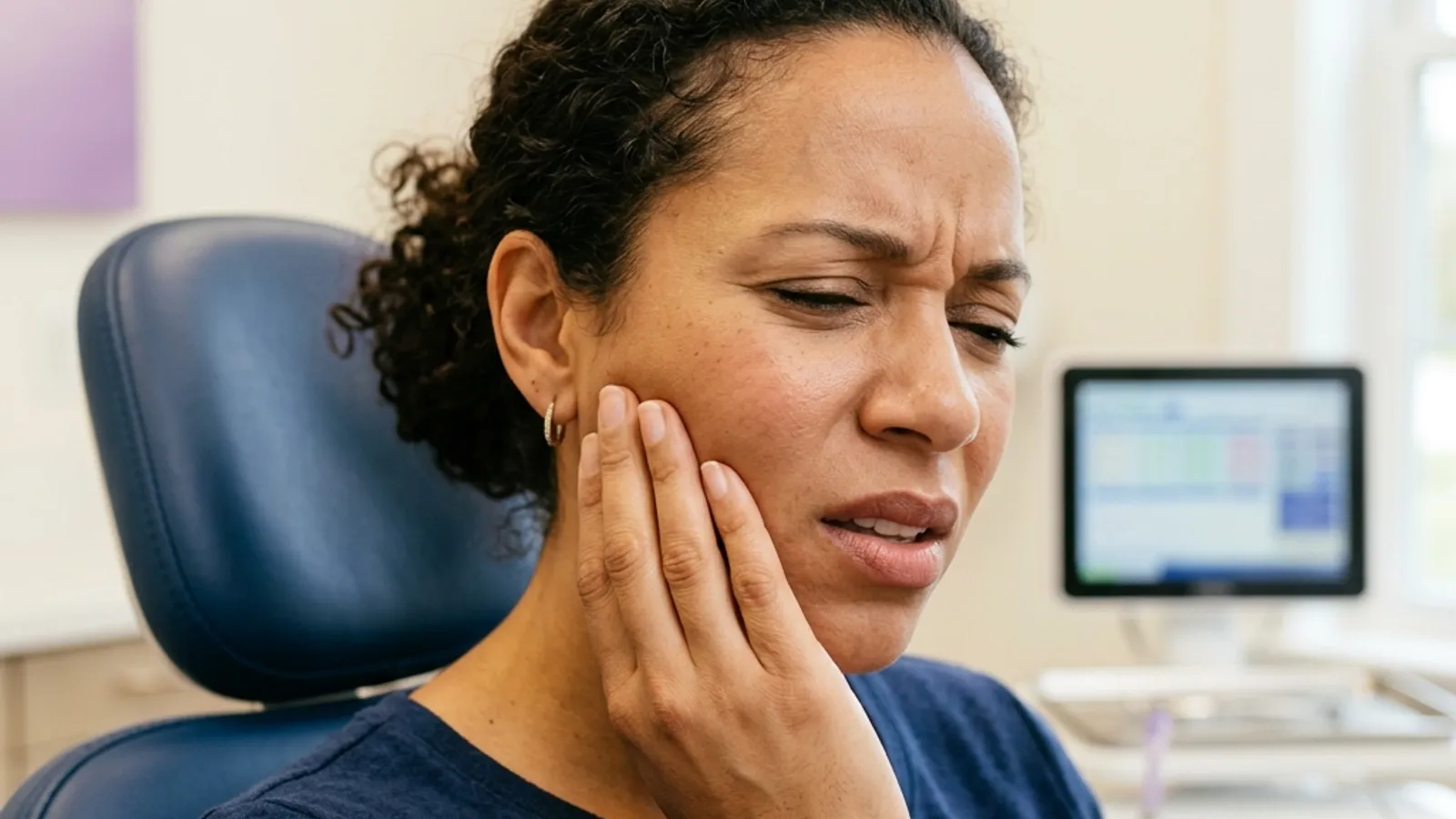
The temporomandibular joints (TMJ), the two hinges connecting your lower jaw to your skull, are particularly vulnerable to stress. Chronic clenching keeps the masseter and temporalis muscles in a sustained state of contraction, leading to muscle fatigue, spasm, and inflammation of the joint itself.
Stress-related TMJ symptoms include:
- Pain or tenderness in the jaw, especially upon waking
- Clicking, popping, or grating sounds when opening or closing the mouth
- Difficulty opening the mouth fully (reduced range of motion)
- Ear pain or a feeling of fullness in the ears
- Headaches radiating from the temples
- Neck and shoulder tension
The American Dental Association estimates that TMJ disorders affect more than 10 million Americans, with stress and bruxism being among the most common contributing factors. Women are diagnosed roughly twice as often as men, which may be partly explained by hormonal influences on pain perception and stress response.
At Innova Smiles, Dr. Fatima evaluates TMJ function as part of every comprehensive exam, checking for joint sounds, muscle tenderness, and range of motion. For patients whose TMJ pain stems primarily from muscle hyperactivity, targeted TMJ-relief therapy injections into the masseter muscle can provide significant relief by reducing the force of involuntary clenching.
Gum Disease Acceleration: How Stress Feeds Periodontal Infection
The link between chronic stress and gum disease is one of the most well-documented connections in dental research. Multiple studies have established that psychological stress is an independent risk factor for periodontal disease, meaning it increases your risk even after controlling for other variables like smoking, age, and oral hygiene.
The 2020 study in the Journal of Clinical Periodontology mentioned earlier found that high-stress individuals had 2.2 times the risk of periodontitis progression. But that study built on decades of evidence:
- A landmark 2007 review in Periodontology 2000 analyzed 14 studies and concluded that psychosocial stress, depression, and inadequate coping behaviors were significantly associated with more severe periodontal disease.
- A 2016 study in the Journal of Periodontal Research measured salivary cortisol levels in 150 patients and found a direct correlation between cortisol concentration and clinical attachment loss (the gold-standard measurement of periodontal destruction).
- Research from the University of Michigan demonstrated that cortisol impairs neutrophil chemotaxis, the ability of immune cells to migrate to infection sites in the gums, effectively giving bacteria a head start.
The mechanism works on multiple levels. Cortisol weakens immune surveillance in gum tissue. Stress-related behavioral changes (poor hygiene, diet changes, skipped cleanings) increase bacterial load. And the systemic inflammatory state that accompanies chronic stress amplifies the destructive immune response in periodontal tissue, the very response that causes bone loss.
For patients in Northborough and Southborough who maintain excellent brushing and flossing habits yet still see their gum disease progress, unaddressed chronic stress may be the missing piece.
Canker Sores: Stress-Triggered Mouth Ulcers
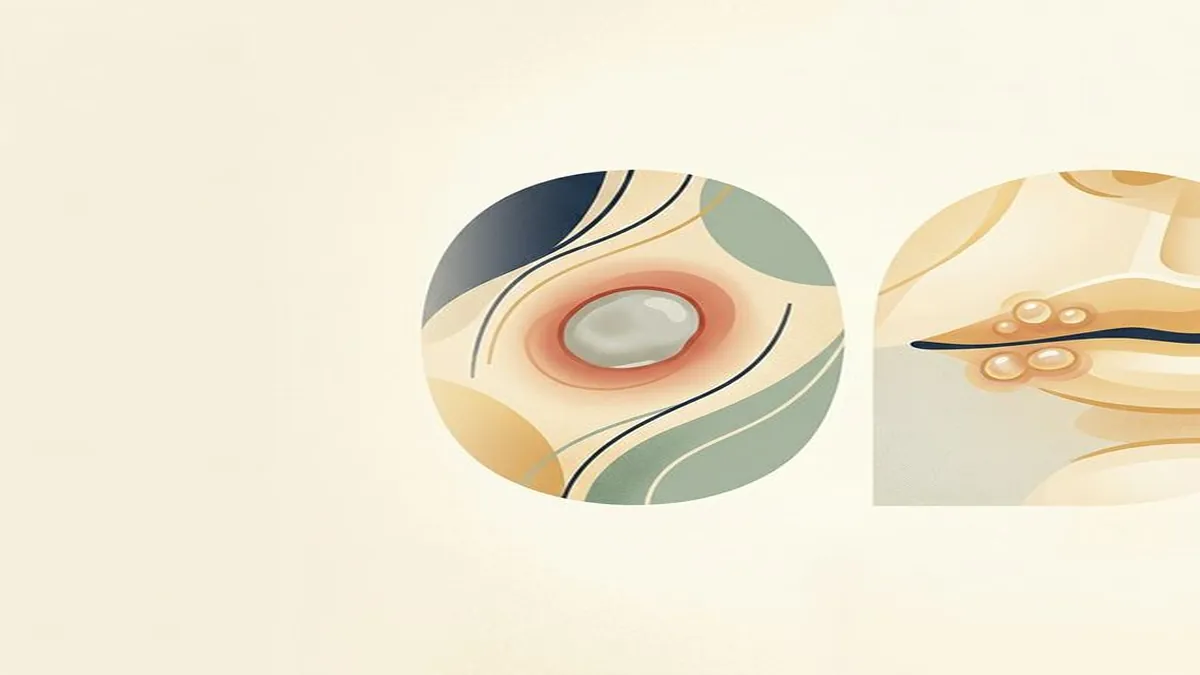
Canker sores (aphthous ulcers), those small, painful, white or yellow ulcers that appear inside the mouth, are among the most common oral manifestations of stress. While their exact cause remains incompletely understood, the association with stress is well-established.
A 2009 study in General Dentistry found that college students experienced significantly more canker sores during exam periods than during breaks, and that the frequency correlated with self-reported stress levels. The proposed mechanism involves stress-mediated changes in immune regulation, particularly shifts in T-cell subsets and increased production of pro-inflammatory cytokines in oral mucosa.
Canker sores typically heal within 7 to 14 days without treatment. Over-the-counter topical anesthetics (benzocaine, Orajel) can reduce pain. For patients with frequent recurrences, Dr. Fatima may prescribe a corticosteroid rinse or "magic mouthwash" to shorten healing time and reduce discomfort.
Dry Mouth From Stress and Anxiety Medications
Stress causes dry mouth through two pathways. First, acute stress activates the sympathetic nervous system, which reduces salivary gland output, this is why your mouth goes dry before a public presentation or during a confrontation. Second, many medications prescribed for stress-related conditions cause dry mouth as a side effect.
Common medications that reduce saliva production include:
| Medication Class | Examples | Used For |
|---|---|---|
| SSRIs | Sertraline (Zoloft), fluoxetine (Prozac), escitalopram (Lexapro) | Depression, anxiety |
| SNRIs | Venlafaxine (Effexor), duloxetine (Cymbalta) | Depression, anxiety, pain |
| Benzodiazepines | Alprazolam (Xanax), lorazepam (Ativan) | Anxiety, panic disorder |
| Antihistamines | Diphenhydramine (Benadryl), cetirizine (Zyrtec) | Allergies, sleep aid |
| Beta-blockers | Propranolol, atenolol | Anxiety, blood pressure |
Dry mouth is not just uncomfortable, it significantly increases cavity risk. Without adequate saliva, the pH in your mouth drops, acids linger on enamel longer, and bacterial colonies grow more rapidly. Patients taking these medications should drink water frequently, consider sugar-free xylitol lozenges (xylitol actively inhibits cavity-causing bacteria), and may benefit from prescription-strength fluoride toothpaste.
Stress Habits That Damage Teeth
Beyond bruxism, stress drives several other oral habits that cause cumulative damage:
Nail biting. The repetitive lateral force of biting nails can chip front teeth, wear enamel on the biting edges, and place strain on the TMJ. The ADA notes that nail biting can also introduce bacteria from under the nails into the oral environment.
Ice chewing (pagophagia). Chewing ice is surprisingly common among stressed individuals and can crack or fracture teeth. The thermal shock of ice combined with biting force is particularly dangerous for teeth with existing restorations.
Cheek and lip biting. Chronic cheek biting (morsicatio buccarum) creates rough, ragged tissue along the inner cheek that is prone to secondary infection and can be mistaken for more serious oral pathology.
Pen and pencil chewing. Common in high-stress work environments, this habit can wear front teeth and place asymmetric forces on the TMJ.
Tobacco and alcohol use. Many people turn to smoking or drinking during stressful periods. Both tobacco and alcohol are established risk factors for gum disease, oral cancer, and delayed wound healing.
Signs Your Mouth Is Showing Stress
During the December holiday season, a time that combines financial pressure, family dynamics, travel fatigue, and disrupted routines, patients across the MetroWest area often see a spike in stress-related oral symptoms. Families from Westborough and Hopkinton return from the holiday stretch with new complaints that were not present at their last visit.
Watch for these signs:
- Cracked or chipped teeth with no injury history. If a tooth breaks while eating soft food, overnight grinding forces are the likely culprit.
- Jaw soreness upon waking. Morning jaw stiffness that eases as the day progresses points to sleep bruxism.
- Receding gums despite good hygiene. When home care is solid and gums still recede, stress-mediated immune suppression or clenching forces may be at work.
- Frequent canker sores. More than three episodes per year, especially clustered around stressful periods, suggests a stress-immune connection.
- Increased tooth sensitivity. New sensitivity without an obvious cause (no cavity, no recent dental work) may indicate enamel wear from grinding.
- Chronic bad breath. Stress-related dry mouth and immune changes can increase volatile sulfur compounds produced by oral bacteria.
- Swollen or bleeding gums. Stress accelerates the inflammatory response in gum tissue, even in patients who brush and floss consistently.
What You Can Do: Managing Stress-Related Oral Damage
Custom Night Guard
For patients who grind or clench, a custom-fabricated night guard (occlusal splint) is the most effective frontline defense. Unlike over-the-counter guards, which are bulky and poorly fitting, a custom guard is fabricated from digital impressions to fit your bite precisely. It distributes grinding forces evenly, prevents tooth-on-tooth contact, and reduces muscle strain on the TMJ.
At Innova Smiles, Dr. Fatima designs night guards using 3Shape digital impressions, no goopy molds, no gagging. Most patients receive their finished guard within two weeks.
Muscle-Relaxing Injectables for TMJ and Severe Clenching
For patients whose clenching causes significant TMJ pain, chronic headaches, or muscle hypertrophy (enlarged jaw muscles from sustained grinding), targeted TMJ-relief therapy injections into the masseter and/or temporalis muscles can reduce the force of involuntary clenching by 30 to 60 percent. Effects begin within 7 to 14 days and last 3 to 6 months per treatment.
Stress Management Strategies
Addressing the root cause matters. While dental treatments manage the oral consequences, reducing stress itself produces the most lasting improvement. Evidence-supported approaches include:
- Regular physical exercise. A 2018 Cochrane review confirmed that aerobic exercise reduces anxiety and depressive symptoms. Even 30 minutes of walking reduces cortisol levels measurably. The MetroWest area offers excellent trails, the Assabet River Rail Trail connects Marlborough, Hudson, and Northborough and is particularly scenic during early winter.
- Sleep hygiene. Consistent sleep and wake times, limiting screen exposure before bed, and keeping the bedroom cool (65 to 68 degrees) support restorative sleep and reduce bruxism episodes.
- Mindfulness and relaxation techniques. Progressive muscle relaxation (PMR) of the jaw muscles, consciously relaxing the masseters by placing the tongue tip behind the upper front teeth and letting the jaw hang slightly open, can reduce daytime clenching.
- Professional support. Cognitive behavioral therapy (CBT) has strong evidence for stress reduction and has been shown in small studies to reduce bruxism frequency.
More Frequent Dental Visits During High-Stress Periods
If you are going through a divorce, a job change, a health crisis, or another sustained stressor, consider scheduling dental visits every four months instead of every six. Catching stress-related damage early, a hairline crack before it deepens, early gum inflammation before bone loss begins, saves significant time, money, and discomfort.
The Holiday Stress Factor
December is consistently one of the highest-stress months of the year. The American Psychological Association's annual "Stress in America" survey regularly finds that holiday-related financial concerns, family obligations, and schedule disruptions elevate stress levels for the majority of adults.
For your teeth, the combination of holiday stress, sugary treats, disrupted brushing routines, and increased alcohol consumption creates a triple threat. Patients from Sudbury and Natick who schedule their December cleaning often discover new stress-related issues that were not present six months earlier.
Practical steps for protecting your teeth during the holiday season:
- Wear your night guard every night, do not skip it even when traveling
- Keep a travel-size oral hygiene kit with you during holiday events
- Limit sticky, hard holiday candies that are most damaging to teeth
- Stay hydrated, holiday gatherings often involve alcohol and salty foods that dehydrate you and reduce saliva flow
- If you notice jaw soreness or headaches increasing, call the office rather than waiting for your next scheduled visit
When to See Dr. Fatima
If you are experiencing any combination of the symptoms described in this article, jaw soreness, unexplained tooth cracks, worsening gum health, frequent canker sores, or chronic dry mouth, a focused evaluation can identify whether stress is the underlying driver and determine the right treatment plan.
Dr. Fatima takes a thorough approach that goes beyond treating symptoms. She evaluates bite relationships, screens for TMJ dysfunction, measures gum pocket depths, and discusses lifestyle factors including stress, sleep quality, and medication use. When dental issues point to an underlying stress or sleep disorder, she provides appropriate referrals.
Innova Smiles is located at 340 Maple St, Suite 100, Marlborough, MA 01752, serving families and professionals from across the MetroWest region including Shrewsbury, Westborough, and Framingham. Call (508) 481-0110 or schedule online.
Concerned about how stress is affecting your teeth? Call (508) 481-0110 or book a stress-related oral health evaluation.
Related Articles
- Teeth Grinding (Bruxism): Causes, Damage, and Night Guard Solutions
- The 4 Stages of Gum Disease: Early Signs, Risks, and Treatment
- TMJ Treatment Options: From Night Guards to Muscle-Relaxing Injectables
- Jaw Pain & Night Guards in Marlborough
Related Services
Sources & Further Reading
- Bruxism — National Institute of Dental and Craniofacial Research
- TMD (Temporomandibular Disorders) — National Institute of Dental and Craniofacial Research
- Dry Mouth — National Institute of Dental and Craniofacial Research
- Teeth grinding (bruxism) — NHS
- Temporomandibular disorder (TMD) — NHS