
Featured Answer: What are mini dental implants and who are they for?
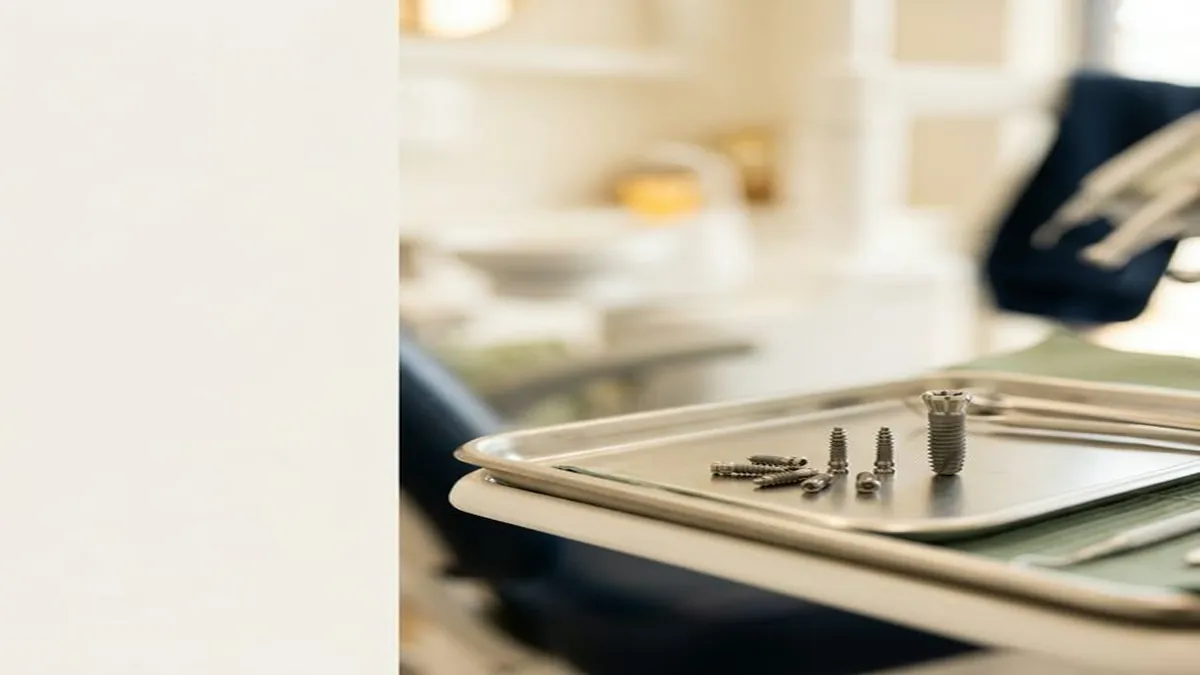
Mini dental implants (MDIs) are narrow-diameter implants, typically 1.8 to 3.3 mm in diameter, compared to standard implants, which range from 3.5 to 6.0 mm. They were originally developed as temporary anchorage devices in orthodontics but gained FDA clearance for long-term use in stabilizing lower dentures and for specific narrow-ridge applications. MDIs are placed through a minimally invasive, flapless technique that often requires no incision, no sutures, and significantly less healing time than conventional implants. They cost roughly one-third to one-half the price of standard implants, making implant-supported tooth replacement accessible to more patients.
At Innova Smiles in Marlborough, MA, I evaluate patients for MDIs, standard implants, and hybrid approaches based on their anatomy, bone density, and treatment goals. Patients from Southborough, Hopkinton, Westborough, and across the I-495 corridor come to our office specifically because we offer the full range of implant options, not just one approach for every patient.
How Mini Dental Implants Differ from Standard Implants
Understanding the structural difference between MDIs and standard implants is essential for understanding when each is appropriate.
Standard Dental Implants: Two-Piece Design
A conventional dental implant consists of two main parts: the implant body (a threaded titanium or zirconia screw, 3.5 to 6.0 mm in diameter) and a separate abutment that screws into the top of the implant after osseointegration is complete. The crown, bridge, or denture then attaches to the abutment. This two-piece design allows flexibility in angulation and prosthetic attachment, but it requires more bone volume for placement and typically involves a surgical flap (incision and reflection of the gum tissue), followed by three to six months of healing before the restoration can be attached.
Mini Dental Implants: One-Piece Design
An MDI is a single-piece implant, the post and attachment mechanism are manufactured as one unit. The most common design features a ball-shaped head at the top that protrudes through the gum tissue and snaps into a housing within the denture. Because MDIs are narrower, they can be placed in bone ridges that lack the width required for standard implants. The one-piece design eliminates the abutment connection, which reduces the number of components and simplifies the prosthetic workflow.
The narrow diameter is both the advantage and the limitation. MDIs can go where standard implants cannot fit, but they have lower load-bearing capacity because of the reduced surface area contacting the bone. This is why their primary indication is denture stabilization rather than standalone crown support in high-load areas.
Side-by-Side Comparison: MDI vs. Standard Implant
| Feature | Mini Dental Implant (MDI) | Standard Dental Implant |
|---|---|---|
| Diameter | 1.8–3.3 mm | 3.5–6.0 mm |
| Design | One-piece (post + attachment) | Two-piece (implant body + abutment) |
| Placement technique | Flapless (no incision) in most cases | Surgical flap with incision and sutures |
| Procedure time | 30–60 minutes for multiple implants | 1–2 hours per implant (more complex) |
| Bone requirement | Narrow ridges acceptable (5+ mm width) | Wider ridges required (6–7+ mm width) |
| Healing time | Often same-day loading; 2–4 weeks full integration | 3–6 months osseointegration |
| Bone grafting needed | Rarely | Sometimes (if bone volume is insufficient) |
| Cost per implant | $500–$1,500 | $3,000–$5,000 |
| Load-bearing capacity | Moderate, best for denture retention | High, supports crowns, bridges, full-arch |
| Longevity | 10–15+ years (denture stabilization) | 20–30+ years (well-documented) |
| Primary uses | Denture stabilization, narrow ridges, temporary anchorage | Single crowns, bridges, full-arch restorations |
| FDA clearance | Long-term denture stabilization; specific narrow-diameter applications | All prosthetic applications |
The MDI Placement Procedure
One of the most significant advantages of mini dental implants is the simplicity of the placement procedure. Here is what the process looks like at Innova Smiles:
Step 1: CBCT Imaging and Treatment Planning
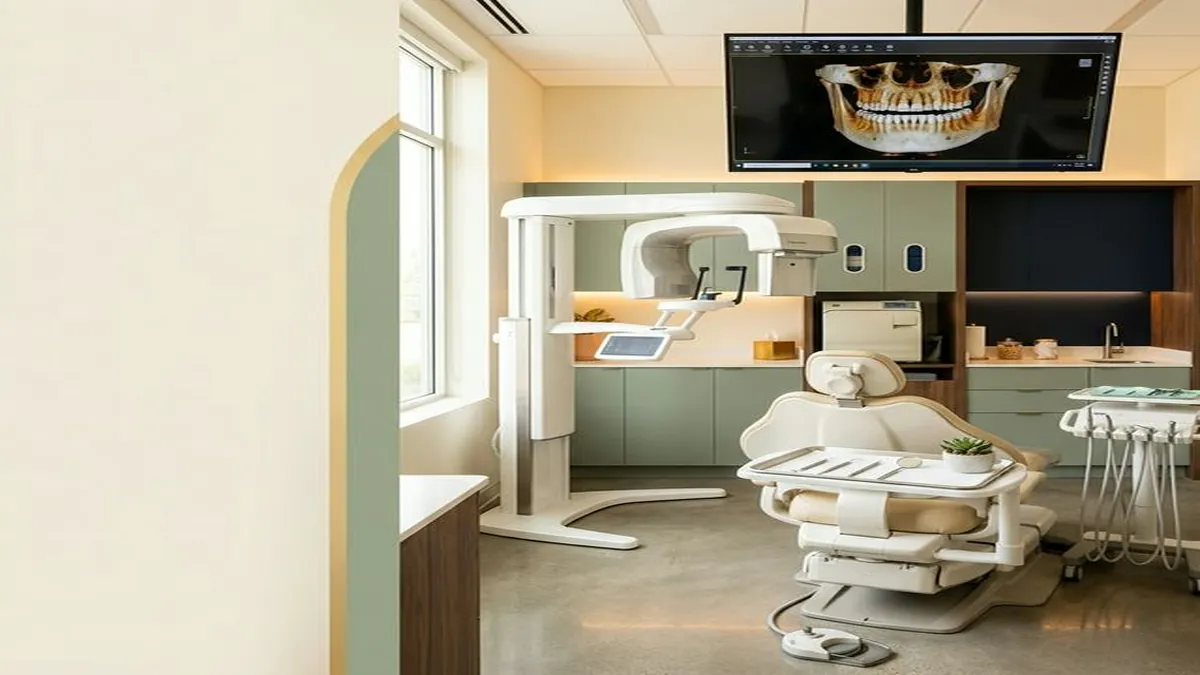
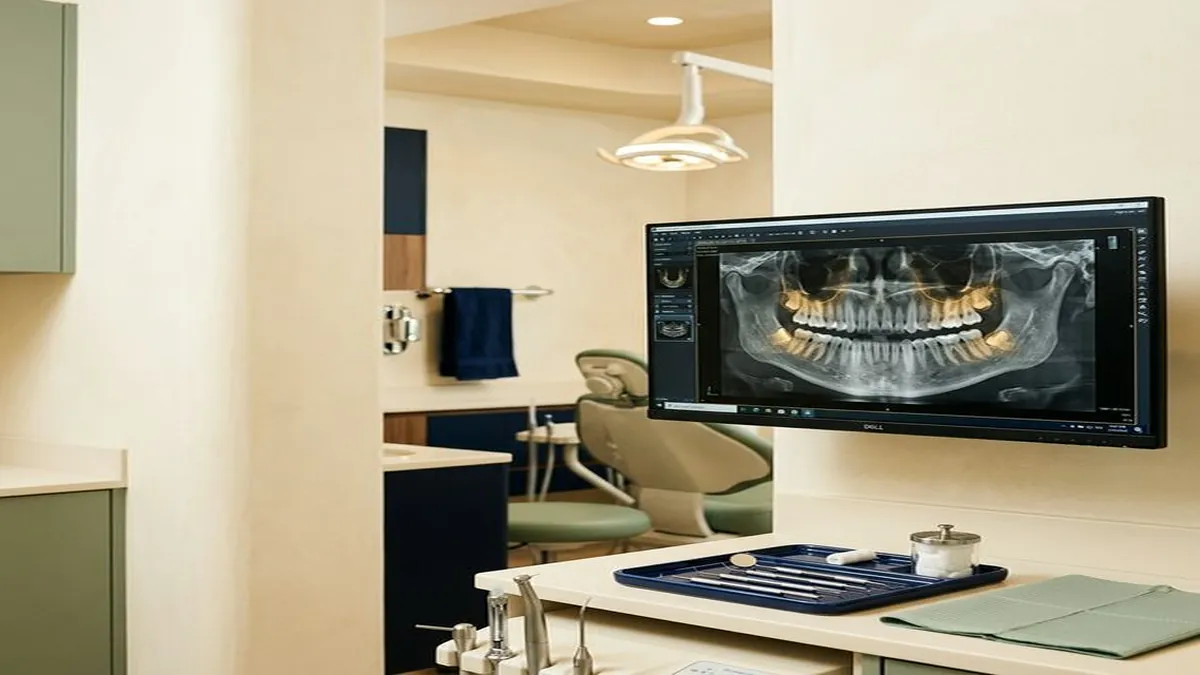
Before any implant, mini or standard — I take a 3D cone beam computed tomography (CBCT) scan. This 15-second scan provides a full three-dimensional view of the jawbone, showing bone width, height, density, and proximity to vital structures like the inferior alveolar nerve and the maxillary sinus. For MDI planning, I am specifically evaluating whether the ridge width can accommodate the implant diameter and whether bone density is sufficient for primary stability.
Step 2: Flapless Placement
Unlike standard implant surgery, MDI placement typically does not require cutting open the gum tissue. Instead, a small pilot hole is drilled directly through the gum tissue and into the bone. The MDI is then threaded into the bone using a specialized hand wrench or low-speed handpiece. Because no flap is raised, there is minimal disruption to the blood supply of the surrounding tissue, which is why swelling and discomfort are significantly reduced compared to conventional implant surgery.
The entire placement of four lower MDIs typically takes 30 to 60 minutes. Patients receive local anesthesia and, if desired, . Most patients report that the experience is less uncomfortable than they expected, closer to having a filling placed than a surgical procedure.
Step 3: Same-Day Loading
In many MDI cases, the denture can be modified and attached to the implants on the same day. The ball attachments on the MDI heads snap into corresponding O-ring housings that are seated within the denture base. This means patients walk out of our office with a stabilized denture the same day the implants are placed, a meaningful advantage for patients who have been struggling with loose dentures for months or years. If you are weighing removable dentures against implant-supported options more broadly, our dentures vs. dental implants comparison covers the full range of choices.
Same-day loading is possible because the flapless technique preserves the periosteum and blood supply, and the threaded design of MDIs achieves good primary mechanical stability immediately upon placement. With standard implants, same-day loading is possible in selected cases (such as All-on-4) but is less routine.
Step 4: Follow-Up and Maintenance
I see MDI patients back at one week, one month, and three months after placement to monitor healing and attachment function. After that, routine six-month checkups are sufficient. The O-ring inserts inside the denture will wear over time, most patients need replacements every 12 to 18 months, a simple chairside procedure that takes about 10 minutes and costs roughly $50 to $75 per housing.
Who Is a Good Candidate for Mini Dental Implants?
MDIs are appropriate for specific clinical situations, and I evaluate candidacy on a case-by-case basis after reviewing the CBCT scan and discussing the patient's goals.
Ideal MDI Candidates
Denture wearers seeking stabilization. This is the primary FDA-cleared indication and the most common use of MDIs. Patients who have worn lower dentures for years and struggle with movement, sore spots, and adhesive dependence are often excellent candidates. Two to four MDIs can transform a conventional lower denture into a stable, snap-in prosthetic. The 2002 McGill Consensus Statement established that a two-implant overdenture should be the minimum standard of care for the edentulous lower jaw, and MDIs fulfill this role at a lower cost.
Patients with narrow ridges. Years of tooth loss lead to progressive bone resorption, and many long-term denture wearers have lost so much ridge width that standard implants cannot be placed without bone grafting. MDIs can be placed in ridges as narrow as 5 mm, which would be too narrow for a 3.75 mm standard implant that requires at least 1 mm of bone on each side.
Patients who cannot undergo lengthy surgery. Some patients have medical conditions (uncontrolled diabetes, anticoagulant therapy, cardiovascular disease) that make prolonged surgical procedures higher risk. The shorter, less invasive MDI placement is often a viable option when standard implant surgery is not advisable. Similarly, elderly patients who are hesitant about surgery often find the MDI procedure far more manageable.
Patients on a limited budget. A full set of four lower MDIs with denture modification typically costs $3,000 to $6,000, compared to $8,000 to $15,000 for a standard implant overdenture with two to four conventional implants. For patients across the MetroWest area, from Framingham to Shrewsbury, who want implant-supported dentures but cannot afford the conventional approach, MDIs offer a meaningful improvement over adhesive at a fraction of the cost.
Orthodontic temporary anchorage. MDIs are used as temporary anchorage devices (TADs) in orthodontics to provide a fixed point for tooth movement. These are typically removed once orthodontic treatment is complete and are not intended as permanent restorations.
Who Should Choose Standard Implants Instead
MDIs are not a universal substitute for standard implants. I recommend conventional implants when:
- A single tooth needs replacement in the bite zone. Premolars and molars bear significant chewing forces — 100 to 250 pounds per square inch during normal function. A standard implant with its larger diameter provides the surface area and load-bearing capacity needed for a standalone crown in these high-stress positions. Placing an MDI as a single-tooth replacement in a posterior chewing area creates a higher risk of implant fracture over time.
- A fixed (non-removable) full-arch bridge is desired. All-on-4 and All-on-6 fixed bridges require the load-bearing capacity of standard implants. MDIs are not indicated for fixed full-arch prostheses.
- Adequate bone is available. When the ridge has sufficient width and height for standard implants, I typically recommend the standard approach because of its stronger long-term evidence base and superior load-bearing capabilities.
- Longevity is the top priority. Standard implants have 25-year and 30-year longitudinal data showing survival rates above 90 percent. MDI long-term data is growing but less extensive, most published studies follow MDIs for 5 to 12 years, with survival rates ranging from 85 to 95 percent depending on the study and application.
Cost Comparison: MDIs vs. Other Tooth Replacement Options
Cost is often the deciding factor for patients. Here is how MDIs compare to other tooth replacement options in the Massachusetts market:
| Treatment | Typical Cost Range | What It Includes | Longevity |
|---|---|---|---|
| Conventional lower denture | $1,500–$3,500 | Denture fabrication, adjustments | 5–8 years |
| MDI-stabilized lower denture | $3,000–$6,000 | 4 MDIs + denture modification | 10–15+ years (implants); denture replaced every 5–8 years |
| Standard implant overdenture (lower) | $8,000–$15,000 | 2–4 standard implants + new overdenture | 15–25+ years (implants); denture replaced every 8–10 years |
| Fixed full-arch bridge (All-on-4) | $20,000–$35,000 per arch | 4 standard implants + fixed prosthesis | 15–25+ years |
| Single standard implant + crown | $3,000–$5,000 | 1 implant + abutment + crown | 20–30+ years |
| Dental bridge (3-unit) | $2,500–$5,000 | 3 connected crowns anchored to adjacent teeth | 10–15 years |
These ranges reflect typical Massachusetts pricing. The actual cost at Innova Smiles depends on the number of implants, the type of prosthetic, and whether any preparatory procedures (bone grafting, extractions) are needed. I provide detailed cost breakdowns during the consultation so there are no surprises.
Risks and Limitations of Mini Dental Implants
Honest patient education requires discussing the limitations alongside the benefits.
Fracture Risk
The narrower diameter of MDIs means they have lower fracture resistance than standard implants. A standard implant made of grade 4 or grade 5 titanium at 3.75 mm diameter can withstand forces exceeding 500 Newtons. An MDI at 2.4 mm diameter has roughly 40 percent less cross-sectional area, which proportionally reduces its mechanical strength. Fracture is uncommon when MDIs are used within their indicated applications (denture stabilization), but placing them in high-load areas intended for standalone crowns increases fracture risk.
Less Long-Term Data
Standard dental implants have been studied extensively since the 1970s, and the Branemark protocol has 40+ years of longitudinal data. MDIs have been in clinical use since the late 1990s, and published long-term data typically extends 5 to 12 years. The data that exists is encouraging, a 2018 systematic review in the Journal of Oral Rehabilitation reported MDI survival rates of 91.4 percent at five years for lower overdenture stabilization, but the evidence base is less mature than for standard implants.
Bone Preservation Is Reduced
While MDIs do transmit some chewing force to the bone (which helps slow resorption compared to a conventional denture), the narrower implant distributes force over a smaller bone volume. Standard implants, with their larger surface area, provide more robust bone stimulation. A 2020 study in Clinical Implant Dentistry and Related Research found that bone loss around MDIs was approximately 0.3 mm greater at five years compared to standard implants supporting overdentures, a measurable but clinically modest difference.
Not for Every Application
MDIs are FDA-cleared for long-term denture stabilization and specific narrow-diameter indications. Using them outside these parameters, such as for standalone posterior crowns or fixed bridges, is considered off-label and carries higher complication rates. I counsel patients clearly about what MDIs can and cannot do.
Insurance Coverage for Mini Dental Implants
Dental insurance coverage for implants, both mini and standard, varies widely by plan. For a comprehensive breakdown, see our guide on whether dental insurance covers implants in Massachusetts. Here is the general picture:
- Most PPO dental plans cover some portion of the prosthetic (crown, denture) but not the implant fixture itself. Delta Dental PPO, for example, typically covers the implant crown at 50 percent of the allowed fee after meeting the deductible and waiting period, but coverage for the implant body varies by plan.
- Medical insurance may cover implant placement if tooth loss resulted from trauma, cancer treatment, or a congenital condition. We assist patients from Hudson and Northborough with cross-coding to medical insurance when applicable.
- Medicare does not cover dental implants in most situations, including MDIs.
- Financing: We offer third-party financing options that allow patients to spread the cost of MDIs over 12 to 60 months. For many patients, the monthly payment for MDI-stabilized dentures is comparable to the ongoing cost of denture adhesives, reliners, and replacement dentures over the same period.
MDIs in Clinical Practice: When I Recommend Them
In my practice, MDIs are most valuable as a middle-ground option. They fill the gap between two extremes: a conventional denture that provides minimal stability, and a full standard implant overdenture or fixed bridge that provides excellent stability but at a much higher cost and surgical commitment.
I find that MDIs are particularly well-received by patients in their 70s and 80s who have worn loose lower dentures for years, have moderate bone loss, and want a meaningful quality-of-life improvement without extended surgery or a five-figure investment. For these patients, four lower MDIs and a denture retrofit can be completed in a single morning visit, and they leave our office that afternoon eating foods they had given up on years ago.
For younger patients with adequate bone and a long time horizon, I typically recommend standard implants because of their superior load capacity and more extensive long-term data. But I always present both options and let the patient make an informed choice after reviewing their CBCT scan together.
The New England patient population is practical. People along Route 20 and the I-495 corridor want to understand the trade-offs clearly, what works, what it costs, and what the realistic outcomes are. That is the conversation we have at every implant consultation.
Questions to Ask Your Dentist About MDIs
If you are considering mini dental implants, bring these questions to your consultation:
- Based on my CBCT scan, do I have enough bone for standard implants, or are MDIs more appropriate for my anatomy?
- How many MDIs do you recommend, and why?
- What is the total cost, including the denture modification or new denture?
- Can I have the denture attached the same day?
- What is the expected lifespan of the MDIs, and what maintenance costs should I anticipate?
- Are there any risks specific to my medical history?
- If MDIs fail or my needs change, can I transition to standard implants later?
That last question is important. In most cases, MDI sites do not preclude future standard implant placement, because the MDI sites are narrow enough that sufficient bone typically remains for a standard-diameter implant nearby. This means choosing MDIs now does not close the door on other options later.
Ready to find out if mini dental implants are right for you? Call Innova Smiles at (508) 481-0110 or schedule a consultation. Dr. Fatima will review your CBCT scan and walk you through every option that fits your anatomy and goals.
Related Articles
- Types of Dental Implants: Titanium vs. Zirconia
- The Real Cost of Dental Implants in Massachusetts
- Am I a Candidate for Dental Implants?
- Dental Implant vs. Bridge: Best Solution for a Missing Tooth