
Does Dental Insurance Cover Implants in Massachusetts?
The short answer: yes, most dental PPO plans cover at least part of the cost of dental implants, but the coverage is partial, varies widely by plan, and often comes with conditions that catch patients off guard. Understanding exactly what your plan covers before starting treatment can save you thousands of dollars and prevent frustrating billing surprises.
This guide breaks down how dental insurance handles implants in Massachusetts, which specific components are typically covered, how major carriers like Delta Dental, BCBS, and Cigna handle implant claims, and, importantly, what to do if your coverage falls short.
What a Dental Implant Actually Consists Of (And Why It Matters for Coverage)
According to the American Academy of Implant Dentistry (AAID), a single dental implant is not one procedure, it's a multi-step treatment with distinct billable components:
- Tooth extraction: Removing the damaged or failing tooth that the implant will replace
- Bone grafting: Rebuilding lost bone (when needed) to create adequate foundation for the implant (learn more about whether you need a bone graft or sinus lift for dental implants)
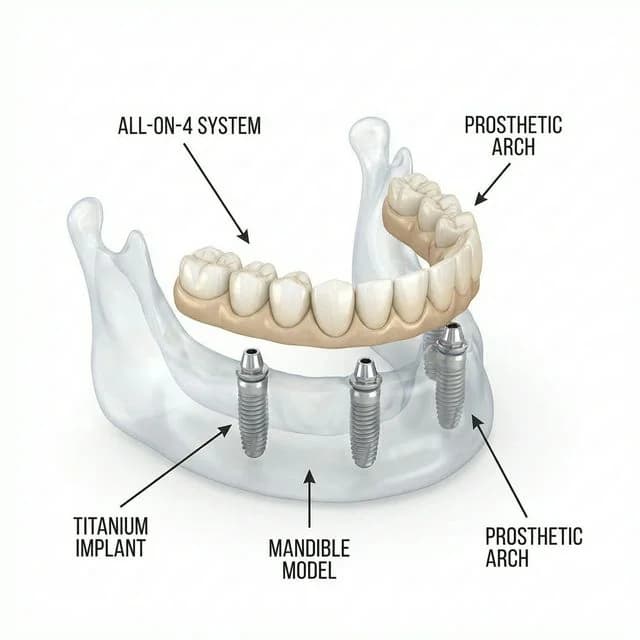
- Implant post (fixture): The titanium screw surgically placed into the jawbone
- Abutment: The connector piece between the implant post and the final crown
- Implant crown: The visible porcelain or zirconia tooth restoration that sits on top
Each component is billed with a separate dental procedure code (CDT code). Insurance plans may cover some components but not others, and at different percentages. This is why two patients with "the same insurance" can have very different out-of-pocket costs depending on how their plans classify each procedure.
What Is Typically Covered (and What Isn't)
Tooth Extraction
Usually covered. Most PPO plans categorize extractions under basic or surgical services and cover 70–80% after your deductible. If the extraction is straightforward, you'll likely pay a small copay. Surgical extractions (impacted teeth, complex roots) cost more and your share may be higher.
Bone Grafting
Sometimes covered, often with limitations. Bone grafts are categorized as a surgical procedure by most carriers. Some plans cover them at 50% under major services; others exclude them entirely, or only cover grafts related to periodontal disease rather than implant preparation. If you need a sinus lift (a larger grafting procedure for upper back teeth), coverage is even less consistent.
Implant Post (Fixture)
Less commonly covered as a standalone item. This is frequently the component patients are most surprised about. Many traditional dental PPO plans were written before implants became mainstream and explicitly exclude the implant post from coverage. However, more recently issued or updated plans, particularly premium employer-sponsored plans, do include a major services benefit that covers the implant fixture at 50% after the deductible.
Implant Crown
Most commonly covered. The implant crown is typically classified the same as a conventional crown, a major restorative service, and covered at 50% by most PPO plans, subject to annual maximums. This is often where insurance provides the most meaningful benefit for implant patients.
Summary by Component
How Major Carriers Handle Implants in Massachusetts
Delta Dental
Delta Dental of Massachusetts offers multiple plan tiers. Their Premier and PPO plans generally cover implant crowns under major restorative care at 50% after a waiting period (often 12 months for new plans). The implant fixture itself may be covered under surgical benefits depending on your specific group plan. Delta Dental's annual maximum, typically $1,000–$2,000, limits total benefit in a single year.
Blue Cross Blue Shield of Massachusetts
BCBS MA plans vary significantly depending on whether you're on an individual plan, a small group plan, or a large employer plan. Comprehensive BCBS plans often include implant coverage at 50% for both the fixture and crown. Review your Summary of Benefits and Coverage (SBC) document for the exact CDT codes covered.
Aetna
Aetna's dental PPO plans in Massachusetts typically classify implants as a major service covered at 50%. Some Aetna plans have specific implant benefit riders that provide more robust coverage. Waiting periods of 6–12 months are common for major services on new Aetna policies.
Cigna
Cigna Dental PPO plans generally cover implant crowns and sometimes the fixture. Cigna is known for fairly detailed explanation of benefits (EOB) documents, which can help you understand exactly what was paid and what wasn't after each procedure.
Important note: The specific plan documents always override general carrier tendencies. Always request a pre-authorization or pre-determination letter from your carrier before starting implant treatment. This is a formal estimate of what they will pay, not a guarantee, but a meaningful benchmark.
The Missing Tooth Clause: A Critical Detail
One of the most misunderstood insurance provisions affecting implant patients is the missing tooth clause. This exclusion states that if a tooth was missing before your current dental coverage began, your plan will not cover any restoration for that tooth, including an implant crown.
Example: You lost a molar five years ago and recently enrolled in a new dental plan. Even if that plan covers implant crowns at 50%, the missing tooth clause means your plan won't pay for the crown on that specific tooth because it was gone before your coverage started.
Missing tooth clauses are especially common in individual and marketplace dental plans. Employer-sponsored group plans are more likely to waive this clause. When enrolling in new dental coverage, ask specifically whether your plan has a missing tooth clause and how it applies to teeth you've already lost.
How to Maximize Your Insurance Coverage
1. Time Procedures Across Plan Years
If your plan has a $1,500 annual maximum, you can often split implant procedures across two calendar years to access two years' worth of benefits. For example, the extraction and bone graft in Year 1, and the implant post and crown in Year 2. At Innova Smiles, our treatment coordinators routinely help patients plan phasing to maximize insurance dollars.
2. Request a Pre-Determination Before Starting
Submit a pre-determination request through your dentist's office before any implant procedure begins. This gives you a written estimate from the insurer and surfaces any exclusions before you're committed to a treatment path.
3. Check if Your Plan Has an Implant Rider
Some employer-sponsored plans have optional implant riders that provide enhanced coverage for implant fixtures. If your open enrollment allows it, adding this rider during an upcoming enrollment period can dramatically reduce your out-of-pocket cost for a planned implant.
4. Coordinate Benefits if You Have Two Plans
If you're covered under both your own employer plan and a spouse's plan, you may be able to coordinate benefits between the two carriers, potentially doubling your coverage ceiling for the year.
What to Do When Insurance Doesn't Cover Enough
Insurance rarely covers 100% of implant costs. For a transparent look at what procedures cost at Innova Smiles, visit our pricing guide. Here's how Marlborough patients bridge the gap:
CareCredit
CareCredit is a healthcare credit card accepted at Innova Smiles that offers promotional financing periods, often 12–24 months with no interest if paid in full during the promotional window. After a PPO pays its share (typically $1,000–$1,500 toward an implant), it's a popular option for spreading the remaining out-of-pocket balance into manageable monthly payments — 0% APR plans are available.
Cherry Financing
Cherry is a patient financing platform that offers flexible payment plans with quick online approval. It works similarly to CareCredit but often approves patients with a wider range of credit profiles.
Innova Smiles Membership Plan
If you don't have dental insurance at all, our in-house membership plan provides preventive care at a flat annual fee and discounts on major restorative procedures including implants. It's not insurance, it's a direct-pay membership that eliminates waiting periods, annual maximums, and missing tooth clauses entirely.
Real Cost Breakdown: Marlborough MA Patients, 2026
Here's a realistic look at what a single dental implant costs with and without insurance in the Marlborough area:
A complete single implant — surgical placement, custom abutment, and permanent crown — runs $3,343–$6,685. The top of that range is what a patient with no coverage pays; the low end is what a patient whose plan covers implants typically pays once the plan's negotiated fee is applied. When two plans coordinate, or the membership plan's 20% applies, your written estimate shows the exact figure. That figure isn't just a tooth: it includes the 3D imaging and surgical planning, implant placement, the custom-milled abutment, and the permanent crown. Many phases can be coordinated in-house; when a case benefits from additional expertise, we coordinate referral or co-management with an appropriate specialist. The higher end of the range reflects cases that also need bone grafting or a sinus lift. For a detailed breakdown of what drives these numbers, see our real cost of dental implants in Massachusetts guide.
Remember that the out-of-pocket figure is a one-time investment in a tooth designed to last decades, and with 0% APR options it breaks down into a manageable monthly payment. These figures are estimates. Your actual cost depends on case complexity, whether bone grafting is needed, and your specific plan's benefit structure. Patients on a tighter budget may also want to explore mini dental implants, which cost roughly one-third to one-half the price of standard implants. We provide detailed written treatment estimates at your consultation.
Frequently Asked Questions
Q: Does Medicare cover dental implants in Massachusetts? According to the Centers for Medicare & Medicaid Services (CMS), traditional Medicare (Parts A and B) does not cover routine dental care, including implants. Some Medicare Advantage plans in Massachusetts include dental benefits that may partially cover implants, check your plan's Summary of Benefits or call 1-800-MEDICARE to ask about your specific plan.
Q: Will my insurance cover an implant to replace a tooth I need extracted today? Possibly, if your plan does not have a missing tooth clause, and the implant crown is placed while you're an active member. Timing matters: the tooth must be extracted while you're covered, and the crown should also be placed while coverage is active. Planning ahead with your dentist and insurer is essential.
Q: How long do I have to wait before insurance covers an implant? Most PPO plans impose a 6–12 month waiting period on major services for new members. This means if you enroll in a plan today, you may need to wait up to a year before your implant crown is a covered benefit. Employer-sponsored plans sometimes waive waiting periods for employees.
Q: My dentist says I need a bone graft. Will insurance pay for it? It depends on your plan. Some cover bone grafts under surgical benefits at 50%; many exclude them entirely. A pre-determination request submitted before the procedure is the only reliable way to find out. At Innova Smiles, we submit pre-authorizations as a routine part of implant treatment planning.
Q: Can I use my FSA or HSA for dental implants? Yes. Flexible Spending Accounts (FSA) and Health Savings Accounts (HSA) can both be used for dental implant expenses, including the post, abutment, crown, and bone graft. Using pre-tax dollars effectively reduces your cost by your marginal tax rate, often 22–32% for Massachusetts patients.
The Hidden Cost of Delaying Implants: Why Waiting Can Cost More
Patients who delay implant placement while weighing insurance options should understand the clinical and financial consequences of prolonged tooth loss. When a tooth is extracted or lost, the alveolar bone in that area begins to resorb almost immediately. A 2015 study published in the Clinical Oral Implants Research journal documented that patients lose an average of 40 to 60 percent of alveolar ridge width within the first two to three years after extraction.
This bone loss has direct financial implications. A patient who places an implant within three to six months of extraction often has sufficient bone for a straightforward procedure. The same patient who waits three years may require a bone graft ($555–$1,110 at the implant site; larger grafts estimated separately) before the implant can be placed, adding both cost and time (three to six additional months of healing). In severe cases, a sinus lift procedure (estimated separately) is necessary for upper posterior teeth.
For MetroWest patients navigating insurance timelines, the optimal strategy is often to extract the tooth and place a bone graft simultaneously (socket preservation), which many plans cover under surgical benefits, and then plan the implant placement for the following plan year when your annual maximum resets. Dr. Fatima routinely coordinates this phased approach to maximize both clinical outcomes and insurance utilization.
Book Your Implant Consultation at Innova Smiles
At Innova Smiles in Marlborough, every implant consultation includes a complimentary insurance benefits check. Before you leave the office, you will know what your plan covers, what your estimated out-of-pocket cost will be, and what financing options are available.
Dr. Ambereen Fatima holds a Fellowship in the International Congress of Oral Implantologists (FICOI) and provides in-house implant planning and restoration for many cases. When a case benefits from additional expertise, she coordinates referral or co-management with an appropriate specialist.
Call (508) 481-0110 or book now to schedule your consultation. We serve Marlborough, Hudson, Northborough, Westborough, and the broader MetroWest region.
Related Articles
- The Real Cost of Dental Implants in Massachusetts
- What Is a Missing Tooth Clause?
- Am I a Candidate for Dental Implants?
- Dental Insurance Waiting Periods: What to Know
- How to Maximize Your Dental Insurance Benefits Before Year-End
Related Services
- Dental Implants
- Implant Calculator
- Financing Options
- New Patient Special -- $0 exam, cleaning, and X-rays with most PPO insurance
How our pricing works
Single dental implant, all-inclusiveOur fee range$3,343–$6,685 per tooth
- Our implant fee covers the full journey from 3D imaging through final crown placement, guided by a fellowship-trained implant dentist using 5D digital technology. Many practices bill the scan, surgical guide, and abutment separately, adding several hundred dollars to the total.
- More PPO plans now contribute toward implant treatment, usually up to the plan's annual maximum. When yours does, the covered portion is billed at the plan's negotiated fee, which is what the low end of this range reflects.
- 0% APR financing through CareCredit or Cherry spreads the cost from about $139/mo with nothing down.*
- No insurance? Our in-house membership plan (from $395/yr) includes your preventive care and takes a flat 20% off our standard fee for this treatment.
- The top of the range is our standard fee; the low end is what a patient whose plan covers the treatment typically pays before their share is applied. A bone graft at the implant site, when needed, is priced separately (see the fee guide); sinus lifts are estimated at your consultation.
- Your exact fee is confirmed in writing at your visit, after your exam and after we have checked your insurance — never a surprise afterward.
- Patients aged 65 and older get 10% off all dental treatments. Mention it when booking and we'll apply it automatically.
*Estimated payment is the lowest published PER-TOOTH fee ÷ 24 months at 0% APR with $0 down, and covers one tooth — a multi-tooth case multiplies it. Financing is provided by third-party lenders (e.g. CareCredit, Cherry), not by Innova Smiles, and is subject to credit approval — not all applicants qualify. Your actual cost, term, and monthly payment depend on your treatment plan and approved offer.