
Why August Is the Best Time to Start Aligners
New routines, new habits. Late summer gives Marlborough, MA teens time to adapt to aligner wear before classes ramp up at Marlborough High, Assabet Valley, and schools across MetroWest. At Innova Smiles, Dr. Ambereen Fatima sees a surge of back-to-school aligner consultations every August because families from Northborough, Hudson, and Sudbury recognize that the back-to-school window is the perfect moment to begin teen orthodontics.
Starting Spark aligners for teens in August means your child has two to three weeks to get comfortable with the trays, learning how to insert and remove them quickly, adjusting to the feel of plastic on their teeth, and building the habits that make treatment successful, all before the demands of homework, sports practice, and extracurriculars kick in. A 2022 study in the Journal of Clinical Orthodontics found that patients who began aligner treatment during a low-stress period were 34 percent more likely to achieve full compliance in the first month, setting the tone for the rest of their case.
At our Marlborough office, we also see families from Framingham, Westborough, and Shrewsbury scheduling consultations during July and August to lock in their teen’s start date before fall activities fill up the calendar.
Why fall is a great starting point
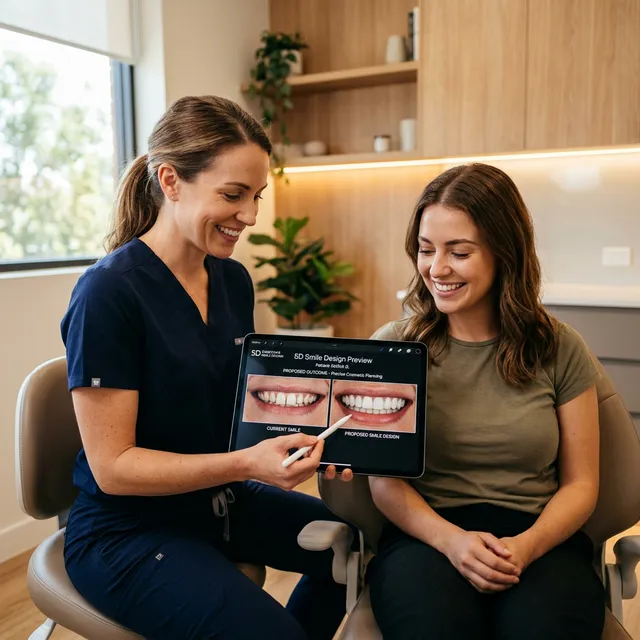
- Digital scans mean no messy impressions. Our iTero scanner captures a precise 3D model of your teen’s teeth in minutes, and many patients say it is actually fun to watch their smile appear on screen. The scan data feeds directly into the Spark treatment planning software, so Dr. Fatima can show your teen a projected before-and-after simulation at the same appointment.
- Fewer in-person check-ins. With hybrid monitoring and well-planned tray sequences, visits are typically every six to eight weeks, easy to schedule around school calendars, midterms, and holiday breaks.
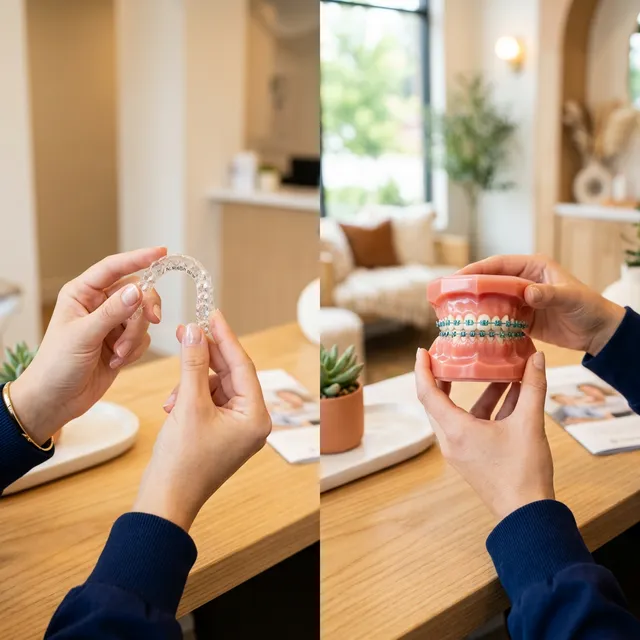
- Clear trays are photo-friendly. School ID photos, homecoming, and yearbook pictures all look natural because Spark aligners are virtually invisible. Unlike metal braces, there is no glare off brackets and no colored elastics competing with your teen’s smile.
- Momentum carries through the school year. By the time winter break arrives, your teen may already be halfway through treatment. That psychological milestone keeps motivation high during the second semester.
- Less social anxiety. Teens are deeply aware of their appearance. Research published in the Angle Orthodontist (2021) reported that adolescent patients using clear aligners scored significantly higher on quality-of-life measures related to self-esteem and social interaction than peers wearing traditional brackets.
How Spark Aligners for Teens Actually Work
Spark clear aligners use a series of custom-fabricated thermoplastic trays, each one engineered to apply gentle, controlled force that moves teeth in small increments. Your teen swaps to a new set of trays every one to two weeks. The entire sequence is mapped digitally before the first tray is even printed, meaning you and your teen can see the projected end result during the initial consultation.
What makes Spark different from other aligner brands is the TruGEN material, it is clearer, more stain-resistant, and more comfortable against gum tissue than many competitors. The trays feature polished, scalloped edges that sit closer to the gumline for a better fit and less irritation, which matters for teens who are wearing aligners during long school days.
Spark also uses tooth-colored attachments (small bumps bonded to specific teeth) and, when needed, precision-cut elastics to handle complex movements that earlier-generation aligners could not manage. These attachments are barely visible and are removed without damage at the end of treatment.
Wear Time and School Life
According to the American Association of Orthodontists (AAO), the biggest factor in aligner success is wear time — 20 to 22 hours per day. That sounds like a lot, but in practice your teen only removes the trays for meals and brushing. Here is how to make that work within a typical MetroWest school day:
- Morning routine: Brush teeth, rinse trays, and insert them before leaving the house. If your teen is rushing to catch the bus at the Marlborough commuter stop, they can rinse and insert in under a minute.
- Lunch period: Remove trays, eat, rinse mouth with water, and reinsert. The whole process takes two to three minutes once it becomes habit. Keeping a small kit in the backpack, aligner case, travel toothbrush, water bottle, makes this seamless.
- After school: Same process for snacks. Many MetroWest teens grab food at the Marlborough Wegmans or Solomon Pond Mall food court after school; a quick bathroom rinse and reinsert keeps them on track.
- Skip hot drinks with trays in. Hot coffee, cocoa, or tea can warp the thermoplastic material and change the fit. If your teen wants a warm drink, they should remove the trays first and reinsert after rinsing.
Teen compliance tips
Compliance is the single biggest variable in aligner treatment success. A 2020 study in the American Journal of Orthodontics and Dentofacial Orthopedics found that patients who wore aligners fewer than 20 hours per day experienced 45 percent more tracking errors, leading to mid-course corrections and longer overall treatment times. Here is how to keep your teen on track:
- Set a phone reminder after each meal period to put trays back in. Most teens already have their phones nearby, use that to your advantage.
- Spark trays include built-in compliance indicators, small blue dots that fade with adequate wear, so parents and Dr. Fatima can verify usage at check-in appointments. The dots provide an objective measurement rather than relying on self-reporting.
- Pair tray reinsertion with an existing habit (for example, right after brushing teeth at night) to make it automatic. Behavioral psychologists call this habit stacking, and it is one of the most effective strategies for building consistent routines.
- Use a wear-time tracking app. Several free apps let teens log their daily hours and see streaks, which creates a sense of accountability and even gamifies the process.
Sports, Band, and Extracurriculars
MetroWest high schools offer a packed schedule of fall activities, and aligners fit into nearly all of them with minimal disruption.
Sports
For non-contact activities like cross-country, swimming, tennis, field hockey, and soccer, a standard mouthguard can be worn over aligners. For contact sports like football, lacrosse, or hockey, popular fall programs at Marlborough High and Assabet Valley, we recommend removing aligners and wearing a proper athletic mouthguard. The AAO notes that a well-fitted mouthguard reduces dental injury risk by up to 82 percent during contact sports. Check out our year-round sports mouthguard guide for more detail.
Dr. Fatima recommends that all teen athletes have a custom-fitted mouthguard fabricated in our office rather than relying on boil-and-bite versions, which provide less protection and a less comfortable fit.
Band and orchestra
Woodwind and brass players may find that aligners slightly affect embouchure, the position and use of lips, tongue, and facial muscles when playing. The solution is simple: remove trays during rehearsal and performances, then reinsert immediately afterward and add a bit of extra wear time in the evening to compensate. Most marching band rehearsals run 60 to 90 minutes, so the impact on total daily wear time is manageable.
Theater and speech
Teens involved in drama productions or speech and debate rarely notice any impact on articulation after the first few days of each new tray. A 2019 study in the Journal of Orthodontics found that speech adaptation to clear aligners occurred within three to seven days for the majority of adolescent patients.
Aligner Care for Teens
Keeping trays clean prevents odor, staining, and bacterial buildup. Dr. Fatima recommends the following daily care routine:
- Rinse trays every time they are removed, even a quick rinse under lukewarm water prevents plaque from hardening on the surface.
- Brush trays gently with a soft toothbrush and clear soap, avoid toothpaste, which can scratch the plastic and reduce clarity. Use an unscented, clear liquid hand soap instead.
- Never use hot water, temperatures above 120 degrees Fahrenheit can warp the thermoplastic material and compromise the fit.
- Always store in the protective case, wrapping trays in a napkin at lunch is the number-one way teens accidentally throw them away. We have heard from more than a few Marlborough families who learned this the hard way in the school cafeteria.
- Soak trays weekly, use a retainer-cleaning tablet or a dedicated aligner cleaning solution to eliminate bacteria and prevent discoloration.
The ADA also recommends that aligner patients brush after every meal before reinserting trays to prevent trapping food particles and bacteria against the teeth, which can accelerate cavity formation. For teens who cannot brush after lunch at school, a thorough water rinse is an acceptable short-term substitute, but they should brush as soon as they get home.
When Braces Are Still the Better Option
Clear aligners have advanced significantly, but the ADA notes that severe rotations, significant bite corrections, or complex vertical movements may still favor traditional bracket-and-wire options. Specific situations where Dr. Fatima may recommend braces over Spark aligners for teens include:
- Severe skeletal discrepancies, cases where the upper and lower jaws are significantly misaligned require appliances that exert force on the jaw itself, not just the teeth.
- Large overbites or underbites, while moderate bite corrections can be managed with aligners and elastics, extreme cases respond more predictably to fixed appliances.
- Impacted teeth, teeth that are stuck beneath the gumline often need to be guided into position with bracket-and-wire mechanics.
- Low predicted compliance, if a teen is unlikely to wear removable trays for 20-plus hours per day, braces may be the more reliable route.
Dr. Fatima evaluates every teen individually during the consultation and will always recommend the approach most likely to deliver the best result in the shortest time. Honesty about treatment options is a core value at Innova Smiles, we will never push aligners when braces are the clinically superior choice.
How Long Does Teen Aligner Treatment Take?
Treatment duration depends on the complexity of your teen’s case:
| Case complexity | Typical duration | Examples |
|---|---|---|
| Mild | 4–6 months | Minor spacing, slight crowding |
| Moderate | 8–14 months | Moderate crowding, mild bite issues |
| Complex | 14–18+ months | Significant bite correction, multiple rotations |
Dr. Fatima provides a detailed timeline at the initial consultation, based on digital scans and clinical evaluation. The projected treatment plan is shared with both the teen and the parents so everyone understands the expected commitment before starting.
The AAO recommends that all children receive an orthodontic evaluation by age 7, even if treatment is not needed immediately. Early assessment allows us to identify potential issues, such as crossbites, crowding, or jaw growth patterns, and plan the ideal time to begin treatment. Many of our MetroWest families bring younger siblings in for early evaluations while their older teen is already in Spark aligners.
What Happens After Treatment: Retainers
Finishing aligner treatment is a milestone worth celebrating, but it is not the end of the process. Teeth naturally want to drift back toward their original positions, a phenomenon called orthodontic relapse. The AAO reports that some degree of relapse occurs in the majority of orthodontic patients who do not wear retainers consistently.
At Innova Smiles, every teen aligner patient receives a custom retainer as part of their treatment plan. Dr. Fatima typically prescribes nightly wear for the first six months after the final Spark tray, then tapers to three or four nights per week long-term. We offer both removable clear retainers and bonded (permanent) retainers depending on the case. For a deeper look at retention protocols, see our post on why retainers are crucial after aligner treatment.
Cost and Insurance for Teen Aligners
Spark clear aligners for teens at Innova Smiles typically cost $2,500 to $5,500, depending on case complexity. Here is how the investment breaks down:
| Component | Included |
|---|---|
| Digital iTero scans | Yes |
| All Spark aligner trays | Yes |
| Attachments and elastics | Yes |
| Progress check appointments | Yes |
| Retainer (one set) | Yes |
| Refinement trays if needed | Yes |
Many PPO dental insurance plans include orthodontic benefits that can offset $1,000 to $2,500 of the total cost. Plans from Delta Dental, Blue Cross Blue Shield, Aetna, and Cigna frequently include orthodontic coverage for dependents under 19. We also accept CareCredit and Cherry financing with 0 percent APR options, making monthly payments as low as $100.
Our treatment coordinators verify your insurance benefits before you commit to treatment and provide a clear, written cost breakdown. There are no surprise fees.
For families without orthodontic insurance coverage, our Innova In-House Membership Plan provides discounts on all treatments, including clear aligners, and has no annual maximums or waiting periods.
Why Families Across MetroWest Choose Innova Smiles for Teen Orthodontics
Families from Marlborough, Southborough, Hopkinton, and across MetroWest MA choose our office for several reasons:
- Fellowship-trained expertise. Dr. Fatima holds FICOI and FAAIP fellowships and has placed thousands of aligner cases over her career.
- All-digital workflow. From iTero scanning to Spark’s digital treatment planning, there are no messy impressions and no guesswork.
- Transparent pricing. We present a written cost breakdown before treatment starts, and we help you maximize insurance benefits and financing options.
- Convenient scheduling. Our Marlborough office is centrally located in MetroWest with easy access from Route 20 and I-495, and we offer after-school appointment slots specifically for teen patients.
- One-stop dental home. Your teen can get cleanings, exams, and aligner check-ins all in one office, saving time for busy families.
Next Steps
The best time to start your teen’s aligner journey is before fall routines are locked in. Call (508) 481-0110 or book a consultation and we will plan around your student’s calendar so treatment fits smoothly into the school year. Dr. Fatima will evaluate your teen’s teeth, discuss whether Spark aligners are the right fit, and provide a clear timeline and cost estimate, all at the first visit.
Frequently Asked Questions
Is summer really the best time to start clear aligners for my teen? Late summer is one of the strongest start windows. Your teen gets two to three weeks to learn how to insert and remove trays, adjust to the feel, and build the habits that make treatment successful -- all before homework, sports, and extracurriculars ramp up. A 2022 study in the Journal of Clinical Orthodontics found patients who began aligner treatment during a low-stress period were 34% more likely to achieve full compliance in the first month.
How do Spark Aligners fit into school sports and band? Non-contact sports (cross-country, swimming, tennis, soccer, field hockey) -- a standard mouthguard can be worn over aligners. Contact sports (football, lacrosse, hockey) -- remove aligners and wear a proper custom-fitted athletic mouthguard. Woodwind and brass players may need to remove trays during rehearsal and add wear time in the evening to compensate. Theater and speech: most teens adapt within three to seven days per new tray, per a 2019 Journal of Orthodontics study.
What are Spark's built-in compliance indicators and how do they work? Spark trays include small blue dots that gradually fade as the tray is worn the recommended 20-22 hours per day. At each check-in, Dr. Fatima can verify whether the trays were worn adequately by checking the indicator color. This provides an objective measurement rather than relying on self-reporting -- helpful for parents who want assurance their teen is staying on track.
Can teens take Spark Aligners out for school photos or special events? Yes, briefly. Spark trays are already virtually invisible -- TruGEN material is significantly clearer than Invisalign's SmartTrack and stays clear longer -- so most teens leave them in for school photos, homecoming, and yearbook pictures with no issue. For a special event where the teen wants them out entirely, removing trays for an hour or two is fine; just reinsert immediately afterward and add a little extra wear time later to compensate.
How much do Spark Aligners cost for teens at Innova Smiles? Spark clear aligners for teens at Innova Smiles typically cost $2,500 to $5,500 depending on case complexity. The fee includes digital iTero scans, all trays, attachments and elastics, all progress-check appointments, one set of retainers, and refinement trays if needed. Many PPO dental insurance plans include orthodontic benefits of $1,000 to $2,500 for dependents under 19. We also offer 0% APR financing through CareCredit and Cherry, often resulting in monthly payments as low as $100.
Related Articles
- Spark Aligners for Teens vs. Braces
- Clear Aligners or Braces? How to Choose
- How Long Does Spark Aligner Treatment Take?
Related Services
- Invisalign Teen Clear Aligners, aligner therapy designed specifically for teenagers
- Clear Aligner Therapy (Spark™), our preferred adult and teen aligner system
- Dental Exams & Cleanings, keep teeth healthy throughout aligner treatment