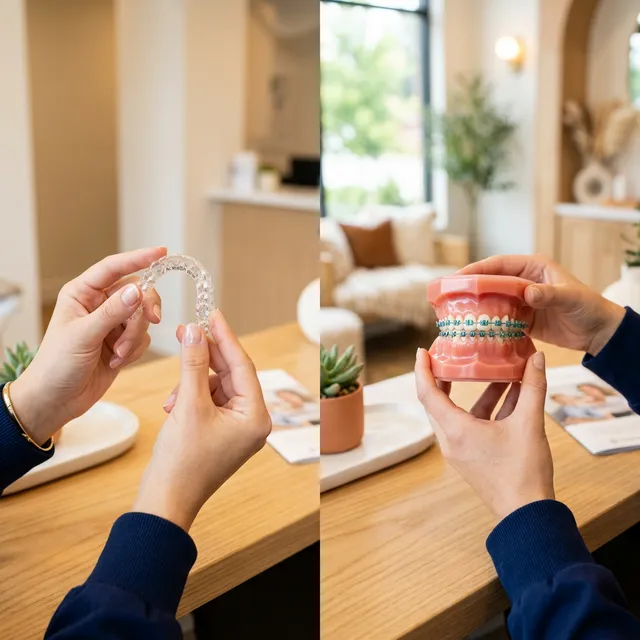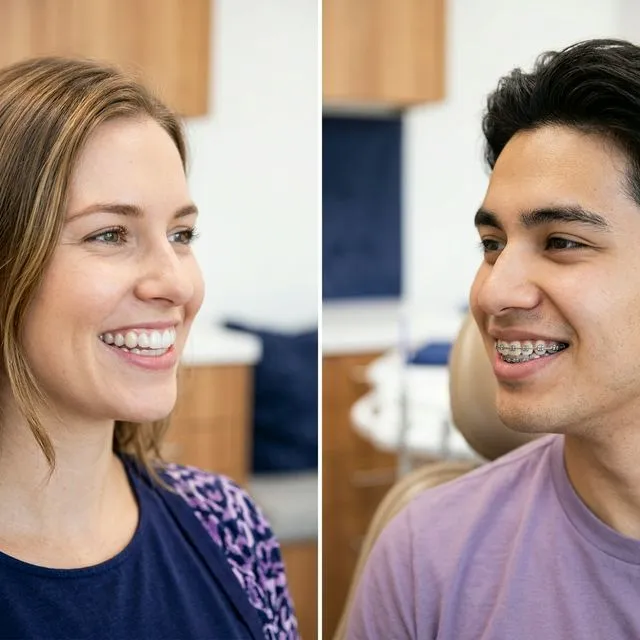

If you have been thinking about straightening your teeth, you are not alone. Patients across Marlborough, MA and the MetroWest region ask us every week whether clear aligners or traditional braces are the better fit. The honest answer is that it depends on your specific bite, your lifestyle, and your goals. At Innova Smiles, Dr. Ambereen Fatima works with each patient to map out a plan that balances aesthetics, function, and budget, whether that means Spark clear aligners, Invisalign, or conventional braces. This guide walks through how clear aligners work, what invisible braces cost in the MetroWest MA area, and how to decide which approach is right for you.
How Clear Aligners Work
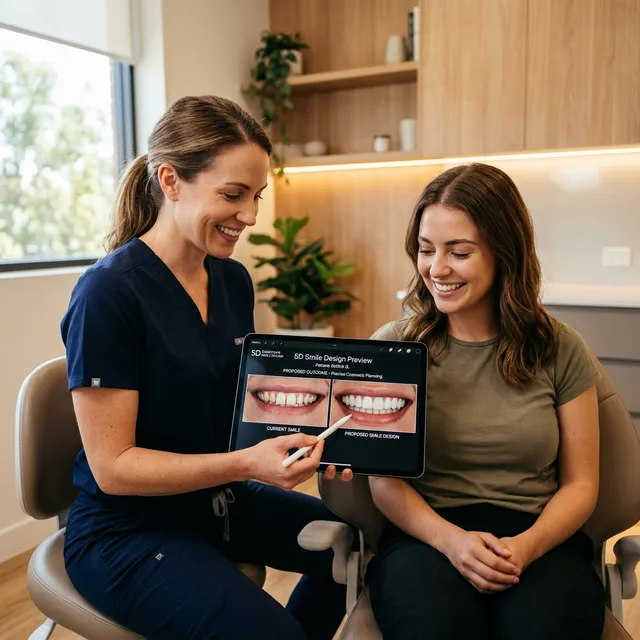
According to the American Association of Orthodontists (AAO), clear aligners apply gentle, controlled force using a series of custom-fabricated thermoplastic trays. You swap to a new set every one to two weeks, and each tray targets a small, precise movement so your teeth gradually shift into alignment. The entire sequence is mapped digitally before your first tray is even printed, giving you a preview of your projected results on screen during your consultation.
The science behind this process involves controlled inflammation in the periodontal ligament, the connective tissue between the root of each tooth and the surrounding bone. When a tray applies sustained pressure, osteoclasts (bone-resorbing cells) break down bone on the pressure side while osteoblasts (bone-building cells) deposit new bone on the tension side. This biological remodeling cycle is the same mechanism braces use; aligners simply deliver the force through a different medium.
A 2023 systematic review in Progress in Orthodontics analyzed 42 clinical trials and found that clear aligners achieved comparable outcomes to fixed braces for mild-to-moderate malocclusion, with statistically significant advantages in patient comfort, oral hygiene maintenance, and treatment satisfaction.
Types of clear aligners we offer
- Spark Clear Aligners: Our preferred system. Spark trays are made from TruGEN material, which is clearer, more stain-resistant, and more comfortable than many competitors. Spark also uses polished, scalloped edges that sit closer to the gumline for a better fit. An independent study published in the Angle Orthodontist (2021) found that TruGEN material sustained its force delivery more consistently than competing thermoplastic materials over a 14-day wear cycle.
- Invisalign: The most widely recognized aligner brand. Invisalign offers SmartTrack material and a large library of case data built from millions of treated patients. We also offer Invisalign Teen with compliance indicators built into each tray.
Both systems use attachments (small tooth-colored bumps bonded to specific teeth) and, when needed, precision-cut elastics to achieve complex movements that earlier-generation aligners could not handle. Attachments are placed using a bonding template that ensures exact positioning, they are barely visible and are removed without damage to enamel when treatment is complete.
Daily expectations for aligner wearers
- Wear 20 to 22 hours per day, the trays are only out during meals and oral hygiene
- Remove only for eating, drinking anything other than plain water, and brushing
- Clean trays with lukewarm water and clear soap, not hot water, which can warp the plastic
- Store trays in a protective case whenever they are out of your mouth
- Brush and floss before reinserting trays after meals to avoid trapping bacteria against tooth surfaces
Who Is a Good Candidate for Clear Aligners?
Clear aligners work well for mild to moderate crowding, spacing, overbite, underbite, crossbite, and open bite. Ideal candidates are patients who can commit to the required wear time and who do not have severe skeletal discrepancies. Here is a breakdown of conditions and how aligners handle them:
| Condition | Aligner suitability | Notes |
|---|---|---|
| Mild to moderate crowding | Excellent | Most common reason patients seek aligners |
| Spacing and gaps | Excellent | Gaps up to 6mm respond well |
| Overbite (mild to moderate) | Good | Attachments and elastics assist correction |
| Underbite (dental, not skeletal) | Good | Skeletal underbites may need surgery |
| Crossbite | Good to fair | Depends on whether the issue is dental or skeletal |
| Open bite | Fair | Requires careful case selection and compliance |
| Severe rotations | Limited | Braces are typically more predictable |
During your consultation, Dr. Fatima evaluates your teeth, gums, jaw joints, and bite relationship to confirm whether aligners can deliver the outcome you want. She also takes full-mouth digital radiographs to assess root length, bone levels, and any pathology that could affect treatment. Patients from Hudson, Northborough, Sudbury, Framingham, and Westborough regularly visit our Marlborough office for aligner evaluations.
Clear Aligners vs. Braces: A Head-to-Head Comparison
Understanding the differences between clear aligners and traditional braces helps you make a confident decision. Here is how they compare across the factors patients care about most:
Aesthetics
Clear aligners are virtually invisible. The trays are fabricated from transparent thermoplastic material, and most people will not notice them in conversation or photographs. Metal braces, by contrast, are immediately visible. Ceramic braces offer a middle ground, tooth-colored brackets reduce visibility, but the archwire is still noticeable. For adults in professional settings and teens concerned about appearance, invisible braces are often the deciding factor.
Comfort
Both options cause some discomfort as teeth move. Braces can irritate the inner cheeks and lips due to brackets and wires, especially in the first weeks and after adjustments. Aligners produce a pressure sensation when a new tray is inserted, but the smooth plastic does not cause soft-tissue irritation. A 2020 study in the European Journal of Orthodontics found that aligner patients reported significantly lower pain scores than braces patients at every measured time point during treatment.
Oral hygiene during treatment
This is where clear aligners have a decisive advantage. Because the trays are removable, you brush and floss normally, no threading floss under archwires, no navigating around brackets with special brushes. The ADA notes that patients with fixed braces face a higher risk of decalcification (white spot lesions) and gingivitis during treatment due to the difficulty of maintaining adequate oral hygiene around the hardware. With aligners, your home-care routine stays the same as it was before treatment.
Eating and drinking
With aligners, you remove the trays and eat whatever you want, there are no dietary restrictions. Braces patients must avoid hard, sticky, and chewy foods that can break brackets or bend wires. No popcorn, no caramel, no biting into apples. For many patients across MetroWest, this freedom is a major quality-of-life advantage.
Treatment monitoring
Both options require regular office visits. Braces typically need adjustments every four to six weeks. Aligner patients visit every six to eight weeks for progress checks and to pick up new tray sets. At Innova Smiles, we also use digital progress tracking between appointments — Dr. Fatima reviews photos submitted through our patient portal and can flag tracking issues before they require an in-office correction.
When Braces Still Win
A 2023 review in the American Journal of Orthodontics and Dentofacial Orthopedics found that complex cases, such as severe overbites, significant rotations, or teeth that need vertical repositioning, still respond best to bracket-and-wire systems. Braces give the clinician more precise control over individual tooth angles and can address skeletal issues that aligners alone cannot correct.
Specific scenarios where Dr. Fatima typically recommends braces over aligners:
- Severe skeletal discrepancies requiring jaw repositioning or surgical orthodontics
- Impacted canines or premolars that need to be guided into the arch with bonded attachments and wire mechanics
- Extreme rotations of more than 45 degrees, where aligner force vectors lack predictability
- Compliance concerns, braces work 24/7 regardless of patient behavior, making them the safer bet for patients who struggle with consistency
Compliance is easier with braces because they are always on. Aligners demand discipline, but for patients who follow the protocol, results are equally impressive.
Health Benefits of Straightening Your Teeth
Orthodontic treatment is not purely cosmetic. The ADA emphasizes that properly aligned teeth are easier to brush and floss, reducing the risk of cavities and gum disease. Crowded teeth create tight contact points where plaque accumulates and floss cannot reach effectively. A 2019 study published in the Journal of Dental Research found that adults with untreated moderate-to-severe crowding had a 67 percent higher incidence of interproximal caries compared to those with well-aligned dentition.
Additional health benefits of straightening your teeth include:
- Reduced jaw pain and TMJ symptoms. Bite correction redistributes forces more evenly across all teeth, reducing strain on the temporomandibular joint.
- Less tooth wear. Misaligned teeth create uneven contact points that concentrate chewing forces, leading to premature enamel wear, chipping, and fracture.
- Improved chewing efficiency. Properly aligned teeth grind food more effectively, which supports better digestion and nutrition.
- Lower bruxism risk. Patients who grind their teeth often see reduced symptoms after alignment therapy, since properly positioned teeth distribute biting forces more evenly. For patients who continue to grind, a custom night guard provides additional protection.
- Better periodontal health. Crowding makes it harder to clean the gumline, increasing the risk of gum disease. Straightening teeth reduces pocket depths and improves gingival health over time.
Invisible Braces Cost: What to Expect in MetroWest MA
| Treatment | Typical duration | Estimated investment (Innova Smiles) |
|---|---|---|
| Spark clear aligners | 6–18 months | $2,500–$5,500 |
| Invisalign | 6–18 months | $2,500–$5,500 |
| Metal braces | 18–24 months | $3,000–$7,000 |
| Ceramic braces | 18–24 months | $4,000–$8,000 |
The cost of clear aligners varies based on case complexity, the number of trays needed, and whether refinement rounds are required. At Innova Smiles, the quoted price for Spark or Invisalign includes all digital scans, all trays (including refinements), all attachments and elastics, all progress-check appointments, and one set of retainers.
Many dental insurance plans cover a portion of orthodontic treatment. PPO plans from Delta Dental, Blue Cross Blue Shield, Aetna, and Cigna commonly include orthodontic benefits of $1,000 to $2,500 as a lifetime maximum. Our treatment coordinators verify your benefits before you commit.
We also offer CareCredit and Cherry financing with 0 percent APR promotional periods, making monthly payments as low as $99 to $150 depending on the plan length. For patients without insurance, our Innova In-House Membership Plan provides discounts on all orthodontic treatment with no annual maximums or waiting periods.
For a detailed cost comparison between Spark and Invisalign, see our post on Invisalign cost vs. Spark aligners.
What to Expect During Treatment
After your initial scan, completely digital, no messy impressions, your custom trays are fabricated and shipped to our Marlborough office. Here is the typical treatment timeline:
- Consultation and scan (visit 1). Dr. Fatima examines your teeth and bite, takes digital x-rays, and captures a full-arch iTero scan. You see a projected outcome on screen before leaving the office.
- Treatment plan review (visit 2, about 2 weeks later). We walk through the finalized digital plan, discuss the projected number of trays and timeline, and present your cost and financing options.
- Attachment placement and first trays (visit 3). Tooth-colored attachments are bonded, and you receive your first several sets of trays with instructions.
- Progress checks (every 6–8 weeks). Dr. Fatima monitors tracking, makes adjustments, and distributes your next sets of trays.
- Refinement (if needed). If certain teeth have not fully reached their target position, a short round of additional trays fine-tunes the result.
- Retainer delivery. Custom retainers are fabricated from your final tooth positions and delivered the day your last tray comes out.
Most patients report mild pressure for the first day or two after switching trays, but it fades quickly. Over-the-counter pain relievers are rarely needed beyond the first few tray changes.
Retainers After Treatment
Aligners or braces, retainers are essential after active treatment ends, no matter which method aligned the teeth. Without a retainer, teeth naturally tend to shift back toward their original positions, a phenomenon called orthodontic relapse. The AAO reports that some degree of relapse occurs in the majority of orthodontic patients who discontinue retainer wear.
At Innova Smiles, we provide both clear removable retainers and bonded (permanent) retainers depending on your case and preference. Dr. Fatima typically prescribes nightly retainer wear for the first six months, then tapers to three to four nights per week long-term. Your retainer is included in your overall treatment plan, there is no additional charge.
Aligner Care and Hygiene Tips
Keeping your aligners clean prevents odor, staining, and bacterial buildup. The ADA recommends these daily practices for aligner wearers:
- Rinse trays every time you remove them, even a quick rinse under lukewarm water prevents saliva and plaque from drying on the surface.
- Brush trays gently with a soft toothbrush, avoid toothpaste, which can be abrasive and scratch the plastic. Use clear, unscented soap or a dedicated aligner cleaner instead.
- Never use hot water, temperatures above 120 degrees Fahrenheit can warp the thermoplastic material and compromise the fit.
- Store in the case, always, leaving trays wrapped in a napkin is the number-one way patients accidentally throw them away.
- Soak weekly, a retainer-cleaning tablet dissolved in lukewarm water eliminates bacteria and keeps trays fresh.
Choosing Confidently: Clear Aligners vs. Braces
The best way to decide between clear aligners and braces is a thorough in-person evaluation. Dr. Fatima will assess your bite, review your dental history, and discuss your goals and lifestyle before recommending a treatment path. There is no pressure and no obligation, just an honest clinical opinion from a dentist who has managed thousands of orthodontic cases across MetroWest MA.
Call (508) 481-0110 or schedule a complimentary smile assessment at Innova Smiles in Marlborough to get started.
Frequently Asked Questions
Are clear aligners faster than traditional braces? Often yes -- Spark and Invisalign typically run 6 to 18 months while traditional metal braces typically run 18 to 24 months. The difference is most pronounced in mild-to-moderate cases. For complex cases with severe rotations, impacted teeth, or skeletal discrepancies, braces may still be the right call and the timeline difference shrinks. Dr. Fatima maps a projected timeline at your consultation based on your specific case.
Are clear aligners more expensive than braces? At Innova Smiles, Spark and Invisalign clear aligners run $2,500 to $5,500, while metal braces run $3,000 to $7,000 and ceramic braces $4,000 to $8,000. Clear aligners are often comparable to or less than braces for similar case complexity. The quoted aligner price includes all digital scans, all trays (including refinements), attachments and elastics, all progress-check appointments, and one set of retainers.
Can clear aligners fix severe crowding or only mild cases? Clear aligners work well for mild-to-moderate crowding, spacing, overbite, underbite, crossbite, and open bite. For severe skeletal discrepancies, extreme rotations beyond 45 degrees, impacted teeth, or compliance concerns where 22-hour daily wear isn't realistic, Dr. Fatima typically recommends braces. The American Journal of Orthodontics and Dentofacial Orthopedics has published evidence that complex cases still respond best to bracket-and-wire systems for precise control.
Do clear aligners hurt as much as braces? Both options cause some discomfort as teeth move, but a 2020 study in the European Journal of Orthodontics found aligner patients reported significantly lower pain scores than braces patients at every measured time point. Braces can irritate inner cheeks and lips due to brackets and wires. Aligners produce a pressure sensation when a new tray is inserted, but the smooth plastic doesn't cause soft-tissue irritation.
Will my dental insurance cover clear aligners? Many dental insurance plans cover a portion of orthodontic treatment, including clear aligners. PPO plans from Delta Dental, Blue Cross Blue Shield, Aetna, and Cigna commonly include orthodontic benefits of $1,000 to $2,500 as a lifetime maximum. Our treatment coordinators verify your specific benefits before you commit. We also offer 0% APR financing through CareCredit and Cherry, often resulting in monthly payments of $99 to $150.
Can I drink coffee or tea with my clear aligners in? No -- only plain water with trays in. Coffee, tea, soda, and sports drinks stain trays and can feed decay against the enamel. Hot beverages can also warp the thermoplastic material and change the fit. Remove your aligners, enjoy your drink, brush your teeth (or at minimum rinse with water), then reinsert.
Related Articles
- Invisalign vs. Braces: Costs, Timeline & Results
- Spark Aligners vs. Braces for Adults
- How Much Do Spark Aligners Cost in Massachusetts?
- Mail-Order Aligners: Risks Without Dentist Supervision