Featured Answer: Can I get implants if I have bone loss?
Yes, you can absolutely receive dental implants even if you have experienced significant jawbone deterioration. For moderate bone loss, a procedure called bone grafting rebuilds the necessary foundation. For severe upper jaw atrophy, zygomatic implants bypass the jawbone entirely, anchoring directly into the dense cheekbone. Both methods are highly effective and predictable when meticulously planned using 3D imaging.
One of the most disheartening experiences for a patient is deciding they are finally ready to restore their smile, only to be told by a dentist, "You do not have enough bone for implants."
For years, severe bone loss meant that a patient's only option was a traditional, removable denture—a solution that often slips, restricts diet, and fails to stop further facial collapse. Today, that is no longer the reality.
At Innova Smiles, serving Marlborough, Framingham, and the greater MetroWest region, we specialize in complex implantology. We believe that previous tooth loss or long-term denture use should not disqualify you from a permanent, confident smile.
In this comprehensive guide, we will explore exactly what dental implants for bone loss entail, the precise bone density requirements, and how modern techniques ensure incredibly high success rates.
The Physiology of Bone Loss: Why It Happens
To understand the solutions, we must first understand the problem. Your jawbone is not a static block of calcium; it is living tissue that constantly remodels itself based on physical stimulation.
The roots of your natural teeth act as stimulators. Every time you chew, the force travels down the root and signals the surrounding bone to remain dense and strong. When a tooth is extracted, that stimulation ceases immediately.
Without this mechanical signal, the body assumes the jawbone is no longer needed in that specific area and begins to resorb (reabsorb) the minerals for use elsewhere in the body.
- Within the first year of tooth loss, the jawbone can lose up to 25% of its width.
- Over multiple years, the bone loses height, eventually causing the lower third of the face to take on a sunken, prematurely aged appearance.
- Using a traditional removable denture actually accelerates this process, as the hard acrylic base compresses the gum tissue and restricts blood flow to the underlying bone.
Bone Density Requirements for Dental Implants
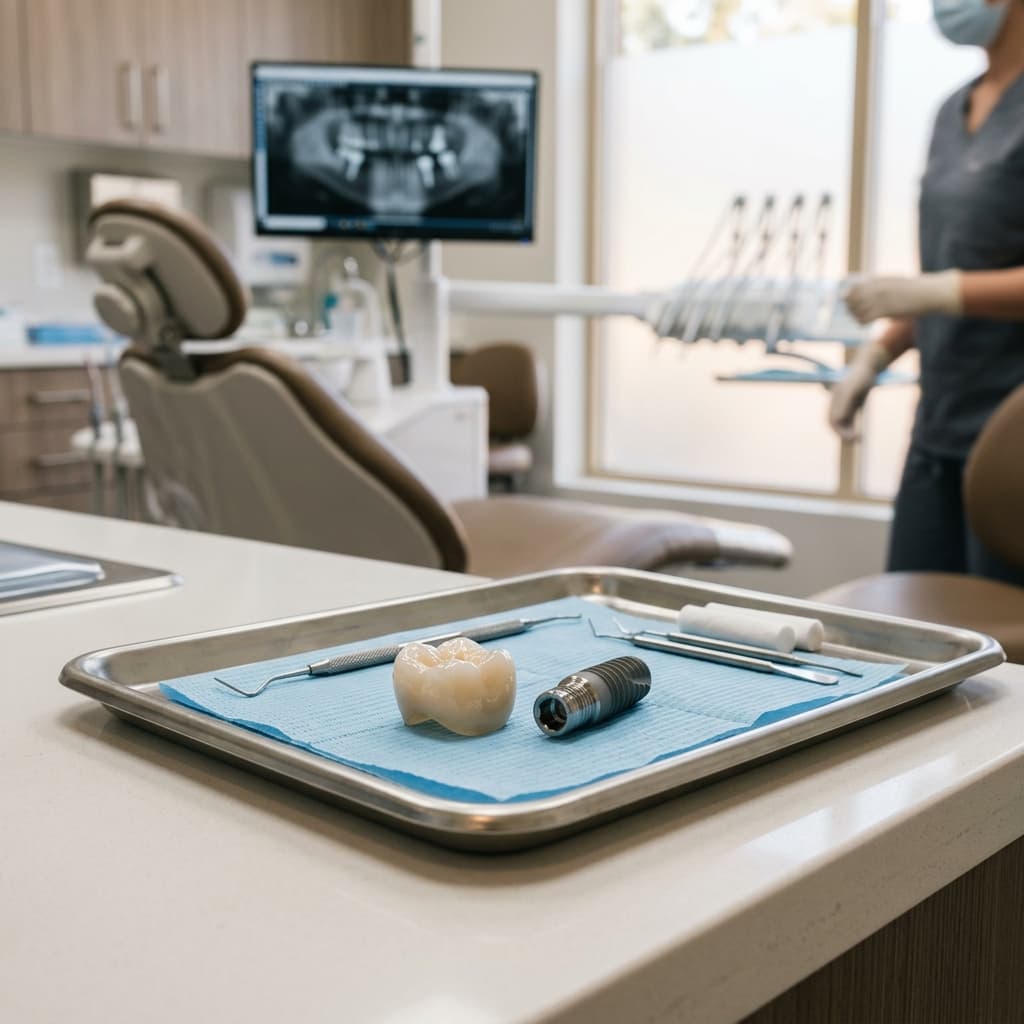
A dental implant is essentially a highly engineered titanium screw. For that screw to remain stable and withstand the immense biting forces of the human jaw, it must be surrounded by a minimum volume of healthy bone.
Generally, successful implant placement requires:
- Sufficient Width: At least 1.5 to 2 millimeters of bone on all sides of the implant.
- Sufficient Height: Enough vertical bone to fully encase the implant (typically 8 to 10 millimeters, though shorter specialized implants exist).
- Quality Density: The bone must be dense enough (like hard wood rather than soft styrofoam) to provide initial stability during the healing phase.
If a patient does not naturally meet these bone density requirements, we must engineer a solution to create that foundation.
Standard Solutions: Bone Grafting and Sinus Lifts
The most common and highly predictable method for treating bone loss is bone grafting.
A bone graft is a surgical procedure where biocompatible bone material (which can be synthetic, donor-derived, or from your own body) is placed into the area of deficiency. Over several months, this material acts as a scaffold. Your body sends osteoblasts (bone-building cells) to the site, replacing the graft material with strong, living natural bone.
1. Socket Preservation (The Preventative Approach)
Ideally, bone loss is prevented before it starts. If you need a tooth extraction, Dr. Fatima can place a bone graft directly into the empty socket on the very same day. This preserves the natural ridge of your jaw, ensuring you have the perfect foundation for an implant 3 to 4 months later.
2. Ridge Augmentation
If your tooth has been missing for years and the jawbone has become too thin (resembling a knife edge), a ridge augmentation is performed. We carefully pull back the gum tissue, place the graft material to widen the jawbone, and cover it with a protective membrane while it heals.
3. The Sinus Lift (For Upper Jaw Implants)
The bone in the upper back jaw is naturally softer and shallower than the lower jaw. Additionally, the maxillary sinuses sit just above the roots of your upper teeth. When upper molars are lost, the sinus cavity often drops down, expanding into the empty space left by the roots.
If we attempt to place an implant here, it could puncture the sinus membrane. To solve this, we perform a sinus lift. We gently lift the sinus membrane back into its proper position and place a bone graft underneath it. Once healed, this creates a deep, solid foundation for your new upper teeth.
Advanced Solutions for Severe Atrophy: Zygomatic Implants
What happens when the bone loss in the upper jaw is so severe that even a sinus lift and massive bone grafting are not viable options?
In the past, these patients were simply told implants were impossible. Today, we utilize an extraordinary surgical innovation: zygomatic implants.
How Zygomatic Implants Work
Instead of anchoring into the soft, resorbed bone of the upper jaw (the maxilla), zygomatic implants are significantly longer and anchor directly into the zygomatic bone (the cheekbone).
The cheekbone is incredibly dense and does not resorb or melt away after tooth loss. Because this bone provides exceptional primary stability, zygomatic implants often allow for "immediate loading"—meaning we can place the implants and attach a temporary set of fixed dental prosthetics on the exact same day.
The Benefits of Zygomatic Implants:
- No Bone Grafting Required: Bypasses the need for complex, lengthy sinus lifts and grafting procedures.
- Shorter Treatment Timeline: Because we are anchoring into dense facial bone, the months of waiting for a graft to heal are eliminated.
- Immediate Function: Patients often walk out of the office with a fixed, unmovable smile on the same day as surgery.
The Dental Implant Success Rate in Compromised Bone
It is natural to wonder: If I have to undergo all this grafting, or rely on specialized implants, is the procedure still reliable?
The answer is unequivocally yes. When performed by a highly credentialed specialist using modern protocols, the dental implant success rate for patients with previous bone loss is statistically comparable to patients with pristine, uncompromised bone—regularly exceeding 90-95% over a 10-year period.
However, this high success rate is entirely dependent on meticulous planning and surgical precision.
The Importance of CBCT 3D Imaging
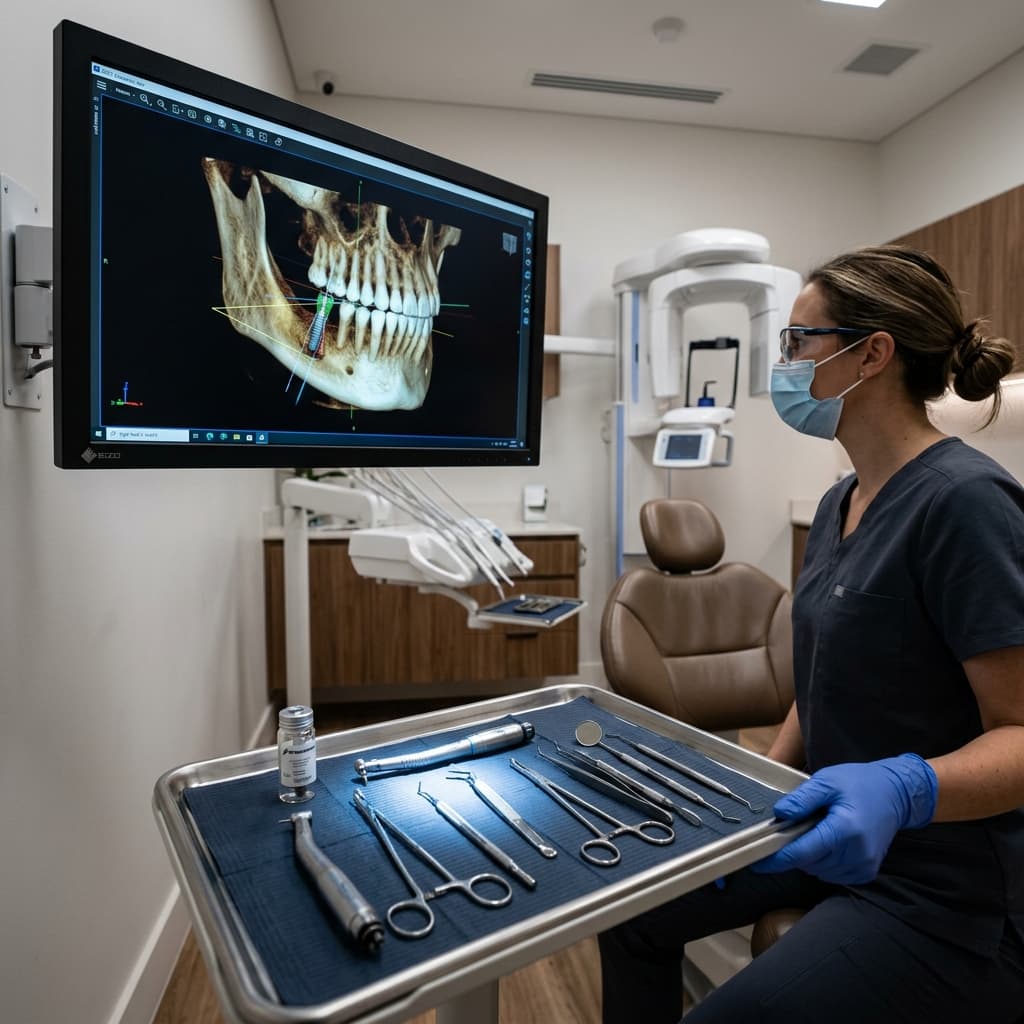
At Innova Smiles, we never guess. Dr. Ambereen Fatima holds prestigious dual fellowships (FICOI and FAAIP), signifying an elite level of training in complex implantology. Every procedure begins with a CBCT 3D scan.
This technology allows us to view your jawbone, nerve pathways, and sinus cavities in high-definition 3D. We use this data to virtually map out the exact placement, angle, and depth of your implants before you ever sit in the surgical chair. This eliminates surprises, minimizes surgical trauma, and guarantees the highest possible success rate.
Choosing the Right Dental Prosthetics
Once the foundation is secure—whether through natural bone, grafted bone, or zygomatic anchoring—the final step is designing your dental prosthetics.
For patients replacing an entire arch of teeth due to severe bone loss, the "All-on-4" or "All-on-6" approach is often utilized. This involves placing four to six implants to support a permanent, fixed bridge of highly aesthetic, custom-crafted teeth. These prosthetics are milled from advanced materials like monolithic zirconia, ensuring they look stunningly natural and are completely resistant to staining and chipping.
Unlike a traditional denture, these prosthetics do not cover the roof of your mouth, allowing you to fully taste your food, speak naturally, and smile without fear of your teeth slipping.
Your Bone Loss Does Not Define Your Smile
Being told you "do not have enough bone" is no longer the end of your implant journey—it is simply a clinical challenge that requires an advanced solution.
If you have been struggling with loose dentures, hiding your smile, or avoiding the foods you love due to severe bone loss, it is time to explore what modern implant dentistry can do for you.
We invite you to our Marlborough, MA office for a comprehensive consultation. We proudly serve patients from Northborough, Westborough, and across MetroWest.
Ready to find out exactly what is possible for your smile? Call us at (508) 481-0110 or Book Online. We will provide a 3D scan, assess your exact bone density, and present a clear, customized roadmap to a permanent, confident smile.
Related Reading
Sources & Further Reading
- Chrcanovic et al. (2016) Zygomatic implants: a systematic review — International Journal of Oral & Maxillofacial Surgery