When Should My Baby First See the Dentist?
The American Academy of Pediatric Dentistry (AAPD) and the American Dental Association both recommend scheduling your child's first dental visit by their first birthday, or within six months of the first tooth appearing, whichever comes first. At Innova Smiles in Marlborough, MA, Dr. Fatima welcomes babies and toddlers for gentle, positive first experiences that set the foundation for a lifetime of healthy smiles.
Many parents across Hudson, Northborough, Southborough, Framingham, and the MetroWest community are surprised by this timeline. A common reaction: "My baby only has two teeth, what could the dentist possibly do?" The answer is more than you might think. Early visits are about prevention, education, and catching problems when they are easiest to fix.
Why Start So Young?
Cavity prevention begins early
The CDC reports that baby bottle tooth decay (early childhood caries) can develop as soon as the first tooth erupts and affects roughly 23% of children aged 2 to 5. That means nearly one in four preschoolers already has cavities. Prolonged bottle feeding, especially with milk or juice at bedtime, is the most common cause. By age 1, we can identify risk factors and provide guidance before problems develop.
Early childhood caries is not a cosmetic issue. Left untreated, cavities in baby teeth cause pain, infections, difficulty eating, and speech delays. The American Academy of Pediatric Dentistry reports that dental decay is the single most common chronic childhood disease in the United States, five times more common than asthma.
Building positive associations
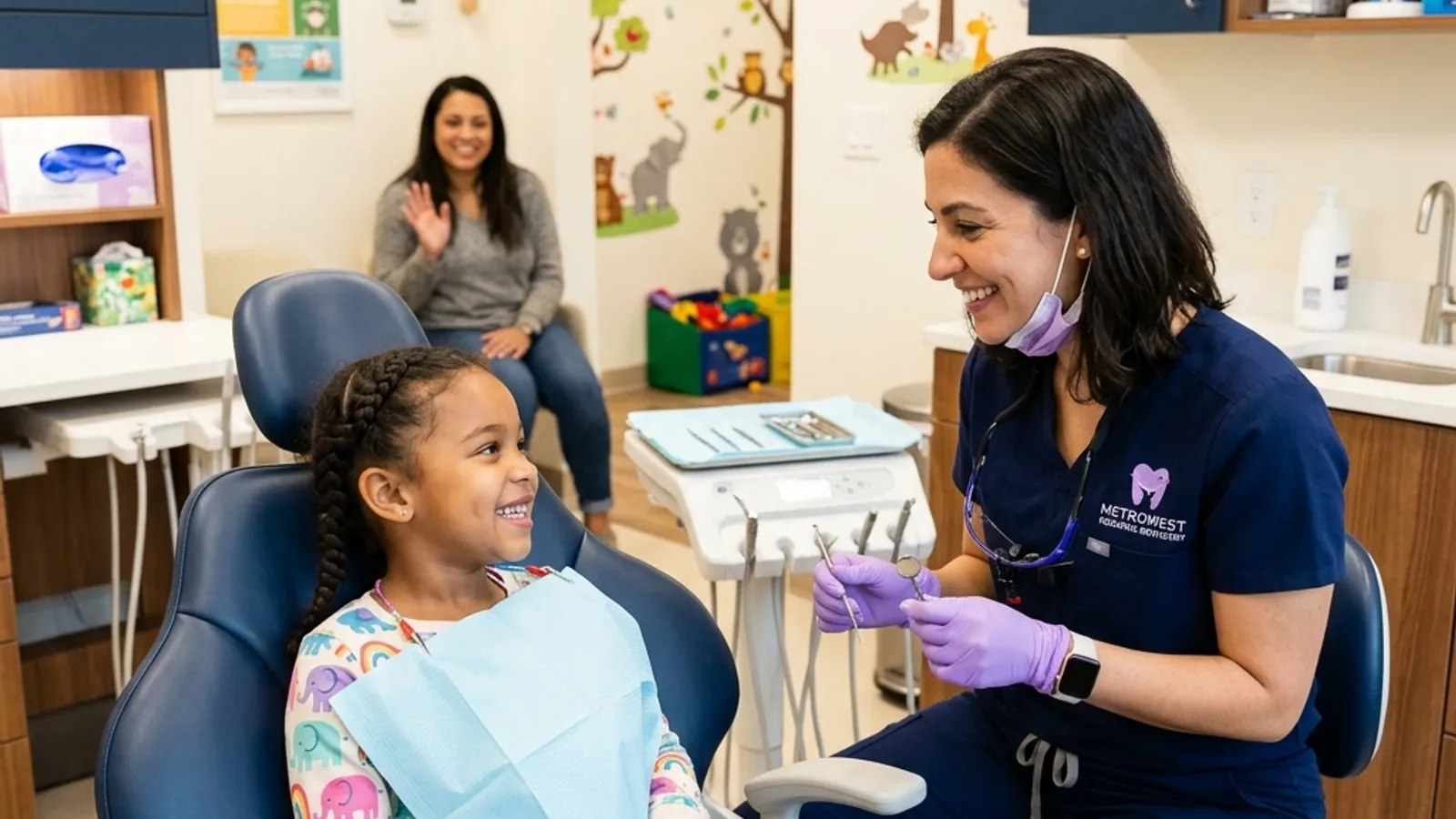
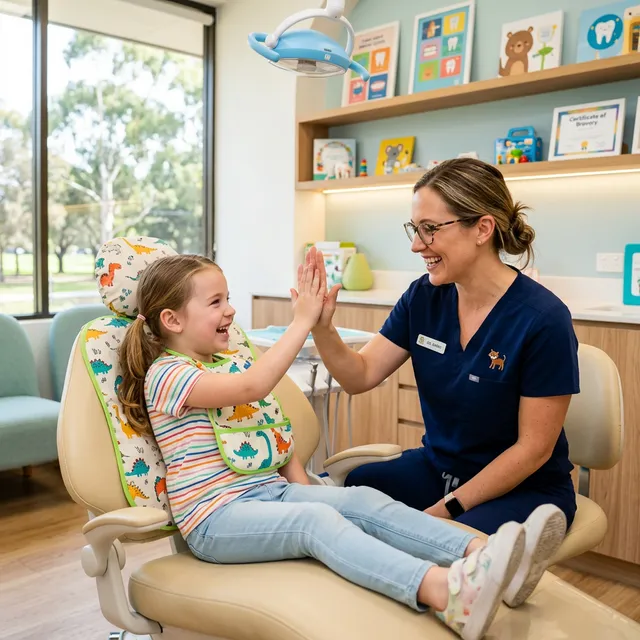
Research published in the journal Pediatric Dentistry shows that children who visit the dentist before age 2 are significantly less likely to develop dental anxiety later in life. The first visit is designed to be short, gentle, and fun, building trust that carries forward for years.
Children who have their first dental experience during a painful emergency, a toothache, a fall, an abscess, are far more likely to develop lasting dental phobia. Starting with a calm, positive visit while your child is healthy establishes the dentist's office as a safe, familiar place rather than a scary one.
Monitoring development
Early visits allow us to track jaw growth, tooth eruption patterns, and identify potential issues like tongue-tie, lip-tie, or thumb-sucking habits before they become complex problems. Catching a crossbite or an eruption abnormality at 12 months is infinitely simpler to manage than discovering it at age 6 when permanent teeth are already arriving.
What Happens at the First Visit: Step by Step
A baby's first dental appointment is often called a "lap exam" because the child sits in the parent's lap while Dr. Fatima examines their mouth. Here is a detailed walkthrough of what happens from the moment you arrive.
Before you enter the treatment room
Our front desk team will collect your child's medical history, including birth history, medications, allergies, and feeding habits. We also ask about fluoride exposure, whether your home water supply is fluoridated (most MetroWest municipal water systems, including Marlborough and Framingham, are fluoridated) and whether you use fluoride toothpaste.
The knee-to-knee exam
Dr. Fatima and you sit facing each other, knee to knee. Your baby lies across both laps, head in Dr. Fatima's lap, body in yours. This position gives the dentist full visibility while keeping your child secure and close to you. It works well even with squirmy babies because your hands are free to hold your child's hands or offer comfort.
What Dr. Fatima examines
- Teeth, checking each erupted tooth for white spots (the earliest sign of decay), discoloration, enamel defects, or cavities
- Gums, looking for redness, swelling, or signs of infection
- Bite, evaluating how the upper and lower jaws align, checking for crossbite or open bite
- Soft tissues, examining the tongue, cheeks, palate, and floor of the mouth for abnormalities
- Frenulum, checking the tissue under the tongue (lingual frenulum) and upper lip (labial frenulum) for tongue-tie or lip-tie that could affect feeding or speech
- Eruption pattern, noting which teeth have erupted and predicting what comes next
Gentle cleaning
If teeth are present, we polish them with a small, soft rubber cup, similar to what we use for adult cleanings, just smaller. This removes any plaque buildup and gives your child an early experience with the feeling of dental instruments in their mouth.
Fluoride varnish
For babies with erupted teeth (typically 6 months and older), we apply a thin coat of fluoride varnish. The varnish is painted on with a tiny brush, hardens on contact with saliva, and delivers concentrated fluoride directly to the enamel surface. It tastes mildly sweet and takes about 30 seconds. The AAPD strongly recommends fluoride varnish application every 3–6 months for children at elevated caries risk.
Parent coaching
This is the most important part of the first visit. Dr. Fatima will cover:
- Proper brushing technique for your child's age
- Toothpaste type and amount
- Dietary recommendations (especially around juice, milk at bedtime, and sippy cup habits)
- Pacifier and thumb-sucking guidance
- Teething management strategies
- When to transition from bottle to cup (the AAPD recommends by 12–14 months)
The entire visit typically takes 15–20 minutes. Most babies do great, and the ones who cry settle quickly once they realize nothing hurts.
How to Prepare Your Child for Their First Visit
Preparation makes a real difference, even for babies and toddlers. Here are practical strategies that MetroWest families find helpful.
For babies (under 12 months)
- Schedule the appointment during your baby's best time of day, after a nap and a feeding, when they are rested and content
- Bring a favorite toy or comfort item
- Stay calm yourself, babies read your emotional cues, and your relaxed body language matters more than words
For toddlers (12–24 months)
- Read a children's book about visiting the dentist in the days before the appointment
- Play "dentist" at home, count your child's teeth with your finger, let them look in your mouth with a flashlight
- Use positive, simple language: "The dentist will count your teeth and make them shiny"
- Avoid negative words like "hurt," "shot," "drill," or "pain", even in the context of "it won't hurt." Toddlers hear the scary word and miss the reassurance
For older toddlers (2–3 years)
- Let them watch a sibling's dental visit first if possible
- Explain what will happen in order: "First we'll sit in the big chair, then the dentist will look at your teeth, then we'll get a sticker"
- Do not bribe with treats, saying "If you're good at the dentist, we'll get ice cream" implies the visit is something to endure rather than a normal part of life
Common Concerns Parents Have
"My child will scream the entire time."
Some children cry. That is completely normal and expected. Crying during a dental exam is not harmful, and a brief exam while a child is crying is still clinically valuable. Dr. Fatima has examined thousands of young children and can gather the information she needs quickly. Parents are often surprised at how fast their child calms down once the exam is finished.
"My baby only has a few teeth, there's nothing to check."
Even a single tooth can develop a cavity. More importantly, the first visit is about establishing a baseline, screening for developmental issues, and coaching parents on prevention. The teeth are just one part of what we evaluate.
"My child has never been away from me."
They will not be away from you during the exam. The lap exam position keeps your child in direct physical contact with you the entire time. At no point is your baby handed off to a stranger in another room.
"We brush every day, do we really need to go?"
Yes. Home care is essential, but it cannot replace a professional evaluation. A dentist can spot early enamel demineralization (white spot lesions) that are invisible to parents, identify bite problems, and assess whether your brushing technique is reaching all surfaces effectively. Think of it as a well-child visit for teeth, you would not skip a pediatrician appointment just because your child seems healthy.
"My pediatrician checks the teeth at every visit."
Pediatricians do an excellent job screening for obvious problems, but a dental exam is significantly more detailed. Your pediatrician and dentist serve complementary roles, and the AAPD recommends both.
The Complete Teething Timeline
Understanding when teeth typically appear, and what to expect, helps you prepare:
Every child is different. Some babies get their first tooth at 4 months; others do not erupt until 14 months. Both are normal. If your child has no teeth by 18 months, mention it at your next dental visit, we may want to take an X-ray to confirm the teeth are developing beneath the gums.
Managing teething discomfort
Teething can cause fussiness, drooling, mild gum swelling, and a desire to chew on everything. Here is what works and what to avoid:
Safe and effective:
- Chilled (not frozen) teething rings or a cold, wet washcloth
- Gentle gum massage with a clean finger
- Age-appropriate pain relief (infant acetaminophen or ibuprofen for babies 6+ months, follow your pediatrician's dosing guidance)
Avoid:
- Topical benzocaine gels (Orajel), the FDA issued a warning against use in children under 2 due to the risk of methemoglobinemia, a rare but serious blood condition
- Homeopathic teething tablets, the FDA has found inconsistent and potentially unsafe levels of belladonna in some products
- Amber teething necklaces, no evidence of effectiveness, and they pose a choking and strangulation hazard. The American Academy of Pediatrics advises against them.
- Frozen teething rings, extreme cold can damage gum tissue
Bottle Tooth Decay: Prevention Is Everything
Baby bottle tooth decay (early childhood caries, or ECC) is the most common dental disease in children under 5. It typically affects the upper front teeth first, appearing as white spots along the gum line that progress to brown or black cavities.
How it happens
When a baby falls asleep with a bottle of milk, formula, or juice, the liquid pools around the upper front teeth. The natural sugars in these drinks feed oral bacteria, which produce acid that attacks enamel. This happens night after night, and the damage accumulates quickly because saliva flow drops during sleep, removing the mouth's primary defense against acid.
Prevention strategies
- Never put a baby to bed with a bottle containing anything other than plain water
- Transition from bottle to sippy cup by 12–14 months, the AAPD recommends weaning from the bottle entirely by 14 months
- Do not dip pacifiers in honey or sugar to calm a fussy baby
- Limit juice to 4 ounces per day for children 1–3 years old (American Academy of Pediatrics guideline), and serve it only during meals
- Wipe teeth and gums with a damp cloth after nighttime feedings, even breast milk contains sugars that can contribute to decay
- Begin brushing with fluoride toothpaste as soon as the first tooth erupts, a rice-grain-sized smear for children under 3
If you notice white spots on your child's front teeth, do not wait for the next scheduled appointment. These early lesions can be reversed with professional fluoride application and improved home care, but only if caught early. Call (508) 481-0110 and we will see your child promptly.
Baby Teeth Care Tips for Parents
Before teeth appear (0–6 months)
- Wipe gums with a soft, damp cloth after feedings
- Never put a baby to bed with a bottle of milk, formula, or juice
- Begin establishing a routine, the act of cleaning the mouth after feedings builds a habit that carries forward into toothbrushing
First teeth through age 2
- Use a soft infant toothbrush with a rice-grain-sized smear of fluoride toothpaste
- Brush twice daily, morning and before bed
- Begin flossing when two teeth touch each other
- Let your child hold a toothbrush and "help", building familiarity and buy-in, but always follow up with a thorough parent brushing
Ages 3–6
- Increase toothpaste to a pea-sized amount
- Supervise brushing, most children do not have the fine motor dexterity to brush effectively until age 6–7. A useful rule: if they cannot tie their own shoes, they cannot brush their teeth adequately on their own
- Teach spitting (not swallowing) toothpaste, but do not worry about a small amount of incidental swallowing with the pea-sized dose
- Consider dental sealants on the first permanent molars (around age 6), sealants reduce cavity risk on molars by up to 80% for the first two years after application, according to the CDC
When to Start Brushing: The Definitive Answer
This is one of the most common questions we get from Sudbury, Westborough, and other MetroWest families. The answer is straightforward: start brushing the day the first tooth appears.
Before the first tooth, wipe the gums. After the first tooth, brush. The AAPD updated its guidelines in 2014 to recommend fluoride toothpaste from the first tooth, a change from earlier guidance that suggested water-only brushing until age 2. The reasoning: fluoride's cavity-prevention benefit outweighs the minimal risk of fluorosis from the tiny rice-grain amount.
Brushing technique for infants and toddlers:
- Lay your child in your lap or on a bed with their head toward you
- Use a small, soft-bristled brush designed for infants
- Angle the bristles toward the gum line at 45 degrees
- Use gentle circular motions on all surfaces, front, back, and chewing surfaces
- Pay special attention to the upper front teeth along the gum line, this is where bottle decay starts
- Total brushing time: about 1–2 minutes
Why Baby Teeth Matter
"They're just baby teeth, they'll fall out anyway." We hear this often, but baby teeth serve critical functions:
- Space holders for permanent teeth, losing a baby tooth too early can cause crowding and alignment problems that require orthodontic treatment later
- Speech development, front teeth are essential for learning to speak clearly; the sounds "th," "f," "v," and "s" all require the tongue to contact or approach the front teeth
- Nutrition, children need healthy teeth to chew a balanced diet; untreated cavities cause pain that leads to picky eating and nutritional gaps
- Self-confidence, a healthy smile matters even for young children; kids with visible decay are more likely to be teased by peers
- Jaw development, baby teeth guide the growth of the jawbone; premature loss can alter the development of the entire dental arch
A baby tooth is not meant to fall out until the permanent tooth beneath it is ready to take its place. The lower front baby teeth typically last until age 6–7, the upper front until 7–8, and the back molars until 10–12. A baby tooth lost years early, due to decay or trauma, leaves a gap that neighboring teeth drift into, blocking the permanent tooth from erupting in its proper position.
Choosing the Right Dentist for Your Baby
Look for a practice that:
- Welcomes infants and toddlers (not all general practices do)
- Creates a calm, child-friendly environment
- Takes time to educate parents without judgment
- Uses kid-safe techniques and modern technology
- Has experience with the full spectrum of children's dental needs, from routine cleanings to managing dental trauma in toddlers
At Innova Smiles, we treat children of all ages, from first-tooth babies to teenagers ready for clear aligners. Families from Sudbury, Westborough, Shrewsbury, and throughout MetroWest choose us for our gentle, unhurried approach to children's dental care.
Your child's first dental visit is one of the best investments you can make in their long-term health. It takes 15 minutes, costs less than a single cavity filling, and builds a foundation that protects their smile for decades. Contact us or call (508) 481-0110 to schedule.
Related Articles
- Baby Teeth Chart: Tooth Eruption Order & Timing
- Children's Dentist Near Me in Marlborough
- Dental Sealants for Children in Marlborough
- Dental Anxiety in Children: A Parent's Guide
Related Services
- Children's Dentistry, fun, fear-free dentistry for kids and teens
- Dental Exams & Cleanings, comprehensive preventive visits
- Preventive Dentistry, your complete guide to preventive and family dentistry