
Featured Answer: How can I help my child overcome fear of the dentist?
Start by normalizing dental visits well before the appointment. Read picture books about the dentist, play pretend check-ups at home, and use calm, positive language, never threaten a child with the dentist as punishment. On the day of the visit, arrive early so your child can adjust to the environment. Let the dental team know about your child's specific fears. At Innova Smiles in Marlborough, we use "tell-show-do", explaining each step, showing the tools, and then performing the procedure, so children always know what comes next. Most children who have one or two positive visits develop lasting comfort with dental care.
How Common Is Dental Anxiety in Children?
If your child resists dental visits, you are far from alone. Research published in the International Journal of Paediatric Dentistry estimates that between 9 and 20 percent of children experience clinically significant dental anxiety, a level of fear that goes beyond mild nervousness and interferes with their ability to receive dental treatment. A separate survey in the European Archives of Paediatric Dentistry found that roughly one in four children reports some degree of fear before dental appointments, even if it does not reach a clinical threshold.
These numbers matter because dental anxiety that begins in childhood tends to persist into adulthood. A longitudinal study published in Community Dentistry and Oral Epidemiology followed anxious children over a 20-year period and found that a majority still experienced elevated dental fear as adults, leading to avoidance of care, worse oral health outcomes, and a greater need for invasive treatments when they finally did seek help.
The encouraging news is that this trajectory is not fixed. When parents and dental teams work together using age-appropriate strategies, most children can develop positive associations with dental care that protect them for life.
What Causes Dental Fear in Children?
Dental anxiety in children rarely has a single cause. Understanding the roots of your child's fear is the first step toward addressing it effectively.
Prior Negative Experience
This is the most potent trigger. A child who has experienced pain during a dental procedure, even a brief sting from an injection or pressure during an extraction, may associate all dental visits with that memory. The brain stores pain memories with particular intensity, and children have fewer coping mechanisms than adults for putting a negative experience into perspective.
Research in the Journal of Dental Research confirms that children who experience pain during their first dental procedure are significantly more likely to develop lasting dental anxiety compared to children whose early visits are comfortable and uneventful.
Parental Anxiety Transfer
Children pick up on their parents' emotional states more than parents realize. A parent who is visibly nervous in the waiting room, grips the armrest during their own cleaning, or tells stories about painful dental experiences sends a powerful signal, even without intending to. A study in the International Journal of Paediatric Dentistry (2018) found a statistically significant correlation between maternal dental anxiety scores and their children's fear levels, particularly in children under age eight.
This is not about blame. If you carry your own dental anxiety, recognizing it allows you to take conscious steps to avoid transmitting it. Even simple changes, like maintaining a neutral, matter-of-fact tone when discussing the dentist, can reduce the transfer effect.
Fear of Pain and the Unknown
Young children have limited experience with medical environments. The sights, sounds, and sensations of a dental office, the chair that moves, the bright overhead light, the sound of suction, the unfamiliar taste of fluoride, can overwhelm a child who does not know what to expect. Fear of pain is often based on imagination rather than actual experience: a child who has never had a cavity filled may still anticipate that it will hurt because they have heard other children or adults talk about it.
Loss of Control
Lying in a reclined chair with your mouth open while an adult works inside it is an inherently vulnerable position. For children who value autonomy, particularly strong-willed preschoolers and independent-minded tweens, the loss of control can trigger anxiety or resistance that has little to do with pain and everything to do with feeling powerless.
Sensory Sensitivities
Some children are more sensitive to sensory input than others. The taste of latex gloves, the vibration of a polishing cup, the texture of fluoride varnish, or the sound of the air-water syringe can be distressing for children with heightened sensory processing. This is especially relevant for children on the autism spectrum or those with sensory processing differences, but it can affect any child.
Age-Specific Strategies for Managing Dental Anxiety
A strategy that works brilliantly for a three-year-old will likely feel patronizing to a twelve-year-old. Here are targeted approaches for each developmental stage.
Toddlers (Ages 2-3): Building Familiarity
At this age, fear is primarily about the unfamiliar. Toddlers do not have the cognitive tools to understand explanations about why dental visits are good for them, they respond to environment, routine, and emotional cues from caregivers.
What works:
- Role play at home. Use a toothbrush to "count" a stuffed animal's teeth. Let your child be the dentist. Make the experience playful, never clinical.
- Keep visits short. The American Academy of Pediatric Dentistry (AAPD) supports "happy visits", brief introductory appointments where the child simply sits in the chair, maybe opens their mouth for a quick look, and receives a reward. No treatment, no pressure.
- Lap exams. At Innova Smiles, Dr. Fatima often examines toddlers while they sit in a parent's lap, facing the parent. This "knee-to-knee" position keeps the child in physical contact with a trusted adult, dramatically reducing distress.
- Bring a comfort object. A favorite stuffed animal, blanket, or toy can serve as an emotional anchor in an unfamiliar environment.
- Time it right. Schedule appointments during your toddler's best time of day, usually mid-morning, after a nap and a meal. A hungry or tired toddler will struggle in any new environment.
Preschoolers (Ages 4-5): Tell-Show-Do
Preschoolers are curious and responsive to simple explanations. They are beginning to develop the ability to cooperate if they understand what is happening and feel that they have some control.
What works:
- Tell-show-do. This is the single most evidence-supported technique for managing dental anxiety in young children. The dentist or hygienist explains what will happen in age-appropriate language ("I'm going to use Mr. Thirsty to drink up the water in your mouth"), shows the child the instrument, and then performs the procedure. A systematic review in the European Archives of Paediatric Dentistry found that tell-show-do significantly reduces anxiety and increases cooperative behavior in children ages 3 to 7.
- Counting games. "I'm going to count your teeth, can you help me? Let's see if you have twenty!" Turning the exam into a game gives the child a role and a predictable structure.
- Positive reinforcement. Praise specific behaviors: "You did a great job keeping your mouth open" rather than vague "good job." Sticker charts, small prizes from a treasure chest, and high-fives all reinforce the association between the dental visit and a positive outcome.
- Child-friendly language. Avoid words like "shot," "drill," "needle," or "hurt." Dental teams use substitutes — "sleepy juice" for anesthetic, "sugar bugs" for cavities, "tooth counter" for the explorer.
School-Age Children (Ages 6-11): Explanation and Choice
School-age children can understand cause-and-effect reasoning. They want to know why something is being done, and they respond well to feeling respected and involved in the process.
What works:
- Age-appropriate explanations. Explain what a cavity is and why it needs to be fixed, using terms the child can grasp. "There's a soft spot on your tooth where bacteria made a tiny hole. We're going to clean out the soft part and fill it with a strong material so your tooth works perfectly again."
- Give choices. "Would you like to start with the top teeth or the bottom teeth?" "Do you want the strawberry or the mint flavored fluoride?" These small choices restore the sense of control that is often at the root of anxiety in this age group.
- Timers and countdowns. "This is going to take about 30 seconds. I'll count down and you can raise your hand if you need a break." Knowing that the experience has a defined endpoint reduces the feeling of being trapped.
- Breathing techniques. Simple belly breathing, breathe in through the nose for four counts, out through the mouth for four counts, is a coping skill children can learn and use in any stressful situation, not just at the dentist.
- Ceiling-mounted TVs and headphones. Distraction is powerful at this age. At Innova Smiles, children can watch their favorite show during treatment, which shifts attention away from the procedure.
Tweens and Teens (Ages 12+): Autonomy and Honesty
Adolescents want to be treated with respect and honesty. They can detect condescension instantly, and they resent being spoken to as if they were young children.
What works:
- Direct, honest communication. "You might feel some pressure during this part. It shouldn't be painful, but if it is, raise your hand and I'll stop immediately." Teens respond to being given accurate information rather than being reassured with platitudes.
- Acknowledge their feelings. "A lot of people feel nervous about this. That's completely normal" is far more effective than "There's nothing to be afraid of," which dismisses their experience.
- Autonomy. Let the teen decide whether a parent stays in the room or waits outside. Ask for their consent before starting. "Ready? Okay, opening in three, two, one." This collaborative approach builds trust.
- Explain the long-term stakes. Teens are developing adult reasoning. Explain that avoiding dental care now can lead to more extensive and more expensive treatment later, not as a scare tactic, but as straightforward information that respects their ability to make good decisions.
What Parents Should, and Should NOT — Do
Your behavior before, during, and after the dental visit has an enormous influence on your child's experience. Here is a practical guide.
Do NOT:
- Use the dentist as a threat. "If you don't brush your teeth, the dentist will have to drill them" teaches your child that the dentist is a consequence of bad behavior, a punisher to be feared.
- Share your own negative dental experiences. Your child does not need to hear about the time you had a root canal without enough anesthesia. Save those stories for adult conversations.
- Say "It won't hurt." This well-intentioned promise introduces the concept of pain into a situation where the child may not have been thinking about it. If a procedure does cause discomfort, you have also broken the child's trust. Instead, try: "Dr. Fatima will take good care of you."
- Force the child physically. Holding a screaming child down for a dental procedure should be reserved for genuine dental emergencies only. Forced treatment creates traumatic memories that can take years to overcome.
- Bribe excessively. A small reward after the visit is fine. Promising an iPad if the child cooperates raises the stakes so high that the child's anxiety actually increases, the reward implies the experience must be terrible to warrant such a prize.
- Hover anxiously. If you are allowed in the treatment room, sit quietly and let the dental team lead. Your child will pick up on your body language, so keep your posture relaxed and your expression calm.
DO:
- Use positive, neutral language. "We're going to visit Dr. Fatima today so she can count your teeth and make sure they're healthy." Simple, factual, calm.
- Practice at home. Brush a doll's teeth together. Read books like The Berenstain Bears Visit the Dentist or Peppa Pig: Dentist Trip. Watch age-appropriate videos of kids having positive dental experiences.
- Validate feelings without amplifying them. "It's okay to feel a little nervous. New places can feel that way. I'll be right here with you."
- Reward bravery, not compliance. "I'm really proud of you for trying even though you were nervous" is more meaningful than "Good job sitting still." The first acknowledges courage; the second values obedience.
- Schedule wisely. Morning appointments are generally best for young children, they are rested, fed, and at their most resilient. Avoid scheduling after school when fatigue and hunger reduce coping capacity.
- Debrief positively afterward. On the drive home, ask what your child liked. "What flavor toothpaste did you pick? Did you see the fish tank?" Reinforcing positive memories strengthens the overall association.
In-Office Techniques Used at Innova Smiles
At our Marlborough office, Dr. Fatima and the hygiene team use several evidence-based behavior guidance techniques specifically designed for anxious young patients.
Tell-Show-Do
Described above, this remains the most-recommended option. Every unfamiliar instrument is introduced before it touches the child's mouth. The child sees the suction, hears the suction, feels the suction on their finger, and only then does it go near their teeth. This systematic desensitization removes the element of surprise.
Distraction
Ceiling-mounted screens allow children to watch cartoons or movies during treatment. Headphones block the sounds that often trigger anxiety (the whir of the handpiece, the beep of the pulse oximeter). For younger children, a hygienist might narrate a story or play a counting game while Dr. Fatima works.
Voice Control and Pacing
The pace of treatment is adjusted to the child's tolerance. If a child needs a pause, they get a pause, no questions asked. The tone is warm, steady, and calm. Abrupt movements and loud voices are avoided. These subtle environmental controls are based on behavioral research showing that vocal tone and pacing significantly affect pediatric patient cooperation.
Comfort Tools for Children
For children who are nervous about treatment, we focus on pacing, plain-language explanations, and child-friendly comfort supports. Premium topical numbing is applied before local anesthesia when numbing is needed.
These tools do not replace local anesthesia. They make the numbing step and the overall visit easier to tolerate while the child stays awake, responsive, and able to pause treatment with a hand signal.
Graduated Exposure
For children with significant anxiety, we sometimes recommend a series of graduated visits rather than attempting a full appointment on day one. The progression might look like this:
- Visit 1: Tour the office, sit in the chair, meet the team. No treatment.
- Visit 2: Sit in the chair, have Dr. Fatima count teeth, try the "tooth tickler" (electric toothbrush) on one tooth. Short and successful.
- Visit 3: Full cleaning with the hygienist, using tell-show-do throughout.
- Visit 4 and beyond: Standard appointments, with the child now confident in the routine.
This approach requires more visits, but the investment pays dividends for years. A child who builds confidence through graduated exposure rarely develops the entrenched avoidance patterns that lead to serious dental neglect as an adult.
When Comfort Is Appropriate for Children
For most anxious children, behavioral techniques and are sufficient. However, some children need additional support. The AAPD guidelines recognize that may be appropriate when:
- The child has extensive treatment needs that cannot be completed in short appointments
- Behavioral techniques have been tried and have not succeeded
- The child has a developmental disability or cognitive difference that makes cooperation difficult
- A dental emergency requires immediate treatment in a child who cannot tolerate it while awake
Comfort options for children include premium topical numbing (a surface-numbing liquid applied before local anesthesia to minimize injection discomfort) and, in rare cases, general anesthesia in a hospital or surgical center setting. Dr. Fatima discusses all options thoroughly with parents and only recommends when the benefits clearly outweigh the risks. You can learn more about our approach on our gentle care for nervous patients page.
Red Flags That Need Professional Guidance
Most childhood dental anxiety responds well to the strategies described above. However, certain signs suggest that a child may need additional support from a behavioral health professional:
- Panic attacks before or during appointments, rapid breathing, trembling, crying that cannot be calmed
- Physical symptoms such as vomiting, diarrhea, or fainting in response to dental visits or even the discussion of dental visits
- Complete refusal lasting three months or more, with no improvement despite graduated exposure
- Generalized anxiety that extends beyond the dental office, the child is also fearful of doctors, school, or other routine situations
- Regression, a child who previously tolerated dental visits well suddenly becomes extremely fearful, which may indicate an unrelated traumatic experience
In these cases, a pediatric psychologist or therapist trained in cognitive behavioral therapy (CBT) can work with your child to develop coping strategies. CBT has strong evidence for treating specific phobias in children, including dental phobia. Treatment often involves systematic desensitization, the same principle we use with graduated exposure, but guided by a mental health professional in a structured therapeutic framework.
The Long-Term Cost of Dental Avoidance
Understanding the downstream consequences of untreated dental anxiety helps put the effort of early intervention into perspective.
Children who avoid dental care due to anxiety are more likely to:
- Develop cavities that progress to the point of pain, infection, or tooth loss
- Need emergency dental treatment under general anesthesia, which carries higher medical risk and cost
- Miss school days due to dental pain (the CDC reports that children miss 34 million school hours per year due to dental problems)
- Carry dental avoidance into adulthood, leading to a cycle of neglect, emergency visits, and increasingly complex treatment needs
A study published in BMC Oral Health found that adults who reported high dental anxiety had significantly more decayed teeth, fewer filled teeth (meaning they avoided treatment), and more missing teeth compared to adults with low anxiety. The pattern begins in childhood.
Investing time and patience in positive early dental experiences is one of the most impactful things a parent can do for a child's long-term oral health, and their relationship with healthcare in general.
How Innova Smiles Makes Visits Comfortable for Kids
Our Marlborough office was designed with families in mind. From the waiting room to the treatment chairs, every detail is intended to create a calm, welcoming environment for children of all ages.
- Warm, unhurried appointments. We never rush a child through an appointment. If a visit takes longer because we need to go slowly, we go slowly.
- A team that loves working with kids. Every member of our clinical team is trained in behavior guidance for children. We love helping anxious children build confidence — it's the most rewarding part of the day.
- Communication with parents. Before and after every visit, we discuss what went well, what we can improve, and what the plan is for next time. Parents are partners in this process, not spectators.
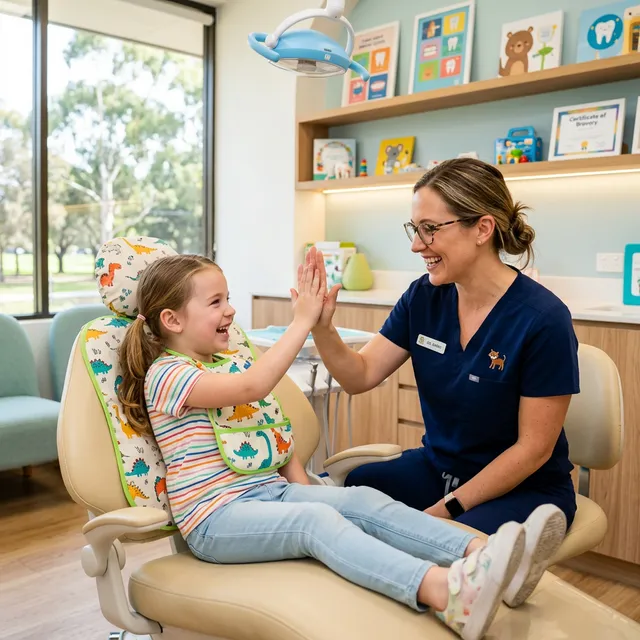
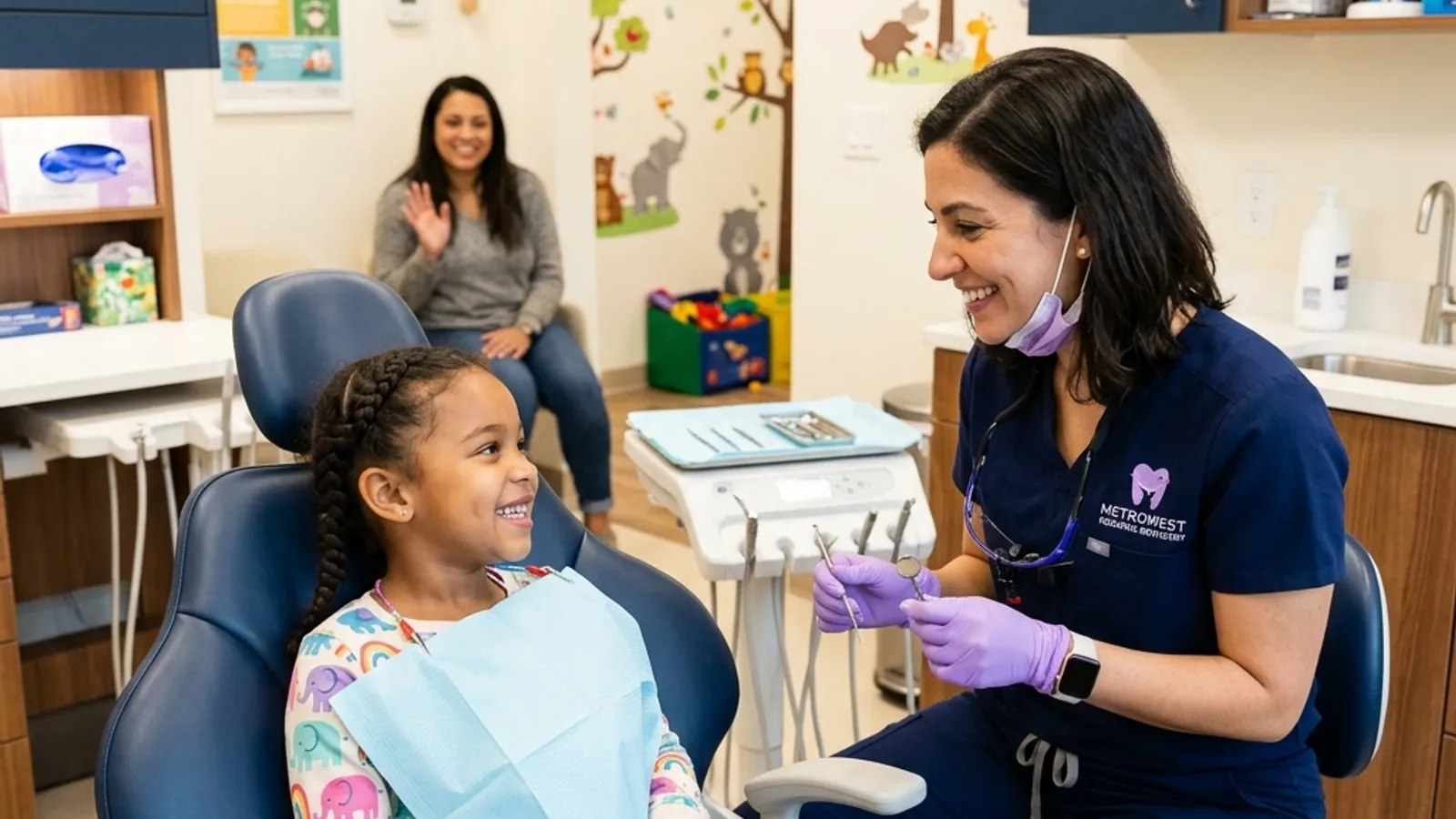
- A track record of turning fear into comfort. Many of our most confident young patients started out terrified. Watching that transformation, from a child who cried in the parking lot to one who walks in, high-fives the hygienist, and hops into the chair, is one of the most rewarding parts of children's dentistry.
Families from Hudson, Northborough, Sudbury, and Hopkinton trust Innova Smiles with their children's dental care. As fall settles over MetroWest and the school year picks up speed, it is a great time to schedule your child's checkup before the holiday rush.
Ready to give your child a positive dental experience? Call (508) 481-0110 or schedule a visit online. We are happy to arrange a "meet and greet" visit for anxious first-timers.
Related Articles
- How We Help Anxious Patients at Our Marlborough Office
- Your Child's First Dental Visit: What to Expect
- Baby's First Dental Visit in Marlborough, MA
- Overcoming Dental Anxiety: Tips and Comfort Options