
Featured Answer: Why schedule before school starts?
A back-to-school dental visit prevents last-minute emergencies, completes required forms, and helps kids start the academic year strong with cleanings, fluoride, and sealants when indicated. At Innova Smiles in Marlborough, MA, we see families from Southborough, Hudson, Northborough, and across MetroWest every August to make sure young smiles are ready for the classroom.
According to the CDC, more than 50 million school hours are lost each year in the United States due to dental problems. A single cavity can mean missed classes, difficulty concentrating, and pain that keeps a child from eating lunch. A 30-minute checkup before school starts can prevent all of that.
Why Timing Matters
Summer is the ideal window for dental checkups because schedules are more flexible, appointments are easier to book, and any treatment that is needed can be completed before homework and activities ramp up. Waiting until September often means competing with sports physicals, school orientations, and other back-to-school demands.
There is also a clinical reason for summer timing. If Dr. Fatima identifies a cavity that needs a filling, a tooth that needs a sealant, or an orthodontic concern that warrants monitoring, you have time to schedule follow-up visits before the school year adds competing demands. A filling done in July means no missed math class in October.
For families in Marlborough, Hudson, Southborough, and Northborough, we recommend scheduling back-to-school appointments in June or July. August appointments fill quickly as families realize school is approaching.
Massachusetts School Dental Requirements
Massachusetts has specific dental health requirements for students. Under Massachusetts General Law Chapter 71, Section 57, schools must maintain health records for all enrolled students. Here is what MetroWest families need to know:
What the State Requires
- Kindergarten and new student enrollment: The Massachusetts Department of Public Health recommends a dental screening or examination as part of school entry. While Massachusetts does not mandate a dental exam for school entry the way it mandates immunizations, most school districts in MetroWest, including Marlborough Public Schools, Southborough Public Schools (Neary and Woodward), and Hudson Public Schools, strongly encourage or require dental health certificates as part of enrollment paperwork
- School-based screening programs: Under MGL Chapter 111, Section 69, the state requires periodic dental screenings in public schools. School nurses coordinate these screenings, but they are not a substitute for a comprehensive dental exam with X-rays
- Head Start and Early Education: Children enrolled in Head Start and state-funded preschool programs are required to have a dental exam within 90 days of enrollment, per federal Head Start Performance Standards (45 CFR 1302.42)
What We Provide for School Records
At Innova Smiles, we provide all documentation your school requires. When you schedule your child’s visit, let our front desk team know which school your child attends and any specific forms needed. We will have the completed paperwork ready for you at the end of the appointment, no extra trips, no delays.
What the Dentist Checks at a Back-to-School Visit
A pediatric dental visit at Innova Smiles covers far more than a quick look at teeth. Here is a detailed breakdown of what Dr. Fatima and our hygiene team evaluate during a back-to-school appointment:
Professional Cleaning
Our hygienist removes plaque and tartar (calcite bacterial buildup that brushing cannot remove) from all tooth surfaces, including the areas between teeth and along the gumline. After scaling, teeth are polished with a gently abrasive paste to remove surface staining. For younger children, we use a smaller polishing cup and flavored paste to make the experience more comfortable.
Cavity Detection
We perform a thorough visual exam of every tooth surface. When appropriate for the child’s age and risk level, we take digital X-rays to detect cavities between teeth (interproximal decay) that are invisible to the eye. Digital X-rays use approximately 80% less radiation than traditional film X-rays, according to the ADA. For children under 6, we typically take bitewing X-rays only if there is clinical reason, tight contacts between teeth, visible discoloration, or a history of cavities.
Bite and Growth Assessment
Dr. Fatima evaluates jaw development, eruption patterns, and the relationship between upper and lower teeth as permanent teeth come in. This includes checking for:
- Crowding: Are the permanent teeth erupting with enough space, or will they overlap?
- Crossbite: Is the upper jaw narrower than the lower jaw on one or both sides?
- Openbite: Do the front teeth fail to overlap when the child bites down?
- Ectopic eruption: Are any permanent teeth coming in at unusual angles that could damage adjacent teeth?
These findings guide whether orthodontic referral or early intervention is appropriate.
Fluoride Varnish Application
After cleaning, we apply a concentrated fluoride varnish directly to the tooth surfaces. This varnish contains 22,600 ppm fluoride, roughly 15 times the concentration of fluoride toothpaste, and it hardens on contact with saliva, releasing fluoride into the enamel over the next 4 to 6 hours. The American Academy of Pediatric Dentistry (AAPD) recommends fluoride varnish every 3 to 6 months for children at moderate to high cavity risk.
Oral Hygiene Assessment and Coaching
We evaluate how well your child is brushing and flossing by looking at plaque distribution patterns. Children under 8 generally lack the fine motor coordination to brush effectively on their own, the AAPD recommends that parents supervise and assist with brushing until age 8 to 10. We provide age-appropriate instruction:
- Ages 3 to 5: Parent brushes; child "practices" on their own afterward
- Ages 6 to 8: Child brushes with parent supervision; parent follows up on back molars
- Ages 9 to 12: Child brushes independently; parent checks once daily
Soft Tissue and Oral Cancer Screening
We examine the tongue, cheeks, palate, floor of the mouth, and throat for any unusual lesions, swelling, or asymmetry. While oral cancer is rare in children, other soft tissue conditions, including mucoceles, geographic tongue, and viral lesions, are identified during these screenings.
Dental Sealants: The Most Cost-Effective Cavity Prevention
Sealants are thin, BPA-free resin coatings applied to the chewing surfaces of back molars, where roughly 90% of childhood cavities form. The deep grooves (pits and fissures) on molar chewing surfaces trap food and bacteria that toothbrush bristles cannot reach. Sealants fill these grooves and create a smooth, cleanable surface.
The Evidence
- The CDC reports that dental sealants prevent approximately 80% of cavities in molars for the first 2 years after application, and continue to protect against 50% of cavities for up to 4 years
- A 2016 Cochrane review of 38 studies confirmed that sealants applied to permanent molars in children and adolescents significantly reduced cavities compared to no sealant
- The ADA’s evidence-based clinical practice guideline (2023) recommends sealants for all children at elevated cavity risk, calling them "one of the most effective caries-prevention measures available"
When to Apply Sealants
The optimal timing is shortly after each set of permanent molars erupts:
- First molars (6-year molars): Typically erupt between ages 5 and 7
- Second molars (12-year molars): Typically erupt between ages 11 and 13
- Premolars: May benefit from sealants in children with deep grooves or high cavity risk
A back-to-school visit is the perfect time to evaluate whether your child’s recently erupted molars are candidates for sealants. The application takes about 2 minutes per tooth, involves no drilling, no anesthesia, and no discomfort. For more detail, read our dedicated post on dental sealants for children.
Cost and Insurance Coverage
Sealants typically cost $30 to $60 per tooth. Most dental insurance plans cover sealants for children under 14 at 100% as a preventive service. MassHealth (Medicaid) also covers sealants for eligible children. Compared to the cost of treating a cavity ($150 to $300 per filling), sealants are one of the best investments a parent can make in their child’s dental health.
Sports Mouthguards for Fall Athletes
Fall sports in MetroWest, soccer leagues in Southborough, field hockey at Algonquin Regional, football at Marlborough High, basketball at Hudson High, carry real risk of dental injuries. The ADA reports that athletes are 60 times more likely to sustain dental injuries without a mouthguard. The National Youth Sports Safety Foundation estimates that more than 5 million teeth are knocked out in sporting events each year in the U.S.
Custom vs. Store-Bought Mouthguards
There are three categories of mouthguards, and the differences in protection are significant:
| Type | Cost | Fit | Protection Level |
|---|---|---|---|
| Stock (pre-formed) | $5–$15 | Poor, bulky, loose, interferes with breathing | Minimal |
| Boil-and-bite | $15–$35 | Fair, better than stock but uneven thickness | Moderate |
| Custom (dentist-made) | $150–$300 | Excellent, precise fit, uniform thickness, comfortable | Maximum |
A custom mouthguard is fabricated from an impression of your child’s teeth. The result is a guard with uniform thickness (typically 3 to 4 mm) that distributes impact forces evenly across all teeth. Because it fits precisely, children can breathe, speak, and drink water without removing it, which means they actually wear it during games and practice.
The Academy for Sports Dentistry recommends custom mouthguards for all contact and collision sports. If your child is joining a fall sports team, mention it during the back-to-school checkup so we can take impressions and have the guard ready before the first practice. For more on protecting teeth during athletic activities, read our year-round sports mouthguard guide.
The Impact of Summer Snacking on Dental Health
Summer vacations often mean more frequent snacking, sugary drinks, and irregular brushing routines. A 2019 study published in Pediatric Dentistry found that children’s cavity rates increased by an average of 18% following summer break compared to the school year, largely due to changes in diet and hygiene habits.
The mechanism is straightforward: every time your child eats or drinks something sugary, the bacteria in their mouth produce acid for approximately 20 to 30 minutes. When snacking is continuous, grazing on goldfish crackers, sipping lemonade throughout the afternoon, the mouth never returns to a neutral pH, and the acid exposure becomes constant.
If Dr. Fatima identifies early-stage cavities (white spot lesions) during the checkup, fluoride varnish and improved hygiene can often reverse the demineralization before a filling becomes necessary. Early detection is always more comfortable, less frightening for the child, and less expensive for the family.
Common Summer Cavity Culprits
- Sports drinks (Gatorade, Powerade), contain 21 to 34 grams of sugar per bottle plus citric acid
- Fruit juice and juice boxes, some contain as much sugar per ounce as soda
- Popsicles and ice cream, frequent daily consumption during summer heat
- Fruit snacks and gummy vitamins, stick to tooth surfaces for prolonged acid exposure
- Dried fruit and trail mix, concentrated sugars that pack into molar grooves
Orthodontic Screening: The Right Age for Evaluation
The American Association of Orthodontists (AAO) recommends an orthodontic evaluation by age 7. This surprises many parents because most orthodontic treatment starts between ages 10 and 14. The reason for early screening is that some problems, particularly crossbites, severe crowding, and protruding front teeth at risk of trauma, benefit from early intervention when the jaw is still growing.
During your child’s back-to-school checkup, Dr. Fatima assesses:
- Phase I (early) treatment candidacy: Ages 7 to 10. A palatal expander for a narrow upper jaw or partial braces to correct a crossbite can prevent more invasive treatment later
- Monitoring: Many children need no immediate treatment but benefit from annual monitoring to identify the optimal treatment window
- Phase II (comprehensive) treatment candidacy: Ages 11 to 15. Full braces or clear aligners (Invisalign, Spark) to align all permanent teeth
For older children and teens who are already candidates for orthodontic treatment, starting aligners in August means they adapt during the relaxed summer schedule. By the time school pictures roll around, their trays will be virtually invisible. Our Invisalign and Spark aligner programs include regular monitoring to ensure treatment stays on track through the school year.
Cavity Prevention Strategies for the School Year
Good habits established at the back-to-school visit need to carry through to June. Here is a practical plan:
Lunchbox Strategies
- Pack water instead of juice boxes or sports drinks. If your child will not drink plain water, add a few slices of cucumber or strawberry for natural flavor
- Include crunchy fruits and vegetables, apples, carrots, celery, and bell peppers stimulate saliva production and naturally scrub tooth surfaces
- Add cheese or yogurt, the calcium and casein in dairy products help remineralize enamel. The Academy of Nutrition and Dietetics confirms that cheese is one of the best snack choices for dental health because it raises oral pH and delivers calcium directly to tooth surfaces
- Limit sticky snacks, fruit leather, gummy bears, dried mango, and similar foods cling to teeth for hours and are the most cariogenic (cavity-causing) items in a typical lunchbox
- Include nuts or seeds (if your school allows them), almonds and sunflower seeds are low-sugar, calcium-rich options
Daily Hygiene Routine
- Morning: Brush for 2 minutes with fluoride toothpaste before school. Use a timer or an electric toothbrush with a built-in timer
- After school: If your child had sugary snacks, rinse with water. Chewing sugar-free gum with xylitol for 5 minutes stimulates saliva and neutralizes acid
- Bedtime: Brush for 2 minutes and floss. This is the most important brushing of the day because saliva flow decreases during sleep, reducing the mouth’s natural defense against bacteria
Making Brushing Stick
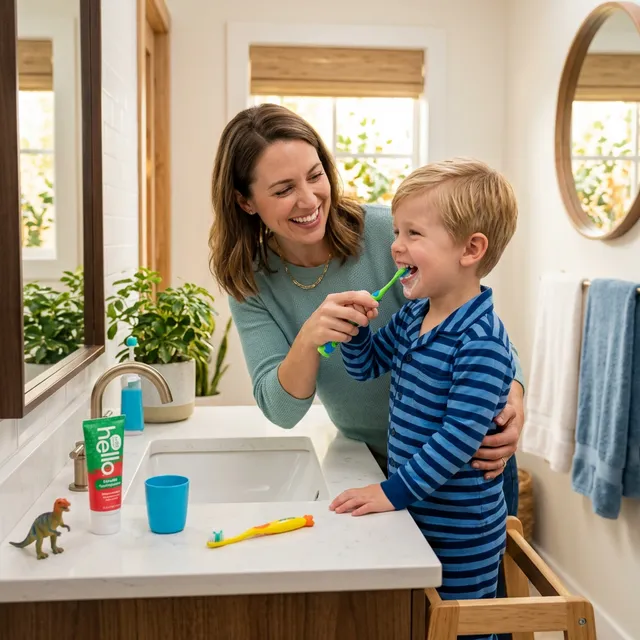
For younger children, try brushing together as a family, kids model what they see. For older children and preteens, electric toothbrushes with Bluetooth apps (Oral-B, Sonicare for Kids) can gamify the routine and provide parent visibility into brushing consistency.
What About Fluoride in Marlborough’s Water?
Marlborough’s municipal water supply is fluoridated at levels recommended by the CDC (0.7 parts per million). Community water fluoridation is recognized by the CDC as one of the ten great public health achievements of the 20th century. Fluoride strengthens developing enamel through a process called remineralization and has been shown to reduce childhood cavities by approximately 25%, according to the CDC’s 2018 community water fluoridation evidence review.
Special Considerations for MetroWest Families
- Well water: Several MetroWest communities, particularly parts of Sudbury, Southborough, and outlying areas of Northborough, use private wells. Well water typically does not contain fluoride. If your family uses well water, Dr. Fatima may recommend supplemental fluoride treatments, prescription fluoride toothpaste (PreviDent 5000), or dietary fluoride supplements based on your child’s age and cavity risk
- Bottled water: Most bottled water brands do not contain fluoride. If bottled water is your child’s primary water source, professional fluoride applications become more important
- Fluoride toothpaste amounts by age: The AAPD recommends a rice-grain-sized smear for children under 3 and a pea-sized amount for children ages 3 to 6. Children should spit out toothpaste after brushing but do not need to rinse, as the residual fluoride continues to protect enamel
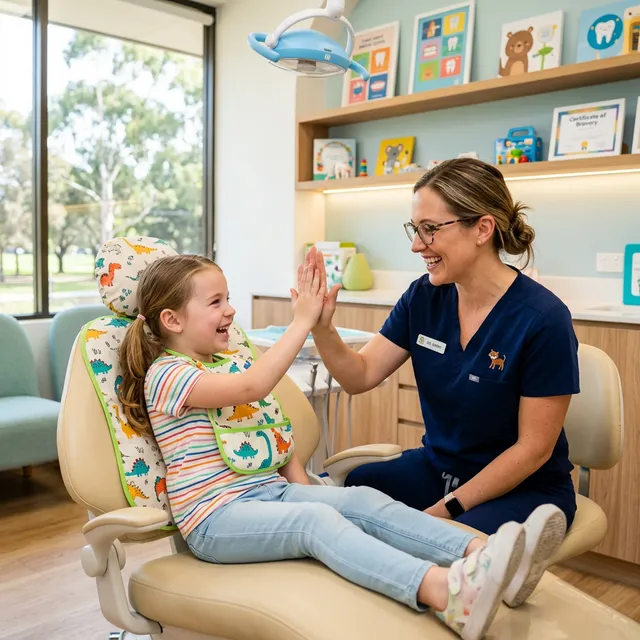
Making the Visit Fun for Kids
Dental anxiety can start early and, once established, can lead to avoidance that lasts into adulthood. Research published in the International Journal of Paediatric Dentistry found that negative childhood dental experiences are the strongest predictor of dental phobia in adults. That is why we invest significant effort in making every child’s experience positive:
- Tell-show-do approach: We explain each step in kid-friendly language, show the tools, and let children ask questions before we begin. The "Mr. Thirsty" suction and the "tooth counter" (explorer) get their own introductions
- Praise and encouragement: Celebrating cooperation builds confidence for future visits. We focus on what the child did well rather than what was difficult
- Comfortable environment: Our operatories are designed to feel welcoming, not clinical. Children can watch a show on the ceiling-mounted screen during treatment
- Parent involvement: Parents are welcome in the treatment room for younger children. For children over 8, we ask parents whether they prefer to be present or wait in reception, both are fine
- No negative language: We avoid words like "shot," "drill," "hurt," and "pain." Our team uses child-friendly alternatives that accurately describe the sensation without creating fear
The goal is for your child to leave feeling proud of their healthy smile, not dreading the next appointment.
Scheduling Your Back-to-School Visit
Innova Smiles sees families from Marlborough, Framingham, Westborough, Southborough, Hudson, Northborough, and throughout MetroWest. We offer early morning, after-school, and select Saturday appointments to accommodate school and activity schedules.
For families with multiple children, we can schedule back-to-back sibling appointments so you make one trip instead of three. Our ground-floor office with free parking means no lugging car seats up stairs or across parking garages.
Book your child’s visit now. Call (508) 481-0110 or book now.
Related Articles
- Children’s Dental Health Month: Tips for Parents
- Dental Sealants for Children in Marlborough
- Pediatric Dentist Near Me in Marlborough