
Featured Answer: How often should I get a dental cleaning?
The American Dental Association recommends dental visits at intervals determined by your dentist, though for most adults and children with healthy gums, that means every six months. A 2013 Cochrane review examined the evidence behind visit intervals and found that six-month cleanings remain the standard for low-risk patients, while patients with periodontal disease, diabetes, a heavy smoking history, or active decay may benefit from cleanings every three to four months. At Innova Smiles in Marlborough, MA, Dr. Fatima evaluates each patient's risk profile and recommends a personalized schedule, but for the majority of our patients from Marlborough, Framingham, Hudson, Shrewsbury, and across MetroWest, twice a year is the right cadence.
Spring, specifically March, is the ideal time for your first cleaning of the year, and the reasoning goes beyond just marking a date on the calendar.
Why Spring Is Strategic for Your Dental Health
Insurance benefits have reset
The vast majority of employer-sponsored and individual dental insurance plans in Massachusetts operate on a calendar-year basis, resetting on January 1. That means your annual maximum (typically $1,000 to $2,000), your deductible, and your two covered preventive cleanings all start fresh at the beginning of the year.
Scheduling your first cleaning in March gives you a comfortable spacing to fit both cleanings within the calendar year, one in early spring, one in early fall, without feeling rushed in December or realizing too late that you have unused benefits about to expire. According to the National Association of Dental Plans, Americans leave an estimated $62 billion in dental benefits unused each year. Two cleanings, fully covered by most PPO and HMO plans, represent $300 to $500 in preventive care you are already paying for through your premiums.
Post-winter recovery
Be honest, the months between Thanksgiving and March are rough on oral health routines. Here in MetroWest, the holiday season means cookie swaps, hot chocolate by the fire, leftover Halloween candy that lingers into November, Thanksgiving pies, Christmas pastries, and the general tendency to eat more comfort food and less fresh produce during cold, dark New England winters.
A study published in the British Dental Journal in 2019 found that patients who had dental cleanings in March and April showed higher levels of calculus (tarite) accumulation compared to those who had cleanings in October, suggesting that the winter months do indeed take a measurable toll on oral hygiene.
Your spring cleaning is a reset button. It removes the plaque and tartar that accumulated during those months, gives your hygienist a chance to catch any early problems that developed over winter, and puts you in a position to maintain cleaner teeth heading into the warmer months when fresh fruits, vegetables, and outdoor activities naturally support better health habits.
Catching problems before they escalate
The most valuable thing about a routine cleaning is not the cleaning itself, it is the examination that accompanies it. Dr. Fatima performs a thorough clinical evaluation at every cleaning visit, and catching a problem in March that started in January can save you thousands of dollars, hours in the dental chair, and considerable discomfort.
A small cavity discovered in March might need a $150 to $300 filling. That same cavity discovered in September, after six more months of bacterial acid exposure, might need a $1,200 to $1,800 crown. Wait another six months and the decay may reach the nerve, requiring a root canal ($1,500 to $2,500) plus a crown. If the tooth becomes unsalvageable, an extraction ($200 to $600) followed by a dental implant ($4,000 to $6,000+) replaces what was once a simple filling.
This is not a scare tactic. This is the literal progression of untreated tooth decay, documented in every dental school textbook. The earlier you catch it, the simpler and less expensive the fix.
What Actually Happens During a Professional Cleaning
Many patients have been getting cleanings for years without fully understanding what each step accomplishes. Here is a detailed walkthrough of what our hygiene team does at every cleaning appointment at Innova Smiles:
Periodontal assessment
Before any cleaning begins, the hygienist measures your gum pockets using a periodontal probe, a thin instrument marked in millimeters that slides gently between each tooth and the surrounding gum tissue. Healthy pockets measure 1 to 3 millimeters. Pockets of 4 millimeters signal early gum disease (gingivitis). Pockets of 5 millimeters or deeper indicate periodontitis and may require more intensive treatment such as scaling and root planing (deep cleaning).
These measurements are recorded and compared to your previous visits. An increase in pocket depth, even by a millimeter, is a clinical signal that warrants attention. This is one of the reasons regular cleanings matter: trends over time reveal problems that a single snapshot cannot.
Scaling (plaque and tartar removal)
Using ultrasonic scalers and hand instruments, the hygienist removes plaque (soft bacterial film) and calculus (hardite mineralized plaque) from all tooth surfaces, including areas below the gumline that you cannot reach with a toothbrush or floss. Ultrasonic scalers use high-frequency vibrations and a water spray to break apart calculus deposits efficiently and comfortably.
Tartar cannot be removed by brushing alone, once plaque mineralizes (which can happen in as little as 48 hours), only a professional instrument can dislodge it. Tartar left on teeth provides a rough, porous surface that harbors more bacteria and accelerates gum disease progression.
Polishing
After scaling, the hygienist uses a slow-speed handpiece with a rubber cup and a mildly abrasive prophylaxis paste to polish all tooth surfaces. This removes residual surface stains from coffee, tea, wine, and food pigments and creates a smooth surface that resists new plaque accumulation. The result is that freshly-polished-teeth feeling that makes you want to run your tongue across your teeth for the rest of the day.
Fluoride treatment
A concentrated fluoride varnish or foam is applied to all tooth surfaces. Professional fluoride treatments contain significantly higher fluoride concentrations (22,600 ppm for varnish) than your toothpaste (1,000 to 1,500 ppm) and remain on the teeth for hours, allowing deep penetration into enamel. A 2016 Cochrane review of 13 trials found that professional fluoride varnish reduced cavities by 43 percent in permanent teeth.
X-rays (when due)
Most adult patients need bitewing X-rays annually and a full-mouth series every three to five years. Digital X-rays expose you to approximately 80 percent less radiation than traditional film X-rays, a single digital bitewing delivers about 0.005 millisieverts, which is less radiation than you receive during a two-hour airplane flight. X-rays reveal cavities between teeth (where visual examination alone misses up to 40 percent of decay), bone loss around teeth, infections at tooth roots, and other conditions that are invisible to the naked eye.
Oral cancer screening
Dr. Fatima performs an oral cancer screening at every exam. This involves a visual and tactile examination of the tongue, floor of the mouth, cheeks, palate, gums, and throat, looking for unusual lumps, patches, sores, or color changes. The Oral Cancer Foundation reports that oral cancer has a five-year survival rate of 84 percent when caught early compared to only 39 percent when caught at later stages. A routine dental visit is one of the most reliable opportunities for early detection.
What Can a Dentist Catch at a Routine Exam
The cleaning is the preventive maintenance. The exam is the diagnostic inspection. Here is what Dr. Fatima evaluates during the examination portion of your visit:
- Early cavities: Small areas of demineralization ("white spot lesions") that can often be reversed with fluoride and improved hygiene before they become actual cavities requiring fillings.
- Gum disease: Bleeding gums, increased pocket depths, bone loss on X-rays, and gum recession. Gum disease affects nearly 47 percent of adults over 30 in the United States, according to CDC data.
- Oral cancer: Suspicious lesions, leukoplakia (white patches), erythroplakia (red patches), or asymmetric swelling.
- Cracked or fractured teeth: Hairline cracks in enamel that can propagate under chewing forces. Particularly common in patients who grind their teeth (bruxism), chew ice, or have old large amalgam fillings.
- Worn or failing restorations: Fillings, crowns, and bridges do not last forever. Margins can break down, allowing bacteria to infiltrate beneath the restoration. Catching a failing filling before it causes a new cavity saves significant time and cost.
- TMJ issues: Jaw clicking, pain on opening, limited range of motion, or signs of nocturnal clenching and grinding.
- Signs of sleep apnea: Scalloped tongue edges, worn tooth surfaces from grinding, a narrow airway, and an enlarged uvula can all suggest obstructive sleep apnea.
- Enamel erosion: Rounded, glassy tooth surfaces that indicate acid exposure from dietary habits, GERD (acid reflux), or bulimia.
For patients from Natick and Hopkinton who commute along I-495 and Route 9, your cleaning appointment is a chance to address all of these concerns in a single efficient visit, typically 45 to 60 minutes.
The Real Cost of Skipping: A Dollar Comparison
Prevention is always less expensive than treatment. Here is what the cost escalation looks like when a dental problem is left unaddressed:
| Stage | Problem | Typical Cost | Time in Chair |
|---|---|---|---|
| Prevention | Cleaning + exam + fluoride | $0 (covered by most insurance) | 45-60 min |
| Early detection | Small filling | $150-$300 | 30-45 min |
| Moderate decay | Large filling or onlay | $300-$800 | 45-60 min |
| Significant decay | Crown | $1,200-$1,800 | 2 visits, 60-90 min each |
| Nerve involvement | Root canal + crown | $2,200-$3,300 | 2-3 visits |
| Tooth loss | Extraction + implant + crown | $4,000-$6,000+ | 3-5 visits over 4-6 months |
Every step up that ladder represents a problem that could have been intercepted at the previous stage with a routine visit. The $0 cleaning that catches the $150 cavity is the single best return on investment in dental care.
New England Spring: Specific Seasonal Considerations
Living in Massachusetts brings some specific spring dental considerations worth mentioning:
Post-winter tooth sensitivity
Cold winter air can trigger tooth sensitivity, especially in patients with exposed root surfaces or thinning enamel. If you have been experiencing sharp pain when breathing in cold air from December through February, a spring cleaning is the right time to address it. Desensitizing treatments, fluoride varnish, and evaluation for gum recession can all happen during the same visit.
Spring sports mouthguards for kids
Spring sports season in MetroWest means lacrosse, baseball, softball, soccer, and track. The ADA estimates that mouthguards prevent approximately 200,000 oral injuries per year. If your child plays a contact or semi-contact sport, your spring cleaning visit is an excellent time to discuss custom-fitted mouthguards, which provide dramatically better protection than boil-and-bite guards from a sporting goods store.
Custom mouthguards are molded from impressions of your child's teeth, resulting in a snug fit that stays in place during activity, allows normal breathing and speaking, and distributes impact forces evenly. They are particularly important for children in braces or with dental implants.
Allergy season and dry mouth
MetroWest tree pollen season typically begins in April and runs through June. Many patients take antihistamines (Benadryl, Claritin, Zyrtec) that cause dry mouth as a side effect. Reduced saliva flow increases cavity risk because saliva is the mouth's primary acid neutralizer and remineralization agent. If you anticipate taking antihistamines through allergy season, discuss dry mouth management strategies during your spring cleaning, including saliva substitutes, xylitol products, and adjusted fluoride protocols.
Insurance Maximization: Getting the Most From Your Benefits
Beyond scheduling two cleanings per year, here are strategies to make the most of your dental insurance:
Know your annual maximum
Most PPO plans cap benefits at $1,000 to $2,000 per year. Preventive services (cleanings, exams, X-rays) typically do not count against this maximum or are covered at 100 percent before the deductible. Major services (crowns, root canals, implants) usually apply to the maximum at 50 to 80 percent coverage. Planning treatment early in the year gives you time to use your full maximum if larger procedures are needed.
Understand your coverage tiers
Dental insurance typically divides services into three tiers:
- Preventive (covered at 100%): Cleanings, exams, X-rays, fluoride, sealants for children
- Basic (covered at 70-80%): Fillings, simple extractions, periodontal scaling
- Major (covered at 50%): Crowns, bridges, root canals, dentures, implants (if covered)
Scheduling your spring cleaning maximizes the use of your 100 percent preventive coverage and allows your dentist to create a treatment plan for any needed basic or major work that optimizes your remaining benefits.
Use FSA/HSA funds
If your employer offers a Flexible Spending Account (FSA) or you have a Health Savings Account (HSA), dental services are eligible expenses. FSA funds typically must be used within the calendar year (or a brief grace period), so scheduling dental work in spring ensures you have time to plan and complete treatments before year-end.
Coordinate family appointments
Booking spring cleanings for the whole family on the same day, or within the same week, reduces the logistical burden of multiple trips and makes it easier to stay on schedule with biannual visits. At Innova Smiles, we regularly accommodate families from Westborough, Southborough, and Northborough who prefer to schedule parents and children in back-to-back time slots.
What to Do Between Cleanings
Your biannual professional cleaning removes what home care misses, but the quality of your home care between visits determines how much buildup your hygienist has to remove and how healthy your gums remain. Here is the between-visit routine we recommend:
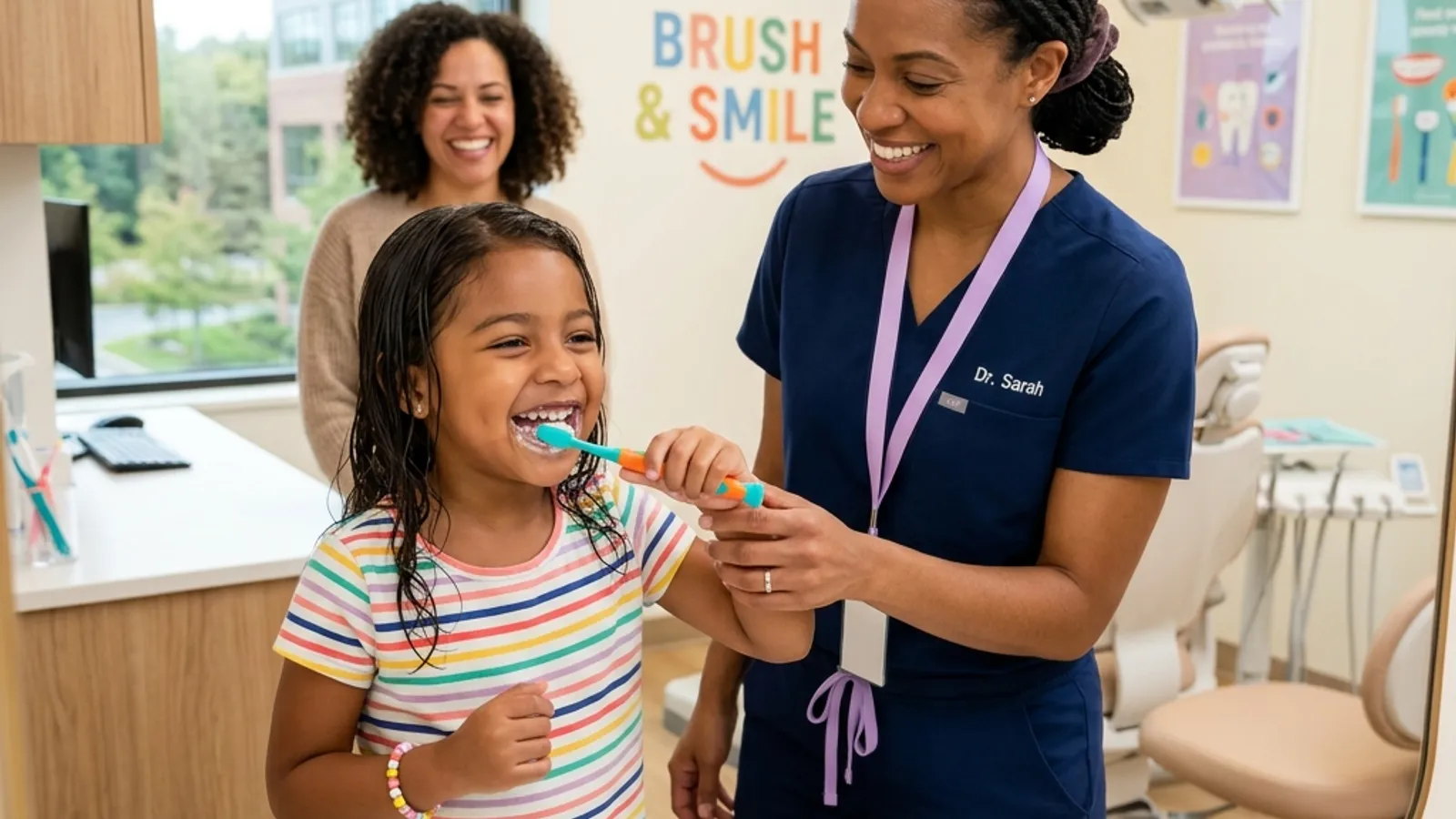
Brushing
- Brush twice daily for a full two minutes with fluoride toothpaste bearing the ADA Seal
- Use a soft-bristled brush (or an electric brush with a pressure sensor)
- Hold the brush at a 45-degree angle to the gumline
- Use short, gentle strokes, avoid aggressive scrubbing that damages enamel and gum tissue
- Replace your brush or brush head every three months
Flossing
- Floss once daily, preferably before your evening brushing session
- Use 18 inches of floss, wrapping most around your middle fingers and using your index fingers to guide it
- Curve the floss into a C-shape against each tooth and slide it gently below the gumline
- If traditional floss is difficult, water flossers (Waterpik) are an effective alternative. A landmark 2005 study by Barnes et al. in the Journal of Clinical Dentistry found that water flossers reduced bleeding sites by up to 93 percent compared to string floss
Mouthwash
- An ADA-accepted fluoride mouthwash can provide additional protection, especially for patients with elevated cavity risk
- Therapeutic mouthwashes containing cetylpyridinium chloride (CPC) or essential oils can reduce gingivitis-causing bacteria
- Rinse for 30 seconds as directed; do not eat or drink for 30 minutes after use
Diet
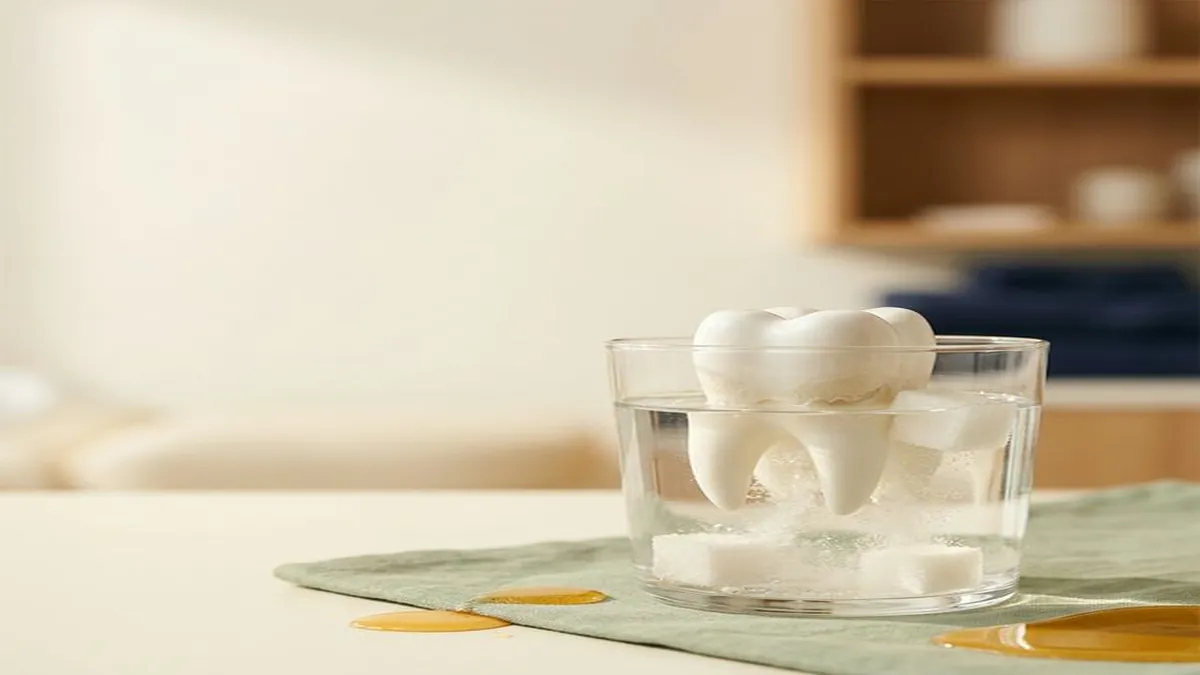
- Limit sugary and acidic foods and beverages, especially between meals
- Drink water throughout the day to maintain saliva flow and rinse food particles
- Chew sugar-free gum after meals to stimulate saliva production
Pair Your Cleaning With Spring Whitening
New England's spring and summer event season, weddings, graduations, reunions, family vacations, means more photos and more social gatherings. Your spring cleaning is a natural starting point for professional whitening.
A professional cleaning removes surface stains and tartar, giving your teeth a clean baseline. Following the cleaning with whitening (either an in-office Zoom session or custom take-home trays) produces the best results because the bleaching agent contacts clean enamel rather than stained, plaque-covered surfaces.
In-office whitening at Innova Smiles brightens teeth 3 to 8 shades in a single 60-to-90-minute appointment. Take-home custom trays achieve similar results over 1 to 2 weeks of daily use. Both options work best when starting from professionally cleaned teeth.
If you have a June wedding, a May graduation, or any summer event where you want your best smile, scheduling your spring cleaning and whitening consultation in March gives you optimal timing.
Booking Your Spring Appointment
The best time to schedule your spring cleaning is now, before the schedule fills up. March and April appointments tend to book quickly as patients act on New Year's resolutions and insurance-renewal reminders. Our front desk team can verify your insurance benefits, confirm your coverage for preventive services, and coordinate family appointment blocks.
If you are overdue for a cleaning, whether it has been seven months or seven years, there is no judgment. Our team sees patients at every stage of dental care reentry, and the first step is always the same: a thorough exam, a professional cleaning, and a clear plan for what comes next.
Ready to schedule your spring cleaning? Call Innova Smiles at (508) 481-0110 or book your appointment online. We welcome patients from Marlborough, Framingham, Northborough, Hudson, Shrewsbury, and communities across MetroWest.
Related Articles
- Why Dental Cleanings Matter More Than You Think
- National Dental Hygiene Month: Brushing and Flossing Tips
- Sugar, Candy & Cavity Prevention: Year-Round Family Guide
- Deep Cleaning vs. Regular Cleaning: When You Need SRP
Related Services
Sources & Further Reading
- Fluoride varnishes for preventing dental caries in children and adolescents — Cochrane Oral Health Group
- Periodontal (Gum) Disease — National Institute of Dental and Craniofacial Research