
Featured Answer: Can my medications cause dental problems?
Yes. Over 400 prescription and OTC medications can affect your oral health, most frequently by causing dry mouth (xerostomia). Saliva protects your teeth by neutralizing acid, washing away food particles, and delivering calcium and phosphorus for enamel repair. When medication reduces saliva flow, the mouth's defense system weakens and cavity risk rises dramatically, some patients develop multiple new cavities within months. Other medications cause gum overgrowth, increase bleeding risk during dental procedures, or stain developing teeth. Always share your full medication list with your dentist so your preventive care can be adjusted accordingly.
The Medication-Oral Health Connection Most People Miss
You probably know that sugar causes cavities and that flossing protects your gums. But there is another factor affecting your dental health that rarely makes headlines: your medication list.
The U.S. Surgeon General's Report on Oral Health identifies more than 400 prescription and OTC medications that can negatively affect the mouth, teeth, or gums. The National Institute of Dental and Craniofacial Research (NIDCR) estimates that xerostomia, medication-induced dry mouth, affects up to 30 percent of adults over age 65, a population that is typically taking multiple prescriptions simultaneously.
This is not a minor inconvenience. Dry mouth from medications is one of the leading causes of rapid-onset tooth decay in adults. Patients who have gone decades without a cavity can suddenly develop three, five, or eight new cavities within a single year of starting a medication that reduces saliva flow.
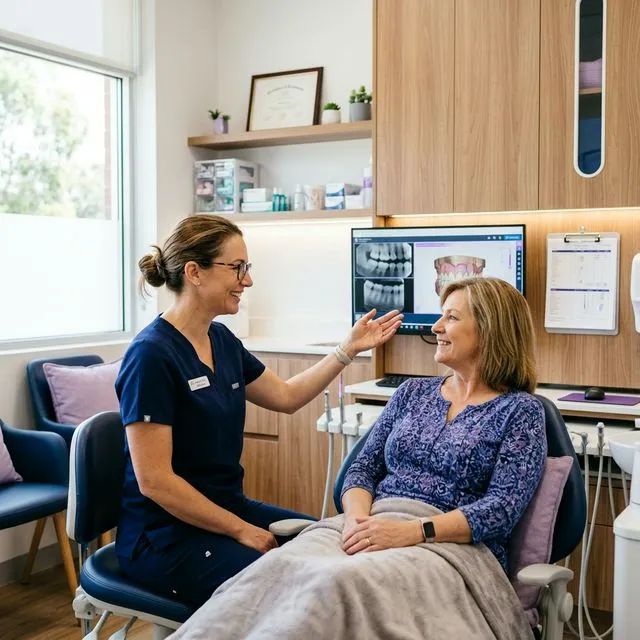
At Innova Smiles in Marlborough, Dr. Fatima reviews every patient's medication list at each visit, not to question your prescriptions, but to anticipate the oral health risks they create and adjust your preventive care accordingly. This guide covers the major drug classes that affect teeth and gums, explains the mechanisms behind the damage, and gives you actionable steps to protect your mouth.
Xerostomia: The Number One Medication Side Effect Affecting Teeth
Why Saliva Matters More Than You Think
Saliva is easy to take for granted. It is always there, doing its work silently. But saliva is the mouth's primary defense system, and its loss has cascading consequences.
Here is what saliva does:
- Neutralizes acid. After every meal or snack, bacteria in the mouth produce acid that dissolves enamel. Saliva contains bicarbonate buffers that neutralize this acid and return the mouth to a safe pH within 20 to 30 minutes.
- Remineralizes enamel. Saliva is supersaturated with calcium and phosphate ions. When these minerals are deposited onto tooth surfaces, they repair the microscopic damage caused by acid attacks, a process called remineralization.
- Washes away food particles. The constant flow of saliva physically flushes food debris and bacteria from tooth surfaces and from between teeth.
- Contains antimicrobial proteins. Salivary IgA, lysozyme, lactoferrin, and histatins inhibit the growth of cavity-causing and gum-disease-causing bacteria.
- Lubricates oral tissues. Saliva keeps the gums, tongue, and cheeks moist, preventing irritation, ulceration, and fungal infections.
When medication reduces saliva production, even partially, every one of these protective functions is compromised. The result is an oral environment that favors bacterial growth, acid accumulation, and enamel breakdown.
How Dry Is Too Dry?
Normal unstimulated salivary flow rate is approximately 0.3 to 0.4 milliliters per minute. Xerostomia symptoms typically appear when flow drops below 0.1 mL/min. However, subjective dryness can occur even when flow rates are technically normal if the composition of saliva changes, some medications alter the mucin content of saliva, making it thinner and less lubricating even without significantly reducing volume.
Symptoms of medication-induced dry mouth include:
- A persistent feeling of dryness or stickiness in the mouth
- Difficulty swallowing dry foods without liquid
- A burning sensation on the tongue
- Cracked, dry, or peeling lips
- Frequent thirst
- Altered taste (dysgeusia)
- Difficulty wearing dentures
- Bad breath despite good oral hygiene
- Waking at night with a dry mouth
Drug Classes That Cause Dry Mouth
The following categories of medications are most commonly associated with xerostomia. If you take one or more drugs from these classes, your dentist should know.
Antidepressants
Both selective serotonin reuptake inhibitors (SSRIs), such as sertraline (Zoloft), fluoxetine (Prozac), and escitalopram (Lexapro), and tricyclic antidepressants (TCAs), such as amitriptyline, nortriptyline, and desipramine, cause dry mouth by blocking acetylcholine receptors on salivary glands (anticholinergic effect). TCAs are the more potent offenders, with xerostomia rates as high as 40 percent in clinical trials.
SNRIs like venlafaxine (Effexor) and duloxetine (Cymbalta) also reduce saliva production, though typically to a lesser degree than TCAs.
Antihistamines
First-generation antihistamines, diphenhydramine (Benadryl), chlorpheniramine, and promethazine, are strongly anticholinergic and reliably cause dry mouth. Second-generation antihistamines, cetirizine (Zyrtec), loratadine (Claritin), and fexofenadine (Allegra), have less anticholinergic activity but can still contribute to dry mouth, particularly at higher doses or with prolonged use.
Here in MetroWest Massachusetts, seasonal allergies are a fact of life. The spring pollen season starts early (March for tree pollen) and the fall ragweed season extends well into October. Many patients in Framingham, Natick, and Sudbury take antihistamines daily for months at a time, and the dental consequences add up.
Decongestants
Pseudoephedrine (Sudafed) and phenylephrine reduce nasal congestion by constricting blood vessels. This vasoconstrictive effect extends to the salivary glands, reducing blood flow and, consequently, saliva output. Combination cold medications that pair an antihistamine with a decongestant (such as Claritin-D or Zyrtec-D) have a particularly strong drying effect.
Blood Pressure Medications
Several classes of antihypertensive drugs affect saliva production:
- Diuretics (hydrochlorothiazide, furosemide) reduce total body fluid volume, which can decrease saliva production.
- ACE inhibitors (lisinopril, enalapril) cause dry mouth in approximately 5 to 10 percent of patients. They can also cause a persistent dry cough, which further dries oral tissues.
- Beta-blockers (metoprolol, atenolol) have mild anticholinergic effects that can reduce salivary flow.
- Calcium channel blockers (amlodipine, nifedipine) cause dry mouth less frequently but have a different and significant oral side effect, gingival overgrowth, discussed below.
Hypertension is extremely common. The CDC reports that nearly half of American adults have high blood pressure, and many take antihypertensive medications for decades. The cumulative dry mouth effect over years of use is a significant but often unrecognized contributor to adult tooth decay.
Anti-Anxiety Medications
Benzodiazepines, diazepam (Valium), alprazolam (Xanax), lorazepam (Ativan), and clonazepam (Klonopin), reduce salivary output through their effects on the central nervous system. Buspirone (BuSpar), a non-benzodiazepine anti-anxiety medication, also lists dry mouth as a common side effect.
Stronger Prescription Painkillers
Stronger prescription painkillers (the class commonly prescribed after major surgery or for chronic pain) strongly suppress salivary gland function. Patients on long-term therapy for chronic pain are at high risk for severe dry mouth and rapid tooth decay. A study published in the Journal of the American Dental Association (JADA) found that patients on chronic stronger-painkiller therapy had significantly higher rates of caries, periodontal disease, and tooth loss compared to matched controls.
Parkinson's Disease Medications
Levodopa-carbidopa (Sinemet) and anticholinergic Parkinson's drugs (benztropine, trihexyphenidyl) cause substantial dry mouth. This is particularly concerning because Parkinson's patients may also have difficulty with manual dexterity for brushing and flossing, compounding the risk.
Bronchodilators
Inhaled bronchodilators for asthma and COPD, albuterol (ProAir, Ventolin), ipratropium (Atrovent), and tiotropium (Spiriva), deliver medication directly to the oral and pharyngeal tissues. Anticholinergic inhalers (ipratropium, tiotropium) inhibit salivary gland secretion. Additionally, the forceful inhalation directs a fine mist of medication across the teeth and gums with each use. Patients who use inhalers multiple times daily should rinse with water after each use to minimize both drying and medication deposition on tooth surfaces.
Beyond Dry Mouth: Other Medication Effects on Oral Health
Gingival Overgrowth (Drug-Induced Gingival Hyperplasia)
Certain medications cause the gum tissue to grow excessively, a condition called drug-induced gingival overgrowth (DIGO) or gingival hyperplasia. The overgrown tissue forms swollen, sometimes lobulated masses between the teeth that can partially or completely cover the tooth crowns.
Three drug classes are primarily responsible:
Phenytoin-related gingival overgrowth was first described in 1939 and remains the most well-known form. The overgrown tissue makes oral hygiene extremely difficult, plaque accumulates under and around the excess gum tissue, leading to chronic gingivitis and potential bone loss. In severe cases, surgical removal of the excess tissue (gingivectomy) is necessary.
The risk of gingival overgrowth increases with poor oral hygiene. Research in the Journal of Periodontology has consistently shown that meticulous plaque control reduces the severity of drug-induced gingival overgrowth, meaning that patients on these medications benefit significantly from more frequent professional cleanings and diligent home care.
Bisphosphonate-Related Osteonecrosis of the Jaw (BRONJ)
Bisphosphonates, medications prescribed for osteoporosis, Paget's disease, and bone metastases, include oral formulations (alendronate/Fosamax, risedronate/Actonel, ibandronate/Boniva) and intravenous formulations (zoledronic acid/Zometa). These drugs work by inhibiting bone resorption, which strengthens bones throughout the skeleton.
However, bisphosphonates can also suppress the normal bone remodeling process in the jaw, creating a risk of osteonecrosis, exposed, non-healing bone, following dental surgery, particularly tooth extractions. The risk is substantially higher with intravenous bisphosphonates used for cancer treatment than with oral bisphosphonates used for osteoporosis, but the condition has been reported with both.
The American Association of Oral and Maxillofacial Surgeons (AAOMS) estimates that the risk of BRONJ with oral bisphosphonates is between 0.01 and 0.04 percent, low, but not zero. The risk increases with duration of use (particularly beyond four years) and with concurrent corticosteroid therapy.
The practical implication: If you take a bisphosphonate, your dentist needs to know before any surgical procedure. At Innova Smiles, Dr. Fatima coordinates with your prescribing physician to determine the safest approach for any necessary extractions or implant placement. In some cases, a "drug holiday" (temporary discontinuation of the bisphosphonate before and after surgery) may be recommended.
Anticoagulants and Bleeding Risk
Blood-thinning medications are relevant to dental care because they increase bleeding during and after procedures such as extractions, deep cleanings (scaling and root planing), and gum surgery.
Common anticoagulants include:
- Warfarin (Coumadin), requires INR monitoring; dental procedures are generally safe when INR is below 3.5
- Direct oral anticoagulants (DOACs), apixaban (Eliquis), rivarelbaan (Xarelto), dabigatran (Pradaxa), edoxaban (Savaysa), do not require routine lab monitoring but do affect hemostasis
- Antiplatelet agents, aspirin, clopidogrel (Plavix), prasugrel (Effient), ticagrelor (Brilinta)
The American Dental Association's guidance, based on a systematic review published in JADA, recommends that most dental procedures can be performed without interrupting anticoagulant therapy. The bleeding risk from stopping these medications (stroke, heart attack, pulmonary embolism) typically outweighs the bleeding risk from a dental procedure, which can be managed with local hemostatic measures.
Never stop an anticoagulant or antiplatelet medication before a dental appointment without explicit instructions from the prescribing physician. Simply inform your dentist and let the dental and medical teams coordinate.
Tetracycline Staining in Children
Tetracycline-class antibiotics (tetracycline, doxycycline, minocycline) can cause permanent gray-brown or yellow discoloration of teeth when administered during tooth development, from the second trimester of pregnancy through approximately age eight. The antibiotic molecules bind to calcium in developing enamel and dentin, creating bands of discoloration that are incorporated into the tooth structure.
For this reason, tetracyclines are contraindicated in pregnant women and in children under age eight. Alternative antibiotics (amoxicillin, azithromycin, cephalosporins) are used instead. Adult teeth that have already finished developing are not affected by tetracycline exposure.
If you have tetracycline-stained teeth from childhood exposure, cosmetic treatments including professional whitening, dental bonding, or porcelain veneers can significantly improve the appearance.
Managing Medication-Related Oral Health Problems
The goal is never to stop taking a medication that your doctor has prescribed for a medical condition. Instead, the strategy is to counteract the oral side effects through targeted preventive measures.
Stay Hydrated
Sipping water throughout the day is the simplest and most effective countermeasure for medication-induced dry mouth. Keep a water bottle at your desk, bedside, and in your car. Small, frequent sips are more effective than occasional large drinks because they maintain a consistent level of oral moisture.
Avoid beverages that worsen dryness: coffee, alcohol, and caffeinated teas are all mild diuretics that reduce total body water. Sugary drinks add an acid-production risk on top of the existing dry mouth problem.
Use Xylitol Products
Xylitol is a sugar alcohol that oral bacteria cannot metabolize. Products containing xylitol, gum, mints, lozenges, and oral sprays, stimulate saliva production (through the chewing reflex) while simultaneously starving cavity-causing bacteria. The ADA Council on Scientific Affairs recognizes xylitol as beneficial for oral health.
Look for products that list xylitol as the first or second ingredient. Aim for a total daily xylitol exposure of 5 to 10 grams, spread across three to five exposures per day. Common products include ICE BREAKERS ICE CUBES gum, Spry dental defense system products, and Epic Dental mints.
Switch to Alcohol-Free Mouthwash
Many commercial mouthwashes contain up to 26 percent alcohol, which further dries oral tissues. Patients with medication-induced dry mouth should use alcohol-free formulations. Biotene Dry Mouth Oral Rinse and ACT Dry Mouth Anticavity Rinse are specifically designed for xerostomia patients and contain moisturizing agents alongside fluoride.
Consider Saliva Substitutes
For patients with severe xerostomia that does not respond adequately to hydration and xylitol, over-the-counter saliva substitutes can provide relief. These products, available as sprays, gels, and rinses, contain carboxymethylcellulose or mucin-based compounds that mimic the lubricating properties of natural saliva. They do not stimulate saliva production but they coat and protect oral tissues.
Biotene Moisturizing Spray and Oasis Moisturizing Mouth Spray are widely available. For nighttime use, when dry mouth is often most severe (saliva production naturally decreases during sleep), Biotene Oralbalance Moisturizing Gel can be applied to the gums and tongue before bed.
Prescription-Strength Fluoride Toothpaste
Standard over-the-counter toothpaste contains 1,000 to 1,100 parts per million (ppm) fluoride. For patients at elevated caries risk due to dry mouth, Dr. Fatima may prescribe a 5,000 ppm fluoride toothpaste such as PreviDent 5000 or Clinpro 5000. This prescription-strength fluoride provides significantly greater remineralization power and has been shown in clinical studies to reduce new cavity development in high-risk patients by 30 to 40 percent compared to standard fluoride toothpaste.
Use prescription fluoride toothpaste at bedtime, brush for two minutes, spit, and do not rinse. This allows the concentrated fluoride to remain in contact with tooth surfaces overnight, maximizing its protective effect during the hours when saliva flow is naturally lowest.
More Frequent Professional Cleanings
The standard recommendation for adults is dental cleanings every six months. For patients on medications that increase caries or periodontal disease risk, Dr. Fatima may recommend cleanings every three to four months. More frequent professional cleanings remove bacterial plaque from areas that home care misses, apply professional-grade fluoride varnish, and allow early detection of new cavities before they progress.
Patients from Shrewsbury, Westborough, Hopkinton, and Stow who take multiple medications should discuss their cleaning frequency with Dr. Fatima at their next visit.
Professional Fluoride Varnish
In-office fluoride varnish, a concentrated fluoride gel painted directly onto tooth surfaces, provides a sustained release of fluoride over 4 to 6 hours. For patients with dry mouth, this treatment can be applied at every cleaning appointment. Research published in the Journal of Dental Research confirms that professional fluoride varnish reduces caries incidence by approximately 43 percent in permanent teeth.
Always Tell Your Dentist Your Full Medication List
This point bears repeating because it is routinely overlooked. Many patients do not think to mention medications to their dentist, they associate medications with their physician, not their dental team. Others forget over-the-counter drugs, supplements, or herbal products that can also affect oral health.
At Innova Smiles, we review your complete medication list at every visit, including prescription drugs, over-the-counter medications, supplements, vitamins, and herbal products. This review is not optional; it is an integral part of your dental care.
Bring an updated list to every appointment, or give us permission to contact your pharmacy for a current medication profile. If your medications change between visits, call our office or mention it at your next appointment so we can update your chart and adjust your preventive plan if needed.
Medications We Especially Want to Know About
A Word of Caution: Never Stop Medications on Your Own
If you read this article and recognize that one or more of your medications may be affecting your oral health, please do not stop or reduce the medication without consulting your prescribing physician. The medical conditions these drugs treat, depression, hypertension, seizures, osteoporosis, chronic pain, carry risks that far outweigh the dental side effects.
The correct approach is to manage the oral side effects through the preventive strategies described above, in partnership with your dental team. In some cases, your physician may be able to substitute a different medication within the same class that has fewer oral side effects, but that decision must be made by the prescriber, not by the patient or the dentist.
Your health is a team effort. Your physician manages your medical conditions, your dentist manages the oral consequences, and you hold it all together with consistent home care and honest communication with both teams.
Protecting Your Smile at Innova Smiles
At our Marlborough office, medication review is woven into every patient interaction. Dr. Fatima and the hygiene team use your medication list to create a personalized preventive plan that accounts for your specific risk factors. For patients on high-risk medications, this might include prescription fluoride, more frequent cleanings, custom fluoride trays, or xylitol product recommendations.
We serve families from across MetroWest — Hudson, Framingham, Northborough, Southborough, and beyond, and we understand that many of our patients take medications for chronic conditions that require lifelong dental vigilance. That is exactly the kind of long-term partnership we are built for.
Taking a medication that causes dry mouth or other oral side effects? Call (508) 481-0110 or schedule a visit online to discuss a personalized preventive plan with Dr. Fatima.
Related Articles
- Bad Breath: Causes and Treatment
- Sensitive Teeth: Causes and Treatments
- The Link Between Oral Health and Overall Wellness
- Diabetes and Dental Health Connection
Related Services
Sources & Further Reading
- Hypertension (High Blood Pressure) - FastStats — Centers for Disease Control and Prevention (CDC)