
Dental Implants vs Dentures: A Complete Guide for 2025
If you are missing teeth or facing the loss of your remaining teeth, you are almost certainly weighing dental implants against dentures. It is one of the biggest decisions in restorative dentistry, and the right answer depends on your health, your jawbone, your budget, and how you want to live day to day. This guide walks you through the honest trade-offs so you can have a more informed conversation at your consultation.
The Key Difference Between Implants and Dentures
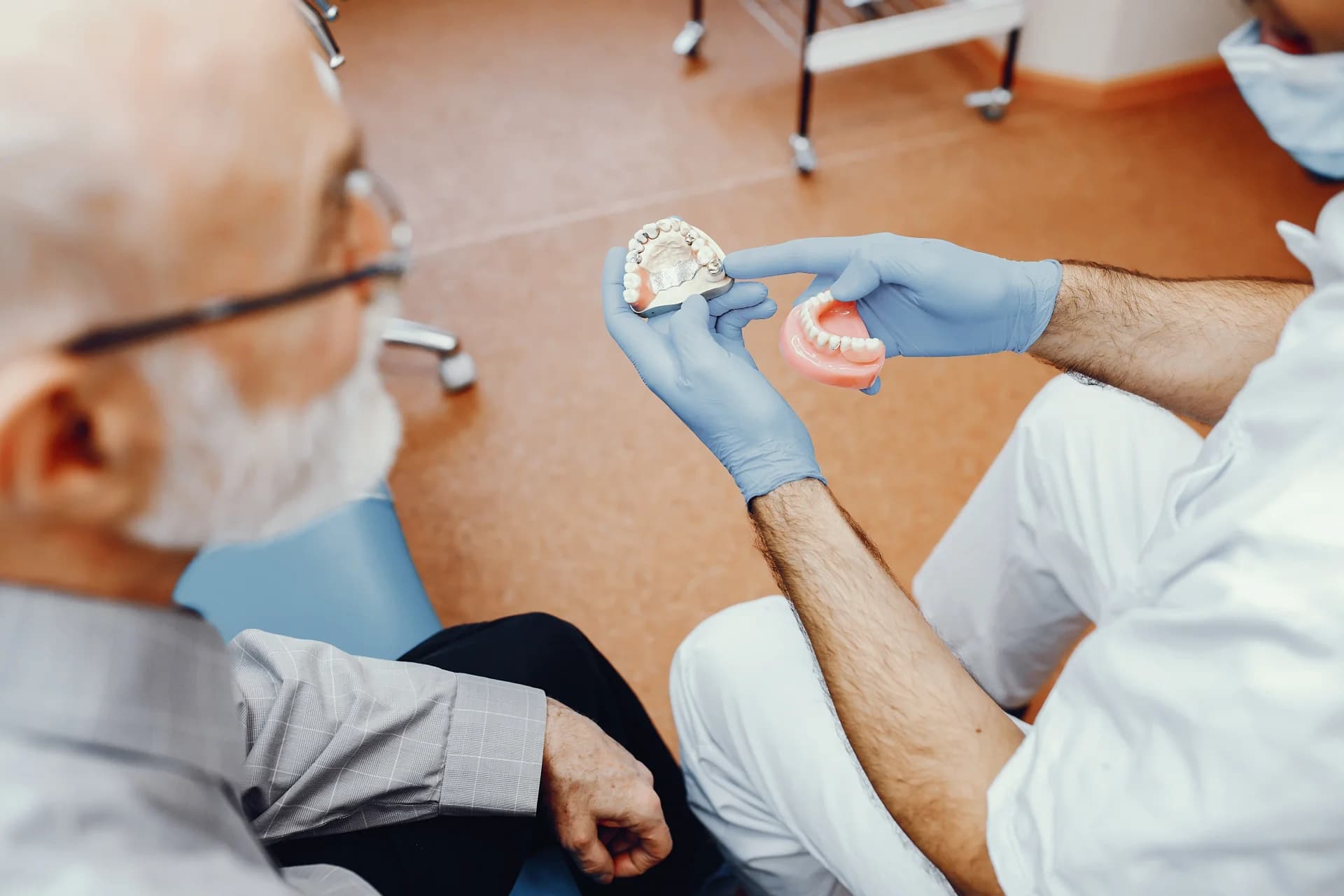
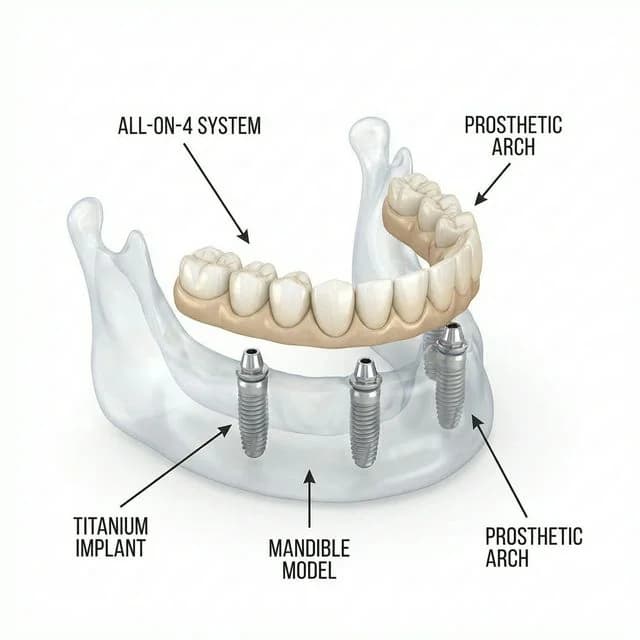
The core difference is how the replacement teeth are anchored. A traditional denture rests on your gums and is held in place by suction, adhesive, or (in the case of a partial) clasps that clip onto remaining teeth. A dental implant is a titanium post surgically placed into the jawbone, where it fuses with the bone over several months and becomes a permanent replacement for the tooth root. A crown, bridge, or even a full denture can then be attached to implants.
That difference matters because anything not anchored in bone shifts over time, and the jawbone under a missing tooth slowly resorbs (shrinks) because it is no longer being stimulated.
Pros and Cons of Dental Implants
Pros:
- Preserve jawbone because the implant stimulates the bone exactly like a natural tooth root
- Restore 90 to 100 percent of natural chewing force, so you can eat anything
- Do not shift, click, or require adhesive
- Last 25 years or longer with proper oral hygiene (some last a lifetime)
- Feel, function, and look like natural teeth
- No dietary restrictions
Cons:
- Higher upfront cost than dentures
- Require surgery and a healing period of 3 to 6 months for osseointegration
- Not every patient is immediately eligible (uncontrolled diabetes, heavy smoking, or severe bone loss may require additional steps, though most patients can still qualify)
Pros and Cons of Traditional Dentures
Pros:
- Lower upfront cost, often $1,500 to $3,500 per arch for basic dentures
- No surgery required
- Fast turnaround, sometimes ready in weeks
- A viable option for patients who are not surgical candidates
Cons:
- Do not prevent jawbone loss, so the fit gets worse over time and needs relines every 1 to 2 years
- Restore only about 20 to 30 percent of natural chewing force, which limits food choices
- Can shift when you eat or speak, requiring adhesive
- May accelerate the "sunken in" facial appearance associated with long-term tooth loss
- Need to be removed nightly for cleaning
What About Implant-Supported Dentures?
Implant-supported dentures, including the popular All-on-4 system, offer a middle path. Instead of placing one implant per tooth, as few as four strategically placed implants can support a full arch of teeth. The denture either snaps on and off for cleaning (removable overdenture) or is fixed permanently (hybrid prosthesis).
All-on-4 is a strong choice for patients who:
- Want the stability and bone preservation of implants
- Are missing most or all of their teeth in an arch
- Prefer a shorter overall timeline compared to individual implants for every tooth
- Want a more affordable path than single implants for every missing tooth
At Innova Smiles we also offer full-mouth restoration for patients who need to rebuild their entire bite.
Cost Comparison: Implants vs Dentures Long-Term
The upfront numbers tell only part of the story. Here is the honest long-term math:
- Traditional dentures: $1,500 to $3,500 per arch upfront, plus relines every 1 to 2 years ($300 to $500 each) and replacement every 5 to 10 years. Over 25 years, total cost often exceeds $10,000 to $15,000 per arch.
- All-on-4 implant-supported dentures: $20,000 to $35,000 per arch upfront, with no relines and typical lifespan of 15 to 25 years or more. Lower ongoing cost.
- Single tooth implants: $3,000 to $5,000 each, with lifespans often exceeding 25 years and minimal ongoing cost beyond normal dental hygiene visits.
For a detailed cost breakdown, see our guide to dental implant cost in Massachusetts.
Who Is a Good Candidate for Each Option?
Great candidates for implants:
- Healthy adults with good oral hygiene
- Patients with enough jawbone (or willingness to do a bone graft)
- Non-smokers or light smokers willing to quit during healing
- Patients who want the longest-lasting, most natural-feeling solution
Better candidates for traditional dentures:
- Patients with significant medical conditions that rule out surgery
- Patients who need an immediate solution and cannot wait for healing
- Patients on very tight budgets who do not qualify for financing
Ideal candidates for All-on-4:
- Missing most or all teeth in an upper or lower arch
- Want a fixed, non-removable solution
- Have enough bone in the front of the jaw (even if bone loss is present in the back)
What Our Marlborough Patients Choose Most
Among our patients at Innova Smiles, single dental implants are by far the most requested option for single or multiple missing teeth. For patients facing full-arch tooth loss, All-on-4 has become the clear preference over traditional dentures because of the stability and bone preservation benefits. Traditional dentures remain a valuable option for a smaller subset of patients with specific medical or financial circumstances, and we are happy to fit and maintain them when they are the right fit.
Dr. Daniel O'Brien evaluates every case with 3D CBCT imaging and walks you through every option in plain language so you can make an informed decision.
Maintenance: What Each Option Asks of You Day-to-Day
Replacement teeth are not a "place and forget" purchase. The maintenance pattern is different for each option:
- Single implants and full-arch implants. Daily brushing, flossing (a water flosser helps around implant abutments), and a hygiene visit every 6 months. Implants do not develop cavities, but the gum tissue around them can develop peri-implantitis if plaque is not controlled. Studies summarized by the American Academy of Periodontology show daily home care is the single biggest predictor of long-term implant survival.
- Traditional dentures. Removed nightly for soaking and brushing with a denture-specific brush and cleaner. Gums get a rest from compression overnight, which reduces sore spots. Annual reline checks; full reline every 1 to 2 years as the underlying bone changes.
- Implant-supported overdentures. Removed for cleaning daily; the snap-attachment "nylons" are replaced about once a year because they wear from the snap-on/snap-off cycle.
- Hybrid full-arch (All-on-4) prostheses. Cleaned in the mouth like natural teeth. A hygienist removes the prosthesis once a year for a deep clean and inspection of the implant abutments.
Patients sometimes assume implants are "more work" than dentures because of surgery. In our experience the opposite is true day-to-day. Dentures need a removal-and-clean ritual every night; well-placed implants are brushed and flossed like the teeth they replaced.
Common Questions Patients Ask at the Consultation
- Is the implant surgery painful? The placement procedure is performed under local anesthesia, with comfort options available for anxious patients. Most patients describe the recovery as similar to a tooth extraction. Over-the-counter ibuprofen handles discomfort for the majority of cases. See our implant recovery week-by-week timeline for what the first 14 days look like.
- What if I do not have enough bone? A bone graft or sinus lift is a routine step that can rebuild bone before placement. The total timeline lengthens by 3 to 6 months, but patients with significant bone loss can still receive implants.
- Can I get implants if I smoke? Smoking reduces blood flow to the gums and lowers implant success rates in the published literature. We do not refuse implants to smokers, but Dr. O'Brien will ask you to stop for at least the first 2 weeks of healing, which is when osseointegration begins.
- What about gum disease? Active gum disease is a contraindication for implant placement. The standard sequence is periodontal treatment first, then implants once tissues are healthy. Read more about stages of gum disease and treatment options.
- How long does the whole process take? From consultation to final crown is typically 4 to 9 months for a single implant, longer if a graft is needed. All-on-4 cases often deliver same-day teeth on a temporary prosthesis with the final restoration about 4 months later.
When a Combination Approach Is the Right Answer
Some patients benefit from a hybrid plan: implants in the front of the mouth (where chewing force and aesthetics matter most), traditional partial dentures elsewhere. Others receive immediate dentures while implant sites heal, then transition to implant-supported teeth a year later. The goal at every Innova Smiles consultation is to lay out the realistic options, including ones that combine approaches, so the recommendation matches your priorities and biology rather than a one-size-fits-all upsell.
Ready for a Personalized Recommendation?
There is no one-size-fits-all answer. The best option for you depends on factors only a thorough exam can reveal. Book a free consultation at Innova Smiles and we will give you an honest, unpressured recommendation based on your specific situation. We serve patients from across MetroWest, including Hudson, Shrewsbury, Framingham, and Northborough.
Related Articles
- Dental Implant Cost in Massachusetts
- Am I a Candidate for Dental Implants?
- Dental Implant Financing Without Insurance
Related Services
- Dental Implants -- single tooth to full arch
- Full Mouth Restoration -- All-on-4 and hybrid prostheses
- Dentures -- traditional and implant-supported options
- New Patient Special
Sources & Further Reading
- American Academy of Implant Dentistry — Patient resources on implants and dentures
- American Academy of Periodontology — Peri-implant maintenance guidance
- American Dental Association MouthHealthy — Implants overview and Dentures overview
- International Journal of Oral & Maxillofacial Implants, published implant survival rates
- Practice records, Innova Smiles, used for reported case-mix at our office