
Featured Answer: How do we keep smiles healthy during summer travel?
Pack a simple dental kit, limit grazing on sugary drinks, wear mouthguards during sports, and know when to call your dentist versus seeking urgent care. A little preparation prevents most vacation dental problems. At Innova Smiles in Marlborough, MA, Dr. Fatima recommends that MetroWest families schedule a pre-travel checkup to catch any issues before they become emergencies far from home.
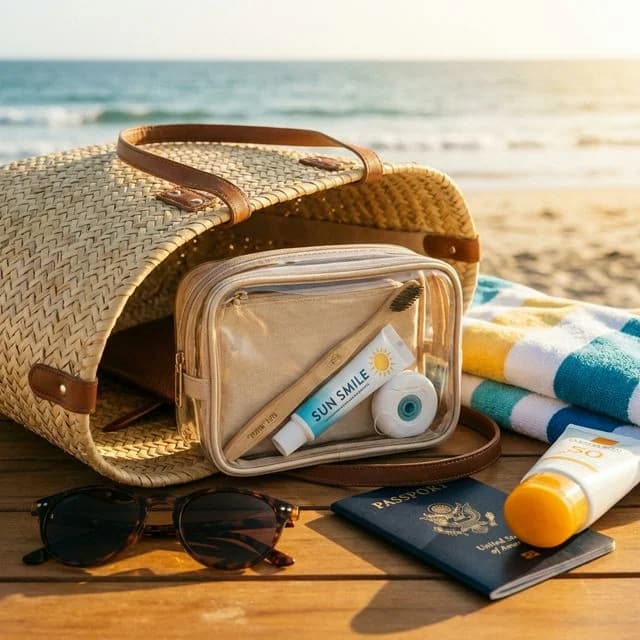
Your Summer Travel Dental Kit
A weekend on Cape Cod or a cross-country flight calls for the same short list. Pack these essentials in a small zip bag:
- Travel toothbrush with a ventilated cap (or a compact electric brush head)
- Fluoride toothpaste (travel-size, 3.4 oz or less for carry-on bags)
- Floss picks or a small floss dispenser
- Small bottle of alcohol-free mouth rinse and a collapsible cup
- Orthodontic wax if wearing aligners, retainers, or braces
- Temporary dental cement (available at any pharmacy--invaluable for a lost filling or crown)
- Over-the-counter pain medication (ibuprofen and acetaminophen)
- A small container with a lid for saving a knocked-out tooth (or keep a small carton of milk accessible)
- Innova Smiles phone number: (508) 481-0110
The temporary dental cement deserves special attention. Brands like Dentemp and Recapit are available at CVS and Walgreens for under $10 and can hold a loose crown or fill a lost-filling cavity for several days. That $10 purchase can save you hundreds of dollars in emergency dental fees in an unfamiliar city. Dr. Fatima recommends buying it fresh each summer since the material has a limited shelf life once opened.
Handling Dental Emergencies While Traveling
Dental emergencies are stressful enough at home--they are even more daunting in an unfamiliar city or country. The American Association of Endodontists estimates that over 5 million teeth are knocked out every year, many during summer activities. Here is how to handle the most common scenarios:
- Toothache: Rinse with warm salt water, floss gently to remove any trapped food, take OTC pain relief if appropriate, and call your dentist. If you are out of state, ask your hotel concierge for a local emergency dentist recommendation. Avoid placing aspirin directly on the gum tissue -- this old remedy causes chemical burns to soft tissue.
- Broken filling or crown: Save the piece and avoid chewing on that side. Apply temporary dental cement from your kit to protect the exposed tooth. This can buy you several days until you can see your regular dentist. If the tooth is sensitive, a small dab of clove oil (eugenol) provides temporary numbing.
- Knocked-out tooth: Handle by the crown only, rinse gently, and try to reinsert into the socket. If that is not possible, store it in milk. Seek emergency dental care within 30 to 60 minutes for the best chance of saving the tooth. The periodontal ligament cells on the root surface begin dying after 15-20 minutes of being dry, so every minute counts.
- Cracked tooth: Rinse with warm water, apply a cold compress, and avoid biting on that side. See a dentist as soon as possible to prevent the crack from worsening.
- Soft tissue injury (cut lip, tongue, or cheek): Apply firm pressure with clean gauze or a damp tea bag (the tannic acid promotes clotting). If bleeding does not stop within 15-20 minutes, visit an emergency room.
- Object stuck between teeth: Use floss to gently work the object free. Never use sharp instruments like pins or toothpicks that could cut gum tissue or damage enamel.
The Golden Hour for Knocked-Out Teeth
A knocked-out permanent tooth is the most time-sensitive dental emergency. Research in Dental Traumatology shows that reimplantation within 30 minutes yields a 90% survival rate. After 60 minutes, the rate drops to about 50%. After two hours, the prognosis is poor.
The storage medium matters significantly. Milk is the best readily available option because its osmolality and pH are similar to the body's natural conditions. Saliva (tucking the tooth inside the cheek) is the second-best option. Saline solution works well if available. Water is acceptable for brief transport but causes cell swelling that damages the root surface over time. Never wrap the tooth in tissue, napkin, or gauze -- the fibers wick moisture from the root surface.
If your child plays summer sports at Ghiloni Park, the Marlborough Rail Trail, or local recreation leagues, save our number in your phone now: (508) 481-0110. We prioritize dental trauma calls and can often see your child the same day, even during busy summer scheduling.
Dental Emergencies Abroad
If you are traveling internationally, dental care can be harder to find and arrange. Before your trip, ask Dr. Fatima about any pending dental concerns that should be addressed first. Consider purchasing travel insurance that includes dental emergency coverage -- many standard travel insurance policies exclude dental unless specifically added. If you need care abroad, the International Association for Medical Assistance to Travellers (IAMAT) can help locate English-speaking dentists in many countries.
A few practical tips for dental emergencies overseas:
- Research the local emergency number for your destination country (it is not always 911)
- Carry a card in the local language that says "I need an emergency dentist" -- Google Translate can prepare this before your trip
- European countries generally have high-quality dental care; Southeast Asian resort areas often have limited options
- Save your receipts -- many dental insurance plans reimburse for emergency treatment abroad at out-of-network rates
Pool and Chlorine Effects on Teeth
Summer means hours in the pool for many Hudson, Northborough, and Marlborough families. What most parents do not realize is that chlorinated pool water can affect teeth:
- Swimmer's calculus: According to the Journal of the American Dental Association, prolonged exposure to chlorinated water (more than six hours per week) can cause brown or yellowish stains on teeth. The chemical compounds in pool water deposit on enamel over time. The staining is caused by antimicrobial agents in the chlorine reacting with proteins in saliva, creating a hard, brown deposit on the front teeth.
- Enamel erosion: Poorly maintained pools with low pH (acidic water) can soften tooth enamel. The CDC recommends pool water pH between 7.2 and 7.8. A study in the American Journal of Dentistry found that pool water below pH 7.0 caused measurable enamel demineralization after just 20 hours of cumulative exposure. If you or your children swim competitively, rinse your mouth with fresh water after each session.
- Prevention: Drink water frequently during pool time, keep your mouth closed when swimming, and schedule a professional cleaning at the end of summer to remove any chlorine deposits.
For competitive swimmers on MetroWest club teams who train 10-15 hours per week, chlorine staining is nearly guaranteed by late August. The good news: swimmer's calculus is entirely superficial and comes off completely with a professional cleaning and polishing at our Marlborough office. No permanent damage occurs.
Ice, Corn on the Cob, and Summer Snack Hazards
Summer brings specific food hazards that send patients to our office every year:
- Chewing ice: The ADA warns that chewing ice is one of the most common causes of cracked teeth and damaged fillings. The hardness and cold temperature create a perfect storm for enamel fractures. The thermal shock of crunching ice causes rapid contraction of tooth structure, and the force required to crush a cube concentrates on a tiny contact area -- enough to fracture weakened enamel or crack an existing filling.
- Corn on the cob: Can dislodge loose fillings, pop off temporary crowns, and cause problems for patients with dental work. Cut kernels off the cob if you have any recent dental restorations.
- Sticky frozen treats: Caramel-coated ice cream bars and taffy can pull on existing dental work. Salt water taffy -- a Cape Cod classic -- has enough tensile strength to pull a crown clean off a tooth.
- Bottle caps: Never use your teeth to open bottles. Use a bottle opener. Every summer, our office treats at least one patient who cracked a front tooth opening a bottle at a cookout.
- Cherry pits, olive pits, and popcorn kernels: Unexpected hard objects in summer foods cause a surprising number of cracked teeth. Bite carefully and discard pits before eating.
Hydration and Oral Health
Summer heat increases the risk of dehydration, which directly impacts oral health. When you are dehydrated, saliva production drops, leaving teeth vulnerable to acid attacks and cavity-causing bacteria. Saliva is the mouth's primary defense mechanism -- it neutralizes acids, remineralizes enamel, and washes away food particles. A 2020 study in Oral Diseases found that even mild dehydration (2% body weight loss from fluid deficit) reduced salivary flow rate by 30%.
Families spending time outdoors at Ghiloni Park, the Marlborough Rail Trail, or local sports fields should prioritize water over sports drinks and juice. If your children play summer sports, water is the best choice for both hydration and dental health. Sports drinks are acidic (pH 2.9-3.3) and sugary -- reserve them for intense activity lasting more than an hour, and rinse with water afterward. A single 20-ounce Gatorade contains 34 grams of sugar -- the equivalent of 8.5 teaspoons -- bathing teeth in a sugar solution for as long as it takes to finish the bottle. For more on protecting teeth during sports, see our year-round mouthguard guide.
The Acid Attack Timeline
Understanding acid attacks helps explain why snacking patterns matter more than total sugar consumption. Every time you eat or drink anything containing sugar or acid, oral bacteria produce acids that lower the pH in your mouth. This acidic environment persists for approximately 20-30 minutes after eating, during which enamel is actively demineralizing (dissolving).
If your child eats breakfast, has a popsicle at 10 AM, a juice box at noon, ice cream at 2 PM, lemonade at 4 PM, and a sweet snack after dinner, that is six separate acid attacks totaling 2-3 hours of active enamel demineralization in a single day. Consolidating sweet foods and drinks to mealtimes -- and drinking only water between meals -- dramatically reduces the total acid exposure time.
Summer Drinks and Snacks
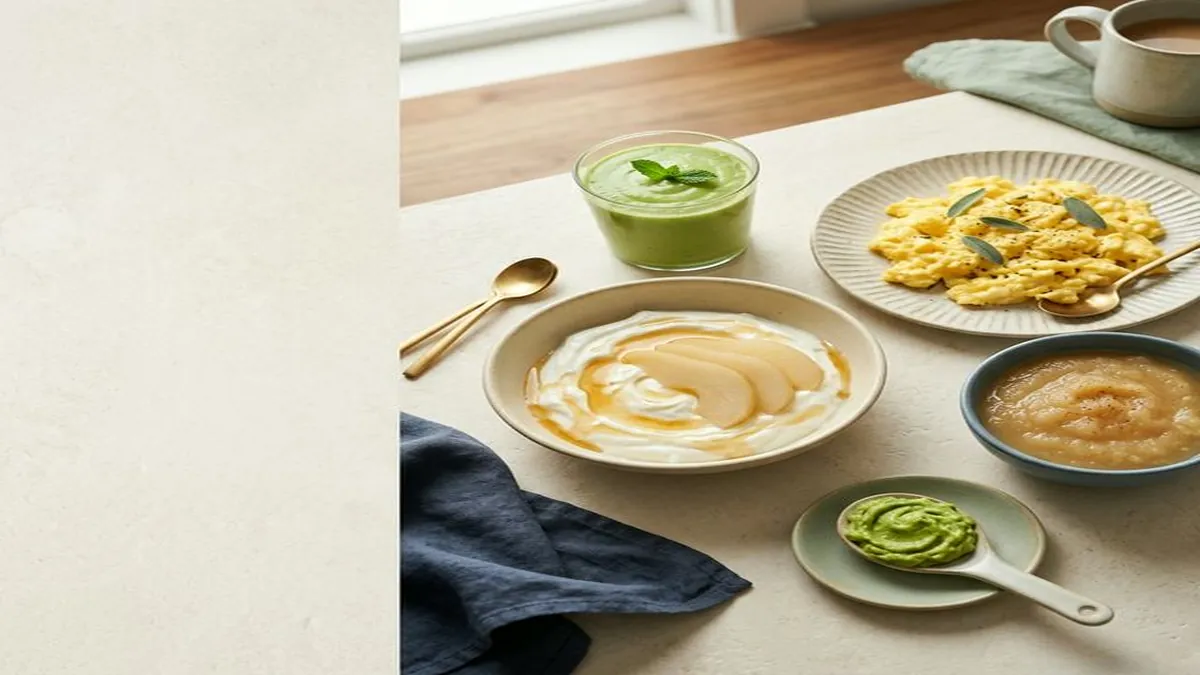
Reserve sweet drinks for mealtimes when saliva flow is highest. Water is best between activities, especially in the heat. If you do enjoy lemonade, iced tea, or smoothies, use a straw to minimize contact with teeth, and rinse with water afterward.
Tooth-friendly summer snack alternatives that kids actually enjoy include:
- Cheese cubes and string cheese (casein in cheese actively protects enamel)
- Apple slices with peanut butter
- Plain yogurt with fresh berries
- Celery with cream cheese
- Watermelon (high water content, low acid)
- Frozen grapes (a satisfying alternative to sugary frozen treats)
- Hummus with vegetables
Sunscreen and Lip Protection
While most families apply sunscreen to exposed skin, lips are frequently overlooked. The Skin Cancer Foundation notes that the lower lip is 12 times more likely to be affected by skin cancer than the upper lip. The vermilion border (the transition between lip and skin) is particularly vulnerable because it has minimal melanin protection. Use an SPF 30 or higher lip balm during outdoor activities and reapply every two hours, especially at the beach, pool, or sports fields.
Actinic cheilitis -- a precancerous condition of the lower lip caused by cumulative sun damage -- is something Dr. Fatima screens for at every exam. Early detection is critical, and the condition is entirely preventable with consistent lip SPF use starting in childhood.
Braces and Aligner Care in Summer
For teens wearing braces or clear aligners during summer break, maintaining oral hygiene routine can be challenging without the structure of the school year. Keep aligner cases easily accessible so trays are not lost during barbecues or pool parties -- a surprising number of aligner trays end up wrapped in napkins and thrown away at restaurants. Rinse aligners with cool water each time they are removed. For patients with braces, pack a travel orthodontic kit with wax, a small brush, and floss threaders for on-the-go care. If a bracket breaks while traveling, apply orthodontic wax and call our office for guidance.
Summer travel across time zones can also disrupt aligner wear schedules. If you are switching trays every 7 days, keep track of your change dates on your phone calendar regardless of time zone changes. The 22-hour daily wear requirement does not change because you are on vacation -- taking trays out for extended meals and forgetting to put them back in is the most common cause of summer aligner tracking issues.
Pre-Travel Dental Checkup
The ADA recommends scheduling a dental checkup before extended travel. A quick exam can catch small issues -- a loose filling, a developing cavity, or early gum inflammation -- before they become painful emergencies away from home. At Innova Smiles, we offer flexible scheduling to accommodate pre-vacation visits.
During your pre-travel visit, Dr. Fatima will:
- Check all existing fillings and crowns for stability
- Evaluate any teeth that have been causing intermittent sensitivity
- Take X-rays of any areas of concern to rule out developing decay
- Address minor issues that could become major problems during your trip
- Provide a digital copy of your most recent X-rays for your phone
Summer Snacking and Cavity Prevention
Summer schedules often mean more frequent snacking, which exposes teeth to acid attacks throughout the day. Each time you eat, oral bacteria produce acids for about 20 minutes. The CDC recommends limiting snacking frequency and choosing tooth-friendly options like cheese, nuts, vegetables, and plain yogurt. If your children enjoy popsicles or ice cream, have them rinse with water afterward and wait 30 minutes before brushing -- brushing immediately after consuming acidic foods can actually abrade softened enamel.
Research in Caries Research found that children who snacked more than three times between meals had a 2.2-fold higher cavity rate than those who limited between-meal eating to once daily. The total amount of sugar consumed mattered less than the frequency of exposure.
Frequently Asked Questions
Should I bring my child's dental records when traveling? If your child has recent dental work or ongoing treatment, keeping a copy of their most recent X-rays on your phone can help an emergency dentist provide faster, more accurate care. Ask our front desk for a digital copy before your trip.
What if a dental emergency happens on a cruise ship? Most cruise ships have a basic medical facility but not a dentist. Pack temporary dental cement and pain medication. If a serious dental injury occurs, the ship's medical team can provide pain management until you reach the next port. Some larger cruise lines (Royal Caribbean, Norwegian) have a dentist on board for Alaska and trans-Atlantic sailings -- check with your cruise line before departure.
Can swimming pool water really stain teeth? Yes. The Journal of the American Dental Association documents "swimmer's calculus" -- brown staining that develops on teeth from prolonged chlorine exposure. Competitive swimmers who train more than six hours per week are most at risk. A professional cleaning removes these deposits easily.
How long can I wait to see a dentist for a cracked tooth? It depends on the severity. A hairline crack with no pain can wait until you return from vacation (days to a week). A crack with sharp pain when biting, visible separation, or bleeding needs attention within 24-48 hours to prevent the crack from extending into the root, which would change the treatment from a crown to an extraction.
Is it safe to brush my teeth with tap water in foreign countries? In countries where tap water is not potable, use bottled water for brushing and rinsing. While the small amount of water used during brushing is unlikely to cause serious illness, contaminated water can introduce bacteria to gum tissue, especially if you have any open sores or recent dental work.
Need advice before upcoming travel? Call (508) 481-0110 or send us a message. Families from Framingham, Sudbury, Southborough, and across MetroWest trust Innova Smiles for pre-travel checkups and summer dental care.
Related Articles
- Sports Mouthguards in Marlborough: A Year-Round Family Guide
- Essential Dental Hygiene Tips for a Healthy Smile
- Dental Emergency Guide for Marlborough