Featured Answer: Do I really need a retainer?
Yes—absolutely. Teeth naturally tend to drift back toward their original positions after orthodontic treatment. Wearing retainers as directed preserves your Spark aligner results and protects the time, effort, and money you invested in your smile. At Innova Smiles in Marlborough, MA, Dr. Ambereen Fatima considers retention the most important phase of orthodontic care, and every aligner patient in our MetroWest practice receives a customized retention plan before treatment even begins.
What Is Orthodontic Relapse?
The American Association of Orthodontists (AAO) defines orthodontic relapse as the gradual shifting of teeth back toward their pre-treatment positions after braces or aligners are removed. It can happen within weeks, months, or even years after treatment ends. Relapse is not a sign that your treatment failed—it is a normal biological response. Your teeth were held in their original positions by a network of periodontal ligament fibers, bone, and soft tissue for years or decades. Moving them into new positions does not instantly reprogram that memory.
Why relapse happens
- Periodontal fiber rebound — The elastic fibers connecting teeth to surrounding bone stretch during orthodontic movement. Without retention, they contract and pull teeth back.
- Ongoing growth and aging — Jaw growth in younger patients and natural age-related changes in adults can shift tooth positions over time.
- Bite forces and habits — Tongue thrust, clenching, grinding, and even lip posture exert forces that gradually move teeth. Patients who grind at night may benefit from a night guard in addition to a retainer.
- Wisdom teeth (sometimes) — While the research is mixed, erupting third molars can contribute to crowding in some cases.
Types of Retainers
Dr. Fatima will recommend the retainer type that best suits your case, lifestyle, and long-term goals.
Removable clear retainers
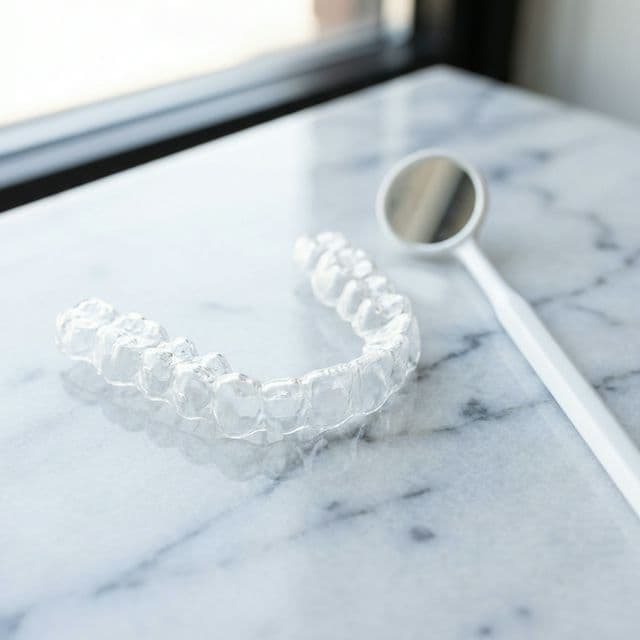
These look similar to your aligner trays—thin, transparent, and custom-fitted to your new tooth positions. They are easy to clean, comfortable to wear, and virtually invisible. Most of our Spark patients in Marlborough, Southborough, and Hudson prefer this option for its convenience.
Fixed (bonded) retainers
A thin wire is bonded to the back of your front teeth, usually the lower six. Research published in the European Journal of Orthodontics shows that fixed retainers work around the clock without any compliance effort on your part. They are ideal for patients who had significant lower crowding or who prefer a set-it-and-forget-it approach. The trade-off is that flossing requires a floss threader or water flosser to clean around the wire.
Combination approach
Some patients benefit from a fixed retainer on the lower arch and a removable retainer on the upper arch. Dr. Fatima tailors the approach based on how your teeth responded to treatment and your risk factors for relapse.
How Long Do You Need to Wear a Retainer?
The short answer: for as long as you want your teeth to stay straight. Here is the typical protocol at Innova Smiles:
- Months 1–6 after treatment — Wear your removable retainer every night, all night. This is when relapse risk is highest.
- Months 6–12 — If your teeth are stable, Dr. Fatima may taper to five or six nights per week.
- Year 2 and beyond — Many patients settle into wearing retainers three to four nights per week indefinitely. Think of it like a gym membership for your smile—consistent, low-effort maintenance that protects your results.
Retainer Care Tips
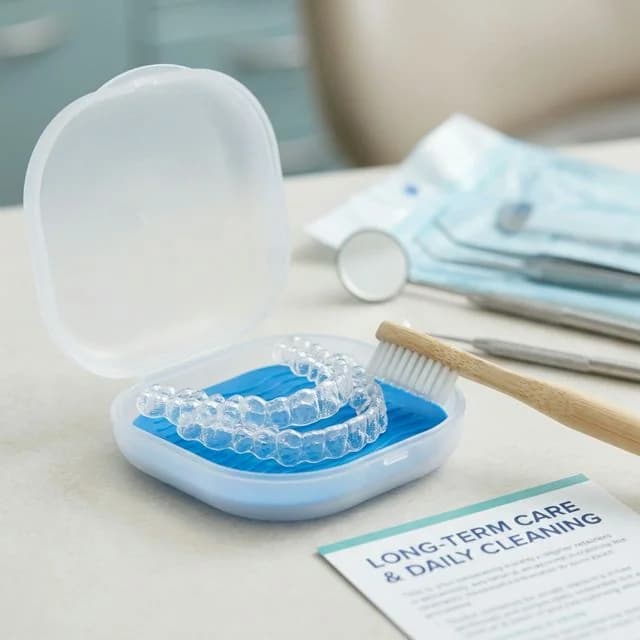
- Rinse your retainer every time you remove it. Brush it gently with a soft toothbrush and cool water—never hot water, which can warp the plastic.
- Soak your retainer in a denture-cleaning tablet or retainer-specific solution once or twice a week to eliminate bacteria and odor.
- Store your retainer in its case when not in use. Wrapping it in a napkin is the number one way retainers end up in the trash.
- Bring your retainer to every dental checkup so we can inspect it for wear, cracks, or fit changes.
- Replace your retainer if it cracks, yellows significantly, or no longer fits snugly. Most removable retainers last one to three years with proper care.
What Happens Without a Retainer?
Patients who stop wearing their retainer often notice subtle crowding returning within a few months—especially in the lower front teeth. Over time, the relapse can become significant enough to require a second round of aligner treatment. That is an expense and a time commitment that is completely avoidable with consistent retainer use.
Can Adults Experience Relapse?
Absolutely. Many adults who had braces as teenagers and stopped wearing retainers notice crowding returning in their 30s, 40s, or beyond. Age-related changes in bone density, ongoing bite forces, and years without retention all contribute to gradual shifting. The AAO notes that adult teeth can shift at any age, which is why lifetime retainer wear is now the standard recommendation regardless of when orthodontic treatment was completed.
Retainers and Night Guards: Do You Need Both?
If you grind your teeth at night (bruxism), your retainer alone may not provide sufficient protection. A custom night guard absorbs grinding forces and prevents enamel wear, while your retainer maintains tooth alignment. For patients who grind, Dr. Fatima may recommend wearing a retainer during the early post-treatment months and then transitioning to a combined retainer-night guard appliance, or alternating between the two on different nights based on your individual needs.
Our Protocol
At Innova Smiles, retention planning starts on day one. Before your final aligner tray is complete, we take impressions or scans for your retainers so they are ready the moment treatment ends. We then schedule periodic retention checks—usually at your regular cleaning appointments—to confirm that your teeth are holding their new positions and your retainer is in good shape.
Keep your smile straight for the long term. Call (508) 481-0110 or book now.
Related Articles
- How Long Does Spark Aligner Treatment Take?
- Living with Spark Clear Aligners: Tips & Tricks
- Straight Teeth, Healthier Gums: Benefits of Spark Aligners