Featured Answer: What are the keys to success with Spark aligners?
Wear your aligners about 22 hours per day, remove them only for meals and brushing, clean trays gently (no hot water), and keep a small travel kit. Consistency is everything—the more you wear them, the smoother and faster treatment goes. According to the American Association of Orthodontists, consistent aligner wear of 20–22 hours per day is critical for achieving planned tooth movements on schedule. At Innova Smiles in Marlborough, MA, Dr. Ambereen Fatima and our team coach every Spark patient through the daily routine so the adjustment period is as smooth as possible for busy MetroWest professionals and families.
Starting aligner treatment is exciting, but the first week or two can feel like an adjustment. These practical tips—based on what our most successful patients do—will help you build great habits from day one.
The 22-Hour Rule
Your aligners need to be in your mouth at least 22 hours per day to keep treatment on schedule. That leaves roughly two hours for meals, snacks, and oral hygiene. Here is how to make it work:
- Set phone reminders — Especially during the first few weeks, a simple alarm after meals helps you remember to pop trays back in. Many of our patients who commute along the I-495 corridor set a timer when they sit down for lunch.
- Plan social events — If you know you will be at a dinner or gathering where trays might be out longer than usual, compensate by being extra diligent the rest of the day. An occasional 20-hour day will not derail treatment, but making it a habit will.
- Track your wear time — Several free apps (TrayMinder, Invisalign My Aligners) let you log when trays are in and out. The data can be surprisingly motivating.
Eating and Drinking Guidelines
- Always remove trays for meals and snacks. Chewing with aligners in can crack or distort the plastic and trap food against your teeth.
- Store trays in their case—never in a napkin. Napkin-wrapped trays are the number one item accidentally thrown away at restaurants. Patients from Framingham to Hudson have learned this the hard way.
- Drink only water with aligners in. Coffee, tea, wine, and soda can stain trays and promote cavity-causing acid exposure between the tray and enamel. Hot beverages are especially problematic because heat warps the thermoplastic material.
- Rinse your mouth before reinserting trays. A quick swish of water after eating removes loose food particles and reduces the risk of trapping sugars against your teeth.
Cleaning and Maintenance Routine
Keeping your trays fresh is simpler than most patients expect:
- Rinse trays every time you remove them. Saliva dries into a cloudy film if left on the plastic.
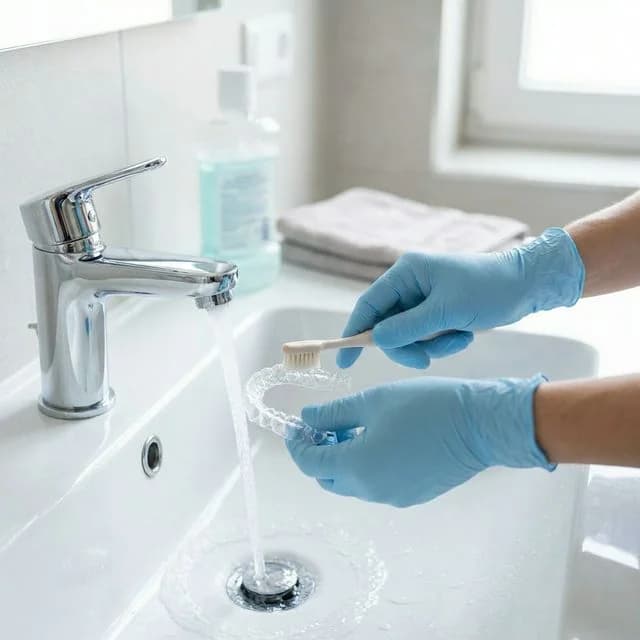
- Brush trays gently with a soft-bristle brush and cool water. Do not use toothpaste—the ADA notes that most toothpastes contain mild abrasives that can micro-scratch the surface, making trays appear hazy.
- Soak trays once daily. A denture-cleaning tablet or Spark’s own cleaning crystals dissolved in cool water for 15 minutes eliminates bacteria and odor.
- Clean your aligner case regularly. Rinse it daily and let it air dry. Replace the case if it starts to discolor or develop an odor.
Speaking Clearly and Confidently
A slight lisp is completely normal during the first one to three days with a new set of trays. Your tongue is adjusting to the thin layer of plastic behind your front teeth. Here is how to speed up the adaptation:
- Read aloud for five to ten minutes. News articles, books, or even work emails—anything that forces you to articulate.
- Practice words with “s” and “th” sounds, which are most affected.
- Most patients report that the lisp is gone by day two or three. By the second tray change, you may not notice any adjustment period at all.
Travel Tips
Whether you are heading to a work conference or a weekend trip, pack a small aligner kit: your case, a travel toothbrush, mini toothpaste, floss picks, and a water bottle for rinsing. Always bring your current tray set plus the previous set as a backup in case your current tray is lost or damaged.
Common Challenges and Solutions
- Rough edge on a tray? Call our office rather than filing it yourself—we will smooth it safely.
- Lost or broken tray? Contact Innova Smiles promptly. Dr. Fatima may advise wearing your previous tray or advancing to the next set.
- Tray feels very tight after switching? That is normal. Mild pressure typically fades within 24 to 48 hours.
- Attachments feel rough? Lips and cheeks adapt within a few days. Orthodontic wax provides temporary cushioning if needed.
Frequently Asked Questions
Q: Can I chew gum with Spark aligners in? No. Gum sticks to the aligner material and can distort the tray shape. Remove your aligners before chewing gum, and opt for sugar-free gum with xylitol after meals to stimulate saliva flow before reinserting your trays.
Q: How often do I switch to a new set of trays? Most patients change trays every one to two weeks, depending on the treatment plan Dr. Fatima designs for your case. The American Association of Orthodontists recommends following your provider's tray schedule precisely—switching early or late can affect tooth movement predictability.
Q: Will my aligners affect my speech at work? A very slight lisp may be noticeable on the first day with new trays, but it typically resolves within 24 to 48 hours. Most patients report that coworkers never notice their aligners at all, making them ideal for professionals across the MetroWest area.
Q: What happens if I lose a tray while traveling? Contact Innova Smiles immediately. In most cases, Dr. Fatima will advise you to wear your previous tray until a replacement arrives. This is why we always recommend carrying your prior set as a backup.
For a comparison of aligner options and costs, see our post on Spark aligner pricing in Massachusetts.
Ready for comfortable, discreet orthodontics? Call (508) 481-0110 or request a consultation.
Related Articles
- How Long Does Spark Aligner Treatment Take?
- Why Retainers Are Crucial After Aligner Treatment
- Straight Teeth, Healthier Gums: Benefits of Spark Aligners