Most people who grind their teeth at night don't know they're doing it. The first clue is often a partner who mentions it, a headache that's always there when you wake up, or a dentist who notices unusual tooth wear at a routine checkup. By then, damage has often already occurred.
Bruxism — the clinical term for teeth grinding and jaw clenching — affects an estimated 8–30% of adults, with the wide range reflecting how often it goes undiagnosed. This guide covers everything you need to know about bruxism and night guards.
What Is Bruxism?
Bruxism is the involuntary grinding, gnashing, or clenching of teeth. It can occur during the day (awake bruxism) or at night during sleep (sleep bruxism). Sleep bruxism is classified as a sleep-related movement disorder — it often occurs with other sleep conditions and is harder to control because it happens unconsciously.
The forces generated by grinding can reach 250 pounds per square inch — compared to normal chewing forces of about 30 psi. Over time, this enormous pressure causes real structural damage.
Signs You May Be Grinding
Physical symptoms:
- Waking up with a dull headache, especially at the temples
- Jaw soreness or stiffness in the morning
- Facial muscle pain or tightness
- Clicking or popping sounds in your jaw (TMJ)
- Neck or shoulder tension upon waking
Dental signs (often caught by your dentist):
- Flattened, worn tooth surfaces — especially on the biting edges of front teeth
- Chipped or cracked teeth without a clear cause
- Increased tooth sensitivity
- Loose teeth
- Teeth that appear shorter than they used to be
Visible signs:
- Scalloping or indentations along the sides of your tongue
- Ridging along the inside of your cheeks (linea alba)
- Visible muscle hypertrophy in the jaw (enlarged masseter muscles give a "square jaw" appearance)
What Causes Bruxism?
The exact causes are not fully understood, but contributing factors include:
- Stress and anxiety — the most commonly cited trigger; emotional stress increases nighttime grinding
- Sleep disorders — sleep bruxism is associated with sleep apnea, snoring, and REM sleep behavior disorder
- Medications — certain antidepressants (particularly SSRIs) and stimulants can increase bruxism
- Caffeine and alcohol — both worsen nighttime grinding, especially when consumed close to bedtime
- Bite misalignment — though less causal than once thought, an uneven bite can contribute
- Genetics — bruxism runs in families
What Damage Does Bruxism Cause?
Left untreated, chronic grinding causes significant, cumulative damage:
To teeth:
- Enamel erosion — the outer enamel layer cannot regenerate once worn away
- Tooth fractures — from hairline cracks to cusp fractures requiring crowns
- Dentin exposure — once enamel is worn through, the softer dentin underneath erodes much faster
- Failed restorations — grinding can fracture fillings, crowns, and veneers
To the jaw and TMJ:
- Temporomandibular joint disorder (TMD) — pain, clicking, and limited jaw opening
- Muscle hypertrophy — enlarged jaw muscles from constant overuse
- Headaches — tension headaches triggered by overworked jaw muscles
The restoration costs for untreated bruxism can be substantial. A full set of worn-down teeth may require crowns on every tooth. A custom night guard at $400–$700 is a fraction of that cost.
Custom Night Guards vs. Store-Bought Options
You've seen the boil-and-bite mouth guards at the drugstore for $20–$30. Here's why they're not the same as a custom dental night guard:
| Feature | Custom Night Guard | Store-Bought Guard |
|---|---|---|
| Fit | Precisely fitted to your exact bite | Generic, bulky, uncomfortable |
| Material | High-quality dental acrylic/thermoplastic | Cheap plastic that degrades quickly |
| Bite position | Fabricated in optimal jaw position | Random bite position |
| Durability | 3–7 years with proper care | Often months before warping |
| Sleep quality | Thin and comfortable — most patients adapt quickly | Bulk causes difficulty sleeping |
| Protection level | Highly effective | Limited due to poor fit |
| Cost | $400–$700 | $20–$30 |
Store-bought guards are better than nothing for short-term use — but they don't provide the precise jaw positioning, protection level, or durability of a laboratory-fabricated custom guard.
How Custom Night Guards Are Made at Innova Smiles
The process is straightforward:
- Impressions: We take precise impressions of your upper and lower teeth (or use digital scans)
- Lab fabrication: Your impressions are sent to a dental laboratory where a custom guard is fabricated to your exact specifications
- Fitting appointment: The guard is adjusted to ensure perfect fit and proper bite alignment
- Instructions: We show you how to clean and care for your guard
Total time: two appointments over 2–3 weeks.
Night Guard Care Tips
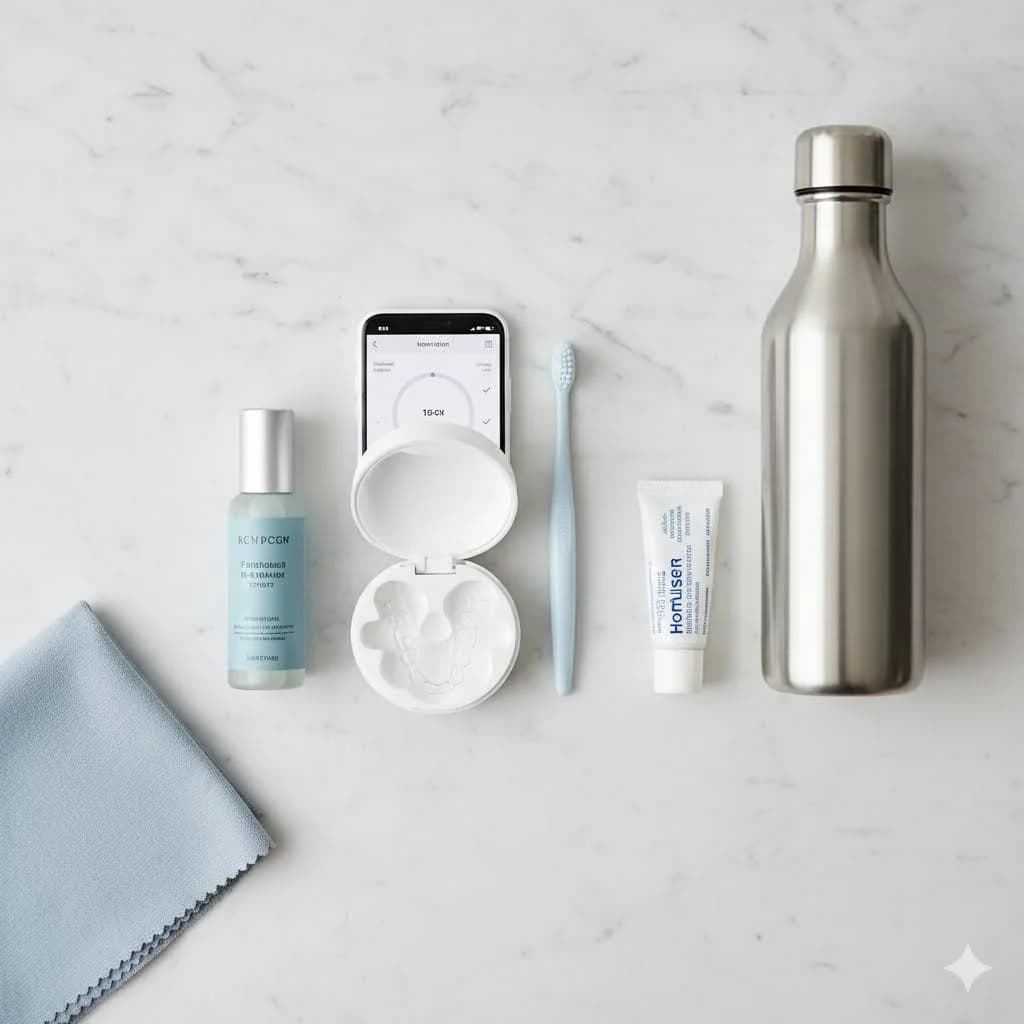
- Rinse with cool water (not hot — hot water warps acrylic) immediately after removing each morning
- Brush with a soft toothbrush and mild soap — not toothpaste (abrasives scratch acrylic)
- Soak weekly in a denture cleaning tablet or mild mouthwash
- Store in the provided case when not in use
- Bring to every dental appointment for inspection
Bruxism Beyond the Night Guard: Additional Treatments
A night guard protects your teeth from damage — but it doesn't cure bruxism. For patients with significant symptoms, additional approaches may help:
Botox for Bruxism
Botulinum toxin injected into the masseter (jaw) muscles reduces the force of grinding by partially relaxing the muscle. Effects last 3–6 months. Many patients report significant reduction in headaches and jaw soreness.
Learn about Botox for TMJ at Innova Smiles →
Stress Management
Since stress is the primary driver for many bruxism patients, addressing the root cause matters. Therapy, mindfulness, exercise, and improved sleep hygiene all have evidence supporting their role in reducing bruxism frequency.
Sleep Apnea Screening
Sleep bruxism and sleep apnea have a significant overlap. If you snore, wake up tired, or have been told you stop breathing during sleep, getting screened for sleep apnea is worthwhile.
Learn about sleep apnea treatment →
Frequently Asked Questions
Can bruxism be cured? Not in the traditional sense — but it can be well-managed. A night guard protects your teeth while you address contributing factors. Many patients see significant symptom reduction with a combination of a guard, stress management, and sometimes Botox.
Will I feel the night guard in my mouth? Most patients adapt within 1–2 weeks. Custom guards are thin and precisely fitted, making them far more comfortable than the bulky store-bought variety. Patients who tried a drugstore guard and gave up are often surprised by how different a custom guard feels.
Does insurance cover night guards? Many dental insurance plans cover a portion of night guard fabrication — typically under preventive or restorative benefits. We verify your specific coverage before fabricating the guard.
How do I know if my guard is still good? We inspect your night guard at every recall appointment. Signs of wear-through, warping, or cracking indicate it's time for a replacement. Well-maintained custom guards typically last 3–7 years.
Schedule Your Night Guard Consultation in Marlborough, MA
If you wake up with jaw soreness, headaches, or your partner has mentioned grinding sounds — don't wait for the damage to accumulate. Innova Smiles is located at 340 Maple St Suite 100, Marlborough, MA 01752.
Call us at (508) 481-0110 or book online. We serve patients from Marlborough, Hudson, Framingham, Northborough, Southborough, Shrewsbury, Westborough, and Sudbury.