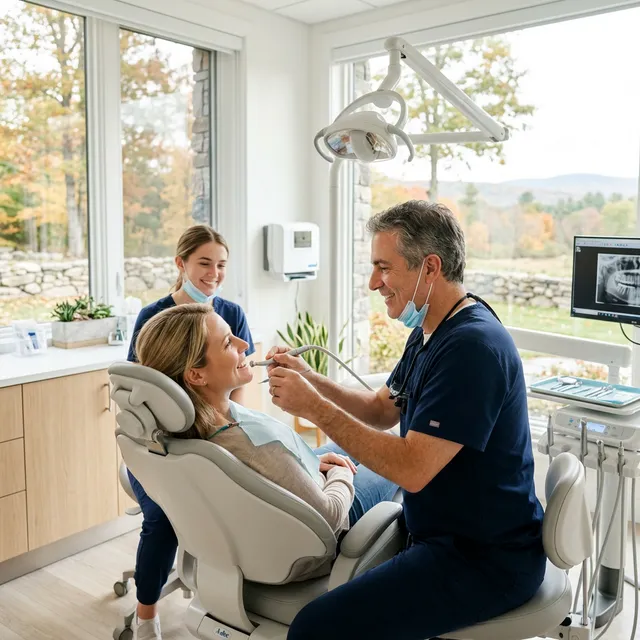

A cracked tooth is one of the most common dental emergencies--and one of the trickiest to diagnose. Unlike a cavity, a crack often does not show up on a standard two-dimensional X-ray. Many patients describe months of mysterious, intermittent pain before finally getting an accurate diagnosis. If you are in the Marlborough, MA area and suspect a cracked tooth, this guide covers the clinical types of fractures, immediate first-aid steps, every treatment option available, cost expectations, and how to prevent future cracks.
Why Cracked Teeth Are So Common
Tooth fractures have increased significantly over the past two decades. The American Association of Endodontists (AAE) identifies cracked tooth syndrome as the third leading cause of tooth loss in industrialized nations, behind periodontal disease and dental caries. Several factors are driving this trend:
- Grinding and clenching (bruxism): Often occurs during sleep and goes undiagnosed for years. The masseter muscle can generate up to 600 pounds per square inch of force during nocturnal clenching--more than enough to fracture enamel and dentin. A 2021 study in the Journal of Dental Research found that bruxism rates increased 25% during the COVID-19 pandemic due to stress, a trend that has persisted. For patients with severe bruxism causing TMJ pain, targeted muscle-relaxation therapy can reduce clenching force and protect teeth from damage.
- Hard foods: Ice, unpopped popcorn kernels, hard candy, olive pits, and crusty bread are among the most common culprits. Biting down on an unexpected hard object concentrates force on a single cusp tip.
- Trauma: Sports injuries, falls, bicycle accidents, and car accidents account for a significant portion of dental fractures, particularly in the MetroWest area where recreational sports are popular year-round.
- Large old fillings: Amalgam (silver) fillings placed decades ago do not bond to tooth structure. Over time, the repeated expansion and contraction of the metal with temperature changes creates internal stress that weakens the surrounding tooth walls. A tooth with a filling that occupies more than 50% of the cusp-to-cusp width is at high risk for fracture.
- Temperature extremes: Rapidly alternating very hot coffee and ice water creates thermal shock in tooth enamel. Enamel and dentin expand and contract at different rates, generating micro-stresses that accumulate over time.
- Age-related changes: Teeth become more brittle with age as the dentin becomes more mineralized and less resilient. Patients over 50 have the highest incidence of cracked tooth syndrome, with lower molars being the most frequently affected teeth.
Signs You May Have a Cracked Tooth
The hallmark symptom is sharp, erratic pain when biting down or releasing bite pressure--especially localized to a specific spot on one tooth. This pain pattern is distinctive because the crack flexes open under biting force, stimulating nerve fibers in the dentin or pulp, and then snaps closed when you release pressure. Other common signs include:
- Pain that comes and goes unpredictably (not constant like a typical cavity)
- Sensitivity to sweets, hot, or cold that lingers for a few seconds after the stimulus is removed
- Discomfort in a general area of your mouth, but difficulty pinpointing which tooth is the source
- A visible chip, fracture line, or staining along a crack on the tooth surface
- Feeling like something is "off" or "catching" when you bite
- Pain specifically when eating crunchy or chewy foods
- Swelling of the gum around a single tooth (indicating possible infection from a deep crack)
Important: Some cracks cause no pain at all until the pulp (nerve) becomes infected or necrotic. This is why regular dental exams--including bite tests and visual inspection with magnification--catch cracks before they become emergencies. At Innova Smiles, Dr. Fatima performs a systematic occlusal evaluation at every checkup.
How Cracked Teeth Are Diagnosed
Diagnosing a cracked tooth requires more than a standard X-ray. Vertical cracks run parallel to the X-ray beam and are often invisible on periapical or panoramic films. Dr. Fatima uses multiple diagnostic methods to locate and characterize cracks:
- Bite test (Tooth Slooth): You bite down on a small plastic or rubber instrument placed on individual cusps. Pain on release indicates a crack in the underlying tooth structure. This test systematically isolates which cusp is involved.
- Transillumination: A bright fiber-optic light is placed against the tooth. Light stops at a crack line, creating a visible shadow that reveals the fracture path and its extent.
- Dye testing: Methylene blue dye is applied to the tooth surface. The dye seeps into crack lines, making them visible under magnification even when they are hairline-thin.
- CBCT 3D imaging: When the fracture pattern is ambiguous, cone beam computed tomography can sometimes reveal root fractures that are invisible on two-dimensional X-rays. This is particularly useful for distinguishing a cracked tooth from a vertical root fracture, which has a very different prognosis and treatment.
- Periodontal probing: A narrow, deep periodontal pocket on one surface of a tooth (especially when the rest of the tooth has normal 2-3mm pockets) is a classic sign of a vertical root fracture.
Early diagnosis is critical. A tooth with a crack confined to the crown has an excellent prognosis with a crown. A tooth with a crack that has reached the root is often unsalvageable.
Types of Cracked Teeth (and What They Mean for Treatment)
Not all cracks are equal. The AAE classifies tooth fractures into five categories, and treatment depends entirely on the type and extent:
The progression from cracked tooth to split tooth is not inevitable, but it is common if treatment is delayed. Every time you chew on a cracked tooth, the crack propagates slightly deeper. What could have been saved with a crown today may require extraction next month.
What to Do Right Now If You Suspect a Cracked Tooth
Immediate steps:
- Call your dentist for same-day evaluation. At Innova Smiles, we reserve emergency slots every business day. Call (508) 481-0110 and describe your symptoms--sharp pain on biting, temperature sensitivity, or visible damage.
- Stop chewing on the affected side. Continued function on a cracked tooth drives the crack deeper with every bite. Eat on the opposite side until you are evaluated.
- Avoid temperature extremes. Hot coffee and ice water cause the crack to flex, worsening pain and potentially propagating the fracture.
- Take over-the-counter pain relief. Ibuprofen (Advil, 400-600mg every 6 hours with food) is preferred because it reduces both pain and inflammation. Acetaminophen (Tylenol) is an alternative if you cannot take NSAIDs.
- Do not place aspirin directly on the tooth or gum. This old home remedy causes chemical burns to soft tissue.
- If a piece has broken off, save it. Place the fragment in milk or saline and bring it to your appointment. In some cases, the fragment can be bonded back.
If there is visible breakage, swelling, or severe pain, treat it as a dental emergency. Call Innova Smiles at (508) 481-0110 for same-day appointments. We serve emergency patients from throughout MetroWest including Hudson, Framingham, and Westborough.
What NOT to Do with a Cracked Tooth
- Do not continue chewing on it. You can convert a savable cracked tooth into an unsalvageable split tooth with a single hard bite.
- Do not use pharmacy dental cement as a permanent fix. Temporary cements like Dentemp are designed for hours, not weeks. They mask symptoms while the crack worsens beneath.
- Do not ignore the pain. Cracked teeth get worse, never better, without treatment. The pulp tissue inside the tooth becomes progressively more inflamed, and once it becomes necrotic (dies), you will need a root canal in addition to a crown--roughly doubling the treatment cost.
- Do not assume an "all-clear" X-ray means no crack. A 2017 study in the Journal of Endodontics found that conventional radiographs detected only 35% of vertical cracks confirmed by clinical testing. Additional diagnostic methods (transillumination, bite test, CBCT) are essential.
Cracked Tooth Treatment Options at Innova Smiles Marlborough
1. Dental Bonding
For minor chips, craze lines, and small enamel fractures, tooth-colored composite resin is bonded directly to the tooth using an adhesive and light-cured in place. The procedure takes 30 to 60 minutes, requires no anesthesia in most cases, and restores both appearance and minor structural integrity. Bonding lasts 5 to 10 years with proper care and is the most affordable repair option.
2. Porcelain or Zirconia Crown
The most common treatment for cracked teeth. A custom crown encases the entire visible portion of the tooth, holding the cracked segments together and preventing the fracture from spreading. The crown absorbs and distributes biting forces evenly, protecting the weakened tooth structure underneath.
At Innova Smiles, we use high-strength zirconia and lithium disilicate (e.max) crowns that match your natural tooth shade precisely. The process requires two visits: the first for preparation, impressions, and a temporary crown; the second (about two weeks later) for permanent cementation. Research in The Journal of Prosthetic Dentistry reports that well-made crowns have a 10-year survival rate exceeding 95%.
3. Root Canal Therapy + Crown
If the crack has extended into the pulp chamber and the nerve tissue is inflamed (irreversible pulpitis) or infected, root canal therapy is needed first to remove the damaged tissue and seal the canal system. The tooth is then restored with a crown. The AAE reports that root canal-treated teeth with proper crown coverage have a success rate above 95% at 10 years.
Modern root canal treatment is performed with rotary nickel-titanium instruments, electronic apex locators, and often a dental operating microscope for magnification. Most patients report that the procedure is no more uncomfortable than having a filling placed.
4. Onlay or Overlay
For fractured cusps where the crack does not extend below the gumline, a porcelain onlay (partial crown) preserves more natural tooth structure than a full crown while still providing structural reinforcement. Onlays are fabricated from the same materials as crowns and offer similar longevity.
5. Tooth Extraction + Dental Implant
When a tooth is split vertically through the root or has a vertical root fracture, it cannot be saved. Extraction is followed by implant dentistry--the closest modern dentistry can get to replacing a natural tooth. The implant (titanium post), abutment (connector), and porcelain crown together create a restoration that looks, feels, and functions like the original tooth. At Innova Smiles, Dr. Fatima often places a bone graft at the time of extraction (socket preservation) to maintain the ridge contour for optimal implant placement three to four months later.
The True Cost of Delaying Cracked Tooth Repair
Procrastination is the most expensive treatment plan. Here is how treatment escalates as a crack progresses:
The message is clear: a crown today can prevent an implant case six months from now.
Can a Cracked Tooth Be Prevented?
In many cases, yes. Prevention focuses on reducing the forces and risk factors that cause cracks:
- Custom night guard: If you grind your teeth, a laboratory-fabricated occlusal splint distributes clenching forces across all teeth instead of concentrating them on individual cusps. We fabricate custom night guards at Innova Smiles from impressions of your teeth for a precise fit. Over-the-counter boil-and-bite guards are a poor substitute--they are bulky, uncomfortable, and can shift bite forces unpredictably.
- Sports mouthguard: Custom-fitted guards protect teeth during contact sports (hockey, basketball, martial arts) and high-impact activities. The Academy for Sports Dentistry recommends custom guards for any sport with a risk of facial contact.
- Stop chewing ice: Ice is one of the single most common causes of cusp fractures. It is a habit worth breaking.
- Crown large old fillings proactively: Amalgam fillings that occupy more than half the width of the tooth have a high fracture risk. Replacing them with bonded porcelain or zirconia crowns before they crack saves the tooth and avoids emergency treatment.
- Use teeth only for chewing food: Opening bottles, tearing packaging, holding bobby pins, and cracking nuts with your teeth are common causes of fractures we see at our Marlborough office.
- Manage acid reflux and eating disorders: Chronic acid exposure erodes enamel, thinning the tooth walls and increasing fracture vulnerability. A study in Operative Dentistry found that patients with GERD had 2.3 times the rate of posterior tooth fractures.
Cracked Tooth FAQ
How much does cracked tooth repair cost in Marlborough, MA? Cost depends on the treatment required — bonding, a crown, root canal plus crown, or extraction plus implant — and on how deep the crack runs. Most PPO dental insurance plans cover 50 to 80% of crowns and root canals. We verify your benefits and provide a written cost estimate before starting any treatment.
Will a cracked tooth heal on its own? No. The ADA confirms that unlike bones, teeth cannot regenerate or repair themselves. A crack that is not treated will stay the same or worsen, often eventually causing pulp necrosis and infection that requires more extensive and more expensive care.
How do I know if my tooth is cracked or just sensitive? Sensitivity alone (from cold, heat, or sweets) is usually related to enamel erosion, recession, or a cavity, not a crack. Cracked tooth syndrome presents as sharp pain specifically triggered by biting or releasing pressure on a single spot. If you can reproduce the pain by biting on something hard in a specific location, a crack is likely. A dentist can confirm with a bite test, transillumination, or dye.
Can a cracked tooth cause an infection? Yes. When a crack extends into the pulp chamber, bacteria from the mouth enter the nerve tissue, causing pulpitis (inflammation) that can progress to a periapical abscess (infection at the root tip). Symptoms include throbbing pain, swelling, a bad taste in the mouth, and sometimes fever. This requires urgent root canal treatment or extraction.
How long can I wait to treat a cracked tooth? As short a time as possible. Every day you chew on a cracked tooth risks extending the fracture deeper. A crack that could be treated with a crown today may require a root canal next week or an extraction next month. If you are experiencing symptoms, call for an evaluation promptly.
Are cracked teeth more common in certain teeth? Yes. Lower molars (especially the second molar) are the most commonly cracked teeth, followed by upper premolars. These teeth bear the highest biting forces and often have large fillings that weaken them structurally.
Book Your Cracked Tooth Evaluation
Innova Smiles is located at 340 Maple St, Suite 100, Marlborough, MA 01752--serving patients from Hudson, Framingham, Northborough, Southborough, Shrewsbury, Westborough, and Sudbury.
For same-day cracked tooth evaluation, call us at (508) 481-0110 or book now. Catching a crack early is the single most important factor in saving your tooth.
Related Articles
- Dental Emergency Guide for Marlborough
- ER or Dentist? A Decision Tree for MetroWest
- Dental Crowns: Procedure, Timeline & Cost
- Dental Emergency Guide: Broken or Aching Tooth