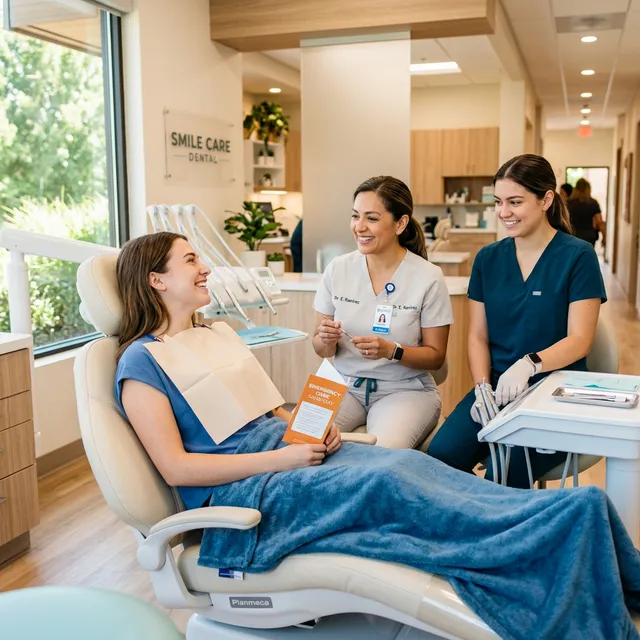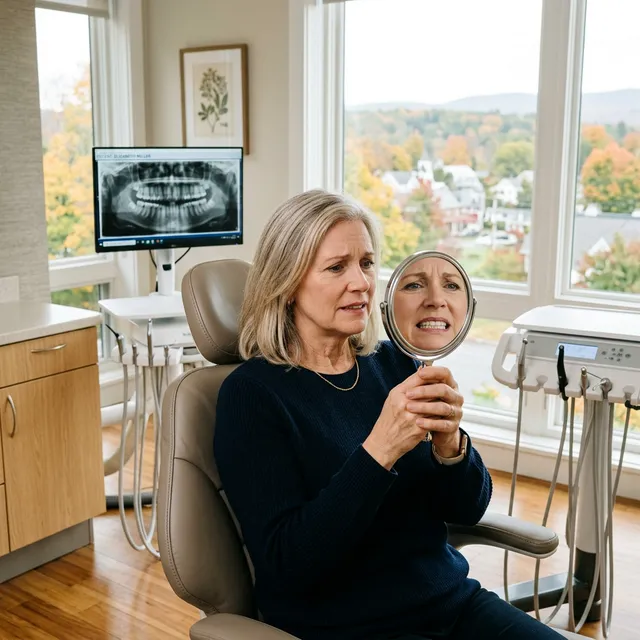

Are you in pain right now? A broken tooth is extremely vulnerable to infection. Do not wait. Call (508) 481-0110 for same-day care.
The Hidden Danger of a Chipped or Broken Tooth
According to the American Association of Endodontists (AAE), a chipped or broken tooth is more than just an aesthetic issue—it is a true dental emergency that requires prompt evaluation to prevent infection and nerve damage. While a minor superficial chip might not cause immediate pain, significant fractures expose the sensitive inner layers of the tooth (dentin and pulp) to bacteria and temperature fluctuations. The AAE estimates that more than 5 million teeth are knocked out or fractured every year in the United States, and the Journal of Endodontics reports that traumatic dental injuries affect up to 30 percent of the population by age 18.
For residents of Hudson, MA, choosing a reliable nearby dentist is critical when moments matter. Innova Smiles is located just minutes away in Marlborough, offering same-day appointments specifically triaged for dental trauma and severe pain.
What to Do Immediately After Breaking a Tooth
If you have just chipped or completely fractured a tooth, taking immediate action can save the tooth and minimize your discomfort. The first 30 to 60 minutes are the most critical window, particularly if the fracture involves the nerve or if the tooth has been knocked out entirely.
- Recover the Fragment: If possible, locate the broken piece of the tooth. Rinse it gently in milk or saline—not tap water, as chlorine and temperature changes can damage the cells on the fragment surface—and bring it to your appointment. In some clean breaks, it can be reattached using cosmetic bonding. Store it in milk, saline, or inside your cheek (between the gum and cheek) during transport.
- Rinse and Clean: Gently rinse your mouth with warm water to remove debris and bacteria. Do not scrub the fractured tooth surface.
- Control Bleeding and Swelling: Apply a clean piece of gauze to any bleeding areas with gentle pressure for 10 to 15 minutes. Use a cold compress on the outside of your cheek—20 minutes on, 20 minutes off—to reduce soft tissue swelling and pain.
- Protect the Area: If the remaining tooth is sharp and irritating your tongue or cheek, cover it with dental wax (available at most Hudson pharmacies, including CVS on Main Street) or sugarless gum.
- Manage Pain: Over-the-counter ibuprofen (400 to 600 mg for adults) is the best choice because it reduces both pain and inflammation. Avoid aspirin directly on the gum tissue—it causes chemical burns.
- Call an Emergency Dentist: Contact a practice that prioritizes urgent care. Relying on an ER for dental issues usually only results in antibiotics and a recommendation to see a dentist—most hospital emergency rooms do not have dental equipment or dentists on staff.
Medical Disclaimer: This content is for informational purposes only. Do not attempt to reattach a broken tooth segment yourself using household adhesives. Doing so is toxic and can cause irreversible damage to the tooth's root structure.
Understanding the Types of Tooth Fractures
Not all broken teeth are the same. The severity of the fracture determines which treatment is appropriate, how urgently you need to be seen, and what the long-term prognosis looks like. The American Association of Endodontists classifies dental fractures into five categories, from least to most severe:
1. Craze Lines (Enamel Infraction)
These are tiny, superficial cracks in the outer enamel layer only. They are extremely common in adults—a 2019 study in the International Endodontic Journal found craze lines in over 80 percent of adult teeth examined under magnification. They do not cause pain, do not require treatment, and do not weaken the tooth structurally. You may notice them as fine hairline marks when light hits your front teeth at certain angles. Dr. Fatima checks craze lines during routine exams to make sure they have not progressed, but in most cases they are completely benign.
2. Enamel Chips (Enamel-Only Fracture)
A small piece of the outer enamel breaks off without reaching the dentin layer underneath. The tooth may feel rough to the tongue but is not usually painful because enamel has no nerve endings. This is the most common type of dental fracture we see in our MetroWest patients—typically caused by biting something unexpectedly hard (an olive pit, a popcorn kernel, a piece of ice) or from a minor impact during sports.
Treatment: Dental bonding or smoothing. If the chip is small and does not affect the appearance, smoothing the rough edge may be all that is needed. For visible chips on front teeth, composite bonding restores the tooth's shape and appearance in a single visit.
3. Enamel-Dentin Fracture (Without Pulp Exposure)
The fracture extends through the enamel into the dentin—the softer, yellowish layer beneath the enamel that makes up the bulk of the tooth structure. The tooth will likely be sensitive to temperature and sweet foods because dentin contains microscopic tubules that connect to the nerve. You may see a yellow or brownish color at the fracture line, which is the exposed dentin.
Treatment: This requires a dental restoration. Small enamel-dentin fractures can be repaired with composite bonding. Larger fractures typically need a crown to protect the remaining tooth structure and seal the exposed dentin from bacteria. The key is timing—every hour the dentin is exposed, bacteria migrate deeper into the tubules toward the nerve.
4. Enamel-Dentin Fracture With Pulp Exposure
The fracture reaches the inner pulp chamber, exposing the nerve and blood supply of the tooth. This is intensely painful. You may see a pink or red spot at the fracture site (this is the exposed pulp tissue), and the tooth will be extremely sensitive to air, temperature, and touch. The Journal of Endodontics reports that pulp exposure from trauma has a window of approximately 24 to 48 hours before irreversible pulpitis (nerve inflammation) sets in, after which root canal therapy becomes necessary.
Treatment: If treated within the first few hours, a pulp cap (a protective dressing placed directly over the exposed nerve) may save the nerve and avoid a root canal. If the exposure has been present for more than 24 hours, or if the patient is experiencing significant spontaneous pain, root canal therapy is typically required, followed by a crown.
5. Root Fracture (Vertical Root Fracture)
The fracture line extends vertically through the root of the tooth, below the gumline and into the bone. This is the most serious type of fracture and often the most difficult to diagnose because it may not be visible on standard X-rays. Symptoms include persistent pain, swelling in the gum above the root, and sometimes a sinus tract (a small pimple-like bump on the gum that drains pus). A 3D CBCT scan—which we have at Innova Smiles—is often the only way to definitively diagnose a vertical root fracture.
Treatment: Vertical root fractures in single-rooted teeth (incisors, canines, premolars) almost always require extraction. The tooth cannot be structurally repaired. In multi-rooted teeth (molars), it is sometimes possible to remove only the fractured root (a procedure called hemisection or root amputation) and preserve the remaining roots. Following extraction, a dental implant is the most-recommended option for replacement.
Fracture Type at a Glance
| Fracture Type | Pain Level | Urgency | Typical Treatment | Approximate Cost |
|---|---|---|---|---|
| Craze lines | None | Monitor at next visit | None needed | $0 |
| Enamel chip | None to mild | Within 1–2 weeks | Bonding or smoothing | $150–$400 |
| Enamel-dentin (no pulp) | Moderate sensitivity | Within 24–48 hours | Bonding or crown | $200–$1,800 |
| Enamel-dentin with pulp exposure | Severe | Same day | Pulp cap or root canal + crown | $1,200–$3,000 |
| Vertical root fracture | Variable to severe | Same day | Extraction + implant | $3,500–$5,500 |
Cost ranges reflect typical out-of-pocket expenses with insurance. Actual costs depend on your specific plan and the complexity of the case.
The Bonding vs. Crown vs. Extraction Decision Tree
One of the most common questions patients from Hudson and Southborough ask is: "How do you decide which treatment my tooth needs?" Dr. Fatima uses a systematic evaluation:
Step 1: Assess fracture depth. Digital X-rays and, when needed, 3D CBCT imaging reveal how deep the fracture extends. If it is limited to enamel, bonding is almost always sufficient. If dentin is involved, the decision moves to step 2.
Step 2: Evaluate remaining tooth structure. If more than 60 to 70 percent of the clinical crown (the visible portion of the tooth) is intact and the fracture does not involve the pulp, a large bonding or an onlay may be appropriate. If less than 50 percent of the crown remains, a full-coverage crown is typically needed to prevent the tooth from fracturing again under chewing forces.
Step 3: Check pulp vitality. Cold testing and electric pulp testing determine whether the nerve is still alive and healthy. A vital (alive) nerve that has not been exposed can often be preserved. A necrotic (dead) nerve requires root canal therapy before any permanent restoration is placed.
Step 4: Evaluate the root. If the fracture extends vertically down the root, or if the root is compromised by prior root canal treatment or resorption, extraction and implant replacement is typically the best long-term option.
Step 5: Consider the patient's overall oral health context. A fractured tooth in an otherwise healthy mouth is treated differently than a fractured tooth in a mouth with advanced gum disease or multiple failing restorations. Dr. Fatima evaluates the whole picture, not just the individual tooth.
Same-Day Broken Tooth Solutions Near Hudson
When you arrive at Innova Smiles, Dr. Fatima and our clinical team will immediately assess the damage using digital, low-radiation X-rays to determine if the fracture extends below the gum line or into the tooth's nerve. For complex fractures, we use our in-house 3D CBCT scanner to get a three-dimensional view of the root and surrounding bone—this technology catches root fractures that standard 2D X-rays miss.
Depending on the severity of the break, we offer several restorative options:
Dental Bonding (For Minor Chips)
Cosmetic composite resin can be color-matched and sculpted directly onto the tooth to repair minor chips beautifully in a single, comfortable visit. The bonding material is layered and cured with a high-intensity light, then shaped and polished to blend seamlessly with your natural tooth. Modern composite resins are durable enough to be the standard of care for minor anterior chips — a 2020 study in Operative Dentistry reported that direct composite bonding on anterior teeth had an average survival rate of 89 percent at 10 years.
Best for: Enamel chips and small enamel-dentin fractures on front teeth. Typical appointment time: 30 to 60 minutes. No anesthesia needed for enamel-only chips.
Premium Dental Crowns
If a large portion of the tooth structure is compromised, a custom, high-strength porcelain dental crown is required to encase and protect the remaining tooth from further fracture or infection. We use zirconia and e.max lithium disilicate crowns fabricated by our local Massachusetts dental lab. These materials are engineered to withstand biting forces of 400 to 800 Newtons—well within the range of normal and heavy chewing.
Best for: Large enamel-dentin fractures, teeth with significant structural loss, teeth that have undergone root canal therapy. Typical treatment: two visits (preparation and temporary crown at visit one, permanent crown placement at visit two) or same-day with digital impression technology.
Root Canal Therapy
If the fracture exposes or damages the inner pulp (nerve), a root canal is necessary to eliminate the pain and prevent a severe abscess. The AAE notes that modern rotary endodontics has dramatically improved treatment outcomes and patient comfort—success rates exceed 95 percent for root canals performed on teeth with reversible pulpitis. We use advanced rotary endodontics for efficient, comfortable treatment. Most patients report that the procedure itself is no more uncomfortable than getting a filling.
Best for: Fractures with pulp exposure that has been present for more than 24 hours, teeth with spontaneous or throbbing pain, teeth showing signs of infection on X-ray.
Emergency Extraction and Implant Replacement
In rare cases where a tooth is fractured vertically down the root and is completely unsalvageable, a gentle emergency extraction is the only option to alleviate pain. Following extraction, we can plan for a permanent dental implant to restore the missing tooth flawlessly. Implant placement can sometimes be done at the same appointment as the extraction (immediate implant), which reduces healing time and the number of surgical procedures.
Best for: Vertical root fractures, teeth with extensive decay beneath the fracture that makes restoration impossible, teeth with severe bone loss around the root.
Why Hudson Families Choose Innova Smiles for Emergencies
We understand the anxiety and pain associated with a broken tooth. Our approach is built around handling anxiety — a calm, focused environment and compassionate care.
- Zero-Wait Triage: We keep specialized times blockaded in our daily schedule exclusively for urgent cases. When you call with a broken tooth, we do not ask you to wait days—our goal is same-day or next-morning care.
- Advanced Diagnostics: We use 5D digital scanners and 3D CBCT imaging to accurately diagnose complex trauma without the guesswork. The CBCT scan is particularly critical for suspected root fractures—it provides a three-dimensional view that reveals fracture lines invisible on standard 2D X-rays.
- A "No-Judgment" Zone: Maybe you slipped and fell, bit into something too hard at a local Hudson restaurant, or put off dental visits longer than planned, it does not matter. Our only goal is to get you out of pain comfortably.
- Comfort options: For patients with dental anxiety — which is common during emergencies — we offer DentalVibe vibration anesthesia and premium topical numbing to keep you calm during treatment. You should not have to white-knuckle through a procedure when you are already in distress.
Getting to Innova Smiles from Hudson
Our Marlborough office is a quick drive from Hudson—typically 8 to 12 minutes depending on traffic. Here are the most direct routes:
From Hudson Center: Take Main Street (Route 62 East) toward Marlborough. Continue on Route 62 as it becomes Broad Street in Marlborough. Our office is conveniently located with plenty of free parking.
From Hudson's South Side (near Route 85): Take Route 85 South to I-290 East, then merge onto I-495 South briefly before exiting at Route 20 West toward Marlborough.
From Hudson near Route 117: Take Route 117 East to Route 20, then follow Route 20 East into Marlborough.
If you are in severe pain and unsure of directions, call us at (508) 481-0110 and our front desk team will guide you in. We have helped patients from all over MetroWest find us quickly during emergencies.
Common Causes of Broken Teeth in the MetroWest Area
Understanding what breaks teeth helps you protect yours. Here are the most common causes we see at Innova Smiles, ranked by frequency:
- Biting on hard objects: Ice, popcorn kernels, olive pits, hard candy, and pen caps account for the largest share of dental fractures in adults. A 2017 survey by the Academy of General Dentistry found that ice chewing was the single most common cause of cracked teeth in adults over 30.
- Bruxism (teeth grinding): Chronic nighttime grinding generates forces of 500 to 700 PSI—enough to crack healthy enamel over time. Many patients do not know they grind until a tooth breaks. A custom night guard is the best prevention.
- Weakened teeth from large fillings: A tooth with a large old filling (especially amalgam) has less structural integrity than an intact tooth. The filling does not bond to the tooth—it is held in place by mechanical retention—and the remaining walls can flex and crack under heavy chewing force. We see this frequently in patients in their 40s and 50s who had large fillings placed in childhood.
- Sports injuries: Contact sports, mountain biking on MetroWest trails, recreational basketball, and even yoga (falling face-first during a balance pose is more common than you would think) cause dental fractures. Custom sports mouthguards reduce the risk of dental injury by up to 60 percent, according to the ADA.
- Falls: Especially in winter. MetroWest's icy sidewalks and driveways send patients to our office every January through March with fractured front teeth. Older adults are at higher risk due to balance changes and medication-related dizziness.
- Temperature shock: Biting into very hot food followed immediately by a cold drink (or vice versa) can cause thermal stress fractures in teeth with existing micro-cracks. This is uncommon but does happen.
How to Prevent Broken Teeth
While accidents cannot always be avoided, many broken teeth are preventable with proactive dental care:
- Wear a custom night guard if you grind your teeth, chronic bruxism is one of the leading causes of cracked and fractured teeth, according to the ADA. A custom guard costs $300 to $500 and protects thousands of dollars in dental work.
- Use a sports mouthguard during contact sports, recreational activities, and even pickup games. Stock mouthguards from sporting goods stores offer some protection; custom-fitted guards from our office provide significantly better protection and comfort.
- Avoid chewing on ice, hard candy, and popcorn kernels, these are responsible for a significant percentage of dental fractures seen in emergency visits. If you are an ice chewer, talk to Dr. Fatima—persistent ice craving (pagophagia) can be a sign of iron deficiency anemia.
- Replace aging fillings proactively, large amalgam fillings placed decades ago can weaken surrounding tooth structure. A preventive crown placed on a compromised tooth costs $1,200 to $1,800. An emergency root canal and crown on the same tooth after it fractures costs $2,500 to $3,500 and involves significantly more discomfort and time.
- Maintain regular checkups: Dr. Fatima can identify hairline cracks and weakened restorations during routine exams before they become emergencies. Our digital transillumination and magnification tools catch cracks that are invisible to the naked eye.
- Address acid reflux and eating disorders: Chronic acid exposure thins enamel and makes teeth dramatically more fracture-prone. Patients with GERD or bulimia need coordinated care between their physician and dentist to protect their teeth.
Patients from Southborough, Northborough, Framingham, and across MetroWest trust Innova Smiles for both preventive care and emergency treatment when the unexpected happens.
What Happens After Emergency Treatment?
The emergency visit addresses the acute problem—pain relief, infection control, and stabilization of the fractured tooth. But the story does not end there. Here is what to expect in the days and weeks following your emergency appointment:
Days 1 to 3: Some soreness is normal, especially if the fracture involved the nerve or required extensive repair. Over-the-counter ibuprofen manages this effectively. Stick to soft foods on the opposite side of the mouth. If you received a temporary crown, avoid sticky foods that could pull it off.
Week 1 to 2: A follow-up appointment checks healing and ensures no infection has developed. If a root canal was performed, the permanent restoration (crown) is typically placed during this window.
Month 1 to 3: The tooth is monitored for vitality. Sometimes a tooth that appears fine immediately after a fracture develops delayed nerve death (necrosis) weeks or months later. Dr. Fatima performs vitality testing at follow-up appointments to catch this early.
Long-term: Once the permanent restoration is placed and the tooth has demonstrated stable vitality, it is monitored at regular six-month checkups like any other tooth. Well-restored fractured teeth can last decades with proper care.
Do not let a damaged tooth turn into a severe infection. If you are dealing with a broken tooth in Hudson or the surrounding MetroWest area, we are ready to help.
Need an Emergency Dentist Near Hudson? Do not wait in pain. Book your same-day emergency triage appointment at Innova Smiles today, or call (508) 481-0110.