
Featured Answer: How do aligners help gum health?
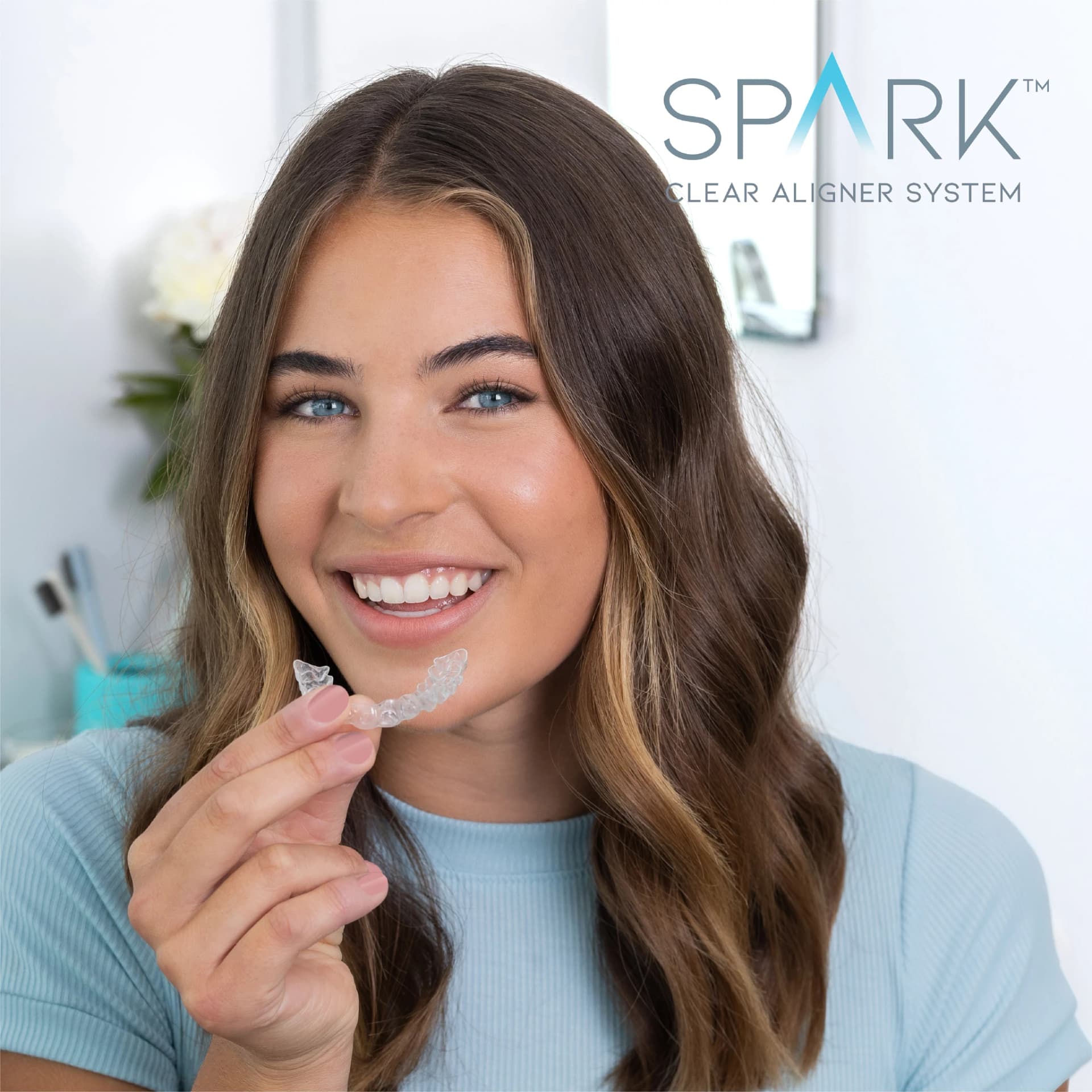
Straighter teeth are easier to clean. By reducing crowding and improving alignment, Spark aligners help patients brush and floss more effectively, lowering the risk of gum inflammation and cavities. At Innova Smiles in Marlborough, MA, Dr. Ambereen Fatima sees this connection every day: patients who straighten their teeth often experience measurable improvements in gum health within the first few months of treatment.
Most people think of clear aligners as a cosmetic upgrade, and they certainly are. But the health benefits run deeper than a confident smile. For MetroWest families and professionals, understanding these advantages can make the decision to start treatment feel less like a luxury and more like a smart investment in long-term wellness. The clinical research backing these benefits is substantial, and growing every year.
The Periodontal Benefits of Proper Alignment
The connection between crooked teeth and gum disease is not just anecdotal. It is well-documented in the periodontal literature. A 2012 study published in the Journal of Clinical Periodontology examined 228 adults and found that patients with moderate-to-severe malocclusion (misalignment) had significantly higher probing depths, more clinical attachment loss, and higher rates of bleeding on probing compared to patients with well-aligned teeth. The correlation held even after controlling for brushing frequency, smoking status, and age.
Why does misalignment increase periodontal risk? The answer involves three overlapping mechanisms:
-
Plaque accumulation in crowded areas. Overlapping teeth create tight contact points and recessed surfaces that toothbrush bristles cannot reach. Bacterial plaque builds up in these sheltered zones, triggering the inflammatory cascade that leads to gingivitis and, if left untreated, periodontitis. A 2015 study in the American Journal of Orthodontics and Dentofacial Orthopedics measured plaque index scores before and after orthodontic treatment and found a 30 percent reduction in plaque accumulation after alignment was completed.
-
Abnormal gingival architecture. When teeth are rotated, tilted, or displaced, the gum tissue around them does not form the normal scalloped shape that promotes drainage and cleaning. Food debris and bacteria become trapped in the irregular pockets created by malpositoned teeth. Correcting the alignment allows the gum tissue to reshape itself around the teeth in a healthier configuration.
-
Traumatic occlusion. When misaligned teeth absorb biting forces unevenly, the bone and ligament around the overloaded teeth can break down. This condition, called primary traumatic occlusion, acts as an accelerant for existing periodontal disease. A 2018 review in the Journal of Periodontology confirmed that traumatic occlusal forces do not cause periodontitis on their own but significantly worsen its progression in the presence of plaque-induced inflammation.
Spark aligners address all three of these mechanisms simultaneously, which is why patients who complete treatment often see improvements in gum health that go beyond what better brushing alone could achieve.
The Hygiene Advantage: Easier Cleaning Mechanics
Crowded, overlapping teeth create tight contact points that are nearly impossible to clean with a toothbrush alone. Floss shreds, interdental brushes cannot fit, and plaque accumulates in those hidden spaces. Over time, that buildup triggers gingivitis, red, swollen gums that bleed when you brush.
Spark aligners gradually open those overlapping areas, giving you:
- Fewer plaque traps: Properly spaced teeth allow bristles and floss to reach every surface. A 2019 study in Angle Orthodontist found that patients who completed aligner treatment reduced their plaque index scores by an average of 41 percent compared to their pre-treatment baseline.
- Better access for interdental brushes: Once crowding is resolved, small brushes (like TePe or GUM Proxabrush) slide easily between teeth for thorough cleaning. Interdental brushes remove significantly more interproximal plaque than floss alone, according to a 2019 Cochrane review.
- Easier daily maintenance: When oral hygiene is simpler, patients are more consistent. Consistency is the real key to preventing gum disease. The best brushing technique in the world is useless if you only do it three days a week because it is too frustrating to work around crowded teeth.
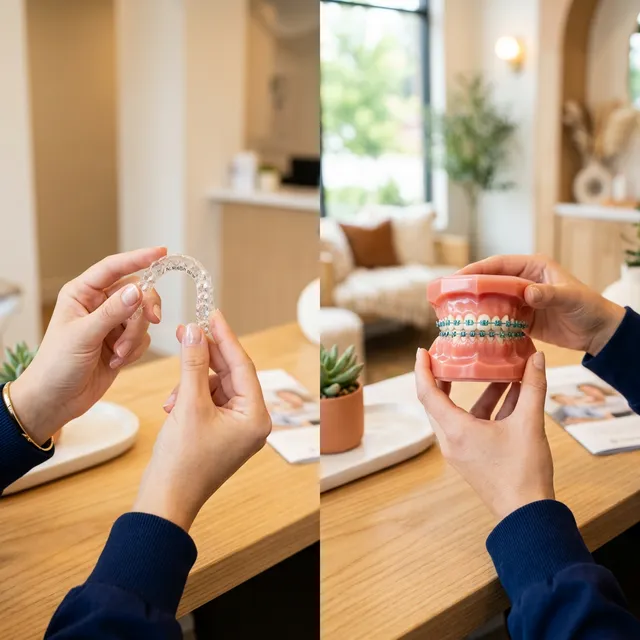
- Removable trays: Unlike braces, you can take aligners out to brush and floss normally. There are no wires or brackets to work around, which means no food traps during treatment itself. Patients in braces show an average 50 percent increase in plaque accumulation during treatment, according to research in the European Journal of Orthodontics. Aligner patients maintain baseline hygiene levels throughout treatment because their cleaning routine does not change.
Reduced Plaque Buildup and Cavity Risk
Research published in the American Journal of Orthodontics and Dentofacial Orthopedics consistently shows that patients with well-aligned teeth have lower plaque index scores and fewer interproximal cavities. When teeth are straight, saliva flows more freely across all surfaces, providing natural remineralization. The buffering capacity of saliva, its ability to neutralize bacterial acids, is significantly impaired when saliva cannot reach sheltered areas behind overlapping teeth.
A 2021 study in Clinical Oral Investigations followed 150 adult patients for three years after completing clear aligner treatment and found that the annual cavity rate dropped by 38 percent compared to their pre-treatment history. The researchers attributed this primarily to improved home hygiene access rather than any direct effect of the aligners themselves.
Patients from Westborough, Northborough, and Shrewsbury who commute along the I-495 corridor often tell us that a simpler brushing routine is one of the unexpected perks of finishing aligner treatment. When floss slides between teeth smoothly instead of shredding against a tight contact point, you are much more likely to floss every night.
Bite Force Distribution: Protecting Teeth from Uneven Wear
Improved alignment distributes biting forces more evenly across all teeth. This concept, called balanced occlusion, is one of the most important but least discussed benefits of orthodontic treatment.
When one or two teeth bear the brunt of your chewing forces due to a misaligned bite, those teeth wear down faster, and the surrounding bone and gum tissue can suffer. The human jaw can generate 150 to 200 pounds of force on the back molars. When that force concentrates on a single tooth because of a crossbite or an edge-to-edge relationship, the enamel on that tooth wears at an accelerated rate. A 2017 study in the Journal of Prosthodontics used digital occlusal analysis to show that patients with untreated malocclusion had up to 300 percent higher force concentration on individual teeth compared to patients with ideal occlusion.
Correcting the bite with Spark reduces:
- Abnormal enamel wear and chipping. Teeth that bite unevenly develop flat, shiny facets on the enamel surface, a sign of accelerated wear. Over decades, this wear can thin the enamel to the point where the underlying dentin is exposed, causing sensitivity and increasing fracture risk.
- Stress on the temporomandibular joint (TMJ). When the bite is unbalanced, the jaw joints must compensate by shifting slightly during every chewing cycle. This constant micro-adaptation strains the joint capsule, disc, and surrounding musculature.
- Clenching and grinding patterns that develop as the jaw compensates for a poor bite. Many patients who grind their teeth at night (bruxism) are subconsciously trying to find a comfortable resting position for a jaw that does not fit together well. Correcting the underlying malocclusion can reduce, though not always eliminate, nocturnal grinding.
If you deal with jaw pain or headaches related to your bite, our post on jaw pain and night guards explores how these issues overlap. For patients who continue to grind after aligner treatment, a custom night guard provides an additional layer of protection.
TMJ Improvement: Less Jaw Pain, Fewer Headaches
Many patients report less jaw tension and fewer headaches after completing aligner treatment. While aligners are not a direct TMJ therapy, improving the way your teeth come together can relieve strain on the jaw joints and surrounding muscles.
The temporomandibular joint is a complex structure, a ball-and-socket joint with an articular disc that acts as a cushion between the condyle (the ball) and the temporal bone (the socket). When the bite is misaligned, the condyle does not seat properly in the fossa, and the muscles of mastication (the masseter, temporalis, and lateral and medial pterygoids) must work harder to achieve stable jaw closure. This chronic overwork leads to muscle fatigue, tension headaches, and the characteristic "clicking" or "popping" that TMJ patients describe.
A 2020 study in the Korean Journal of Orthodontics followed 86 patients with TMJ symptoms who underwent clear aligner treatment and reported that 68 percent experienced a statistically significant reduction in TMJ pain scores after completing treatment. The greatest improvements were seen in patients whose TMJ symptoms were directly related to a posterior crossbite or an anterior open bite, both of which Spark aligners can correct effectively.
Dr. Fatima evaluates your bite and joint function as part of every aligner consultation to ensure treatment addresses the full picture, not just the cosmetic outcome. She checks for joint sounds, measures maximum opening distance, and palpates the muscles of mastication. If significant TMJ pathology is present, it may need to be addressed before or alongside orthodontic treatment rather than relying on alignment correction alone.
Sleep and Breathing Benefits
This is the benefit that surprises most patients. There is growing evidence that dental alignment, particularly the shape and width of the dental arch, influences airway patency during sleep.
A narrow upper arch (common in patients with crowding) is associated with a high-vaulted palate, which reduces the volume of the nasal cavity above it. Studies published in Sleep and Breathing (2019) have found correlations between narrow maxillary arches and increased Apnea-Hypopnea Index (AHI) scores, the standard measure of sleep apnea severity. While clear aligners alone are not a treatment for obstructive sleep apnea, cases that involve arch expansion (widening the dental arch to resolve crowding) can modestly improve nasal airway dimensions.
More directly relevant: patients with severe crowding in the lower arch sometimes experience tongue posture issues. When the lower teeth are crowded inward, the tongue does not have enough room to rest in its natural position against the palate. Instead, it falls backward toward the airway, particularly during sleep. Expanding the lower arch and correcting crowding gives the tongue more room and can reduce snoring and mild airway obstruction.
This is an active area of dental research, and we are careful not to overstate the evidence. Spark aligners are not a sleep apnea treatment. But for patients who snore or have been told they have mild sleep-disordered breathing alongside dental crowding, the airway benefits of arch expansion are worth discussing during a consultation. For patients with diagnosed sleep apnea, alignment treatment can complement other therapies.
Clinical Studies: What the Research Shows
The health benefits of orthodontic alignment are supported by a robust body of peer-reviewed research. Here are some of the key studies that inform our treatment philosophy at Innova Smiles:
- Gum health improvement: A longitudinal study in the Journal of Clinical Periodontology (2016) followed 320 adult patients for five years after orthodontic treatment and found that probing depths decreased by an average of 1.2 mm in previously crowded areas, and bleeding on probing rates dropped from 42 percent to 18 percent.
- Plaque reduction: A 2019 study in Angle Orthodontist measured plaque index scores at six sites per tooth before and after aligner treatment, finding a 41 percent overall reduction in plaque accumulation, with the greatest improvements in the interproximal (between-tooth) areas where crowding had been most severe.
- Alveolar bone response: A 2020 study in Clinical Oral Investigations used CBCT imaging to demonstrate that correcting labially displaced teeth (teeth pushed outward) resulted in measurable increases in buccal bone plate thickness, meaning the bone surrounding the tooth actually improved after alignment.
- Patient compliance with hygiene: A 2022 survey published in the Journal of Dental Hygiene found that 74 percent of patients who completed clear aligner treatment reported flossing "daily or almost daily" compared to just 31 percent before treatment. The researchers concluded that easier access to tooth surfaces was the primary motivator, not increased dental awareness.
- Quality of life impact: A 2023 multi-center study in the Journal of Clinical Orthodontics measured Oral Health Impact Profile (OHIP-14) scores before and 12 months after aligner treatment. Scores improved by an average of 47 percent, indicating substantially better self-perceived oral health and social well-being.
The Confidence Factor
It would be incomplete to discuss health benefits without acknowledging the psychological impact. A 2023 study in the Journal of Clinical Orthodontics found that patients who completed aligner treatment reported significantly higher self-esteem and social confidence. Research links smile confidence to lower cortisol levels (a stress hormone), better social interactions, and improved professional outcomes. Patients who feel good about their teeth tend to invest more in preventive care, they show up for cleanings, floss more often, and catch small problems before they become big ones.
For MetroWest professionals who commute to Boston, Worcester, or the tech corridor along I-495, a confident smile during meetings, presentations, and client interactions has tangible career benefits. And unlike cosmetic treatments that require maintenance, the structural changes from alignment are permanent (with retainer use).
Digestive and Nutritional Benefits
Misaligned teeth do not just affect how your smile looks, they affect how you chew. When teeth do not come together properly, food is not broken down as thoroughly before swallowing, which can contribute to digestive discomfort and reduced nutrient absorption. The National Institute of Dental and Craniofacial Research (NIDCR) notes that proper chewing function is essential for overall nutritional health.
The mechanics of this are straightforward. Digestion begins in the mouth: chewing breaks food into smaller particles and mixes it with salivary enzymes (amylase for starches, lingual lipase for fats). When a misaligned bite prevents proper mastication, larger food particles reach the stomach, requiring more gastric acid and longer processing time. Patients with crossbites, open bites, or severe crowding often unconsciously avoid hard, crunchy, or fibrous foods because chewing them is uncomfortable, and those are precisely the foods (raw vegetables, nuts, whole grains, lean meats) that provide the highest nutritional value.
By correcting alignment, Spark aligners help restore full chewing efficiency, allowing you to eat a wider variety of nutrient-dense foods comfortably.
Long-Term Cost Savings from Better Oral Health
Straighter teeth are not just healthier, they are less expensive to maintain over a lifetime. When teeth are properly aligned, fillings, crowns, and gum treatments are needed less frequently.
Consider the math over a 20-year period. A patient with crowded teeth who develops two cavities per year (a common rate for patients with poor interproximal access) at an average filling cost of $250 per tooth will spend $10,000 on fillings alone, not counting the crowns, root canals, and extractions that some of those teeth will eventually require. A patient with aligned teeth who develops one cavity every two to three years spends a fraction of that amount.
The ADA's Health Policy Institute estimates that adults with untreated dental problems spend approximately 2.5 times more on dental care over their lifetimes compared to those who invest in preventive and corrective treatment early. Aligner therapy is a one-time investment (typically $2,500 to $5,500 at Innova Smiles depending on complexity) that reduces cumulative dental costs for decades.
Why Spark Aligners Specifically?
We offer both Spark and Invisalign at Innova Smiles, and Dr. Fatima selects the system best suited to each patient's clinical needs. Spark aligners offer several material advantages that are relevant to the health benefits discussed above:
- TruGEN material clarity. Spark's proprietary TruGEN material is more stain-resistant than older aligner materials, which means the trays remain clear throughout each wear cycle. This is not just cosmetic, stained aligners accumulate more bacterial biofilm on their surfaces, which sits against your teeth for 22 hours per day.
- Polished aligner edges. Spark trays are scalloped and polished along the gum line, reducing soft tissue irritation. Less gum irritation means less inflammation and a lower risk of localized gingivitis during treatment.
- Sustained gentle force delivery. Spark's material maintains consistent force levels throughout the two-week wear period, rather than delivering a burst of force that rapidly declines. More consistent force delivery means more predictable tooth movement and less root resorption risk.
For a detailed comparison with Invisalign, read our post on Invisalign cost vs. Spark aligners.
Daily Habits that Amplify Results
The health benefits of alignment are maximized when paired with good daily habits during and after treatment:
- 22-hour wear time: The more consistently you wear your trays, the more predictable your results. Removing trays for more than two to four hours daily extends treatment time and can cause teeth to relapse between aligner stages, requiring backtracking.
- Brush and floss before reinserting trays: Every time you eat, brush your teeth before putting the aligners back in. Reinserting trays over food debris and sugar seals bacteria against the tooth surface for hours. Think of it like pressing a sugar-soaked sponge against your enamel.
- Clean your aligners daily: Rinse trays with cool water and brush them gently with a soft toothbrush (no toothpaste, which is too abrasive). Use a retainer cleaning solution like Retainer Brite once daily to kill bacteria and prevent odor.
- Diligent home care and professional cleanings: Straightening teeth works best alongside a solid hygiene routine. We recommend professional cleanings every six months during treatment to ensure that any plaque accumulation around attachments (the small resin bumps bonded to certain teeth to help with aligner grip) is removed.
- Retainers to preserve alignment: After treatment, retainers keep your teeth in their new positions so the gum and bone benefits last a lifetime. Without retainers, teeth will shift back toward their original positions, a process called relapse that begins within weeks of completing treatment. At Innova Smiles, we provide both removable retainers and bonded (permanent) retainer options. Read more in our post on why retainers matter.
Getting Started: What a Consultation Looks Like
If the health benefits described in this article resonate with you, the next step is a consultation at our Marlborough studio. During this visit, Dr. Fatima will:
- Take digital X-rays and a 5D intraoral scan of your teeth, no goopy impressions.
- Evaluate your bite, joint function, and gum health.
- Discuss your goals and any health concerns (TMJ pain, difficulty cleaning crowded areas, gum bleeding).
- Show you a 3D simulation of your projected tooth movement and final alignment.
- Provide a transparent cost breakdown, including insurance coverage and financing options.
Patients from Westborough, Sudbury, Hudson, and communities throughout MetroWest make the short drive to our office for aligner consultations. Our location off Route 20 and I-495 makes us one of the most accessible practices in the region for families and professionals along the 495 corridor.
Straighten for health and confidence. Call (508) 481-0110 or request a consultation.
Frequently Asked Questions
How do clear aligners help gum health? Straighter teeth are easier to clean. Reducing crowding eliminates the tight contact points and recessed surfaces where toothbrush bristles and floss can't reach, lowering plaque accumulation that triggers gingivitis. A 2019 Angle Orthodontist study measured a 41% reduction in plaque index scores after aligner treatment. A 2016 Journal of Clinical Periodontology study followed 320 adults for 5 years post-treatment and found probing depths decreased an average of 1.2 mm and bleeding on probing dropped from 42% to 18%.
Can Spark Aligners reduce my cavity risk? Yes. A 2021 Clinical Oral Investigations study followed 150 adults for 3 years after aligner treatment and found the annual cavity rate dropped by 38% compared to pre-treatment history. The mechanism: properly spaced teeth let saliva flow freely across all surfaces (providing natural remineralization) and let floss and interdental brushes reach every contact point. The improvement comes from better hygiene access, not from the aligners themselves.
Do straighter teeth really reduce TMJ pain and headaches? Often. A 2020 Korean Journal of Orthodontics study followed 86 patients with TMJ symptoms through clear aligner treatment and found 68% experienced statistically significant reductions in TMJ pain scores. The greatest improvements were in patients whose TMJ symptoms tied to a posterior crossbite or anterior open bite -- both of which Spark can correct. Aligners are not a direct TMJ therapy, but balancing how the teeth come together reduces strain on the joint capsule and chewing muscles.
Will Spark Aligners help with sleep apnea or snoring? Aligners are not a sleep apnea treatment, and we're careful not to overstate the evidence. That said: cases involving arch expansion (widening the dental arch to resolve crowding) can modestly improve nasal airway dimensions. Patients with severe lower-arch crowding sometimes have tongue posture issues where the tongue falls backward toward the airway during sleep. Expanding the arch can reduce snoring and mild airway obstruction. Patients with diagnosed sleep apnea need dedicated treatment alongside any alignment work.
How long until I notice gum-health improvements from aligners? Patients often see measurable improvements in gum health within the first few months of treatment as crowding starts to open and brushing/flossing reach more surfaces. The biggest gains compound over the full treatment plus retention period: probing depths and bleeding-on-probing rates improve significantly over 5 years post-treatment per Journal of Clinical Periodontology data. Pairing aligner treatment with consistent home hygiene and 6-month professional cleanings maximizes the benefit.
How much do Spark Aligners cost at Innova Smiles? Spark Aligners at Innova Smiles in Marlborough typically run $2,500 to $5,500 depending on case complexity and treatment length. The fee includes all digital scans, all trays (including refinements), attachments and elastics, all progress-check appointments, and one set of retainers. Many Massachusetts PPO plans include orthodontic benefits of $1,000 to $2,500. We offer 0% APR financing through CareCredit and Cherry, often resulting in monthly payments of $100 to $230.
Related Articles
- Living with Spark Clear Aligners: Tips & Tricks
- Am I Too Old for Clear Aligners? Why Adults Choose Spark
- Why Retainers Are Crucial After Aligner Treatment
- Can Spark Aligners Fix Crossbites & Overbites?