Demystifying the Dental Implant Recovery Process
Whenever a patient from Marlborough, Hudson, or the surrounding MetroWest communities sits down in our consultation room to discuss replacing missing teeth with dental implants, they universally ask two questions: "How much will this cost?" and "How much is this going to hurt?"
Fear of the unknown, particularly regarding oral surgery, is entirely natural. Many patients envision weeks of unbearable agony and a liquid diet. However, thanks to the massive leaps in modern 3D CBCT digital planning, the reality of dental implant surgery at Innova Smiles is profoundly different. Because Dr. Ambereen Fatima utilizes strictly guided, minimally invasive surgical techniques, the trauma to the surrounding jawbone and gum tissue is drastically minimized. Less surgical trauma directly translates into an exponentially faster, remarkably comfortable recovery.
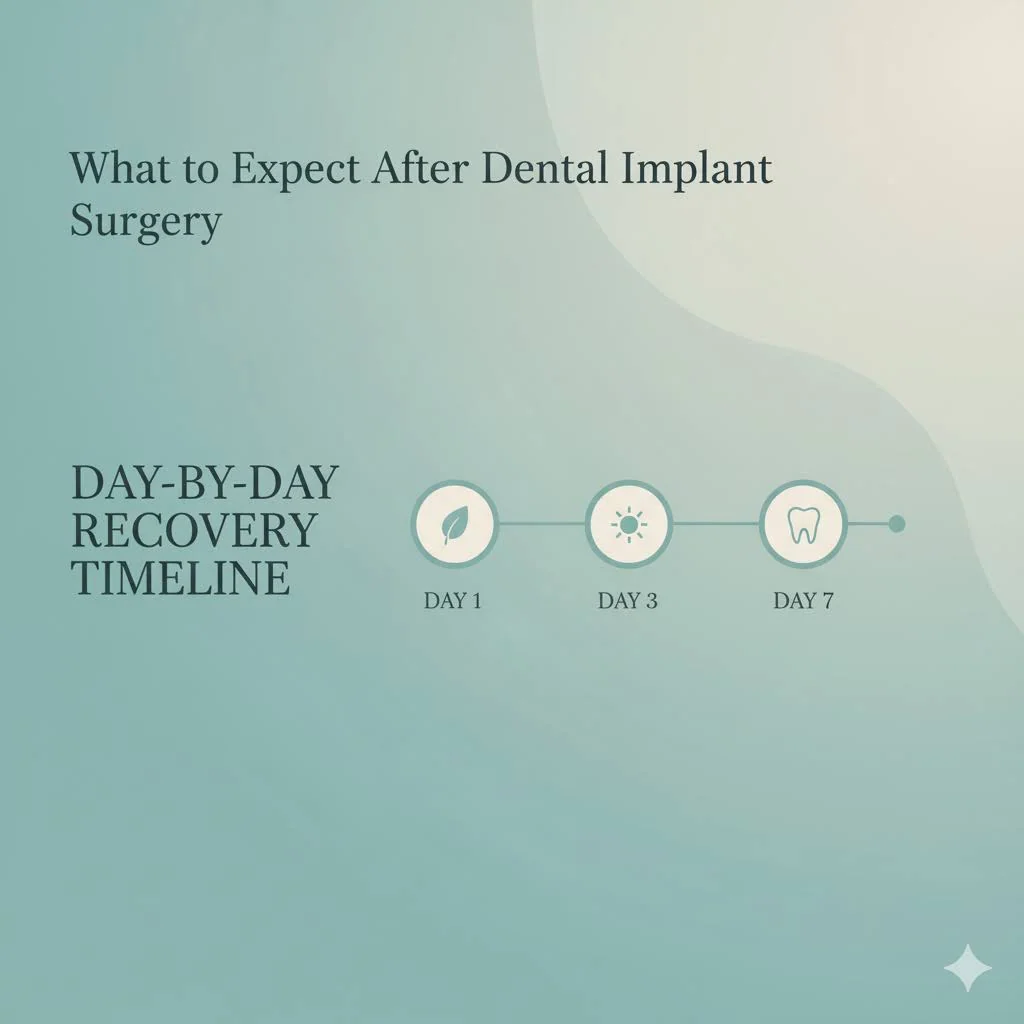
If you are preparing for your procedure, knowledge is your sharpest weapon against anxiety. In this comprehensive, day-by-day recovery timeline, we break down exactly what you will experience physically, how to manage your diet, and the crucial steps you must take to guarantee your new smile heals flawlessly.
The Procedure Itself: Setting the Stage for Recovery
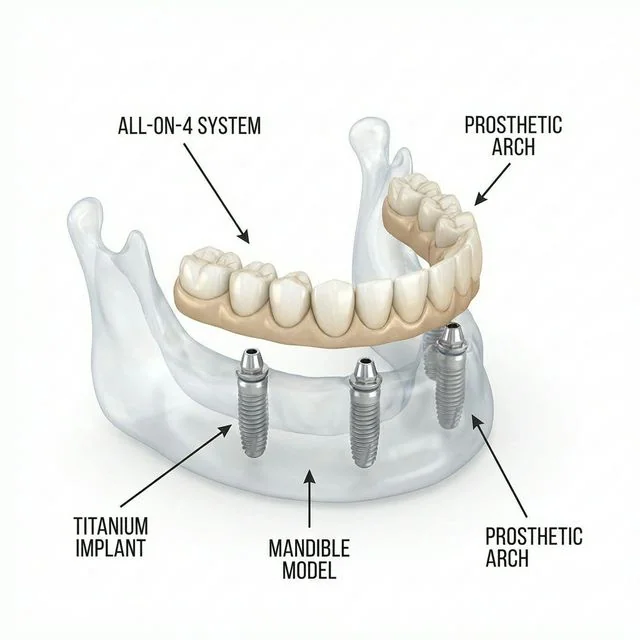
Before the timeline begins, it is vital to acknowledge the surgery itself. Due to our advanced local anesthetics and elite pain management protocols, the physical act of having a titanium implant placed into your jawbone is completely painless. You will feel pressure and vibration, but zero sharp pain. Once the implant is secured beneath the gum line, a small protective healing cap is often placed, and the area is sutured closed.
The "recovery clock" begins the moment the local anesthetic begins to fade—usually two to four hours after you leave our Marlborough studio.
Day 1: The First 24 Hours (The Crucial Window)
The first 24 hours post-surgery are the most critical for establishing a healthy blood clot and minimizing the inevitable inflammatory response.
Bleeding and Gauze
It is entirely normal to experience minor "weeping" or a slight pinkish tint in your saliva for the first 24 hours. Immediately after surgery, you will be biting down on a thick gauze pad. You must maintain firm, constant pressure on this pad for the first 45 to 60 minutes to promote clotting. Do not aggressively spit, use a straw, or aggressively rinse your mouth, as creating a vacuum pressure will forcefully dislodge the delicate blood clot and restart the bleeding.
Pain Management and Swelling
Do not wait for the freezing to wear off entirely before taking your first dose of pain medication. Dr. Fatima will typically advise a tightly scheduled rotation of over-the-counter anti-inflammatories, such as Ibuprofen and Acetaminophen, taken every four to six hours. Staying ahead of the pain curve is vital.
You must also wage war on swelling immediately. Wrap a flexible ice pack (or a bag of frozen peas) in a thin towel and apply it to the outside of your jaw nearest the surgical site. Use the "20 minutes on, 20 minutes off" protocol continuously for the first 24 hours. Keep your head elevated on two extra pillows when you sleep that night to prevent blood from pooling in your face.
Diet
Strictly adhere to a cold, liquid, or incredibly soft diet. Think protein shakes, lukewarm broth, yogurt, applesauce, and smoothies (eaten with a spoon, absolutely no straws!). Avoid anything hot, spicy, or physically hard.
Days 2 and 3: The Peak of Inflammation
This period often surprises patients. You might wake up on Day 3 and realize your cheek is puffier than it was on Day 1. This is a completely normal biological response to cellular trauma.
Swelling and Bruising
Swelling generally peaks dramatically between the 48- and 72-hour mark. You may also notice subtle, yellowish bruising descending down your cheek or toward your neck. Switch from cold compresses to a warm, moist towel. The mild heat will promote vasodilation, increasing blood flow to the area and helping your body rapidly flush away the stagnant fluids causing the bruising and swelling.
Hygiene and Diet
You must keep the surgical site surgically clean to prevent infection. Begin using a prescribed antimicrobial mouthwash, or a gentle, warm saltwater rinse (1/2 teaspoon of salt dissolved in an 8oz glass of warm water). Do not swish violently; gently roll the water around your mouth and passively let it fall out into the sink. You can softly brush your other teeth, but completely avoid the surgical site with your toothbrush bristles.
You can graduate slightly to semi-solid foods: scrambled eggs, mashed potatoes, very soft pasta, and flaky fish. Continue to chew strictly on the opposite side of your mouth.
Days 4 to 7: The Rapid Return to Normalcy
As you enter the latter half of your first week, a profound shift occurs. The acute swelling should visibly deflate, and the persistent throbbing ache transitions into a mild, easily manageable soreness or a feeling of "tightness" in your jaw.
Activity Levels
Most of our Marlborough patients are fully capable of returning to their standard desk jobs or remote work environments by Day 3 or 4. However, you must still strictly avoid intense cardiovascular workouts, heavy lifting at the gym, or strenuous physical labor. Elevating your blood pressure aggressively can cause the surgical site to throb and potentially trigger delayed bleeding.
The End of the Soft Diet
By the end of the first week, your sutures (if they were not the dissolving variety) will likely be removed during a brief follow-up visit. You can begin reintroducing normal, easily chewable foods into your diet. However, you must still avoid violently hard or sharp foods—such as popcorn kernels, hard taco shells, almonds, and crusty baguettes—as these can accidentally stab the healing gum tissue over the implant.
Weeks 2 to 4: The Phase of Quiet Healing
By the beginning of Week 2, 95% of patients report that their mouth feels entirely normal. The surface-level gum tissue has successfully closed over the surgical site. You can resume regular brushing and flossing (being mindful not to aggressively scrub the implant cap) and return entirely to your normal athletic and professional routines.
However, you must remember that a profound biological process is still occurring identically beneath the surface.
Months 2 to 6: Osseointegration (The Real Magic)
While your gums heal in a week, human bone alters its cellular structure incredibly slowly. The absolute most critical phase of dental implant recovery is osseointegration.
During this three-to-six-month window, specialized bone cells called osteoblasts physically migrate onto the microscopic threads of the titanium implant. The jawbone physically fuses and bonds permanently with the titanium, turning the artificial post into an unmovable, structurally invincible anchor within your skull.
During this lengthy phase, you will feel absolutely nothing. There is no pain or sensation as bone fuses. You must simply exhibit patience. Dr. Fatima will schedule periodic X-rays to physically verify that the bone density around the titanium post is flawless.
Once osseointegration is confirmed to be an absolute success, you enter the final, exciting phase: we attach a custom connecting piece (the abutment) and permanently cement your breathtaking, custom-milled porcelain crown. Your journey is complete.
Elevated Expertise Reduces Healing Timelines
The recovery timeline described above is standard for a flawlessly executed surgery. If a dentist clumsily hacks through the bone due to poor planning, the inflammation, pain, and osseointegration failure rates skyrocket.
This is exactly why choosing an elite specialist matters profoundly. Dr. Fatima’s dual Fellowships—the FICOI and the FAAIP—validate an obsession with precision. Because we digitally "print" your surgery using CBCT scans before you even sit in the chair, we know the exact trajectory to use. Less time in the surgical chair equals vastly less trauma, which dictates a recovery so smooth our patients are often shocked by how easy the process was.
If you are tired of living with the anxiety of missing teeth or failing dentures, you do not have to fear the recovery process. Contact the Innova Smiles team today. Call our Marlborough studio at (508) 481‑0110 to discuss your personalized dental implant timeline and transparent financing options.