
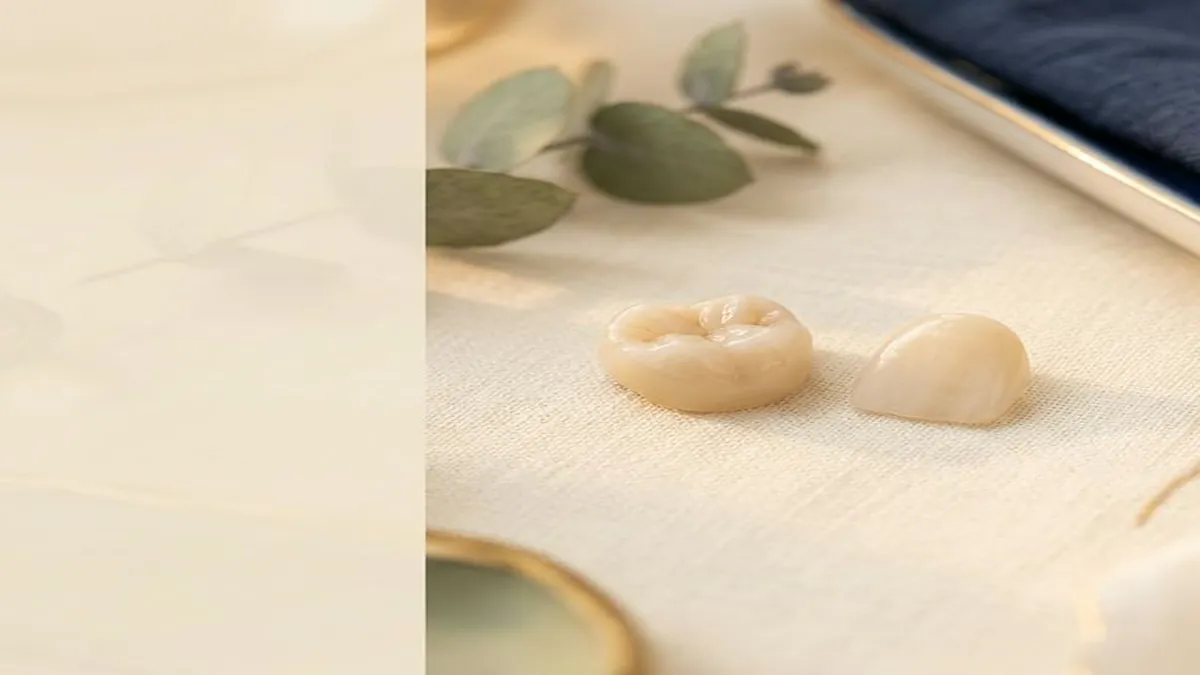
Featured Answer: Veneers vs crowns — which should I get?
It depends on the condition of your tooth. If the tooth is structurally damaged, cracked, heavily decayed, or weakened by a large filling or root canal, a crown is the right choice because it wraps around the entire tooth and restores its strength. If the tooth is structurally sound but has cosmetic issues like discoloration, minor chips, slight misalignment, or gaps, a veneer is typically the better option because it preserves more natural tooth structure while transforming the tooth's appearance. At Innova Smiles in Marlborough, Dr. Fatima examines the structural integrity of each tooth before making a recommendation, the decision is clinical first, cosmetic second.
The Difference Between a Crown and a Veneer
Crowns and veneers are both tooth-colored restorations made from porcelain or ceramic, and from the outside, they can look nearly identical. But the difference between a crown and a veneer is purpose: they solve different problems, and understanding that difference is the key to making the right choice.
A dental crown is a full-coverage restoration. It encircles the entire visible portion of the tooth, front, back, top, and sides, like a cap. To place a crown, the dentist reduces the tooth structure on all surfaces by roughly 1.5 to 2 millimeters to create space for the restoration. The crown then fits over the prepared tooth, restoring its original shape, size, and strength. Crowns are primarily restorative, they fix teeth that are broken, weakened, or compromised.
A porcelain veneer is a thin shell, typically 0.3 to 0.7 millimeters thick, that bonds to the front surface of the tooth only. The dentist removes a thin layer of enamel from the front face of the tooth (and sometimes a small amount from the biting edge) to create space. The sides, back, and most of the internal structure of the tooth remain untouched. Veneers are primarily cosmetic, they change how a tooth looks rather than rebuilding its structural integrity.
This distinction matters enormously. Choosing a crown when a veneer would suffice means removing more healthy tooth structure than necessary. Choosing a veneer when a crown is needed means leaving a weakened tooth vulnerable to fracture. The clinical evaluation that informs this decision is not something you can do at home, it requires X-rays, a bite assessment, and a careful examination of the remaining tooth structure.
Veneers vs Crowns: Head-to-Head Comparison
When a Crown Is the Clear Choice
Some situations call unambiguously for a crown. If the tooth has lost significant structural integrity, a veneer bonded to the front surface simply will not provide enough protection. The tooth needs 360-degree reinforcement.
After a Root Canal
Root-canal-treated teeth are more brittle than vital teeth because the blood supply has been removed. The American Association of Endodontists recommends crown coverage for most posterior (back) teeth after root canal treatment. A 2019 study in the Journal of Endodontics found that root-canal-treated premolars and molars without crown coverage had a fracture rate five to six times higher than those restored with crowns within the first year after treatment. The crown acts as a protective shell that distributes chewing forces evenly and prevents the weakened tooth from cracking.
Large Cavities and Broken-Down Teeth
When more than half of the visible tooth structure has been lost to decay or fracture, a filling alone cannot predictably hold up. The remaining tooth walls are too thin to resist the 150 to 200 pounds of force generated by the jaw during chewing (according to bite force measurements published in the Journal of Prosthodontic Research). A crown replaces the missing structure and redistributes that force safely.
Patients from Hudson and Framingham frequently visit Innova Smiles for second opinions on teeth that have been recommended for extraction, in many cases, a crown with a proper buildup can save the tooth for another decade or more.
Cracked Teeth
A crack that extends from the chewing surface down toward the root requires full-coverage protection to prevent the crack from propagating further. A veneer covering only the front face would leave the cracked area unprotected and allow the fracture to worsen under chewing forces. Crowns bind the cracked segments together, much like a splint holds a broken bone in place. For comprehensive diagnosis and treatment options, see our detailed broken tooth repair guide.
Replacing a Large Existing Filling
Old amalgam or composite fillings that have broken down often leave insufficient tooth structure for a new filling. If the cavity left by the old restoration is too large, the tooth needs a crown rather than a bigger filling. A general guideline used by many prosthodontists: if the restoration would extend more than two-thirds of the distance between the cusps (the peaks of the tooth), a crown is the more predictable option.
Dental Implant Restorations
Dental implants are restored with crowns, not veneers. The implant post replaces the root, and a custom crown is placed on top to function as the visible tooth. Implant crowns are typically fabricated from zirconia or porcelain-fused-to-zirconia for maximum durability.
When a Veneer Is the Clear Choice
Veneers excel when the tooth is structurally healthy but cosmetically imperfect. The goal is to change the way the tooth looks without removing more natural structure than necessary.
Discoloration That Does Not Respond to Whitening
Some types of tooth discoloration, tetracycline staining, fluorosis, or intrinsic darkening after trauma, cannot be resolved with professional whitening. In these cases, a veneer covers the discolored enamel with a uniformly white, natural-looking porcelain surface. The tooth underneath is intact and strong; the veneer simply provides a new visible face.
Minor Chips and Wear
Small chips on the edges of front teeth, common after a fall, a sports impact, or years of minor wear, are ideal veneer cases. The chip affects appearance but not structural integrity. A veneer restores the original shape and provides a smooth, polished edge. For very small chips, dental bonding may be an even more conservative alternative, but veneers provide superior longevity and stain resistance.
Gaps Between Front Teeth (Diastema)
A gap between the two upper front teeth can be closed with veneers that are slightly wider than the natural teeth. This approach avoids orthodontic treatment for patients who want a faster cosmetic solution. Veneers close the gap in two appointments rather than the months required for aligners, though clear aligners remain the better option when multiple teeth need repositioning.
Slight Misalignment or Irregular Shape
Teeth that are mildly rotated, overlapping, or uneven in length can be made to appear perfectly aligned with a set of veneers. Dentists sometimes call this approach "instant orthodontics" because the result mimics the appearance of straight teeth without moving them. Patients from Natick, Southborough, and Westborough who want a transformed smile in two visits rather than 6 to 18 months often choose veneers for this reason.
Veneers are a cosmetic illusion of alignment, not a functional correction. If the bite (occlusion) is significantly off, orthodontic treatment addresses the underlying cause, while veneers address only the visible appearance.
When Either Could Work — How Dr. Fatima Decides
Some cases fall in a gray zone where both a crown and a veneer could technically be used. A front tooth with a moderately sized filling and some cosmetic concerns, for example, might be treated with either restoration. In these situations, Dr. Fatima considers several factors:
Remaining tooth structure: The more healthy enamel and dentin that remains, the more conservative the approach should be. If a veneer can do the job, there is no reason to remove extra tooth structure for a crown.
Location in the mouth: Front teeth bear less chewing force than back teeth. A veneer on an upper front tooth experiences roughly 20 to 30 pounds of biting force, while a crown on a molar must withstand 150 to 200 pounds. This difference in functional demand often tips the decision.
Opposing teeth and bite pattern: If a patient clenches or grinds (bruxism), the risk of veneer fracture increases. A 2012 study in the Journal of Prosthetic Dentistry found that bruxism was the single strongest predictor of veneer fracture, with a failure rate three to four times higher than in non-bruxers. For patients who grind, a crown or a combination of veneers plus a protective night guard may be the safest path.
Patient's cosmetic goals: If the patient is planning a full smile makeover involving multiple teeth, veneers often provide a more cohesive, natural-looking result on the front teeth because they allow for precise control of shape, length, and color across all visible teeth.
Long-term plan: If a tooth is likely to need a root canal in the future (for example, it already shows early signs of pulp irritation on X-ray), placing a crown now may save the patient from needing to redo the restoration later. For anterior teeth, a veneer can remain intact if root canal treatment becomes necessary, since endodontic access is created on the lingual (back) surface, while the veneer bond is on the labial (front) surface. However, some patients prefer a crown for predictability and simplicity if they are uncertain about future endodontic risk.
Materials: What Modern Crowns and Veneers Are Made Of
Material science in dentistry has advanced dramatically. Understanding the options helps you have a more informed conversation with your dentist.
Crown Materials
Lithium disilicate (e.max): A glass-ceramic that combines excellent aesthetics with good strength (roughly 400 MPa flexural strength). Ideal for front teeth and premolars. This is the material used in most of the porcelain crowns at Innova Smiles.
Zirconia: An extremely strong ceramic (900-1,200 MPa flexural strength) that has become the material of choice for back teeth. Modern "multilayer" zirconia mimics the color gradient of natural teeth, translucent at the biting edge, more opaque near the gumline. A 2020 systematic review in Clinical Oral Investigations reported a 97.6 percent five-year survival rate for monolithic zirconia crowns.
Porcelain-fused-to-metal (PFM): A metal substructure covered with a porcelain layer. Once the most-recommended option, PFMs are now used less frequently because all-ceramic options have matched their strength while providing superior aesthetics. The metal margin can create a dark line at the gumline over time, which is cosmetically noticeable on front teeth.
Gold: Still used in some posterior situations where maximum durability is needed and aesthetics are not a concern. Gold is biocompatible and wears at a rate similar to natural enamel, making it gentle on opposing teeth.
Veneer Materials
Feldspathic porcelain: The most translucent and lifelike veneer material. Each veneer is hand-layered by a ceramist, allowing extraordinary control over color, texture, and characterization. Feldspathic veneers are the most artistic option but also the most technique-sensitive.
Pressed lithium disilicate (e.max): Stronger than feldspathic porcelain and still highly aesthetic. These veneers are pressed from a single ingot and then characterized with surface staining. They offer a good balance of strength and beauty and are slightly more forgiving to fabricate.
Composite resin: The most affordable veneer option, applied directly to the tooth in a single visit (dental bonding). Composite veneers cost less than porcelain but stain more easily and typically last 5 to 7 years compared to 10 to 20 years for porcelain.
The Procedure: What to Expect
Crown Procedure Timeline
Custom porcelain crown (2 appointments over 2-3 weeks):
- First visit: numbing and tooth preparation, the tooth is reduced on all surfaces; a digital scan captures the prepared tooth with our 3Shape scanner, no messy impression material; a temporary crown is placed
- Fabrication: the crown is designed from your digital scan and milled from a ceramic block, then stained and glazed to match your surrounding teeth
- Second visit: temporary removed, permanent crown tried in, adjusted, and cemented
Patients who drive from Shrewsbury, Northborough, or Hopkinton appreciate that the digital workflow means a more precise fit and a comfortable, well-fitting temporary to wear between visits.
Veneer Procedure Timeline
- Consultation and planning: Dr. Fatima discusses goals, takes photos, and may create a digital mockup or wax model of the planned result so you can see the design before any tooth preparation begins
- First visit, preparation: The front surface of each tooth is reduced by 0.3 to 0.7 millimeters. A digital scan captures the prepared teeth. Temporary veneers are placed to protect the teeth and give you a preview of the final shape
- Lab fabrication: A master ceramist creates each veneer by hand, matching the prescribed shade, translucency, and surface texture. This process takes 10 to 14 business days
- Second visit, bonding: The temporary veneers are removed, the teeth are etched and primed, and each veneer is individually bonded with light-cured resin cement. The dentist verifies the fit, bite, and color before final curing
Cost and Insurance Realities
Cost is a major factor for most patients, and the insurance coverage landscape for crowns and veneers is very different.
Crowns are classified as major restorative treatment by most dental insurance plans. PPO plans typically cover 50 percent of the cost after your deductible has been met, subject to the plan's annual maximum (usually $1,000 to $2,000). If your plan covers 50 percent, your out-of-pocket cost is half of the plan's negotiated crown fee, after the deductible.
Veneers are almost always classified as cosmetic and excluded from insurance coverage. Patients pay the full cost out of pocket. Some plans will cover a veneer if the tooth is chipped or fractured (because the restoration serves a functional purpose), but this is the exception, not the rule.
At Innova Smiles, we offer flexible payment plans for both crowns and veneers, and our membership plan provides uninsured patients with 20 percent off all treatments. Our team handles insurance verification and pre-authorization so you know your expected out-of-pocket cost before any work begins.
Longevity: How Long Do Crowns and Veneers Last?
Both restorations are designed to last a decade or more with proper care, but their longevity depends heavily on the material used, the quality of the cementation, and the patient's oral habits.
Crown longevity: A 2017 systematic review published in the Journal of Dental Research analyzed over 34,000 crowns and found a median survival time of 15 years, with all-ceramic crowns and gold crowns showing the highest long-term survival rates. Zirconia crowns, though newer, are tracking similarly in early longitudinal studies.
Veneer longevity: A landmark 2012 retrospective study in JADA (Journal of the American Dental Association) followed porcelain veneers for up to 20 years and reported survival rates of 93 percent at 10 years and 91 percent at 20 years. The most common reason for veneer failure was fracture (often associated with bruxism or trauma), followed by marginal discoloration.
Both crowns and veneers last longest when patients maintain good oral hygiene, wear a night guard if they grind or clench, avoid using teeth as tools, and attend regular dental exams. At Innova Smiles, we check the margins, bite, and integrity of every restoration at each cleaning appointment, catching small issues early prevents costly replacement.
Making the Right Decision
The crown-versus-veneer decision is not about choosing the "better" restoration, it is about matching the restoration to the tooth's specific needs. A structurally compromised tooth needs a crown. A cosmetically imperfect but healthy tooth benefits from a veneer. And in borderline cases, the conservative choice, preserving as much natural tooth structure as possible, is almost always the wiser path.
If you are weighing your options, the best next step is an in-person evaluation. Dr. Fatima will examine the tooth, review your X-rays, discuss your goals, and explain exactly why one option makes more sense than the other for your situation. No guesswork, no pressure, just a clear, clinical recommendation based on what your tooth actually needs.
Innova Smiles is located at 340 Maple St, Suite 100, Marlborough, MA 01752, serving patients from Sudbury, Framingham, and communities throughout MetroWest Massachusetts. Call (508) 481-0110 or schedule online.
Considering a crown or veneer? Call (508) 481-0110 or book a consultation with Dr. Fatima to find out which restoration is right for your tooth.
Frequently Asked Questions
Is a crown or a veneer better?
Neither is universally better — they solve different problems. A crown covers the whole tooth and is the right choice when a tooth is cracked, heavily filled, or weakened (for example after a root canal). A veneer is a thin facing bonded to the front of a healthy tooth, chosen mainly to improve appearance. If your tooth is structurally sound and the concern is cosmetic, a veneer usually preserves more natural tooth; if the tooth is damaged, a crown protects it.
What is the cost difference between a crown and a veneer?
At Innova Smiles, dental crowns run $889–$1,977 per tooth and porcelain veneers $900–$2,500 per tooth — the top of each range is our standard fee, the low end what a plan-covered patient typically pays. Crowns are often partly covered by insurance as a restorative procedure, while veneers are usually considered cosmetic and not covered. We review your exact costs and any coverage before treatment.
Related Articles
- Dental Crown Procedure: What to Expect
- How Long Do Veneers Last?
- Porcelain Veneers Cost in Marlborough
Related Services
How our pricing works
Porcelain crownOur fee range$889–$1,977 per unit
- We use digital impressions and work with a trusted dental lab to craft crowns that look and feel like your natural teeth. Our fee covers shade-matching, temporary crowns, and post-placement adjustment visits.
- If you have dental insurance, your plan pays us a negotiated fee for covered treatment — typically about half of our standard fee — and you pay your share of that lower amount. Once you've booked your appointment and returned your forms, we'll verify your insurance benefits and call you with a breakdown within three business days.
- 0% APR financing through CareCredit or Cherry spreads the cost from about $37/mo with nothing down.*
- No insurance? Our in-house membership plan (from $395/yr) includes your preventive care and takes a flat 20% off our standard fee for this treatment.
- The top of the range is our standard fee; the low end is what a patient whose plan covers the treatment typically pays before their share is applied. A core build-up, when the tooth needs one, is estimated separately.
- Your exact fee is confirmed in writing at your visit, after your exam and after we have checked your insurance — never a surprise afterward.
- Patients aged 65 and older get 10% off all dental treatments. Mention it when booking and we'll apply it automatically.
*Estimated payment is the lowest published PER-TOOTH fee ÷ 24 months at 0% APR with $0 down, and covers one tooth — a multi-tooth case multiplies it. Financing is provided by third-party lenders (e.g. CareCredit, Cherry), not by Innova Smiles, and is subject to credit approval — not all applicants qualify. Your actual cost, term, and monthly payment depend on your treatment plan and approved offer.