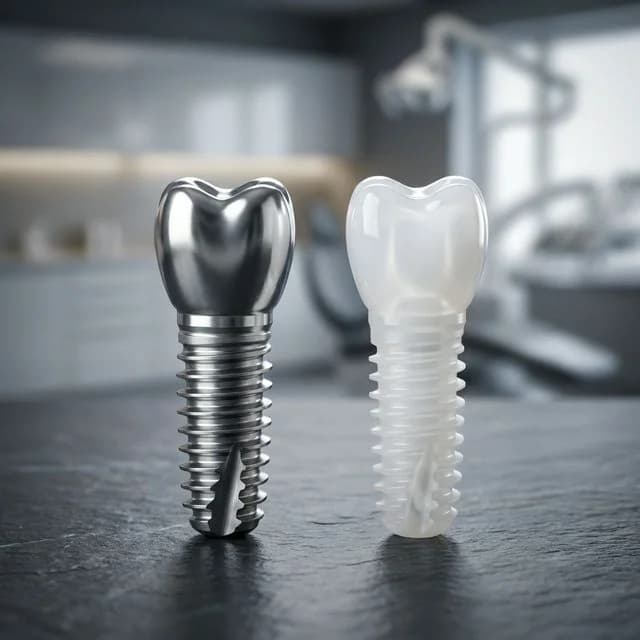
Featured Answer: Titanium or zirconia—what’s better?
Titanium is the long‑standing, well‑researched standard with excellent success rates. Zirconia offers a metal‑free option with esthetic advantages in select cases. The best choice depends on your anatomy, bite, and esthetic priorities.
When patients in Marlborough, MA and the greater MetroWest area begin researching dental implants, one of the first questions that arises is what material the implant is made from. At Innova Smiles, Dr. Ambereen Fatima takes time to explain the differences between titanium and zirconia implants so you can make a confident, informed decision.
Titanium Implants: The Proven Standard
Titanium has been the backbone of implant dentistry for over 50 years. It was the material used by Dr. Per-Ingvar Branemark when he pioneered modern dental implants in Sweden, and it remains the most widely researched and clinically validated implant material available today.
Advantages of titanium:
- Decades of clinical evidence — Long-term studies confirm success rates above 95 percent over 10 or more years
- Excellent osseointegration — Titanium bonds with bone at a cellular level, creating an exceptionally strong foundation
- Two-piece versatility — Most titanium implants use a separate abutment, allowing the dentist to adjust the angle and position of the crown independently from the implant post
- Proven serviceability — If a component needs replacement years later, titanium systems offer a wide range of compatible parts
- Cost-effective — Generally less expensive than zirconia systems
Considerations:
- Contains metal, which is a concern for patients with metal sensitivities (though true titanium allergies are extremely rare)
- In patients with very thin or receding gum tissue, a grayish hue from the titanium may show through
Zirconia Implants: The Metal-Free Alternative
Zirconia (zirconium dioxide) implants entered the market more recently and have gained popularity among patients seeking a completely metal-free option. Zirconia is a ceramic material known for its white color and biocompatibility.
Advantages of zirconia:
- Metal-free — Ideal for patients who prefer to avoid metals or have confirmed titanium sensitivities
- White color — Blends naturally with surrounding tissue, especially beneficial in the front of the mouth where gum tissue is thin
- Low plaque affinity — Studies suggest zirconia surfaces attract less bacterial plaque than titanium, which may support healthier gum tissue
- Hypoallergenic — Virtually no risk of allergic reaction
Considerations:
- Fewer long-term studies compared to titanium, though mid-term data is promising
- Typically one-piece design, which limits flexibility in angulation for the final crown
- Generally higher cost than titanium systems
- Not available in as many sizes and configurations
Side-by-Side Comparison
| Factor | Titanium | Zirconia |
|---|---|---|
| Track record | 50+ years | 15–20 years |
| Success rate (10-year) | 95–98% | 92–97% |
| Osseointegration | Excellent | Very good |
| Aesthetics (thin gums) | May show gray | White, natural |
| Plaque accumulation | Moderate | Lower |
| Metal-free | No | Yes |
| Design flexibility | Two-piece (adjustable) | Usually one-piece |
| Cost | $$ | $$$ |
Biocompatibility: What the Science Says
Both materials are highly biocompatible. Titanium is classified as a bioinert material, meaning the body tolerates it without significant immune response. Zirconia is similarly well-tolerated and may even promote slightly better soft tissue attachment. True allergic reactions to either material are exceedingly rare. If you have concerns about metal sensitivity, Dr. Fatima can discuss testing options during your consultation.
Who Is Each Material Best For?
- Titanium is typically recommended for most patients, especially those needing implants in the back of the mouth, complex multi-implant cases, or situations requiring angulated abutments
- Zirconia may be preferred for patients with metal sensitivities, those replacing front teeth where thin gum tissue could reveal a titanium post, or individuals who prioritize a completely metal-free approach
Patients from Shrewsbury, Westborough, and across the region trust Dr. Fatima to guide this decision based on their unique anatomy and goals. For a deeper look at what happens during the planning process, read our post on the dental implant consultation process.
Why System Quality Matters
Evidence‑based systems ensure component precision and serviceability over time. Not all implant brands are created equal. Dr. Fatima uses reputable, well-researched implant systems with established track records and reliable component availability, ensuring your implant can be serviced and maintained for decades to come.
Personalized Selection
Dr. Fatima’s FICOI/FAAIP training informs material choices based on tissue response, biomechanics, and hygiene access.
Internal Links
- Learn about implants → Dental Implants
- Meet the team → About Us
- Schedule a consult → Contact
Ready to plan your implant with confidence? Call (508) 481‑0110 or book now.