
Featured Answer: Which is better for teens—braces or Spark?
Both options deliver excellent results. For motivated teens, Spark clear aligners offer discretion, fewer orthodontic emergencies, and easier oral hygiene. Traditional braces remain the best choice for certain complex movements. Success with aligners depends on compliance—trays must be worn approximately 22 hours per day. At Innova Smiles in Marlborough, MA, Dr. Ambereen Fatima helps parents and teens across MetroWest weigh the pros and cons so the final decision fits the patient's lifestyle, maturity level, and clinical needs.
Choosing between braces and aligners for a teenager is one of the most common conversations we have with families from Marlborough, Southborough, Sudbury, and Westborough. Here is a detailed comparison to help you make an informed choice.
Traditional Braces: The Tried-and-True Option
Braces have been the gold standard in orthodontics for decades. The American Association of Orthodontists (AAO) recommends that children receive their first orthodontic evaluation by age 7, though treatment typically begins between 11 and 15. Braces continue to deliver reliable results for a wide range of cases.
Advantages for teens:
- Effective for complex movements including severe rotations, vertical repositioning, and significant bite corrections
- No compliance requirement—brackets are bonded to the teeth 24/7, so treatment progresses regardless of the patient's discipline
- Customizable with colored bands, which some younger teens enjoy as a form of self-expression
Drawbacks for teens:
- More frequent in-office adjustments (typically every four to six weeks) and occasional emergency visits for pokey wires or broken brackets
- Dietary restrictions—no popcorn, hard candy, sticky foods, or biting into apples
- Oral hygiene is more challenging; the American Journal of Orthodontics and Dentofacial Orthopedics reports that food gets trapped around brackets and wires, increasing the risk of cavities and white spot lesions
- Visibility can be a source of self-consciousness during a socially sensitive time
Spark Aligners for Teens: The Modern Alternative
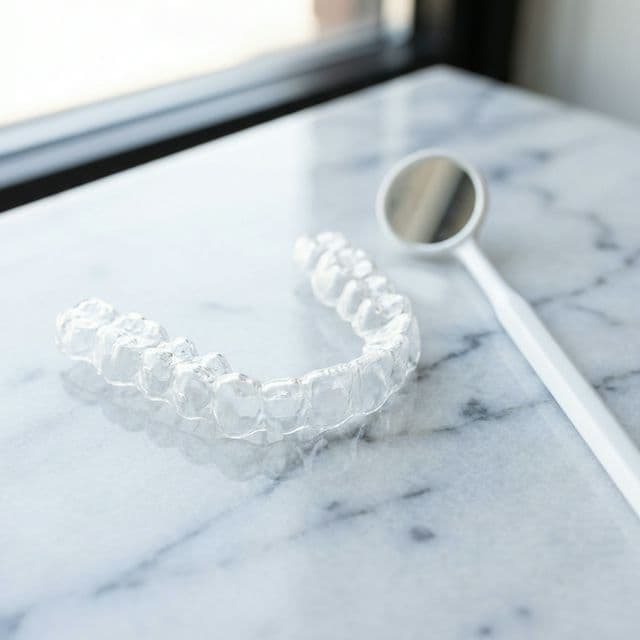
Spark clear aligners are designed with TruGEN material that is clearer, more comfortable, and more stain-resistant than many competitors. For the right teen candidate, they offer real advantages.
Advantages for teens:
- Nearly invisible—great for school photos, prom, and everyday confidence
- Removable for meals, so there are no food restrictions
- Easy brushing and flossing with no brackets to work around
- Fewer orthodontic emergencies—no broken wires or loose brackets
- Smooth, scalloped edges that sit comfortably against the gums
Drawbacks for teens:
- Requires discipline. If trays are not worn 22 hours per day, treatment stalls or results suffer.
- Trays can be lost or forgotten—teens need to carry a case and build the habit of putting trays back in immediately after eating
- Not ideal for every clinical scenario; some complex movements still favor braces
Sports and Music Considerations
For student athletes, aligners offer a practical edge. There are no brackets to cut the inside of the lip during contact, and for non-contact sports, a standard mouthguard can be worn over the aligners. For contact sports like football or hockey, we recommend removing aligners and wearing a proper sports mouthguard. Read more in our post on back-to-school aligners for Marlborough teens.
For teens who play woodwind or brass instruments, traditional braces can affect embouchure and cause lip irritation against brackets. Aligners can be removed during band practice and performances, then replaced immediately afterward. This flexibility is a significant quality-of-life advantage for young musicians.
Treatment Timeline
Both braces and Spark aligners typically require 12 to 24 months for teen cases, depending on the complexity of the movements. Mild crowding or spacing cases may finish in as little as six months with aligners. Dr. Fatima provides a projected timeline during the initial consultation so families can plan accordingly.
Addressing Parent Concerns
"What if my teen does not wear them enough?"
This is the most common concern we hear. Spark trays for teens include compliance indicators—small blue dots that fade with wear, giving parents and Dr. Fatima a visual check on whether the trays are being worn as prescribed. If compliance is a serious concern, braces may be the more predictable option.
"Is one option more expensive than the other?"
In many cases, Spark aligners and traditional braces fall within a similar price range. Insurance coverage often applies equally to both. We offer flexible payment plans to make either option accessible for families.
Compliance Is Everything
Regardless of which option you choose, the outcome depends on teamwork between the patient, the parents, and our clinical team. For aligner patients, that means committing to wear time and keeping every scheduled check-in. For braces patients, it means maintaining excellent oral hygiene and following dietary guidelines.
Retainers After Treatment
Both braces and aligner treatments require retainers to maintain results. The American Association of Orthodontists (AAO) emphasizes that teeth can shift at any age, making long-term retainer wear essential. Dr. Fatima provides custom retainers designed from your teen's final digital scan, ensuring a precise fit that keeps their new smile in place.
Frequently Asked Questions for Parents
At what age can my teen start Spark aligners? Most teens are candidates for Spark aligners once all permanent teeth have erupted, typically around age 12 to 14. Dr. Fatima evaluates each case individually based on dental development and maturity level.
Can my teen play sports with aligners? For non-contact sports, aligners can be worn during activity. For contact sports like football, hockey, and lacrosse, we recommend removing aligners and wearing a custom athletic mouthguard to protect both teeth and aligners.
What happens if my teen loses a tray? Because all treatment plans are stored digitally, replacement trays can be ordered quickly. In the meantime, your teen should wear the previous tray to prevent teeth from shifting.
How often does my teen need check-ups during treatment? Braces patients typically visit every 4 to 6 weeks. Spark aligner patients usually visit every 8 to 12 weeks, making aligners more convenient for families with busy school and activity schedules.
Unsure which is best for your teen? Call (508) 481-0110 or request a consultation.
Related Articles
- Back-to-School Clear Aligners for Teens
- Clear Aligners or Braces? How to Choose
- How Long Does Spark Aligner Treatment Take?