Featured Answer: Which option is better--implant or bridge?
For a single missing tooth, a dental implant is often the healthier long-term choice. It preserves bone, doesn’t require reshaping neighboring teeth, and can last decades with proper care. Bridges can be faster, but they rely on adjacent teeth and may need replacement sooner. At Innova Smiles in Marlborough, MA, Dr. Fatima helps MetroWest patients weigh both options using 3D imaging and a detailed treatment plan tailored to their oral health, budget, and lifestyle.
The Consequences of a Missing Tooth
Bone resorbs where a tooth is lost, nearby teeth can shift, and bite forces change--often creating new problems. Within the first year of tooth loss, you can lose up to 25% of bone width at the extraction site. Over time, this bone shrinkage alters your facial profile and makes future restoration more complex. Opposing teeth may also begin to super-erupt, moving out of alignment because they no longer have a partner to bite against. For patients from Hudson, Northborough, and across MetroWest, addressing a missing tooth promptly is one of the most important steps you can take for long-term oral health.
Dental Bridges: Pros and Cons
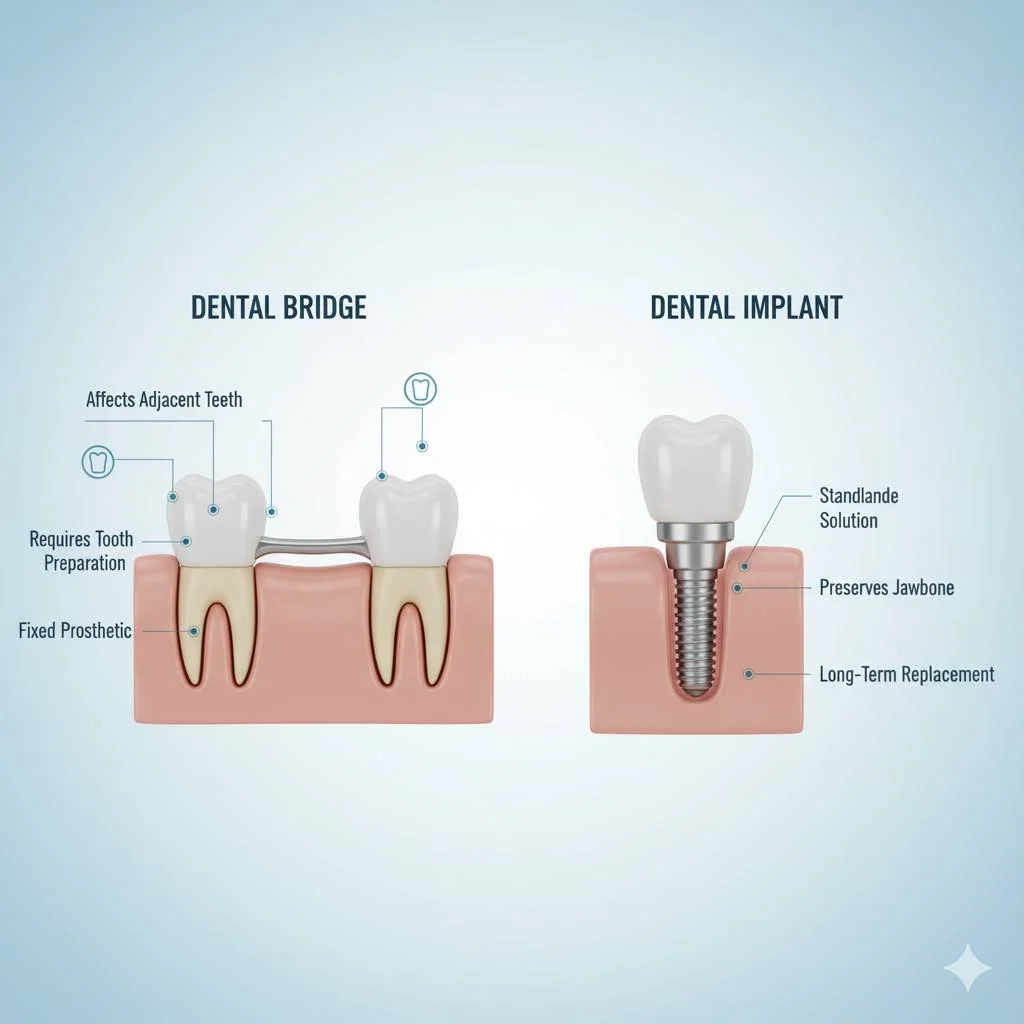
A dental bridge literally "bridges" the gap by anchoring an artificial tooth (pontic) to crowns placed on the teeth on either side.
- Pros: Shorter treatment timeline (often completed in two visits over two to three weeks); no surgical procedure required; natural-looking esthetic results; typically lower upfront cost ranging from $2,000 to $5,000 for a three-unit bridge.
- Cons: Requires removing healthy enamel from adjacent teeth to create anchor crowns; does not replace the root, so bone loss continues underneath the pontic; average lifespan of 7 to 15 years before replacement is needed; can be harder to floss around, increasing the risk of decay at the margins.
Dental Implants: Pros and Cons
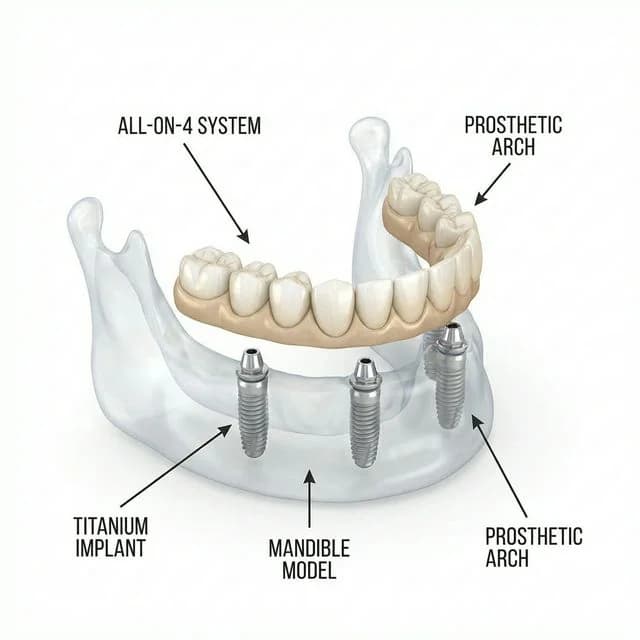
A dental implant replaces the entire tooth structure--a titanium or zirconia post serves as an artificial root, topped with an abutment and a custom crown.
- Pros: Preserves jawbone through osseointegration (the bone fuses to the implant, maintaining density); protects adjacent teeth since no reshaping is required; excellent chewing function that feels like a natural tooth; longevity of 25 years or more with proper maintenance, and many implants last a lifetime.
- Cons: Requires a minor surgical procedure; longer overall timeline of three to six months to allow for healing and osseointegration; upfront cost can be higher, typically $3,500 to $6,000 for a single implant with crown; requires adequate bone density (though bone grafting can address this if needed).
E-E-A-T: Dr. Fatima’s advanced training (FAAIP in prosthodontics, FICOI in implant surgery) supports precise planning for long-term success and natural esthetics.
Who is the Best Candidate for Each?
Bridges may be preferred when: you need a faster solution, the adjacent teeth already have large fillings or crowns that would benefit from coverage, or medical conditions make surgery inadvisable.
Implants are often ideal when: you have healthy neighboring teeth you want to preserve, you have sufficient bone (or are willing to undergo grafting), you want the longest-lasting solution, or you are replacing a tooth in a highly visible area where the most natural result matters.
Cost-Effectiveness Over Time
While a bridge may cost less initially, consider the full picture. A bridge typically needs replacement every 10 to 15 years, and each replacement involves re-preparing the anchor teeth--which weakens them further over time. An implant, by contrast, is a one-time surgical investment. The crown on top may need replacement after 15 to 20 years, but the implant post itself can last a lifetime. When you factor in the cost of multiple bridge replacements, implants frequently offer the best lifetime value.
Bone Preservation: The Hidden Advantage
One of the most significant advantages of implants that patients overlook is bone preservation. The titanium post mimics a natural tooth root, stimulating the jawbone every time you chew. This prevents the bone resorption that inevitably occurs under a bridge pontic. Maintaining bone density keeps your facial structure intact and avoids the sunken appearance that can develop after years of tooth loss.
Local Guidance for Marlborough and MetroWest
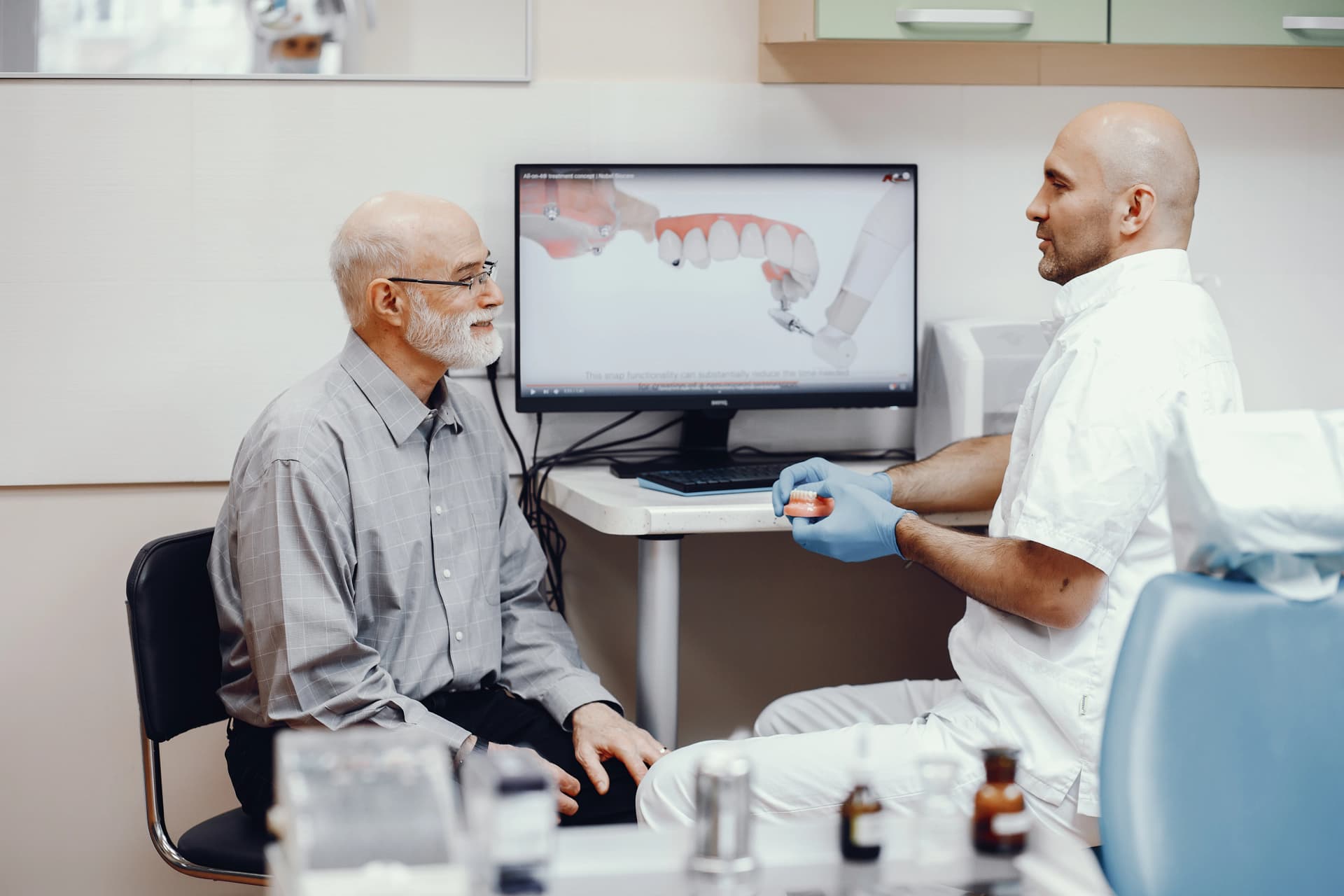
Many professionals along the I-495 corridor prefer the stability and confidence implants provide for daily life, dining, and presentations. At Innova Smiles, we use CBCT 3D imaging to evaluate bone density, nerve location, and sinus proximity before recommending a treatment path. Whether you commute to Boston or work locally in Framingham or Westborough, we schedule consultations and follow-ups to fit your calendar.
Internal Links
- Learn about implant care and options at Dental Implants
- Explore restorations like crowns and bridges at Tooth Repair & Restoration
- Get personalized recommendations at Contact Us
Ready to compare your options with imaging and a written plan? Call (508) 481-0110 or request a consultation.