Featured Answer: Are clear aligners more expensive than braces?
Not necessarily. In 2026, the cost of clear aligners and traditional braces overlaps significantly. Invisalign ranges from $3,000 to $7,000, Spark clear aligners from $2,500 to $6,500, and traditional metal braces from $3,000 to $7,000. The final cost depends on case complexity, treatment duration, geographic location, and provider experience rather than the type of appliance alone. Many dental insurance plans cover clear aligners and braces equally up to the orthodontic lifetime maximum.
Choosing between clear aligners and braces is one of the biggest decisions patients face when pursuing orthodontic treatment. At Innova Smiles in Marlborough, Dr. Ambereen Fatima helps patients weigh this decision by weighing clinical factors alongside financial realities — because the best orthodontic solution is one that delivers excellent results at a price you can manage.
2026 Cost Breakdown by Treatment Type
Understanding the current pricing landscape is the essential first step. The numbers below reflect national averages as well as typical MetroWest Massachusetts pricing based on data from the American Association of Orthodontists (AAO) and practice-level reporting.
Invisalign
- National average: $3,000–$7,000
- MetroWest MA typical range: $4,000–$6,500
- Treatment duration: 6–18 months for most cases
- Included in cost: Digital scans, all aligner trays, refinement trays (varies by tier), retainers (varies by provider)
Invisalign remains the most recognized clear aligner brand globally. The system uses SmartTrack material and offers tiered products — Invisalign Lite (for mild cases, fewer trays) and Invisalign Comprehensive (for complex cases, unlimited refinements). The tier your case requires is one of the primary cost drivers. Cases requiring only 14 trays will cost substantially less than cases requiring 40+ trays with refinements.
Spark Clear Aligners
- National average: $2,500–$6,500
- MetroWest MA typical range: $3,500–$6,000
- Treatment duration: 6–18 months for most cases
- Included in cost: Digital scans, all aligner trays, refinement trays, retainers (varies by provider)
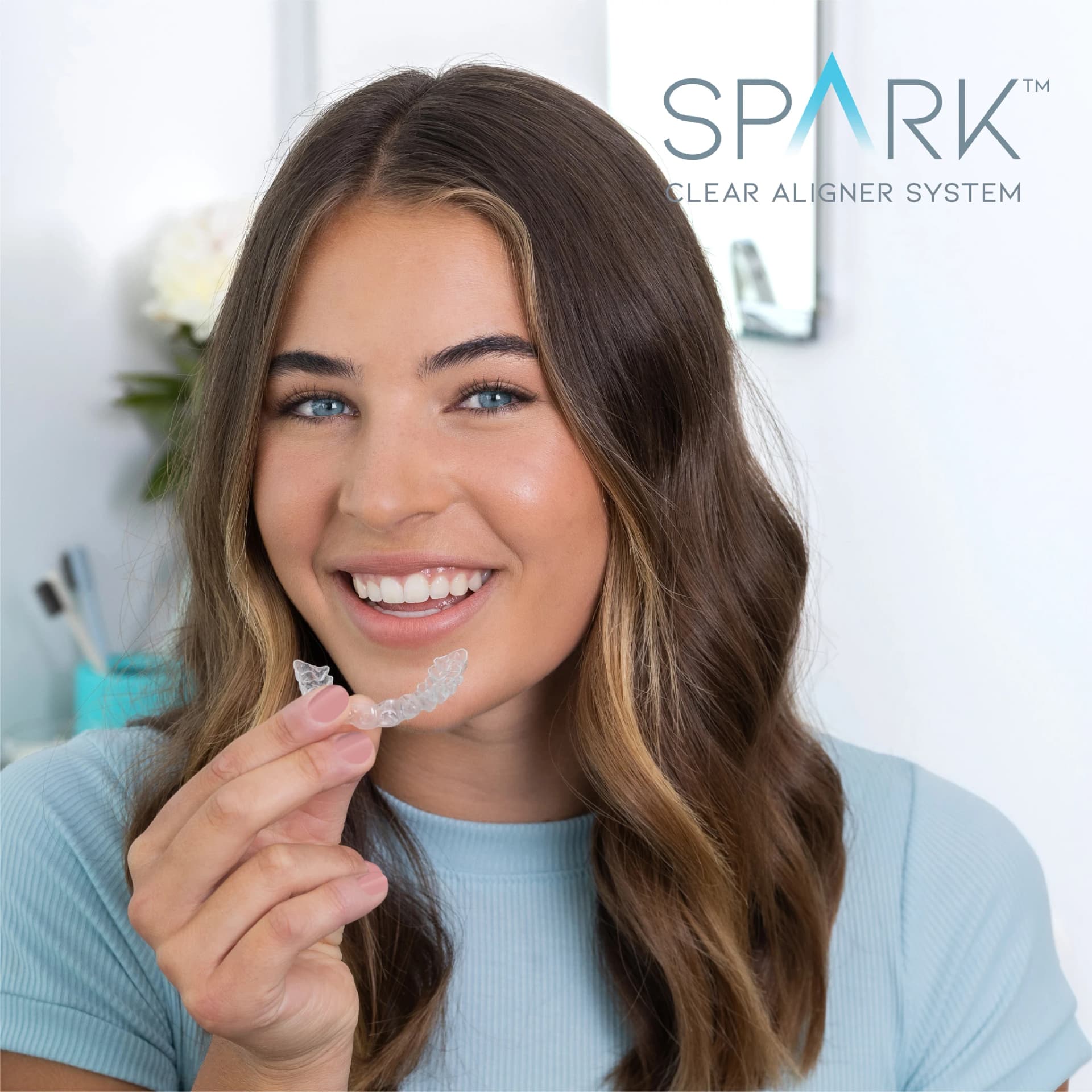
Spark aligners, manufactured by Ormco (a leading orthodontic company), use TruGEN material that is clearer, more stain-resistant, and offers stronger sustained force delivery compared to earlier-generation aligners. At Innova Smiles, Dr. Fatima selected Spark as the preferred aligner system after evaluating clinical performance data, material science, and patient satisfaction outcomes. Learn more in our detailed comparison of Spark vs. Invisalign.
Traditional Metal Braces
- National average: $3,000–$7,000
- MetroWest MA typical range: $4,000–$7,000
- Treatment duration: 18–24 months on average
- Included in cost: Brackets, wires, adjustments, retainers
Metal braces remain the gold standard for complex orthodontic cases involving severe crowding, significant bite discrepancies, or cases requiring precise vertical tooth movement. Modern brackets are smaller and more comfortable than those from previous decades, but they remain visible and require dietary restrictions (no hard, sticky, or chewy foods).
Ceramic (Clear) Braces
- National average: $4,000–$8,000
- MetroWest MA typical range: $4,500–$8,000
- Treatment duration: 18–24 months on average
Ceramic braces use tooth-colored or clear brackets to reduce visibility while maintaining the mechanical advantages of traditional braces. They cost 20–40% more than metal braces due to more expensive bracket materials and the need for more careful adjustment.
Lingual Braces
- National average: $8,000–$13,000
- Treatment duration: 18–30 months
Lingual braces are placed on the tongue-side surface of the teeth, making them invisible from the front. Their high cost reflects the custom fabrication of each bracket and the specialized training required for placement. They are less commonly offered and typically reserved for patients who require fixed appliances but prioritize aesthetics.
Factors That Influence Your Final Cost
The ranges above are broad because no two orthodontic cases are identical. Understanding what drives cost helps you anticipate where your case will fall within the range.
Case Complexity
The single largest cost driver is the severity of your misalignment. Mild crowding or minor spacing issues require fewer trays (or shorter wire treatment) and cost less. Complex cases involving deep bites, crossbites, open bites, significant crowding, or cases requiring tooth extraction and space closure cost more because they demand more clinical time, more materials, and more expertise.
Treatment Duration
Longer treatments require more appointments, more aligner trays or wire changes, and more of your provider's time. A 6-month Spark case will cost less than an 18-month Spark case, even within the same practice.
Geographic Location
Orthodontic fees vary significantly by region. Metropolitan areas and high cost-of-living regions (including the greater Boston area) generally have higher fees than rural areas. However, patients should weigh cost against provider experience and technology — a lower fee at a less experienced provider may result in suboptimal outcomes and the need for retreatment.
Provider Experience and Technology
Dentists and orthodontists with advanced training, digital scanning technology (no messy impressions), 3D treatment planning, and a track record of complex cases often charge more — but deliver more predictable results. Dr. Fatima at Innova Smiles uses fully digital workflows with 3Shape iTero scanning, 3D CBCT imaging when needed, and has completed advanced orthodontic training specific to clear aligner therapy.
Retainers
Retainers are essential after any orthodontic treatment to prevent relapse. Some providers include retainers in the total treatment fee; others charge separately ($100–$500 per retainer). Permanent bonded retainers (a thin wire glued behind the front teeth) may also be recommended. Always ask whether retainers are included in the quoted price.
Insurance Coverage for Orthodontics in 2026
Dental insurance can significantly offset orthodontic costs, but coverage varies widely between plans. Here is what patients in the MetroWest area typically encounter:
What's Typically Covered
- Orthodontic lifetime maximum: Most PPO dental plans include an orthodontic benefit with a lifetime maximum of $1,000–$2,500. This is a one-time benefit — once used, it does not renew annually.
- Age limitations: Some plans restrict orthodontic coverage to patients under age 19. However, a growing number of 2026 plans include adult orthodontic benefits. Always verify with your specific carrier.
- Clear aligners: The majority of major dental insurers — including Delta Dental, MetLife, Cigna, Aetna, and Guardian — now cover clear aligners (including Invisalign and Spark) at the same rate as traditional braces, provided the treatment is deemed medically necessary.
- Coinsurance: Orthodontic benefits typically pay 50% of the allowed amount up to the lifetime maximum.
How to Maximize Your Orthodontic Insurance Benefit
- Start treatment before your plan renews if possible, to lock in your current benefit structure.
- Coordinate benefits if you or your child are covered under two dental plans. Dual coverage can significantly increase the total insurance contribution.
- Ask about pre-authorization. Submitting a pre-determination to your insurance company before starting treatment gives you a written estimate of what they will cover.
At Innova Smiles, our insurance team verifies your orthodontic benefits before your consultation so you know your out-of-pocket cost before committing. We work with all major PPO plans and help patients from Hudson, Northborough, Sudbury, and throughout MetroWest maximize every dollar of coverage.
Financing Options: Making Orthodontics Affordable
Even after insurance, orthodontic treatment represents a significant investment. Flexible financing ensures cost does not become a barrier to a healthier smile.
CareCredit
CareCredit is the most widely used healthcare financing card in the United States. It offers promotional financing periods of 6, 12, 18, or 24 months with 0% APR for qualified applicants. For a $4,500 Spark aligner case after $1,500 in insurance coverage, a 24-month 0% plan means monthly payments of approximately $125 — with no interest if paid within the promotional period.
Cherry Financing
Cherry is a newer patient financing platform that offers approval in seconds with no hard credit check. Plans range from 6 to 24 months with competitive rates. Cherry is particularly popular with patients who prefer not to open a traditional credit line.
In-Office Payment Plans
Many practices, including Innova Smiles, offer in-house payment plans that allow you to spread the cost of treatment over the duration of your case with no third-party financing. Ask about these options during your consultation.
FSA and HSA Funds
Flexible Spending Accounts (FSA) and Health Savings Accounts (HSA) can be used to pay for orthodontic treatment with pre-tax dollars, effectively saving you 25–35% depending on your tax bracket. Orthodontic treatment is an IRS-qualified medical expense. If your employer offers an FSA, you can elect a higher contribution during open enrollment specifically to fund orthodontic care.
Clear Aligners vs. Braces: Which Is Better for Your Case?
Cost is only one factor in the decision. Clinical suitability matters equally. Here is a general framework, though every case requires individual evaluation.
Clear Aligners Are Typically Best For:
- Mild to moderate crowding (1–6 mm)
- Spacing issues (gaps between teeth)
- Minor bite corrections (Class I with mild overbite)
- Patients who prioritize aesthetics and discretion
- Adults and teens with the discipline to wear aligners 20–22 hours per day
- Patients who do not want dietary restrictions
Traditional Braces Are Typically Best For:
- Severe crowding requiring extractions and space closure
- Complex bite problems (significant overbite, underbite, open bite)
- Cases requiring precise vertical tooth movement (intrusion/extrusion)
- Younger teens who may not comply with removable aligner wear
- Cases with impacted teeth requiring orthodontic traction
When Either Option Works
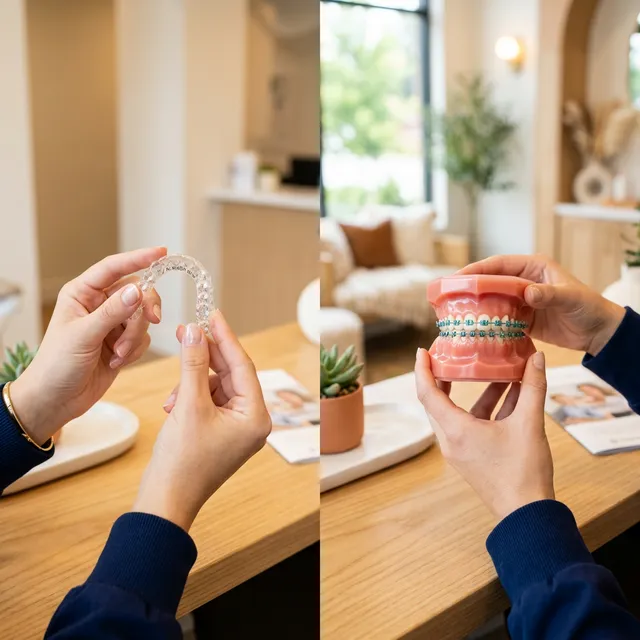
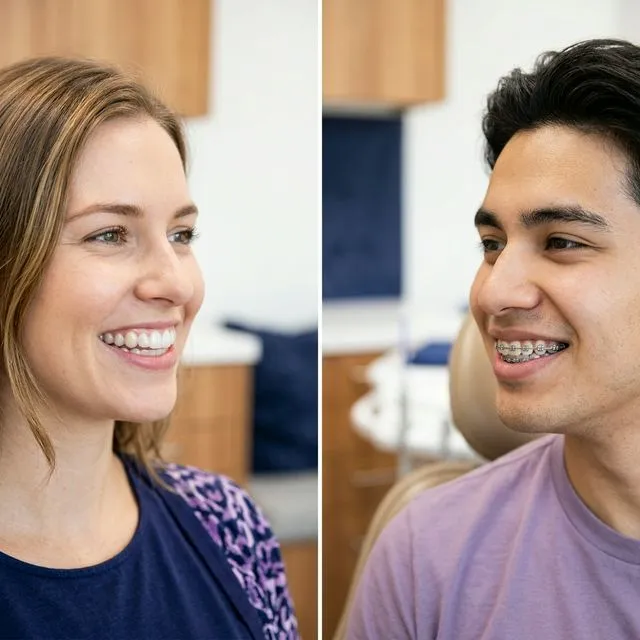
For a large middle ground of moderate orthodontic cases, both clear aligners and braces can achieve excellent results. In these situations, patient preference, lifestyle, and cost often drive the final decision. Dr. Fatima presents both options when clinically appropriate and supports whichever choice you make.
For a deeper clinical comparison, read our guide on Clear Aligners or Braces: How to Choose.
Hidden Costs to Watch For
When comparing quotes between providers, make sure you are comparing apples to apples. Ask about these potential additional costs:
- Diagnostic records: Some offices charge separately for X-rays, photos, and digital scans ($200–$500).
- Refinement aligners: Confirm whether additional aligner trays needed after the initial set are included in the fee.
- Retainers: Ask if retainers are included or charged separately.
- Broken bracket fees: With braces, some offices charge for emergency bracket repairs.
- Missed appointment fees: Some practices charge for no-shows or last-minute cancellations.
- Post-treatment monitoring: Confirm whether follow-up visits after active treatment are included.
At Innova Smiles, our orthodontic fee is comprehensive. Digital scans, all aligner trays, refinement trays as needed, and post-treatment retainers are included in the quoted price so there are no surprises. Patients from Framingham, Westborough, Hopkinton, and across MetroWest appreciate this transparent pricing model.
The Real Cost of Doing Nothing
It is tempting to postpone orthodontic treatment to save money, but misaligned teeth carry their own long-term costs. Crowded teeth are harder to clean, increasing the risk of cavities and gum disease. Malocclusion contributes to uneven enamel wear, TMJ dysfunction, and chronic jaw pain. The American Association of Orthodontists estimates that patients with untreated malocclusion spend 30–40% more on restorative dental work over their lifetime compared to patients with well-aligned teeth.
Investing in orthodontic correction now can prevent far more expensive restorative work — crowns, implants, gum surgery — in the future.
Frequently Asked Questions About Orthodontic Costs
Q: Does my child's orthodontic benefit apply to clear aligners, or only to braces? The vast majority of dental PPO plans in Massachusetts that include an orthodontic benefit cover clear aligners and braces equally. Insurers reimburse based on the orthodontic CDT codes (D8010–D8090) regardless of the appliance type. However, a small number of plans — particularly older HMO-style plans — may restrict coverage to traditional braces. Our insurance team verifies the specific terms of your plan before your consultation so there are no surprises.
Q: Can I start orthodontic treatment in December and use two years of FSA funds? Yes. Orthodontic treatment is an IRS-qualified medical expense under both FSA and HSA plans. Because treatment spans multiple months, you can allocate FSA funds from the current plan year toward your initial payment and then apply next year's FSA election toward subsequent installments. For a $5,000 treatment plan, contributing $2,500 per year to your FSA across two plan years saves you $1,250 to $1,750 in taxes at typical Massachusetts marginal rates (federal plus state combined).
Q: Are there any orthodontic costs that insurance never covers? Retainers are sometimes excluded from orthodontic insurance benefits, depending on the plan. Replacement retainers are almost always an out-of-pocket expense. At Innova Smiles, your initial set of retainers is included in the treatment fee, so this is not an additional cost with us. Cosmetic upgrades — such as choosing ceramic brackets over metal — are also typically patient-pay.
Q: My quote from another office is lower. Should I go with the cheaper option? Price alone is an unreliable metric for comparing orthodontic providers. Ask what is included in the quoted fee: diagnostic records, refinement trays, retainers, and post-treatment monitoring visits. A $4,000 quote that excludes retainers ($300 to $500), refinement trays ($500 to $1,500 if needed), and diagnostic imaging ($200 to $500) may actually cost more than a $5,000 comprehensive fee that includes everything. A 2022 survey by the American Association of Orthodontists found that 18% of patients who chose the lowest-cost provider required retreatment within three years — an outcome far more expensive than investing in quality care initially.
Your Next Step
The best way to determine your specific cost is a personalized consultation. At Innova Smiles, your orthodontic evaluation includes a comprehensive clinical exam, digital scanning, and a detailed treatment plan with a written cost estimate including your insurance benefit and financing options — all before you commit to treatment.
Ready to explore your options? Call (508) 481-0110 or schedule your aligner consultation today.
Related Articles
- Clear Aligners or Braces? How to Choose
- Why We Chose Spark Over Invisalign
- Cost of Spark Aligners in Massachusetts: 2025 Pricing Guide
- Back-to-School: Are Clear Aligners Right for Teens?
Related Services
- Spark Clear Aligners -- advanced clear aligner therapy with TruGEN material
- Orthodontics -- comprehensive orthodontic solutions for teens and adults
- Dental Insurance & Financing -- insurance verification and flexible payment plans