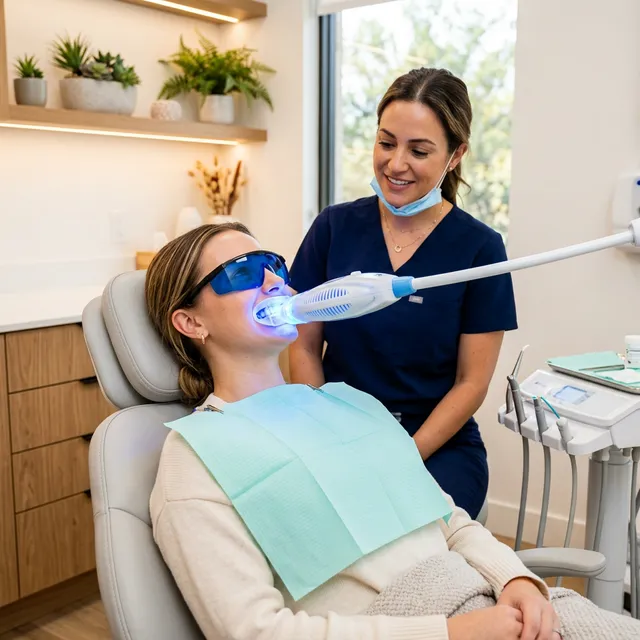
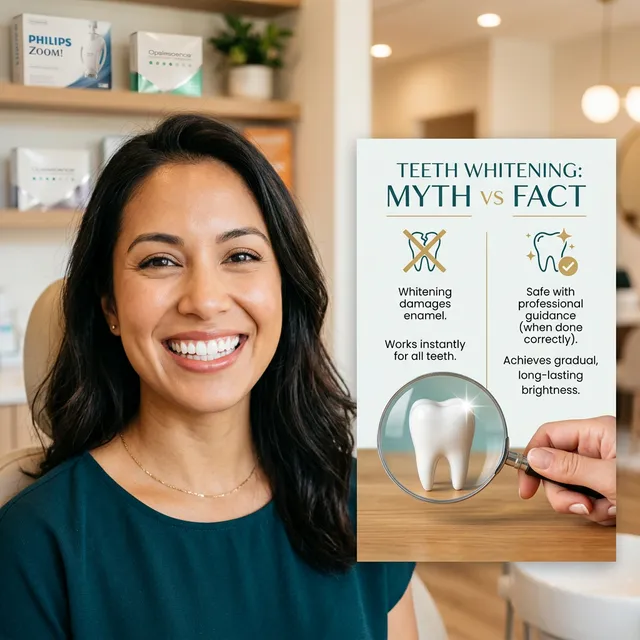
Teeth whitening is one of the most popular cosmetic dental treatments, yet misinformation about it is everywhere. At Innova Smiles in Marlborough, MA, Dr. Fatima regularly hears concerns from patients across MetroWest, from Westborough to Framingham, that are based on myths rather than science. Let us set the record straight so you can make an informed decision about brightening your smile.
Myth 1: Whitening ruins enamel
Professional whitening gels work by opening tiny pores in enamel, lifting stains, and then closing the pores again. The structure of your tooth stays intact when you follow the instructions and avoid overuse. The active ingredients in professional whitening, hydrogen peroxide or carbamide peroxide, have been studied extensively and are considered safe by the American Dental Association (ADA) when used as directed. A 2019 review in the Journal of Evidence-Based Dental Practice confirmed that professionally supervised whitening does not cause permanent enamel damage. The key is proper concentration and application time, which is exactly what professional supervision ensures.
What to avoid
- Over-the-counter kits that promise instant whitening without clear instructions
- Leaving trays on overnight without your dentist's guidance
- Mixing baking soda and lemon juice, a popular DIY recipe that erodes enamel rapidly due to the acidic pH
Myth 2: All whitening results look fake
Custom trays let us control the shade change precisely. We typically aim for two to four shades lighter, enough to brighten your smile noticeably without making it look artificial or fluorescent. The gradual approach of take-home trays also allows you to stop at the exact shade you prefer.
Whitening should complement your natural skin tone. Anything beyond that can look artificial.
Myth 3: Sensitivity means damage
Temporary sensitivity is common because the dentin layer dehydrates slightly during whitening. This is a reversible, temporary effect, not damage. A fluoride varnish or potassium nitrate sensitivity gel applied after treatment usually calms discomfort within 24 to 48 hours. Patients with a history of sensitivity can use a desensitizing toothpaste for two weeks before treatment to minimize any reaction.
Myth 4: Charcoal toothpaste whitens teeth safely
Activated charcoal toothpaste has surged in popularity thanks to social media, but the ADA warns that dental professionals urge caution. Charcoal is abrasive enough to scrub surface stains but can also wear away enamel over time, leading to increased sensitivity and a yellowish appearance as the darker dentin layer becomes more visible. Most charcoal products also lack fluoride, meaning they offer no cavity protection. The ADA has not granted its Seal of Acceptance to any charcoal whitening product.
Myth 5: Strawberries, banana peels, and oil pulling whiten teeth
There is no scientific evidence that rubbing fruit on your teeth or swishing oil in your mouth produces meaningful whitening results. Strawberries contain citric acid, which can actually erode enamel with repeated use. Oil pulling may support general oral hygiene, but it does not change tooth color. If you want real results, professional whitening is the safe and proven path.
Myth 6: Whitening works on all teeth
Whitening is effective on natural tooth enamel with extrinsic stains from food, beverages, and aging. However, it does not change the color of crowns, veneers, bonding, or fillings. Teeth with intrinsic discoloration from medications like tetracycline, fluorosis, or trauma may not respond fully to whitening. Dr. Fatima evaluates your specific situation during a consultation to set realistic expectations and may recommend porcelain veneers as an alternative for teeth that whitening cannot improve.
The Science Behind Professional Whitening
Professional whitening uses hydrogen peroxide or carbamide peroxide at concentrations higher than what is available over the counter. When applied to the tooth surface, the peroxide breaks down into oxygen radicals that penetrate the enamel and break apart the chromophore molecules responsible for discoloration. The enamel structure itself is not altered. After treatment, the pores in the enamel close naturally, and fluoride treatments help remineralize the surface.
Safe vs. Unsafe Whitening Products
Safe and effective:
- ADA-accepted professional in-office whitening
- Dentist-prescribed custom take-home trays with professional-grade gel
- ADA-accepted whitening toothpastes for maintenance
- Whitening strips from reputable brands with ADA Seal
Use with caution or avoid:
- Charcoal toothpaste (abrasive, no fluoride)
- DIY baking soda and lemon juice (erosive)
- Unregulated whitening products ordered online from overseas
- Mall kiosk or salon whitening (no dental supervision, inconsistent results)
- UV or LED lights sold as standalone whitening devices without professional-grade gel
Choosing your approach
| Option | Best for | Treatment time | Longevity |
|---|---|---|---|
| In-office Boost | Fast, dramatic results | 1 visit (60–90 min) | 6–12 months |
| Custom trays | Gradual, controlled change | 10–14 days | 12+ months with touch-ups |
| Whitening toothpaste | Daily maintenance | Ongoing | Maintains results |
How Often Can You Whiten Safely?
The ADA recommends following your dentist's guidance on whitening frequency. In-office treatments can typically be repeated every 6 to 12 months. Custom take-home trays allow for periodic touch-ups as needed — usually a few days of use every few months. Over-whitening (more than once every few months with high-concentration products) can lead to enamel weakening and chronic sensitivity. Dr. Fatima monitors each patient's enamel health at routine visits and advises when another whitening cycle is appropriate.
Whitening During Orthodontic Treatment
If you are currently wearing clear aligners, your trays can double as whitening trays with professional-grade gel. This is a convenient way to brighten your smile while straightening it. However, patients with traditional braces should wait until brackets are removed to whiten, as the areas under brackets will not be treated, resulting in uneven color when the braces come off.
Maintaining Your Results
After whitening, a few simple habits help your results last:
- Avoid dark-colored beverages (coffee, red wine, dark tea) for 48 hours after treatment
- Use a straw for staining beverages when possible
- Brush twice daily with a whitening maintenance toothpaste
- Schedule touch-up treatments with your custom trays every six to twelve months
- Keep up with professional cleanings to remove surface stains before they set
Ready to start? Book a consultation and we will personalize your plan.
Related Articles
- Professional Teeth Whitening in Marlborough
- Professional Whitening vs. Store-Bought Kits
- Valentine's Day Smile Prep: Whitening Tips
Related Services
- Teeth Whitening — professional in-office and take-home whitening options
- Cosmetic Dentistry — full range of smile enhancement treatments
- Porcelain Veneers — a longer-lasting alternative when whitening alone isn't enough