Featured Answer: What is the fastest way to whiten teeth?
In-office professional whitening offers the most dramatic results in the shortest time--typically lightening teeth several shades in a single hour-long visit. Take-home professional trays are also effective but take one to two weeks. At Innova Smiles in Marlborough, MA, Dr. Fatima helps MetroWest patients find the best whitening approach for their timeline and goals.
Love Your Smile This February
Date night, Galentine's brunch in Framingham, or a little self-care this Valentine's Day, a bright, healthy smile is the best accessory. The good news is that even with just a week or two before February 14th, there are several quick cosmetic fixes that can make a noticeable difference.
A 2017 study in PLOS ONE found that a genuine smile is the single strongest predictor of perceived attractiveness--outranking clothing, hairstyle, and body language. Teeth are the first thing people notice in that smile, and staining from years of coffee runs to Dunkin' on Route 20, red wine at a Sudbury dinner party, or blueberries from the Framingham farmers market adds up faster than most people realize.
Whether you are planning a romantic dinner in downtown Marlborough or celebrating Galentine's Day with friends in Westborough, putting your best smile forward is one of the simplest confidence upgrades available--and it does not require months of treatment.
Whitening Timeline: How Far in Advance Should You Start?
Planning ahead ensures the best results. Here is a realistic timeline based on what we see in our Marlborough office every January and February:
- 4 to 6 weeks before: If you have existing dental work--old bonding, crowns, or veneers on visible teeth--schedule a consultation now. Dr. Fatima can evaluate whether those restorations need updating after whitening so the colors match.
- 2 to 3 weeks before: Ideal for custom take-home tray whitening. This gives you time for gradual, even results with minimal sensitivity. A 2016 randomized controlled trial in the Journal of the American Dental Association found that custom-tray whitening with 10 percent carbamide peroxide achieved clinically significant shade improvement within 14 days, with lower sensitivity rates than higher-concentration protocols.
- 1 week before: In-office whitening delivers dramatic results in a single visit. Schedule at least a few days before your event in case of temporary sensitivity.
- Day of: A professional cleaning can remove surface stains from coffee, tea, and wine, leaving teeth noticeably brighter even without whitening treatment.
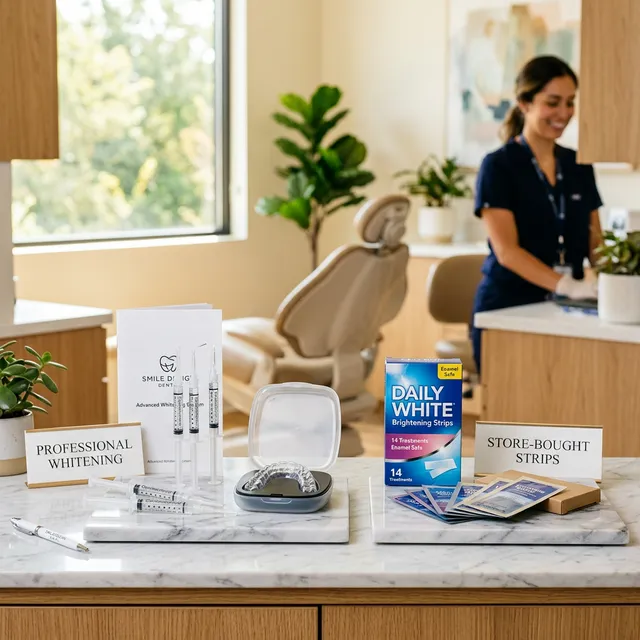
The biggest mistake patients make is waiting until the last 48 hours and then reaching for an over-the-counter strip product. Those strips apply a thin, low-concentration hydrogen peroxide film that sits unevenly across the teeth. You end up with patchy results and increased gum irritation--the opposite of what you want for a close-up Valentine's moment.
Whitening Options at Innova Smiles
1. In-Office Professional Whitening
Perfect if you are short on time. We use high-concentration professional gel (typically 25 to 40 percent hydrogen peroxide) protected by a gum barrier to safely lift deep stains from coffee, tea, red wine, and aging. According to the American Academy of Cosmetic Dentistry, professional in-office whitening is the fastest way to achieve dramatic results. The entire appointment takes about one hour, and most patients see results of four to eight shades lighter on the VITA shade guide. This is the most-recommended option for fast, reliable whitening.
The process works in three to four 15-minute gel application cycles. Between each cycle, the hygienist checks your comfort and shade progress. Because the concentration is far higher than anything available over the counter, the gum isolation step is critical--it protects soft tissue from chemical burn while the gel works exclusively on enamel.
A clinical review published in Operative Dentistry (2019) found that in-office whitening with hydrogen peroxide concentrations above 25 percent produced shade changes of 5 to 14 units on the VITA guide, compared to 1 to 4 units for OTC strips over a similar treatment period.
2. Custom Take-Home Trays
We create custom-fitted trays from impressions of your teeth. These trays hold professional-grade gel (10 to 22 percent carbamide peroxide) against your teeth perfectly--no gaps, no waste, and no gel leaking onto your gums. You wear them for 30 to 60 minutes daily at your convenience. Results build gradually over one to two weeks and are easy to maintain with periodic touch-ups.
Many patients prefer this option for the control it gives them. If you notice sensitivity after a session, you simply skip a day and resume. The Journal of Evidence-Based Dental Practice (2014) noted that custom-tray whitening remains one of the most thoroughly researched and consistently effective cosmetic dental procedures, with results persisting 12 to 24 months when patients follow maintenance recommendations.
3. Combination Approach (Best for Weddings and Events)
For patients who want the absolute brightest result, Dr. Fatima often recommends starting with an in-office session for immediate impact, then following up with custom trays for one week to deepen and stabilize the shade. This dual approach is popular with MetroWest brides and grooms preparing for engagement photos or wedding weekends.
The Science Behind Tooth Staining
Understanding why teeth stain helps you prevent it from happening again after treatment. There are two categories of staining:
- Extrinsic stains sit on the outer enamel surface. Coffee, tea, red wine, dark berries, soy sauce, and tobacco are the primary culprits. These stains accumulate in the microscopic ridges and pits of enamel. Professional cleaning removes most surface-level extrinsic stains, and whitening gel oxidizes the deeper pigment molecules embedded in enamel.
- Intrinsic stains exist within the tooth structure itself. Tetracycline antibiotics taken during childhood, excessive fluoride exposure during development, trauma that caused internal bleeding, and natural aging (enamel thins, revealing the yellowish dentin underneath) all contribute. Intrinsic stains require higher-concentration professional whitening and sometimes multiple sessions. In severe cases, porcelain veneers may be the better solution.
A longitudinal study in the Journal of Dentistry (2015) found that participants who received professional whitening and then maintained results with an electric toothbrush and low-abrasion whitening toothpaste retained 80 percent of their shade improvement at the 12-month follow-up.
Quick Cosmetic Fixes Beyond Whitening
Whitening is not the only way to refresh your smile before Valentine's Day:
- Dental bonding: If you have a chipped, cracked, or slightly uneven tooth, cosmetic bonding can reshape it in a single visit using tooth-colored composite resin. It takes 30 to 60 minutes per tooth and requires no anesthesia for most cases. Bonding material has improved dramatically--modern nano-hybrid composites can be polished to a glass-like finish that blends seamlessly with surrounding enamel. A study in the Journal of Esthetic and Restorative Dentistry (2020) reported bonding longevity of 5 to 10 years with proper care, making it an excellent short-term and medium-term cosmetic solution.
- Professional cleaning and polishing: Surface stains, tartar buildup, and plaque can dull your smile significantly. A hygiene visit followed by polishing with fine-grit prophylaxis paste often reveals a brighter smile you did not know was hiding underneath. For patients from Northborough and Shrewsbury who have not had a cleaning in over a year, this alone can produce a visible transformation.
- Enamel microabrasion: For localized white or brown spots on front teeth (common after braces), microabrasion uses a mild acid combined with fine pumice to remove a thin layer of discolored enamel. The procedure takes about 30 minutes and can dramatically improve the appearance of front teeth without any drilling or bonding.
- Lip balm and hydration: Chapped, dry lips detract from even the whitest teeth. In the days leading up to your event, keep lips moisturized and hydrated. For more on combating winter dry mouth, check out our seasonal guide.
At-Home Prep Tips for the Week Before
- Oil pulling: Swishing coconut oil for 10 to 15 minutes may help reduce surface bacteria and leave your mouth feeling fresh (though it is not a substitute for professional care). A systematic review in the Journal of Traditional and Complementary Medicine (2020) found limited evidence supporting oil pulling for plaque reduction, but many patients report subjectively fresher breath.
- Whitening toothpaste: Use a gentle whitening toothpaste with hydrogen peroxide for the week leading up to your date. Look for the ADA Seal of Acceptance, which indicates the product has been independently tested for safety and efficacy. Avoid highly abrasive formulas (check the Relative Dentin Abrasivity, or RDA, score--aim for under 70) that can scratch enamel.
- Avoid staining foods and drinks: In the 48 hours after any whitening treatment, teeth are more porous and susceptible to staining. Skip red wine, coffee, berries, and tomato sauce. If you must have coffee, use a straw and rinse with water immediately after.
- Stay hydrated: Drinking water throughout the day keeps saliva flowing, which naturally cleanses teeth and freshens breath. Saliva contains calcium and phosphate ions that help remineralize enamel, so maintaining adequate hydration is not just about breath--it actively protects your teeth.
- Switch to an electric toothbrush: If you are still using a manual brush, this is a good week to switch. A Cochrane systematic review found that oscillating-rotating electric toothbrushes reduced plaque 21 percent more and gingivitis 11 percent more than manual brushing over three months.
Banishing Bad Breath (Halitosis)
Nothing ruins a close moment like bad breath. The International Journal of Dental Hygiene (2018) estimated that roughly 30 percent of the general population experiences chronic halitosis. Here is how to ensure yours is fresh:
- Brush your tongue: The back of the tongue harbors odor-causing bacteria, particularly in the deep papillae on the posterior third. Use a tongue scraper daily for the most effective removal. A study in the Journal of Clinical Periodontology found that tongue scraping reduced volatile sulfur compound (VSC) levels--the primary chemical source of bad breath--by 75 percent, compared to 45 percent for brushing the tongue with a toothbrush.
- Floss daily: Decaying food particles trapped between teeth are a major source of odor that brushing alone cannot reach. If you struggle with traditional floss, a water flosser is an effective alternative--particularly helpful for patients with crowns, bridges, or tight contacts.
- Hydrate: Dry mouth leads to bad breath (morning breath is worse in winter when heated indoor air drops humidity). Drink water throughout the day. Chewing sugar-free xylitol gum between meals also stimulates saliva production.
- Check for tonsil stones: Sometimes debris trapped in tonsils (tonsilloliths) causes persistent sulfurous odor. Gargling with warm salt water can help dislodge them. If tonsil stones are a recurring problem, mention it at your next visit--we can evaluate whether a referral to an ENT specialist is warranted.
- Use alcohol-free mouthwash: Alcohol-based rinses can dry out your mouth and make breath worse long-term. Look for rinses containing cetylpyridinium chloride (CPC) or chlorine dioxide, which neutralize VSCs without dehydrating oral tissue.
- Rule out underlying causes: Persistent halitosis that does not respond to improved hygiene may indicate gum disease, an abscessed tooth, post-nasal drip, or gastroesophageal reflux. Dr. Fatima screens for these conditions during every exam.
The Confidence Boost: What the Research Says
Research published in the Journal of Cosmetic Dentistry shows that people with white, healthy smiles are perceived as more attractive, confident, and successful. A 2012 study conducted by Kelton Research found that people with straight, white teeth were 58 percent more likely to be perceived as successful and 57 percent more likely to attract a romantic partner based on their smile alone. Investing in your smile is investing in yourself.
Patients from Southborough, Hudson, and across MetroWest tell us that a brighter smile changes how they feel in social situations year-round, well past Valentine's Day. We regularly hear from patients that whitening was the first step in a broader self-care journey that included better nutrition, more consistent exercise, and renewed confidence at work.
Not sure which cosmetic treatment is right for you? Take our free smile quiz to get personalized recommendations.
Whitening Safety: Separating Fact from Fiction
Patients frequently ask whether whitening damages enamel. The short answer is no--when performed under professional supervision. A comprehensive review in the British Dental Journal (2020) concluded that professionally supervised hydrogen peroxide and carbamide peroxide whitening products, used according to manufacturer instructions, do not cause permanent structural damage to enamel or dentin.
That said, there are situations where whitening should be postponed or modified:
- Active cavities or cracks: Whitening gel can seep into damaged tooth structure and irritate the nerve. We always perform an exam before any whitening treatment and address restorative needs first.
- Pregnancy and breastfeeding: While no studies have demonstrated harm, the ADA recommends postponing elective whitening during pregnancy and breastfeeding as a precaution.
- Children under 16: Tooth enamel is still maturing and the pulp chamber is larger, increasing sensitivity risk. Professional whitening is typically recommended only for patients 16 and older.
- Severe sensitivity: Patients with generalized dentin hypersensitivity may benefit from a desensitizing regimen (potassium nitrate toothpaste for two weeks) before whitening. Dr. Fatima customizes the protocol for each patient.
Frequently Asked Questions About Valentine's Day Smile Prep
How long do whitening results last? Professional in-office whitening typically lasts 6 to 12 months with proper maintenance. Custom take-home trays can extend results to 12 months or longer with periodic touch-ups. Avoiding staining foods and beverages, brushing twice daily, and scheduling regular cleanings all help maintain your brighter shade. A touch-up session with your custom trays once every 3 to 4 months can keep your shade consistently bright year-round.
Is whitening safe for sensitive teeth? Yes, when supervised by a dentist. The ADA notes that professionally supervised whitening is safe even for patients with mild sensitivity. Dr. Fatima applies a desensitizing treatment before and after whitening to minimize discomfort. If you have a history of sensitivity, custom take-home trays at a lower concentration may be a better fit than in-office treatment.
Can I get whitening and bonding at the same visit? We recommend whitening first, then waiting one to two weeks for your shade to stabilize before performing bonding. This ensures the composite resin is color-matched to your brightest, most stable shade. Composite resin does not respond to whitening agents, so the order matters.
What about whitening before a wedding or engagement photos? The same timeline applies. Schedule in-office whitening at least one week before your event. For best results, start custom trays two to three weeks in advance and complete an in-office session as a finishing touch. Many MetroWest brides and grooms visit us 4 to 6 weeks before their wedding for the full combination protocol.
Does professional whitening work on crowns or veneers? No. Whitening agents only change the color of natural tooth enamel. If you have crowns, veneers, or bonding on visible teeth, Dr. Fatima will discuss options for matching these restorations to your new, brighter shade -- which may include replacing them after whitening is complete.
How much does professional whitening cost? In-office whitening at Innova Smiles ranges from $350 to $600. Custom take-home trays are $250 to $400. Most cosmetic whitening is not covered by dental insurance, but our in-house membership plan offers a discount on all elective cosmetic treatments. We also accept CareCredit and Cherry financing for 0% APR payment plans.
What is the difference between professional whitening and over-the-counter strips? Concentration and customization. OTC strips use 5 to 10 percent hydrogen peroxide applied with a one-size-fits-all strip. Professional whitening uses 10 to 40 percent concentrations delivered via custom-fitted trays or controlled in-office application with gum protection. The result is faster, more even, and longer-lasting whitening with less gum irritation.
Quick Confidence Boosts Beyond Your Teeth
A great smile involves more than just white teeth. In the days leading up to your event, consider these additional steps:
- Stay hydrated to keep lips moisturized and breath fresh
- Use a gentle lip scrub followed by a hydrating balm to eliminate dry, flaky lips
- Schedule a professional cleaning -- removing surface stains and tartar often reveals a noticeably brighter smile even without whitening
- Practice good posture -- standing tall with shoulders back naturally projects confidence alongside your smile
- Address any visible dental concerns now -- a chipped front tooth or a dark old filling on a canine can undermine even the whitest smile. Cosmetic bonding fixes both in a single visit.
Why MetroWest Patients Choose Innova Smiles for Cosmetic Dentistry
Patients from Sudbury, Grafton, and throughout the I-495 corridor choose our Marlborough office for Valentine's Day smile prep because we offer every option under one roof--cleaning, whitening, bonding, veneers, and full smile makeovers--without referrals to outside specialists. Dr. Fatima's Fellowship in the International Congress of Oral Implantologists (FICOI) and Fellowship in the American Academy of Implant Prosthodontics (FAAIP) reflect a commitment to advanced training that extends to every cosmetic procedure we perform.
Our 5D digital smile design technology lets you preview your results before treatment begins. You can see a simulation of your whitened, reshaped smile on screen and make adjustments before a single drop of gel touches your teeth.
Fall in love with your smile again. Call Innova Smiles at (508) 481-0110 or book online to schedule your whitening consultation before the 14th. Same-week appointments are often available for Valentine's Day smile prep--but January and early February fill fast, so do not wait.
Related Articles
- Professional Teeth Whitening in Marlborough
- Teeth Whitening Myths Patients Still Believe
- Smile Makeover Guide for Marlborough