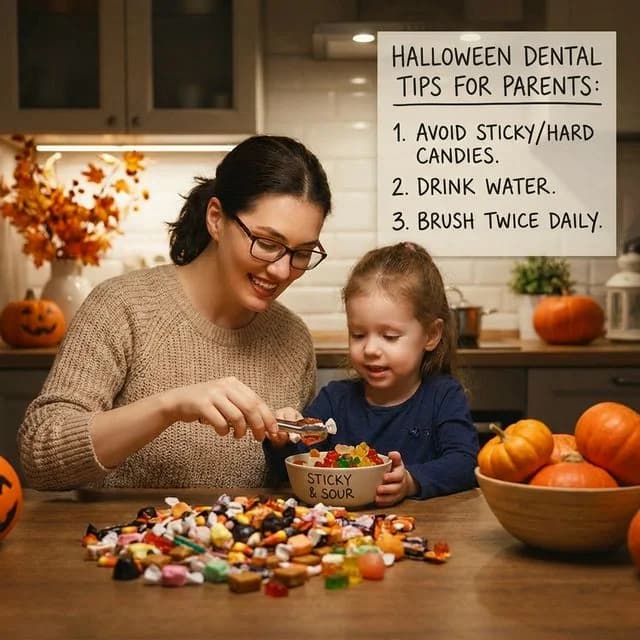

Featured Answer: What candies are the best and worst for teeth?
Sticky and sour candies are the worst, sugar lingers and acids erode enamel. Chocolate (especially dark) dissolves faster and rinses away more easily. Time treats with meals and brush before bed to reduce cavity risk. At Innova Smiles in Marlborough, MA, Dr. Fatima helps MetroWest families navigate the candy and treat seasons that show up across the year — Halloween, Thanksgiving, the December holidays, Valentine's Day, Easter, birthday parties, and end-of-school celebrations, without sacrificing the fun.
When This Guide Matters Most
This guide is written to be useful any time of year, but the heaviest sugar exposures for most MetroWest families cluster around a handful of repeating moments:
- October 31: Halloween haul and the candy bowl that follows
- November–December: Thanksgiving pies, Christmas cookies, holiday chocolate boxes, candy canes, gingerbread, hot cocoa
- January 1: "Detox" intentions that often include sugar swaps or new habits
- February 14: Conversation hearts, chocolate boxes
- March–April: Easter baskets and Passover candies
- June: End-of-school parties and graduation cake
- Summer: Ice cream, popsicles, sports drinks, lemonade stands
- Birthday parties: every month of the year
The biology is the same in every season. The bullet-point tips below apply whether the candy is wrapped in orange foil for Halloween, wrapped in red foil for Valentine's Day, or sitting in an Easter basket. The only thing that changes is the calendar.
The science of sugar and acid attacks
Before ranking candy, it helps to understand what actually causes cavities. The culprit is not sugar directly, it is the acid that oral bacteria produce when they feed on sugar.
Here is the chain of events:
- Sugar enters the mouth. Candy, juice, soda, any carbohydrate will do.
- Bacteria feast. Streptococcus mutans and other cavity-causing bacteria metabolize the sugar within seconds.
- Acid is produced. The bacteria excrete lactic acid as a byproduct of sugar metabolism.
- Enamel demineralizes. The acid drops the pH in the mouth below 5.5, the critical threshold where tooth enamel begins dissolving. Calcium and phosphate ions leach out of the enamel surface.
- The acid attack lasts 20–30 minutes. After each sugar exposure, it takes saliva approximately 20–30 minutes to neutralize the acid and restore the mouth to a safe pH.
- Remineralization occurs. If the mouth stays acid-free long enough, saliva deposits calcium and phosphate back into the enamel. This is your body's natural repair mechanism.
The critical insight: frequency matters more than quantity. A child who eats 10 pieces of candy in one sitting triggers one acid attack lasting about 30 minutes. A child who eats those same 10 pieces one at a time over 5 hours triggers 10 separate acid attacks, keeping the mouth in a demineralized state for most of the day. This is why all-day grazing on Halloween candy is far more damaging than a single post-dinner candy session.
The candy damage rankings
Not all candy hits your child's teeth the same way. Here is how common Halloween treats rank, from most harmful to least, based on their sugar content, acidity, stickiness, and duration of exposure.
Worst for teeth (avoid or limit heavily)
| Candy Type | Examples | Why It's Harmful | Damage Level |
|---|---|---|---|
| Sour candy | Warheads, Sour Patch Kids, Toxic Waste | pH as low as 1.6–2.0. Citric and tartaric acid erode enamel on contact before bacteria even get involved. Double attack: acid + sugar. | Extreme |
| Sticky/chewy candy | Starburst, Tootsie Rolls, caramels, taffy, gummy bears | Clings to tooth surfaces and hides in molar grooves. Saliva cannot wash it away. Bacteria feed for hours. | Very High |
| Hard candy and lollipops | Jolly Ranchers, Dum Dums, Blow Pops | Dissolves slowly, bathing teeth in sugar for 5–15 minutes per piece. Biting down risks cracking or chipping teeth. | High |
| Dried fruit snacks | Fruit roll-ups, raisin boxes, dried mango | Marketed as "healthy" but just as sticky as gummy candy. Concentrated natural sugars feed bacteria identically to refined sugar. | High |
| Candy corn | Brach's, generic | Pure sugar and corn syrup. Sticky enough to lodge between teeth. No redeeming nutritional or dental qualities. | High |
Better choices (still candy, but less damaging)
| Candy Type | Examples | Why It's Better | Damage Level |
|---|---|---|---|
| Plain chocolate | Hershey bars, Dove, Ghirardelli squares | Dissolves quickly and washes off teeth more easily. Dark chocolate contains theobromine, which research in BMC Oral Health suggests may fight cavity-causing bacteria. | Moderate |
| Nut-based candy bars | Snickers, PayDay, Almond Joy | Nuts break up stickiness, stimulate saliva production, and provide protein. Still sugary, but the texture helps. | Moderate |
| Powdery/dissolving candy | Smarties, Pixie Sticks, Sweet Tarts (plain) | Dissolves almost instantly. Minimal contact time with teeth. | Low–Moderate |
| Sugar-free gum or candy | Ice Breakers, Trident, xylitol mints | Xylitol actively inhibits S. mutans. The ADA Council on Scientific Affairs recognizes xylitol gum as beneficial for oral health. | Low |
Trick-or-treat timing strategy
Smart timing can dramatically reduce candy's impact on your child's teeth. Here is a tactical approach for MetroWest parents:
Before trick-or-treating: Feed your kids a full, balanced dinner before heading out. A full stomach reduces candy cravings during the walk, and the saliva production from a meal creates a protective buffer in the mouth. Neighborhoods in Marlborough, Northborough, and Sudbury typically start trick-or-treating between 5:30 and 6:00 PM, plenty of time for an early dinner.
During trick-or-treating: Let kids enjoy a piece or two during the walk. Trying to ban all candy consumption during the event is unrealistic and creates a "forbidden fruit" effect. Choose chocolate over sticky or sour options if possible.
After trick-or-treating (the candy sort): This is the most important step. Sit down together and sort the haul:
- Keep pile: Chocolate, nut bars, and a limited quantity of their favorites
- Trade pile: Sticky, sour, and hard candies (see buyback ideas below)
- Discard pile: Any unwrapped or suspicious items (standard safety practice)
Daily candy schedule (the week after Halloween): Allow your child to choose 2–3 pieces of candy as a post-meal dessert. After the candy, have them rinse with water and brush 30 minutes later. This limits acid attacks to once per day rather than the continuous assault of all-day grazing.
Candy buyback and swap alternatives
The candy buyback concept has gained traction in communities across MetroWest, and for good reason, it lets kids enjoy Halloween night while reducing the weeks-long sugar exposure that follows.
How it works:
- After sorting, children trade in a portion of their candy for a reward: a toy, experience, or cash (many families use $1 per pound)
- Some local dentist offices and businesses host official candy buyback events in the days after Halloween
- Collected candy can be donated to troops overseas through organizations like Operation Gratitude or Soldiers' Angels
Non-candy Halloween alternatives to hand out: If you want to be the popular house and the tooth-friendly house, consider:
- Glow sticks and glow bracelets (trick-or-treaters of all ages love these)
- Stickers, temporary tattoos, or small figurines
- Mini bags of pretzels, crackers, or trail mix
- Sugar-free gum packs (with xylitol)
- Small play-doh containers or bouncy balls
- Coins (quarters are always welcome)
Many Southborough and Hudson neighborhoods now participate in the Teal Pumpkin Project, which offers non-food treats for children with allergies, these options happen to be better for teeth too.
Age-specific tips: toddlers, kids, and teens
Toddlers (ages 1–3)
- Skip trick-or-treating for candy. At this age, the experience is about costumes and walking around the neighborhood, not the candy itself. Most toddlers are just as happy with a single piece of chocolate or a non-candy treat.
- Avoid all hard candy, choking hazard.
- Avoid sticky candy entirely. Toddler enamel is thinner and softer than adult enamel, making it more vulnerable to acid attacks.
- No candy before bed. Toddlers who fall asleep with residual sugar in their mouths are at high risk for early childhood caries (baby bottle tooth decay pattern).
- Parent-supervised brushing after any candy consumption. Children under 3 should use a rice-grain-sized smear of fluoride toothpaste.
School-age kids (ages 4–10)
- This is the peak trick-or-treat age group and the hardest to manage.
- Implement the candy sort after trick-or-treating. Let them pick 10–15 favorite pieces for the keep pile. Trade the rest.
- Enforce the "candy with meals" rule. Dessert after lunch or dinner only, no mid-morning or mid-afternoon candy snacking.
- Make brushing visible. Use disclosing tablets (available at pharmacies) that temporarily stain plaque pink so kids can see exactly where they need to brush better.
- Dental sealants are especially protective during this period. Sealants cover the grooves of molars where sticky candy gets trapped. Ask Dr. Fatima about sealants at your child's next cleaning if they do not already have them.
Tweens and teens (ages 11–17)
- Teens make their own candy choices, so education matters more than restriction.
- Explain the acid attack cycle (see above). Teens respond better to science than to "because I said so."
- Sour candy awareness: Many popular teen candies — Warheads, Sour Punch Straws, Sour Patch Kids, are among the most acidic foods a human being can put in their mouth. A pH of 1.6 is more acidic than vinegar.
- Braces and candy: Teens with braces should avoid all hard and sticky candy. Brackets can break, wires can snap, and repair appointments disrupt treatment. Patients with Invisalign Teen or Spark aligners should remove trays before eating any candy and brush before reinserting.
- Sports drinks are candy in liquid form. Many teens consume Gatorade, Powerade, or energy drinks alongside Halloween candy. These beverages are loaded with sugar and acid, compounding the dental damage. Water is the only safe sports beverage for teeth.
What about sugar-free candy?
Sugar-free candies sweetened with xylitol, erythritol, or stevia are genuinely better for teeth than their sugary counterparts. Xylitol in particular has been shown in clinical studies to actively reduce the population of Streptococcus mutans, the primary cavity-causing bacterium, in the mouth. A meta-analysis published in the Journal of Dental Research found that regular xylitol use reduces cavity incidence by 13–65% depending on the delivery method and frequency.
However, sugar-free does not mean unlimited. Some sugar-free candies still contain citric acid, which erodes enamel regardless of sugar content. And sugar alcohols (xylitol, sorbitol, maltitol) can cause bloating, gas, and diarrhea in large quantities, especially in children. A few pieces after trick-or-treating is a smart choice, but moderation still applies.
The post-Halloween dental checkup
November is an ideal time to schedule a dental cleaning and checkup for your child. Here is why:
- Catch problems early. If Halloween candy has caused the beginning of a cavity (white spot lesion), we can often reverse it with fluoride treatment before it progresses to a cavity requiring a filling.
- Professional fluoride application. After weeks of elevated sugar exposure, a professional fluoride varnish remineralizes weakened enamel and provides protection for the months ahead.
- Sealant check. Existing dental sealants can chip or wear down, especially from sticky candy. We will inspect and repair any compromised sealants.
- Reset habits. A cleaning appointment is a natural moment to reinforce brushing and flossing techniques with your child, especially important as holiday sweets season continues through Thanksgiving, Hanukkah, Christmas, and New Year's.
Families from Framingham, Westborough, Shrewsbury, and throughout MetroWest can schedule a November cleaning by calling (508) 481-0110 or booking online.
Make dental care fun
Turn post-Halloween brushing into a game:
- Let your child pick a new toothbrush in their favorite color or character
- Play a two-minute song and challenge them to brush the entire time
- Use disclosing tablets that temporarily stain plaque pink so kids can see where they missed
- Start a "candy swap" tradition where kids trade in a portion of candy for a small toy or experience (a trip to the movies, an extra bedtime story, a new book)
- Create a "Cavity-Free Halloween" chart on the fridge, if they follow the brushing plan all week, they earn a non-candy reward
For more tips on building strong dental habits year-round, check out our guide on children's dental health.
Local trick-or-treat safety note
Trick-or-treating around Marlborough, Northborough, Framingham, and neighboring towns is a wonderful tradition. Many MetroWest communities host organized trick-or-treat events downtown, the Marlborough Downtown Village Halloween Walk and Northborough's Town Common event are family favorites. These events often run earlier in the evening, which makes it easier to get kids home for the candy sort, brushing routine, and a reasonable bedtime.
Plan a quick "post-candy" routine to keep smiles healthy all season long. And if a piece of hard candy does lead to a chip or crack, Innova Smiles offers same-day emergency appointments to get your child's smile repaired quickly.
Applying These Tips to Other Treat-Heavy Days
Halloween is the most concentrated sugar-exposure day on the calendar for most families, which is why this guide leans on it as the worked example. The same principles apply to every other sweet-heavy moment in the year:
The December holidays (Christmas, Hanukkah, Diwali, Kwanzaa)
Holiday cookies, candy canes, hot cocoa, gingerbread, and chocolate boxes spread sugar exposure across 4 to 6 weeks rather than one night. The candy sort approach does not work the same way; instead, focus on timing rules: limit treats to a single dessert window after dinner, drink water afterward, and brush before bed. Hot cocoa is particularly worth flagging because it bathes the teeth in a sugar solution for as long as it takes to drink, then often gets followed by bed without brushing.
Valentine's Day
Conversation hearts are highly acidic; chocolate boxes are dense with sugar but rinse off faster. The same "candy sort" approach used after Halloween works after Valentine's Day for kids who receive multiple candy gifts at school.
Easter and Passover
Easter baskets typically combine chocolate, jelly beans, and Peeps. Apply the same ranking from this guide: chocolate is the safer choice; jelly beans and Peeps stick to teeth. Sort and stretch.
Birthday parties
A single party with cake, ice cream, and goody-bag candy is a one-day exposure, not significantly worse than a normal day if followed by water and a brush. The risk multiplies when birthday parties cluster (some weeks have three) and treat exposure becomes daily.
Summer (sports drinks, popsicles, ice cream)
Sports drinks and lemonade are surprisingly acidic, pH 2.9 to 3.3, and many parents underestimate the cavity risk because the sugar feels "healthier" than candy. The 30-minute rule still applies: rinse with water, wait, then brush. For more on summer-specific dental risks, see our summer dental tips for families.
A Note on Sugar Substitutes for Cavity-Prone Kids
If your child has had multiple cavities at past visits, ask Dr. Fatima about xylitol gum and lozenges. The American Academy of Pediatric Dentistry has published guidance noting that xylitol, a sugar substitute that bacteria cannot metabolize, can reduce S. mutans counts when used consistently. It is not a replacement for brushing, but it is a useful tool for high-risk kids during heavy-treat seasons.
Want tailored advice for your family? Call (508) 481-0110 or book now.
Related Articles
- Children's Dental Health Month: Tips for Parents
- Dental Sealants for Children in Marlborough
- Healthy Smile Habits for Every Age
- Summer Dental Tips for Marlborough Families
Related Services
Sources & Further Reading
- American Dental Association — Cavities patient resource
- American Academy of Pediatric Dentistry — Sugar substitutes and xylitol guidance
- Journal of the American Dental Association, published research on acid attacks and remineralization
- Centers for Disease Control and Prevention — Oral health: cavities and prevention