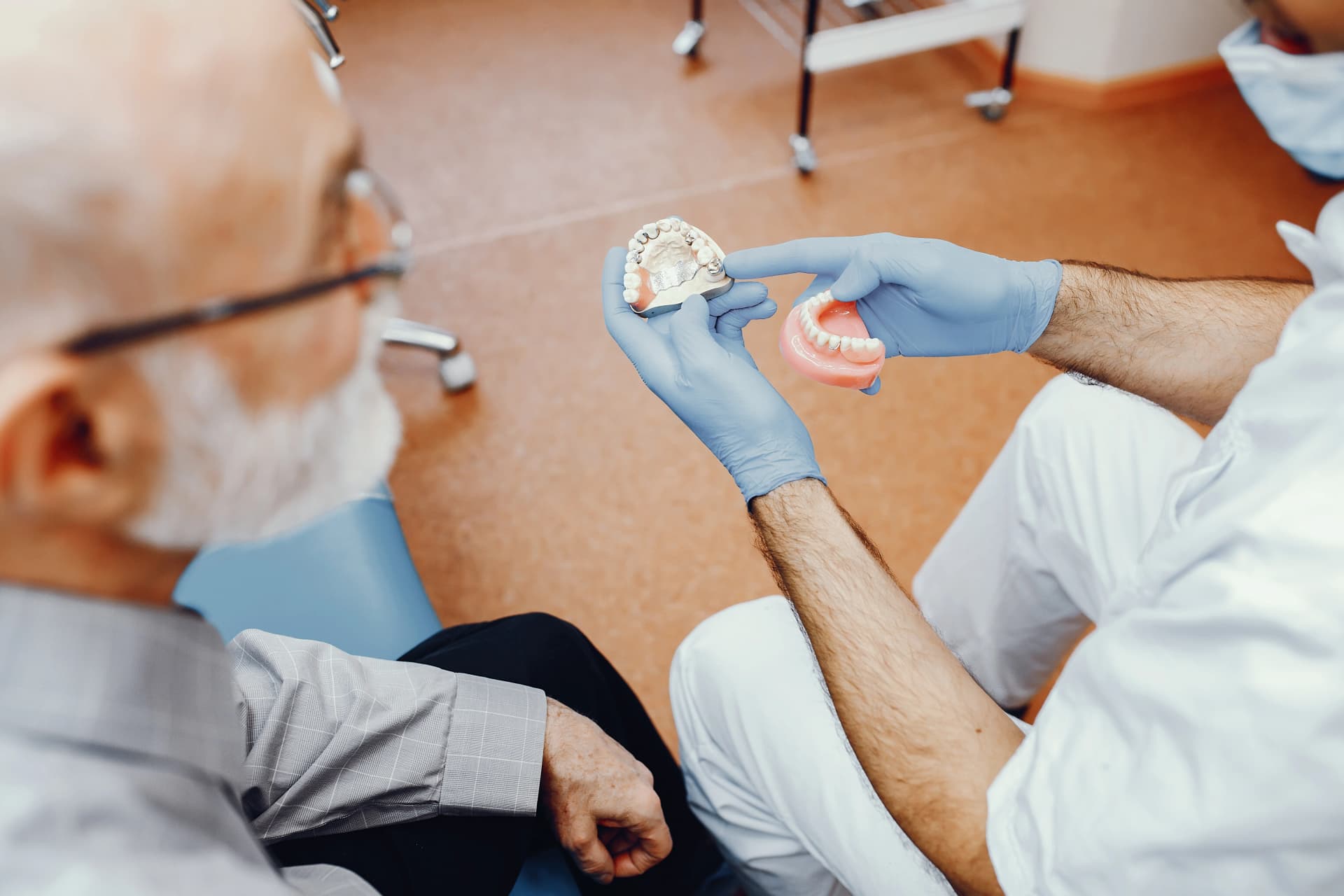
Featured Answer: Why upgrade from traditional dentures?
Implants anchor your prosthesis, reducing slipping and improving chewing. They help preserve bone and protect facial structure—delivering better function and confidence than adhesive‑dependent dentures.
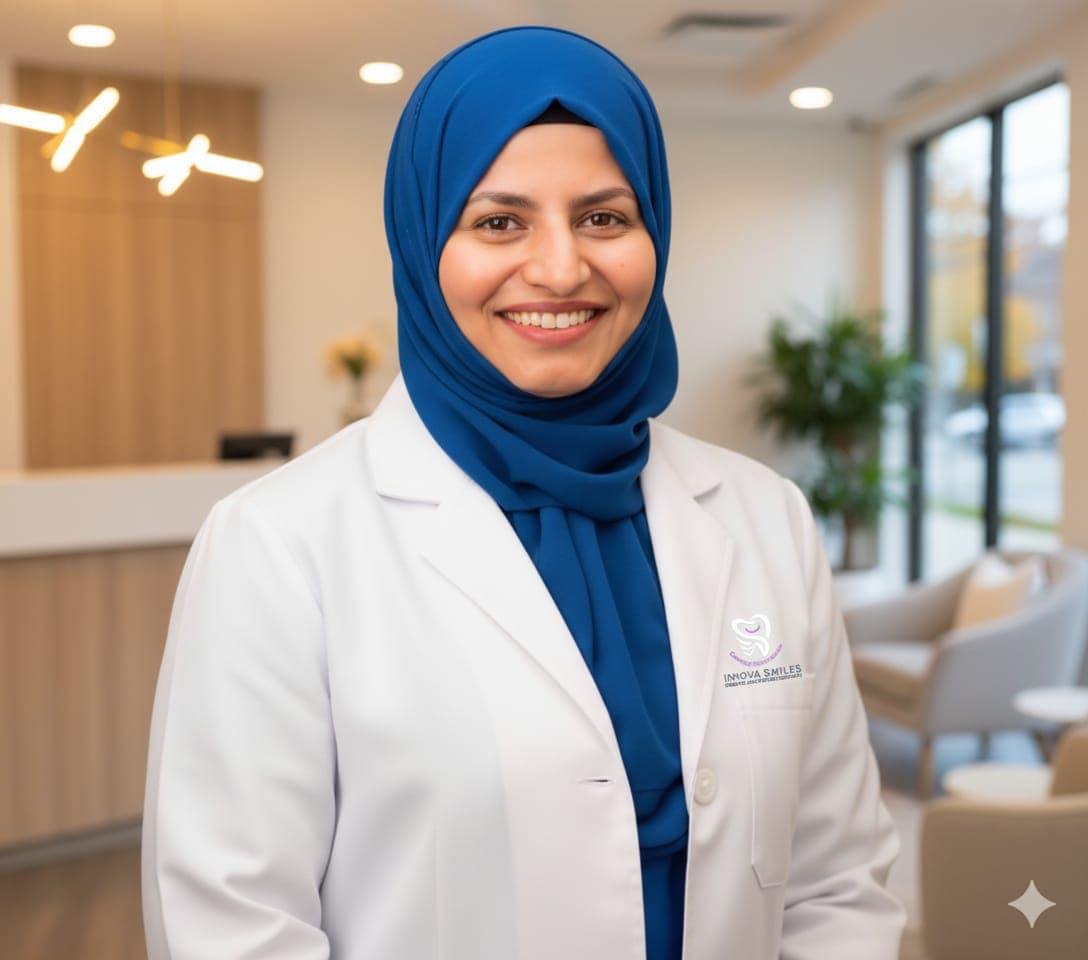
If you wear traditional dentures and find yourself dealing with slipping, sore spots, or a shrinking jawline, you are not alone. Many patients across Marlborough, MA and the MetroWest region visit Innova Smiles seeking a more stable, comfortable alternative. Dr. Ambereen Fatima helps patients understand the full spectrum of options, from traditional dentures to implant-supported solutions, so they can make an informed decision.
Problems with Traditional Dentures
- Movement and sore spots
- Adhesives and dietary limits
- Ongoing bone loss and changing fit
Traditional dentures rest on the gum ridge and rely on suction or adhesive for retention. Over time, the jawbone beneath the denture resorbs because it no longer receives stimulation from tooth roots. This bone loss causes the denture to fit more loosely, requiring frequent relining and eventually a complete remake. Many long-term denture wearers from Northborough, Southborough, and surrounding communities report that their dentures fit well initially but become increasingly problematic within a few years.
Implant-Supported Solutions
- Overdentures: Removable prosthesis that snaps onto implants
- Fixed full‑arch: Non‑removable bridge supported by multiple implants
Implant Overdentures
An overdenture snaps onto two to four implants using attachment systems such as locators or bar clips. The denture is still removable for cleaning, but it stays firmly in place during eating and speaking. This option is often more affordable than a fixed bridge and dramatically improves stability compared to a conventional denture.
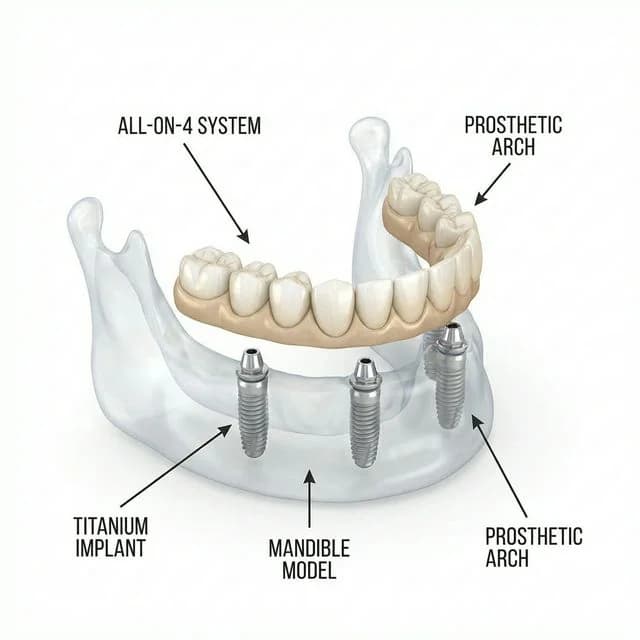
Fixed Full-Arch Bridges (All-on-4)
A fixed full-arch bridge is permanently attached to four or more implants and can only be removed by your dentist. It feels and functions much more like natural teeth, eliminating the need for adhesives entirely. Patients who choose this option often describe it as life-changing.
Side-by-Side Comparison
| Factor | Traditional Dentures | Implant Overdentures | Fixed Full-Arch |
|---|---|---|---|
| Stability | Low to moderate | High | Highest |
| Bone preservation | None | Moderate | Best |
| Chewing efficiency | 20–25% of natural | 60–80% of natural | 85–95% of natural |
| Adhesive required | Often | No | No |
| Removable | Yes | Yes (for cleaning) | No |
| Typical lifespan | 5–8 years | 15+ years (prosthesis) | 15–25 years (prosthesis) |
| Approximate cost range | $1,000–$3,000 | $8,000–$15,000 | $20,000–$35,000 per arch |
Lifestyle Impact
The difference between dentures and implant-supported restorations extends well beyond the dental chair. Implant patients consistently report being able to eat foods they had given up, speaking more clearly without worrying about denture movement, and feeling more confident in social and professional settings.
Who Is a Candidate for the Upgrade?
Most denture wearers are candidates for implant-supported options, even those who have experienced significant bone loss. Bone grafting techniques can rebuild the jaw to support implants. A consultation with Dr. Fatima, including 3D CBCT imaging, will determine which solution best fits your anatomy, lifestyle, and budget. For a detailed look at the cost factors involved, read our guide to the real cost of dental implants in Massachusetts.
E‑E‑A‑T: Full‑arch planning requires advanced surgical and prosthetic training. Dr. Fatima’s FICOI/FAAIP background supports precise outcomes.
Internal Links
- Learn about implants → Dental Implants
- Explore restorative options → Tooth Repair & Restoration
- Get started → Contact Innova Smiles
Ready to stabilize your smile? Call (508) 481‑0110 or request a consultation.