
Redefining "Affordable" in Modern Dentistry
If you have recently suffered through a severe toothache, lost a filling while eating lunch on Main Street, or simply realized that it has been five years since your last cleaning, your first instinct was likely to open your phone and search for an "affordable dentist Marlborough MA."
You are not alone in that search. The ADA Health Policy Institute's 2024 survey found that 40 percent of American adults cited cost as the primary barrier to seeking dental care, and MetroWest Massachusetts is no exception. With the cost of living in Middlesex County consistently ranking above the national average, balancing a household budget is difficult. When unexpected medical or dental expenses arise, price sensitivity is entirely natural and completely justified.
However, the dental industry has a harsh reality that every patient must understand to protect themselves: nothing is more expensive than cheap dentistry. The ADA consistently emphasizes that preventive care is the most cost-effective approach to dental health, with every dollar invested in prevention saving an estimated $8 to $50 in restorative treatment down the line. A study published in the Journal of Dental Research (2016) quantified this further, finding that patients who maintained regular preventive visits spent 31 percent less on total dental care over a 10-year period compared to patients who visited only for emergencies.
At Innova Smiles, we believe that high-quality dental care must be accessible. We also believe in radical transparency. In this guide, we explain exactly how insurance corporations and volume-driven dental chains manipulate the concept of "affordability"--and how investing in quality preventive care at a private practice actually saves you thousands of dollars over your lifetime.
The Dangerous Trap of the Cheap Dentist Near Me
The internet is saturated with aggressive marketing from massive dental support organizations (DSOs) and corporate clinics promising "free exams," "$29 cleanings," and impossibly cheap dental crowns. A 2023 report by the ADA's Health Policy Institute found that DSOs now account for approximately 35 percent of all dental practices in the United States, up from 8 percent just a decade ago. That rapid consolidation is driven by private equity investment, not by improvements in patient care.
When a clinic heavily discounts their upfront services to a fraction of the market rate, they must compensate for that loss elsewhere. This high-volume, low-margin business model inevitably results in a rushed environment that compromises your health and your wallet in three specific ways:
1. Over-Treatment and Up-Selling
When a corporation loses money on a heavily advertised $29 cleaning, the dentists working there are placed under production quotas--documented in a 2022 Journal of the American Dental Association editorial on corporate dentistry ethics. A tiny arrested stain that a private practitioner like Dr. Fatima would simply monitor with annual X-rays suddenly becomes a "mandatory" filling. An old, perfectly functional silver amalgam filling is deemed a "fracture risk" requiring a $1,300 crown. You walk in for a cheap cleaning and walk out with a $4,000 treatment plan that may not reflect what your teeth actually need.
A 2020 investigation by the Senate Finance Committee found that one major DSO chain had systemically pressured dentists to perform unnecessary procedures, particularly on pediatric Medicaid patients. The incentive structure at volume clinics--where associate dentist compensation is tied to production rather than patient outcomes--creates a fundamental conflict of interest that private practices do not share.
2. Inferior Materials and Outsourced Labs
High-quality composite resins, zirconia ceramics, and premium titanium implants are inherently expensive to manufacture. Volume clinics frequently reduce overhead by purchasing cheaper bonding agents, using overseas dental labs that produce crowns with subpar alloys, and selecting the lowest-cost implant systems available regardless of clinical track record.
A "cheap" filling that leaks bacteria three months later and triggers a root canal infection is not a bargain. A budget crown manufactured with inferior ceramic that fractures when you bite into an almond requires total replacement at full cost. A study in Clinical Oral Implants Research (2019) found that discount implant systems with limited clinical data had failure rates up to three times higher than established, research-backed implant brands over a five-year follow-up.
At Innova Smiles, we use IPS e.max and BruxZir zirconia for our CEREC crowns--materials with published 10-year survival rates exceeding 95 percent. Our dental implants are placed using Straumann and Nobel Biocare systems, which collectively represent over 60 years of longitudinal clinical data and peer-reviewed research.
3. The Five-Minute Appointment
Time is the most valuable resource in a medical setting. A volume clinic cannot afford to let a dentist spend 45 minutes reviewing your 3D X-rays, discussing your sleep apnea symptoms, or answering your questions about clear aligner therapy. You are rotated through a dental chair in minutes--anxious and unheard.
At Innova Smiles, new patient appointments are 60 to 90 minutes. Follow-up treatment visits are scheduled with appropriate time so Dr. Fatima can work without rushing. The difference is measurable: a rushed crown preparation that does not achieve adequate margins leads to recurrent decay within 3 to 5 years. A carefully prepared crown lasts 15 to 25 years. The "fast" appointment costs you more in the long run.
The Preventive Principle: How to Actually Save Thousands
The ultimate secret to affordable dentistry is simple: the cheapest cavity to fill is the one you never get.
When evaluating the true cost of low cost dental care in Massachusetts, you must shift your perspective from short-term transaction cost to long-term preventive value. Our entire clinical philosophy at Innova Smiles is to identify small issues before they become expensive emergencies.
Consider the trajectory of a single cavity:
- If we catch it early during a routine exam and digital X-ray, it requires a composite filling costing $200 to $350.
- If you avoid the dentist to save money, that cavity silently progresses into the nerve of the tooth over 12 to 18 months.
- One night, you wake up in severe pain. You are now forced to pay for an emergency exam ($150 to $250), a root canal ($1,000 to $1,500), a post and core buildup ($300 to $500), and a full porcelain crown ($1,200 to $1,800). A $200 prevention just became a $2,650 to $4,050 crisis.
The math scales dramatically for patients with multiple neglected teeth. We regularly see patients from Framingham, Hudson, and Westborough who delayed care for financial reasons and now face treatment plans in the $10,000 to $20,000 range--treatment that would have cost under $2,000 if addressed incrementally over the preceding years.
The Cost of Gum Disease
Tooth decay is not the only financial risk. The CDC reports that 47.2 percent of American adults aged 30 and older have some form of periodontal disease. Left untreated, gum disease destroys the bone that supports your teeth, eventually leading to tooth loss. Replacing a single missing tooth with a dental implant costs $3,500 to $6,000. Replacing a full arch costs $15,000 to $30,000.
Compare that to the cost of prevention: two professional cleanings per year ($200 to $400 total) plus a deep cleaning if early gum disease is detected ($600 to $1,200 per quadrant, often covered at 70 to 80 percent by PPO insurance). The Journal of Periodontology (2014) published a cost-effectiveness analysis showing that patients who received consistent periodontal maintenance spent an average of $6,000 less on dental care over a 20-year period compared to patients who received no regular maintenance.
The Systemic Health Connection
Chronic oral infections do not stay in your mouth. A growing body of research links periodontal disease to systemic conditions including cardiovascular disease, Type 2 diabetes complications, adverse pregnancy outcomes, and Alzheimer's disease. A landmark 2020 study in Science Advances identified the periodontal pathogen Porphyromonas gingivalis in the brain tissue of Alzheimer's patients, and a 2019 meta-analysis in the Journal of Clinical Periodontology found that patients with periodontitis had a 1.5 times higher risk of cardiovascular events.
Investing in preventive dental care is not just about saving money on fillings and crowns. It is about protecting your overall health--which has its own profound financial implications in medical costs, lost work days, and quality of life.
Breaking Free from Insurance Limitations
Another significant barrier to accessing an affordable dentist in Marlborough relates directly to the limitations of traditional PPO dental insurance.
Corporate dental insurance is not designed like medical insurance; it does not protect you against catastrophic loss. It is a restricted pre-payment benefit with hard caps. According to the NADP, the average annual maximum for PPO dental plans is approximately $1,500--a figure that has barely increased since the 1970s. Adjusted for inflation, a $1,000 annual maximum in 1970 would equal roughly $8,000 in 2026 dollars. The fact that maximums have remained stagnant while dental treatment costs have risen with inflation means that insurance covers a shrinking percentage of actual treatment needs with each passing decade.
Furthermore, insurance carriers routinely deny coverage for procedures that your dentist has determined are medically necessary. They impose 12-month waiting periods for major services on new plans, enforce "missing tooth clauses" that refuse to cover replacement of teeth lost before your plan's effective date, and use "least expensive alternative treatment" (LEAT) policies to reimburse for a cheaper procedure even when a better option is clinically indicated.
A study published in the Journal of the American Dental Association (2018) found that 30 percent of dental insurance claims for crowns and bridges were initially denied or down-coded by insurers, requiring appeals that delayed treatment by an average of 45 days. That delay can mean the difference between saving a tooth and losing it.
The Innova Smiles In-House Membership Solution
We realized that relying on a broken insurance system to provide affordable care to our MetroWest patients was unsustainable.
To eliminate the red tape entirely, we created the Innova Smiles In-House Membership Plan. If you are tired of paying monthly premiums to Delta Dental or Blue Cross Blue Shield only to face rejected claims and restrictive annual caps, our plan provides a straightforward alternative.
For a single, flat annual fee, your preventive health is fully covered. The membership includes your two annual exams, two preventive cleanings, all necessary diagnostic X-rays (bitewings and panoramic), and oral cancer screening.
Most importantly, it provides an immediate, meaningful percentage discount off every other procedure we offer--from a composite filling to advanced porcelain veneers, from a simple extraction to a full-arch implant reconstruction.
- No Annual Maximum limits. Need $5,000 of work? Your discount applies to every dollar.
- No Waiting Periods. Need a crown today? The discount applies today.
- No Pre-Existing Condition denials. Missing a tooth from 10 years ago? Covered.
- No Deductibles. Your savings begin with your very first procedure.
- No Claim Forms. No calling the insurance company. No appeals. No denied claims.
You pay for exactly the care you need, directly to the doctor providing it, at a reduced rate with complete transparency. Patients from Southborough, Northborough, Shrewsbury, and throughout the I-495 corridor have found that our membership plan costs less annually than many PPO premiums while providing broader coverage and zero administrative frustration.
What Affordable Dentistry Actually Looks Like: A Cost Comparison
To illustrate the real-world financial difference between prevention-focused care and emergency-driven care, consider two hypothetical patients over a five-year period:
Patient A: Regular Preventive Care
- 10 cleanings and exams: $2,000 (or covered by insurance/membership)
- 2 small fillings caught early: $500
- 1 night guard for grinding: $400
- Total 5-year cost: $2,900
Patient B: Emergency-Only Visits
- 2 emergency exams for acute pain: $400
- 1 root canal + crown (neglected cavity): $3,000
- 1 extraction + implant (fractured tooth): $5,000
- 1 deep cleaning for advanced gum disease (4 quadrants): $2,400
- Total 5-year cost: $10,800
Patient B spent 3.7 times more than Patient A, endured significantly more pain and time in the dental chair, and still has less healthy teeth. This pattern is not hypothetical--it reflects what we observe in our Marlborough practice regularly.
Financing Options for Larger Treatment Plans
Even with insurance or our membership plan, some treatments represent a significant investment. We offer several financing options to make necessary care accessible:
- CareCredit: 0 percent APR for 6, 12, 18, or 24 months on qualifying purchases. Monthly payments spread the cost of a crown, implant, or orthodontic treatment into manageable installments.
- Cherry Financing: Similar 0 percent APR terms with a quick, soft-credit-check application process that does not affect your credit score.
- Phase treatment across insurance years: For patients with PPO coverage, we strategically schedule multi-phase treatments (like implants or multiple crowns) across calendar years to maximize dental insurance benefits and double the insurance contribution.
- FSA and HSA funds: Most dental procedures qualify for tax-advantaged spending through your employer's Flexible Spending Account or Health Savings Account. Paying with pre-tax dollars saves you 25 to 35 percent depending on your tax bracket.
The Premium Difference You Can Trust
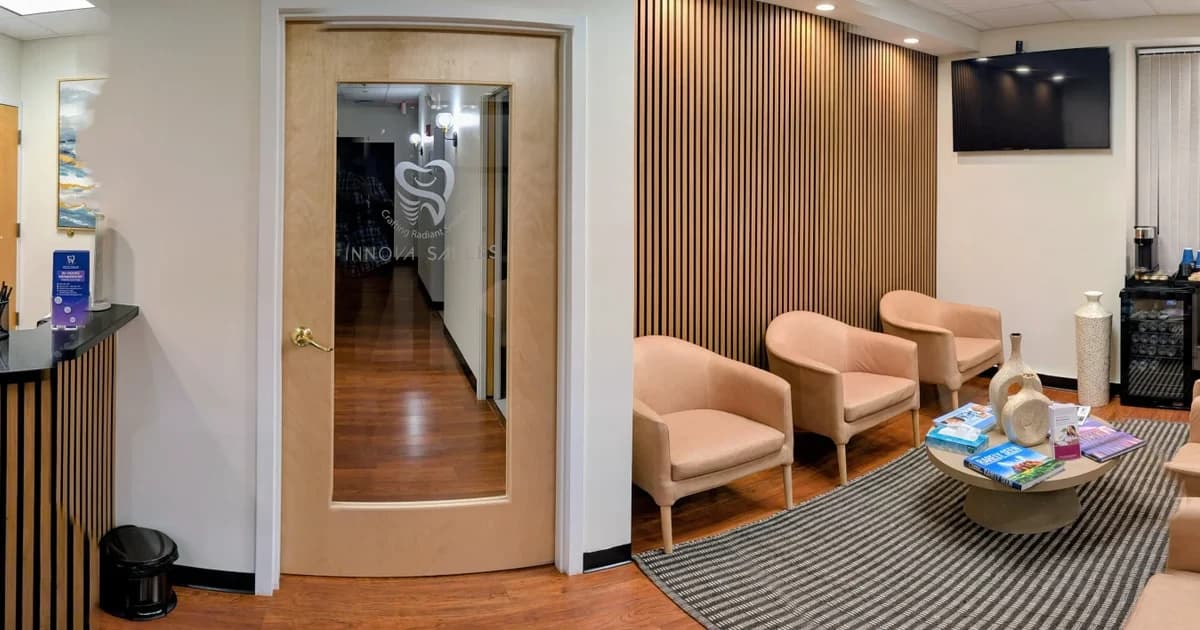
When you walk into our Marlborough office at 340 Maple St, Suite 100, you are not entering a frantic, chaotic waiting room attached to a production mill. You are entering a deliberately paced environment where you have Dr. Fatima's full, undivided attention. Dr. Fatima's Fellowship in the International Congress of Oral Implantologists (FICOI) and Fellowship in the American Academy of Implant Prosthodontics (FAAIP) reflect a commitment to advanced training that translates directly into better outcomes for your teeth.
We use 5D CBCT technology--three-dimensional cone-beam imaging that reveals bone density, nerve canal locations, and tooth root anatomy with sub-millimeter precision. This eliminates guesswork. We use CEREC same-day crown technology to mill ceramic restorations from solid blocks of lithium disilicate and zirconia right in our office, eliminating the need for temporary crowns and second appointments.
Our restorations are fabricated to blend seamlessly with your natural anatomy, fit precisely on day one, and seal the tooth for decades. A crown placed correctly the first time does not need replacement in five years. An implant placed with 3D-guided surgery does not fail due to poor angulation. When you invest your money at Innova Smiles, you are investing in getting it done right the first time--and that is always the most affordable path.
Ready to take control of your dental budget? Call our Marlborough office at (508) 481-0110 to discuss activating your In-House Membership Plan today, or use our online booking portal to schedule your comprehensive exam. New patient appointments are available this week. Patients from Grafton, Sudbury, Berlin, and throughout MetroWest are welcome.
Related Articles
- Finding a Dentist That Accepts Delta Dental
- Dental Insurance Waiting Periods: What to Know
- How to Choose a Dentist in Marlborough