The CPAP Alternative: A New Era of Quiet, Restful Dental Sleep Medicine
If you have been diagnosed with Obstructive Sleep Apnea (OSA) or suffer from severe, chronic snoring, you are likely intimately familiar with the "gold standard" medical recommendation: the Continuous Positive Airway Pressure (CPAP) machine.
While CPAP therapy is highly effective at keeping airways open, the reality of living with the machine is often frustrating. For millions of patients, trying to sleep while tethered to a noisy machine, dealing with a claustrophobic mask, tangled hoses, and the constant blowing of dry air makes getting a restful night of sleep seemingly impossible.
If your CPAP has ended up gathering dust in the closet, you are experiencing "CPAP intolerance." You are not alone, and you are not out of options. At Innova Smiles in Marlborough, we offer a scientifically proven, comfortable, doctor-directed alternative: Oral Appliance Therapy (OAT).
The Hidden Dangers of Untreated Sleep Apnea
Giving up on your CPAP and simply ignoring sleep apnea is not a viable strategy. Obstructive Sleep Apnea occurs when the muscles in the back of your throat relax too much during sleep, allowing the tissue to collapse and block your airway. This momentarily stops your breathing, causing your brain to jolt you awake just enough to gasp for air. This cycle can happen dozens or hundreds of times a night.
Because you never achieve deep, restorative REM sleep, the immediate symptom is chronic daytime exhaustion, brain fog, and irritability. However, the long-term systemic dangers are far more severe. The constant drops in blood oxygen levels put immense stress on your cardiovascular system.
According to the American Academy of Sleep Medicine, untreated OSA radically increases your risk for:
- Hypertension (Chronic high blood pressure)
- Heart arrhythmias and severe heart failure
- Strokes
- Type 2 Diabetes complications
- Severe cognitive decline and memory issues
Treating your apnea isn't just about feeling less tired at work; it is about extending your lifespan and protecting your heart.
Understanding the AHI Scale: How Severe Is Your Sleep Apnea?
Sleep apnea severity is measured by the Apnea-Hypopnea Index (AHI), which counts the number of times your breathing stops or becomes significantly shallow per hour of sleep:
- Normal: AHI below 5 events per hour
- Mild OSA: AHI 5 to 15 events per hour
- Moderate OSA: AHI 15 to 30 events per hour
- Severe OSA: AHI above 30 events per hour
A patient with moderate OSA at an AHI of 20 stops breathing approximately 160 times during an eight-hour sleep period. Each event triggers a spike in blood pressure and a brief awakening that fragments sleep architecture. Over years, this repetitive cardiovascular stress takes a measurable toll. A 2019 longitudinal study in the American Journal of Respiratory and Critical Care Medicine followed 6,400 patients for 11 years and found that untreated moderate-to-severe OSA doubled the risk of fatal cardiovascular events compared to matched controls.
These are the patients we see at Innova Smiles. Professionals commuting along the I-495 corridor and Route 9 who have been diagnosed, received a CPAP, and stopped using it. Their apnea did not disappear -- it just went back to being untreated.
Why Patients Are Choosing Oral Appliance Therapy
Oral Appliance Therapy (OAT) shifts the approach of sleep medicine away from forced air and toward anatomical repositioning. The American Academy of Dental Sleep Medicine recognizes OAT as an effective first-line treatment for mild to moderate OSA. Here is why so many patients in MetroWest are making the switch.
1. Completely Silent and Partner-Friendly
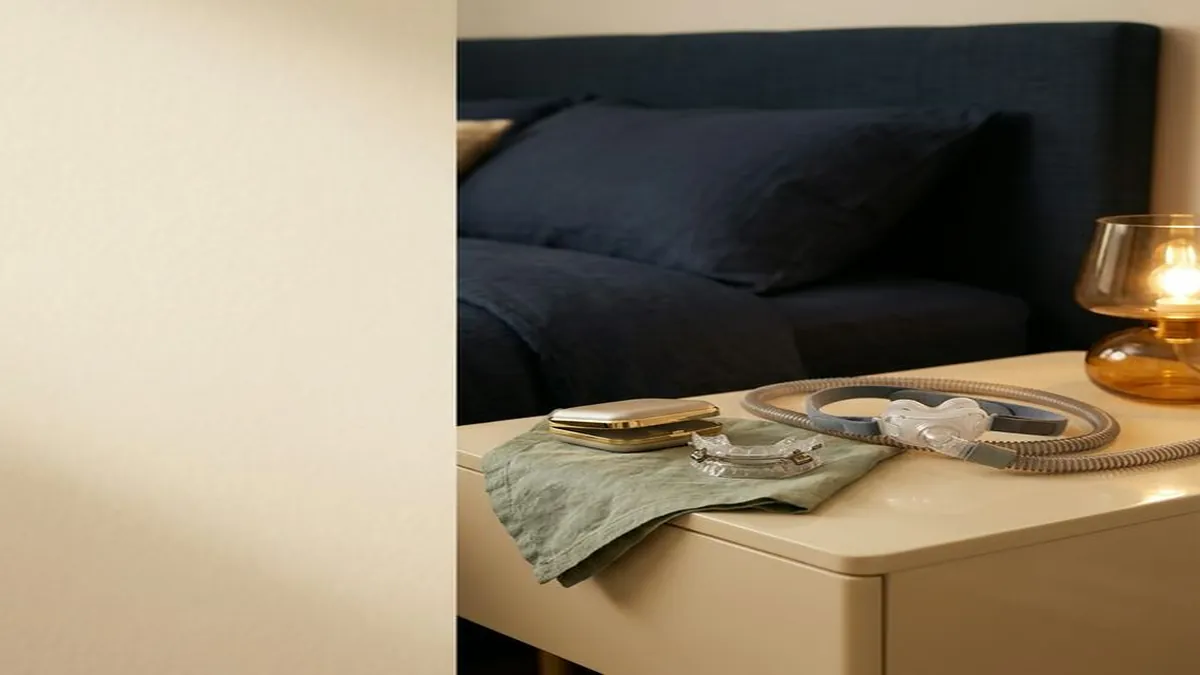
Unlike the persistent rhythmic hum of a CPAP motor and the whooshing of forced air, an oral appliance makes zero noise. It is a small, custom-fabricated acrylic device that resembles a clear sports mouthguard or an orthodontic retainer. You simply snap it over your teeth before bed. There are no power cords, no blinking lights, and no masks. This means both you and your bed partner can finally sleep in total silence.
The partner factor is significant. A 2020 survey published in the Journal of Clinical Sleep Medicine found that bed partners of CPAP users reported their own sleep quality was disrupted by machine noise in 43% of cases. When those patients switched to OAT, partner sleep satisfaction improved by an average of 36%. In many households, untreated sleep apnea has forced couples into separate bedrooms. OAT often brings them back together.
2. How the Science Works
The mechanism is simple and effective. The two-piece appliance is custom-calibrated by Dr. Fatima to gently hold your lower jaw slightly forward while you sleep. By advancing the mandible, the appliance naturally pulls the tongue and soft palate forward as well, preventing those tissues from collapsing backward into the throat. Your airway remains structurally open all night, allowing for smooth, unobstructed breathing.
The degree of mandibular advancement is measured in millimeters and titrated over several weeks. Most patients require 6 to 10 mm of advancement to achieve therapeutic results. Dr. Fatima starts conservatively and adjusts the appliance incrementally at follow-up visits, using symptoms, partner feedback, and follow-up sleep testing to find the optimal setting. A 2018 meta-analysis in Sleep Medicine Reviews analyzed 67 randomized trials and found that OAT reduced AHI by an average of 13.6 events per hour -- enough to move most mild-to-moderate patients into the normal range.
3. Dramatically Higher Compliance Rates
In the medical community, the "best" treatment is useless if the patient refuses to use it. Research published in the Journal of Clinical Sleep Medicine confirms that CPAP compliance rates are notoriously low, with up to half of all patients abandoning the machine within the first year. Medicare defines CPAP compliance as using the device for at least four hours per night on at least 70% of nights -- a surprisingly low bar that many patients still cannot meet.
Compliance rates for Oral Appliance Therapy, by contrast, are high. A 2021 study in Sleep and Breathing reported that 76% of OAT patients wore their appliance every night for the full sleep duration, compared to 46% of CPAP users meeting the minimum compliance threshold. Because the device is small, non-claustrophobic, and comfortable, patients actually wear it consistently throughout the entire night. Because it is used consistently, the long-term health benefits and reductions in cardiovascular risk are often vastly superior to an unused CPAP machine in the closet.
The clinical implication: a treatment that works at 80% effectiveness but is used 90% of the time delivers better real-world outcomes than a treatment that works at 100% effectiveness but is used 40% of the time. This is why the American Academy of Sleep Medicine updated its practice guidelines to endorse OAT as a first-line treatment, not just a backup for CPAP failure.
4. Travel Conducive
If you travel for work along the East Coast or take frequent vacations, traveling with a CPAP is a massive burden. You have to haul a bulky carrying case through TSA, deal with specific distilled water requirements, and ensure you always have access to an electrical outlet near your bed.
Our oral appliances fit right into a pocket-sized retainer case. From cross-country flights to camping in the White Mountains, you can bring your sleep therapy anywhere without thinking about it. There is no water reservoir to fill, no filter to replace, no power supply to pack. For the many patients in Westborough, Hudson, and Shrewsbury who travel regularly for work, this portability is often the deciding factor.
The Bruxism-Sleep Apnea Connection
Research increasingly shows that teeth grinding (bruxism) and sleep apnea frequently coexist. A 2023 study in Sleep found that 30-40% of patients with OSA also exhibit sleep bruxism. The proposed mechanism is that the brain triggers jaw clenching as a reflexive attempt to tighten the airway muscles and restore airflow during an apneic event.
This overlap matters because patients who grind their teeth at night and also snore heavily may have undiagnosed sleep apnea driving both conditions. A standard night guard protects the teeth from grinding damage but does nothing for the airway obstruction. An oral appliance for sleep apnea, however, can address both problems simultaneously by advancing the jaw and preventing airway collapse -- which may reduce the grinding reflex at its source.
At Innova Smiles, Dr. Fatima screens every bruxism patient for sleep apnea risk factors. If the clinical picture suggests both conditions, we coordinate with a sleep physician for a formal sleep study before recommending the appropriate appliance.
The Innova Smiles Approach: Precision Without the Goop
Getting an oral appliance for sleep apnea used to require uncomfortable, messy putty impressions that triggered gag reflexes. Not anymore.
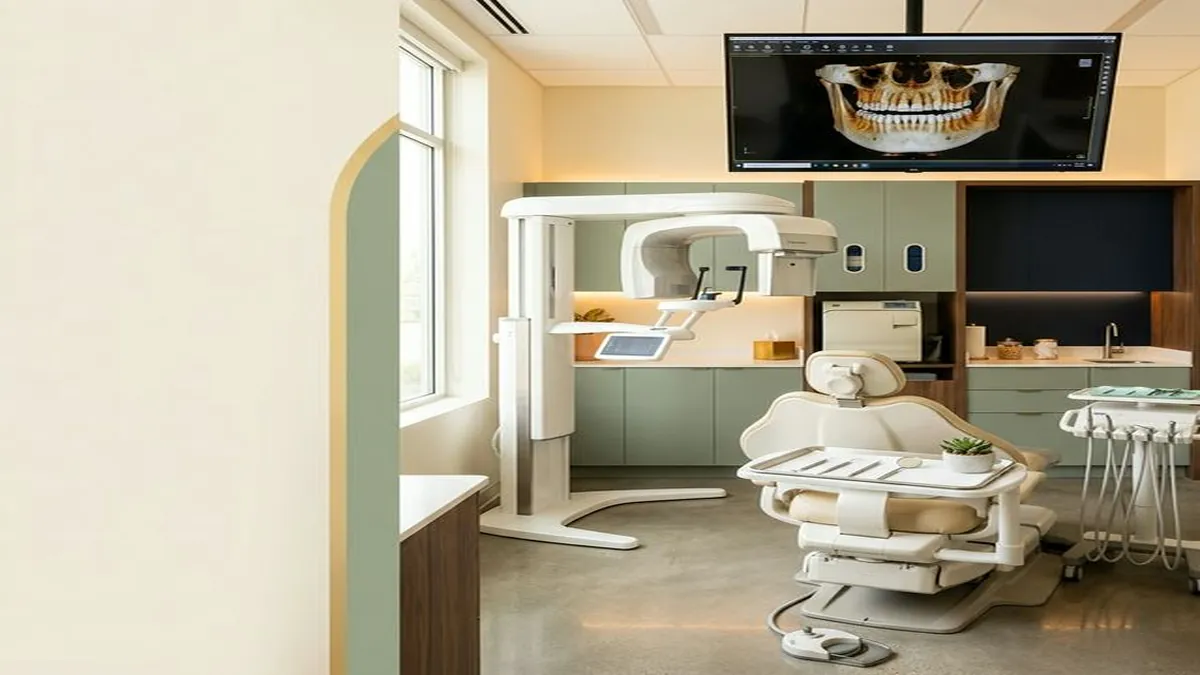
At Innova Smiles, we use our TRIOS 5 digital scanner. During your sleep consultation, our assistant will quickly wave a digital wand over your teeth, generating a perfect, high-definition 3D map of your mouth in minutes.
That digital file goes directly to a specialized sleep laboratory. The resulting appliance fits your dental anatomy precisely, which means it is comfortable to wear nightly and does not put unnecessary stress on your teeth or TMJ.
The OAT Treatment Process: Step by Step
Here is what the full treatment journey looks like at Innova Smiles:
- Initial consultation: Dr. Fatima reviews your sleep study results (or refers you for one if you have not yet been tested), evaluates your airway anatomy, and assesses your dental and TMJ health. Not every patient is a candidate -- patients with fewer than 8 healthy teeth, severe periodontal disease, or active TMJ disorder may need alternative approaches.
- Digital scanning: The TRIOS 5 scanner captures your dental anatomy in under five minutes. No putty, no gagging.
- Appliance fabrication (2-3 weeks): The digital file goes to a specialized sleep lab where your custom appliance is precision-milled. We use FDA-cleared, titratable (adjustable) appliances that allow incremental advancement.
- Delivery and calibration: At your fitting appointment, Dr. Fatima sets the initial mandibular advancement position and teaches you how to insert, remove, and clean the appliance. You also receive a morning jaw exercise protocol to prevent any temporary stiffness.
- Titration visits (2-4 visits over 4-8 weeks): We gradually increase the advancement until symptoms resolve and your bed partner confirms that snoring has stopped. Each adjustment is 0.5-1.0 mm.
- Follow-up sleep testing: Once optimal positioning is achieved, we coordinate with your sleep physician for a follow-up sleep study (often a home test) to confirm that your AHI has dropped to the therapeutic range.
- Annual maintenance: Ongoing monitoring includes checking appliance wear, verifying bite stability, and ensuring the device remains effective.
Is Oral Appliance Therapy Right for You?
Oral Appliance Therapy is an FDA-approved, first-line treatment for patients diagnosed with mild to moderate Obstructive Sleep Apnea. It is also frequently approved for patients with severe OSA who are documented as physically unable to tolerate a CPAP machine.
Furthermore, if you suffer from severe, chronic snoring that disturbs your partner--but you have tested negative for clinical apnea--a custom oral appliance is often the ultimate solution.
Please Note: OAT therapy requires coordination with a sleep physician. If you haven't had a sleep study, we can help facilitate one (often done comfortably in your own bed at home). If you already have a diagnosis and a CPAP intolerance, we can work directly with your medical doctor to transition you to an appliance.
Frequently Asked Questions About Oral Appliance Therapy
Is OAT covered by insurance? Yes, in many cases. Because sleep apnea is a medical condition, oral appliance therapy is typically billed through medical insurance rather than dental insurance. Many PPO and Medicare plans cover OAT when prescribed by a sleep physician for diagnosed OSA. Our team assists with prior authorization and insurance coordination.
How long does the oral appliance last? A well-maintained custom oral appliance typically lasts 3 to 5 years. Dr. Fatima checks the fit and condition of your appliance at regular follow-up visits and can order a replacement when wear is detected.
Can OAT be combined with CPAP? Yes. For patients with severe OSA, combination therapy -- using both an oral appliance and CPAP at a reduced pressure setting -- can improve comfort and compliance. The lower CPAP pressure required when used in combination is often tolerated much better than standard pressure settings. A 2020 study in Sleep found that combination therapy reduced required CPAP pressure by an average of 4 cm H2O, which significantly improved mask comfort and reduced air leak.
Will OAT cause jaw pain or bite changes? Some patients experience mild jaw stiffness for the first few mornings, which typically resolves within one to two weeks. Long-term studies published in the Journal of Clinical Sleep Medicine show that significant bite changes are uncommon when the appliance is properly fitted and monitored. Dr. Fatima adjusts the appliance incrementally to minimize side effects.
How do I know if I have sleep apnea? Common warning signs include loud snoring, observed breathing pauses during sleep, waking up gasping or choking, excessive daytime sleepiness, morning headaches, and difficulty concentrating. If your bed partner has mentioned any of these, a sleep study is warranted. Modern home sleep tests are simple -- you wear a small device on your finger and chest for one night in your own bed, and the data is interpreted by a board-certified sleep physician.
Is OAT effective for snoring even without sleep apnea? Yes. Oral appliances are highly effective for primary snoring (snoring without apnea). By advancing the mandible and opening the airway, the appliance eliminates the tissue vibration that causes snoring in most patients. Many couples report that an oral appliance has transformed their sleep quality even when the AHI was within the normal range.
Reclaim Your Rest in Marlborough
You do not have to choose between heart health and a comfortable night's sleep. Modern dental sleep medicine offers a pathway out of the exhaustion. Patients from Framingham, Sudbury, Northborough, and across MetroWest are discovering that a small, silent appliance can replace the machine they could never tolerate.
- Learn more about our approach → Sleep Apnea Treatment at Innova Smiles
- Curious about financing your health? → Insurance & Financing Options
Ready to wake up refreshed and leave the hoses behind? Call Innova Smiles today at (508) 481-0110 or book your consultation online to see if the CPAP alternative is right for you.
Related Articles
- Teeth Grinding and Night Guards Guide
- Jaw Pain and Night Guards: TMJ Relief Guide
- The Link Between Oral Health and Overall Wellness
- 7 Warning Signs of Sleep Apnea You Should Not Ignore
- TMJ Treatment Options: From Night Guards to wrinkle-relaxer treatment Therapy