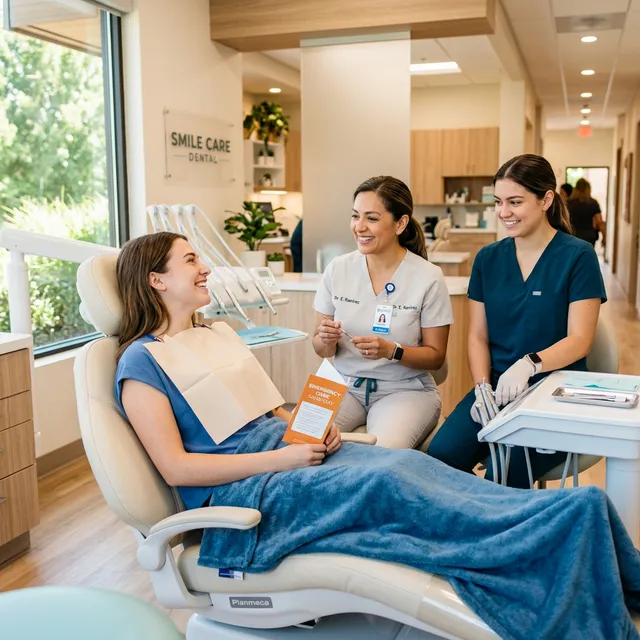

Require Immediate Dental Attention? A fast, accurate diagnosis is the key to preserving your smile during an emergency. Call (508) 481-0110 for urgent evaluation.
True Urgent Care Demands Advanced Triage
The American Dental Association (ADA) defines a dental emergency as acute, unmanageable pain, active uncontrollable bleeding, or a severe, spreading infection that threatens the patient's overall health and airway. When facing these severe symptoms, generic dental care is not enough, you need clinical precision and immediate action.
For patients in Hopkinton, MA, choosing a practice equipped with the right clinical technology and same-day availability is essential to stop the pain and save the affected teeth. Innova Smiles in Marlborough is a short drive from Hopkinton, roughly 15 minutes via Route 85 North, and our emergency protocols are built for exactly these situations.
4 Signs You Need Urgent Dental Care Immediately
Do not delay or attempt to "tough out" the pain if you experience any of the following symptoms:
- A Pimple-Like Bump on the Gum (Fistula): This small, painful bump near the root of an infected tooth is a pathway for pus draining from a serious abscess. This infection is actively destroying jawbone and requires immediate intervention.
- Facial Cellulitis: Rapid swelling that spreads from the jaw into the cheek, eye socket, or down into the neck. This indicates a severe, spreading bacterial infection that can rapidly become life-threatening if it compromises the airway.
- Spontaneous, Throbbing Pain: Pain that occurs without any stimulus (not just from chewing or drinking cold liquids) and throbs in time with your heartbeat is a classic indicator that the inner nerve of the tooth is dying and irreversibly infected.
- A Knocked-Out Adult Tooth: The American Association of Endodontists (AAE) emphasizes that a permanent tooth that has been cleanly knocked out must be re-implanted within 60 minutes for a high chance of survival.
Medical Disclaimer: If dental swelling begins to restrict your breathing, affects your ability to swallow, or causes your eye to swell shut, call 911 or proceed to the nearest hospital emergency department immediately. This is a medical emergency requiring IV antibiotics.
Specific Emergency Types and Exactly What to Do
Different dental emergencies require different immediate responses. Here is a detailed guide for each common scenario.
Knocked-Out Tooth (Dental Avulsion)
A knocked-out permanent tooth is the most time-sensitive dental emergency. The periodontal ligament cells on the root surface begin dying within 15 minutes of the tooth leaving the socket, and reimplantation success drops sharply after 60 minutes. According to the International Association of Dental Traumatology, a tooth reimplanted within 5 minutes has a 85–97% long-term survival rate; that number falls below 50% after 60 minutes.
Immediate steps:
- Pick up the tooth by the crown (white part) only, never touch the root
- If the root is dirty, rinse it gently under running water for no more than 10 seconds. Do not scrub, do not use soap, do not wrap it in tissue
- Try to place the tooth back in the socket yourself. Bite down gently on a clean cloth to hold it in place. This is the single best thing you can do.
- If you cannot reimplant the tooth, store it in one of these solutions (ranked by effectiveness): Hank's Balanced Salt Solution (available in Save-A-Tooth kits at many pharmacies), cold milk, saliva (hold it between your cheek and gum), or saline solution. Never store a knocked-out tooth in water, it destroys the root surface cells
- Call (508) 481-0110 immediately and tell us you have an avulsed tooth. We will prioritize your appointment.
Important: This protocol applies only to permanent teeth. If a baby tooth is knocked out, do not reimplant it, doing so can damage the developing permanent tooth underneath. Bring the child in for evaluation, but do not attempt to put the tooth back.
Broken or Fractured Tooth
Tooth fractures range from minor chips to catastrophic breaks that expose the nerve. The treatment depends entirely on the severity.
Minor chip (enamel only): Not usually a true emergency, but schedule an appointment within a few days. Save any fragments — Dr. Fatima can sometimes bond them back into place. Cover sharp edges with dental wax or sugar-free gum to protect your tongue and cheeks.
Moderate fracture (into the dentin layer): The tooth will be sensitive to temperature and air. Cover the exposed area with dental wax or temporary dental cement (available at pharmacies in Hopkinton and throughout MetroWest). Take ibuprofen for pain. Call our office for a same-day or next-day appointment.
Severe fracture (nerve exposed, you may see a pink or red dot in the break): This is a true emergency. The exposed nerve will be extremely painful and is at immediate risk of infection. Cover the tooth with a damp gauze, take ibuprofen, and call us immediately. Treatment usually involves a root canal followed by a crown to save the tooth.
Root fracture (tooth feels loose but is not knocked out): The tooth may be mobile and painful to bite on. Do not wiggle it. Eat soft foods and avoid biting on that side. This requires 3D imaging to diagnose, standard X-rays often miss vertical root fractures. Our CBCT scanner can visualize root fractures that are invisible on conventional film.
Dental Abscess
A dental abscess is a pocket of pus caused by bacterial infection. Abscesses can form at the tip of the root (periapical abscess) or in the gum tissue alongside the root (periodontal abscess). Both are serious.
Warning signs:
- Constant, deep, throbbing pain that radiates to the jaw, ear, or temple
- A visible pimple-like bump on the gum that may ooze pus
- Swelling in the face or cheek
- Fever
- A foul taste in the mouth from draining pus
- Sensitivity to hot foods and drinks (a reliable indicator that the nerve is compromised)
What to do:
- Call (508) 481-0110 for a same-day appointment, abscesses do not resolve on their own and will worsen without treatment
- Rinse with warm salt water (half a teaspoon in eight ounces of water) to draw pus toward the surface and provide temporary relief
- Take ibuprofen (400–600 mg) for pain and inflammation. Acetaminophen (500–1000 mg) can be added alongside ibuprofen for stronger pain control
- Do not apply aspirin directly to the gum, this causes a chemical burn to the tissue
- Do not attempt to lance or drain the abscess yourself
Treatment at Innova Smiles: Dr. Fatima will drain the abscess, prescribe antibiotics if the infection is spreading, and determine whether the tooth can be saved with a root canal or requires extraction. Our 3D CBCT imaging reveals the exact extent of bone destruction, which standard X-rays frequently underestimate.
Lost Filling or Crown
A lost filling or crown exposes the underlying tooth structure, which is often weakened by the original decay or preparation. Without the protective restoration, the tooth is vulnerable to fracture, sensitivity, and further decay.
What to do:
- Save the crown if you still have it, in many cases, we can recement it
- If a crown fell off, try placing it back on the tooth with a small amount of denture adhesive or toothpaste as temporary cement. Do not use superglue.
- Cover a lost filling with temporary dental cement or sugar-free gum
- Avoid chewing on that side
- Call for an appointment within 24–48 hours, this is urgent but rarely a same-day emergency unless you are in significant pain
We use our 5D digital scanner to fabricate precise replacement restorations, often completing the repair in a single visit.
Soft Tissue Injuries
Cuts, tears, or puncture wounds to the lips, tongue, cheeks, or gums often bleed heavily because of the rich blood supply to the oral tissues.
What to do:
- Apply firm pressure with clean gauze or a damp tea bag for 15–20 minutes
- Rinse gently with warm salt water after the bleeding slows
- Apply a cold compress to the outside of the face to reduce swelling
- If bleeding does not stop after 20 minutes of constant pressure, or if the wound is deep or gaping, go to the emergency room
Precision Diagnostics for Hopkinton Patients
Why do Hopkinton families drive to our Marlborough studio for urgent care? Because Innova Smiles replaces stressful guesswork with total diagnostic clarity.
In a crisis, the last thing you want is a dentist who is "guessing" at the source of your pain. Traditional 2D X-rays often hide complex root fractures or infections nestled behind thick bone. A 2019 study in Dental Traumatology found that conventional periapical radiographs missed 40% of root fractures that were visible on CBCT imaging.
We Use 3D Cone Beam Computed Tomography (CBCT)
When an emergency requires it, we employ our 3D CBCT imaging system. This technology allows Dr. Fatima to virtually rotate your jaws and view the exact anatomy of your teeth, nerves, sinuses, and bone in three dimensions.
This means we can immediately identify:
- Micro-fractures running down the length of a root
- The exact size and borders of a hidden bone abscess
- The safest approach for a complex emergency surgical extraction avoiding major nerve bundles
- Whether a tooth is salvageable or needs extraction, preventing unnecessary root canals on teeth that are already compromised beyond repair
- The relationship between an infection and adjacent structures like the maxillary sinus or the inferior alveolar nerve
Resolving Your Urgency
Once the source of your emergency is mapped in 3D, we enact immediate, definitive treatment.
- If the tooth can be saved, we remove the infected nerve via a gentle, single-visit root canal procedure.
- If a large filling or crown was lost, we use our 5D digital scanner to immediately re-surface and protect the tooth.
- If a tooth is completely broken below the gumline, we provide gentle, comfortable surgical extractions, often placing a bone graft in the same visit to prepare the site for a future dental implant.
Getting from Hopkinton to Innova Smiles
Innova Smiles is located at 227 Washington Street, Marlborough, MA 01752. For Hopkinton residents, the drive is straightforward and quick, especially important when you are in pain and cannot afford to get lost.
Primary route (fastest, approximately 15 minutes): Take Route 85 North from Hopkinton center. Continue on Route 85 through Southborough. Route 85 becomes Lincoln Street as you enter Marlborough. Turn right onto Washington Street (Route 20). Innova Smiles is on the right side.
From the Hopkinton Marathon start line area: Head north on Main Street to Route 135 East. Take Route 135 to Route 85 North. Follow Route 85 into Marlborough and turn right onto Route 20 (Washington Street).
From Woodville / South Hopkinton: Take Hayden Rowe Street north to Route 85 North, then follow the primary route above.
The drive from most Hopkinton neighborhoods takes 12–18 minutes depending on traffic. We are also easily accessible from neighboring communities: Southborough (8 minutes), Westborough (12 minutes), Ashland (10 minutes), and Framingham (15 minutes).
Insurance, Payment, and Emergency Costs
Dental emergencies are stressful enough without worrying about cost. Here is what to expect regarding payment when you arrive for emergency care.
Insurance: Most dental insurance plans cover emergency exams, X-rays, and medically necessary treatment. We accept and file claims with all major PPO dental insurance plans. If you have dental insurance, bring your card, we will verify your benefits before treatment begins and explain your estimated out-of-pocket cost.
No insurance: Emergency exams and diagnostic imaging are available at transparent, published rates. We will provide a written estimate before any treatment. Common emergency costs without insurance:
- Emergency exam + X-rays: $150–$250
- CBCT 3D scan (when indicated): $200–$350
- Simple extraction: $200–$400
- Root canal (anterior tooth): $800–$1,200
- Root canal (molar): $1,000–$1,500
- Temporary restoration: $100–$200
Financing: We offer flexible payment plans through our financing partners, including 0% interest options for qualified patients. Emergency care should never be delayed because of cost concerns, we will work with you to find a payment solution.
MassHealth / Medicaid: We accept most MassHealth dental plans for emergency services. Call ahead so we can verify your coverage.
After-Hours Emergency Protocol
Dental emergencies do not always happen during business hours. If you experience a dental emergency outside of our regular office hours, here is what to do:
- Call (508) 481-0110. Our after-hours voicemail includes instructions for reaching Dr. Fatima for urgent situations.
- Follow the first-aid guidelines outlined above for your specific emergency type.
- Go to the emergency room if: you have uncontrolled bleeding that does not respond to pressure, facial swelling that is affecting your breathing or swallowing, a fever above 101 degrees F with facial swelling, or trauma involving possible jaw fracture. MetroWest Medical Center in Framingham and Marlborough Hospital are the closest ERs to Hopkinton.
- Do not go to the ER for: a toothache (even a severe one), a lost filling, or a broken tooth without other complications. ERs can prescribe pain medication and antibiotics but cannot perform definitive dental treatment. You will still need to see us for the actual repair.
What to Do While Waiting for Your Emergency Appointment
If you are experiencing a dental emergency and need to manage symptoms before reaching Innova Smiles, follow these guidelines:
- For severe toothache: Rinse with warm salt water (half a teaspoon of salt in eight ounces of warm water). Take over-the-counter ibuprofen for pain and inflammation, ibuprofen is more effective than acetaminophen for dental pain because it reduces inflammation at the source. Apply a cold compress to the outside of your cheek in 15-minute intervals (15 minutes on, 15 minutes off).
- For a knocked-out tooth: Handle the tooth by the crown only. Gently rinse with water if dirty, but do not scrub or remove tissue. Place the tooth in milk or saliva and seek care within 60 minutes. Time is the single most important factor.
- For a broken tooth: Rinse your mouth gently, save any fragments in milk, and cover sharp edges with dental wax or sugar-free gum to protect your tongue and cheeks.
- For uncontrolled bleeding: Apply firm pressure with a clean gauze pad or tea bag for at least 15 minutes. Tea bags contain tannic acid, which promotes clotting. If bleeding does not stop, proceed to the emergency room.
Medications to avoid before your appointment:
- Do not take aspirin for dental pain, it thins the blood and can worsen bleeding
- Do not apply clove oil or other home remedies inside a broken tooth, these can irritate exposed nerve tissue
- Do not drink alcohol to manage pain, it increases bleeding and interacts with pain medications we may prescribe
Do not wait for your situation to escalate. If you are experiencing a severe emergency near Hopkinton, MA, our clinical team is ready. Patients from Northborough, Hudson, Sudbury, and throughout MetroWest also rely on our emergency dentistry team for rapid, definitive care.
Experienced Trauma and Urgent Care: Contact our prioritized triage line today for a same-day appointment from Hopkinton, or call (508) 481-0110.
Related Articles
- Dental Emergency Guide for Marlborough
- Emergency Dentist vs. ER: Where to Go
- Emergency Dentist Westborough MA