
Severe Toothache and Swelling? A severe dental infection can quickly spread. We prioritize extractions. Call (508) 481-0110 for urgent evaluation.
When is an Emergency Tooth Extraction Necessary?
The American Association of Oral and Maxillofacial Surgeons (AAOMS) notes that while the primary goal is always to preserve natural teeth, there are specific emergency scenarios where an extraction is the safest and most effective way to eliminate severe pain and stop the spread of infection. An emergency extraction differs from a planned extraction in urgency: the tooth is causing active harm, spreading infection, uncontrollable pain, or structural damage to neighboring teeth, and delaying treatment by even 24 to 48 hours can lead to systemic complications.
For patients in Northborough, MA, driving just a few minutes down Route 20 to our advanced Marlborough studio ensures you receive prompt, precise surgical care in a high-tech environment. The ride from Northborough center to our office takes roughly seven minutes, short enough that a tooth stored in milk after a trauma still has a strong chance of survival. Families coming from the Northborough Crossing area or Church Street neighborhoods can reach us even faster via I-290 to I-495.
We commonly perform emergency extractions for:
- Advanced Dental Abscesses: An infection that has destroyed the bone structure supporting the tooth, making root canal therapy impossible. A 2022 study in the Journal of Endodontics found that teeth with periapical abscesses larger than 10 mm on radiograph had a significantly lower long-term survival rate even after root canal therapy, making extraction the more predictable treatment. Left untreated, periapical abscesses can progress to cellulitis or, in rare but documented cases, Ludwig's angina, a life-threatening infection of the floor of the mouth.
- Severe Vertical Fractures: A tooth that has split vertically down through the root into the bone cannot be saved. Vertical root fractures account for roughly 2–5 percent of all root fractures, according to the International Endodontic Journal, and they are notoriously difficult to diagnose without 3D imaging. These fractures often masquerade as a persistent abscess that does not respond to root canal therapy, which is why advanced imaging is essential before committing to retreatment.
- Impacted Wisdom Teeth: Wisdom teeth that are actively infected, causing intense jaw pain, or damaging adjacent molars. The American Association of Oral and Maxillofacial Surgeons reports that about 85 percent of third molars eventually require extraction. When a partially erupted wisdom tooth develops pericoronitis, an infection of the gum tissue flap overlying the crown, the swelling can progress rapidly and restrict jaw opening within hours.
- Advanced Periodontal Disease: Severely loose teeth (Grade III mobility, movement in all directions) caused by aggressive gum disease that require removal to stabilize oral health. Data from the CDC's National Health and Nutrition Examination Survey shows that 47.2 percent of adults over 30 have some form of periodontal disease, and advanced cases can progress rapidly if compromised teeth remain. A tooth with Grade III mobility is essentially floating in its socket and serves as a bacterial reservoir that endangers adjacent teeth.
- Failed Previous Restorations: Teeth with recurring infections beneath old crowns, posts, or large fillings that have exhausted retreatment options. When decay extends below the bone crest, the tooth becomes non-restorable. We see this frequently with teeth that have had multiple root canal retreatments or post-and-core buildups that have corroded over time.
- Orthodontic Necessity: In some cases, severe crowding requires strategic extraction of a premolar to create space for alignment. This is planned rather than emergent, but the extraction itself follows the same precision protocol.
- Trauma-Related Fractures: A blow to the face, from a car accident, a fall on ice during a New England winter, or a sports collision at a MetroWest youth league game, can fracture a tooth at or below the gum line. If the fracture extends into the root below the alveolar bone crest, the tooth typically cannot be restored and must be extracted urgently to prevent infection of the fractured root remnant.
Medical Disclaimer: If you are experiencing severe facial swelling that is affecting your eye or making it difficult to breathe or swallow, this is a medical emergency. Go to the nearest emergency room immediately. This content is for informational purposes only.
Can the Tooth Be Saved? How We Decide
This is the most important question in emergency dentistry, and Dr. Fatima takes it seriously. No ethical dentist should extract a tooth that can be predictably saved. At the same time, attempting to save a hopeless tooth wastes time, money, and bone, bone you will need later for an implant.
Before recommending extraction, Dr. Fatima exhausts every reasonable alternative. The decision tree looks like this:
- Pulp vitality testing. We assess whether the nerve inside the tooth is still alive using cold testing and electric pulp testing. A vital nerve often means the tooth can be saved with a root canal. If the tooth responds normally to cold stimulus, the nerve is still healthy, and extraction is almost certainly unnecessary.
- 3D CBCT evaluation. Our cone beam scanner reveals fracture lines, the extent of bone loss around the root, and the proximity of infection to the inferior alveolar nerve or maxillary sinus. A standard 2D X-ray misses vertical fractures roughly 30 percent of the time, according to research in Dentomaxillofacial Radiology. The CBCT also shows whether an infection has perforated through the buccal or lingual cortical plate, a finding that changes the treatment approach entirely.
- Periodontal probing. Pocket depths greater than 8 mm with Class III furcation involvement (on multi-rooted teeth) typically indicate a poor long-term prognosis, even with surgical intervention. We probe all six sites around the tooth and document the findings so you can see the pattern.
- Restorability assessment. If healthy tooth structure does not extend at least 2 mm above the bone crest (the biological width), a crown cannot seal properly, and the tooth will fail again. This measurement is the single most reliable predictor of long-term restoration success.
- Crown-to-root ratio. Even if the tooth can theoretically be restored, a poor crown-to-root ratio (less than 1:1 after bone loss) means the tooth lacks adequate anchorage and will be prone to fracture under normal chewing forces. The Journal of Prosthetic Dentistry has published extensively on this topic, and the consensus is clear: restoring a tooth with a severely compromised ratio often leads to failure within two to five years.
When the numbers point toward extraction, we explain every finding on screen so you understand exactly why saving the tooth is no longer the best option. Patients from Northborough and neighboring Berlin appreciate this transparency, nobody wants a tooth pulled without a clear clinical rationale.
The "Comfort-First" Northborough Extraction Experience
We know the phrase "tooth extraction" can cause immense anxiety. At Innova Smiles, Dr. Fatima and our team specialize in changing that perception. Here is the step-by-step process.
Step 1: 3D CBCT Precision Imaging
Before any extraction, we take a 5D digital scan and a 3D CBCT image. This allows us to map the exact anatomy of the tooth roots, adjacent nerves, and sinuses. For lower wisdom teeth, we identify the exact position of the inferior alveolar nerve to avoid post-operative numbness. For upper molars, we measure the distance to the maxillary sinus floor to prevent an oroantral communication. This precision means the extraction is faster and significantly less invasive.
The CBCT scan takes about 14 seconds and delivers a radiation dose roughly equivalent to two or three standard dental X-rays, far less than a medical CT scan. The three-dimensional data it provides is worth every second: it shows us curved or hooked roots, the number of root canals (mandibular molars sometimes have four instead of the expected three), and any proximity to the mental foramen, which houses the nerve that provides sensation to your lower lip and chin.
Step 2: Anesthesia Options — Reliable Local Numbness
According to the ADA, modern local anesthetics are highly effective and safe for dental extractions. We offer several levels of comfort:
- Articaine with epinephrine (standard). Articaine diffuses through bone more effectively than lidocaine, which is why multiple studies in the British Dental Journal show higher success rates for single-injection mandibular anesthesia. This is our go-to for most extractions. You will feel pressure, but you will not feel pain. For patients who have had bad experiences with "not getting numb enough" at other offices, articaine's superior bone penetration often solves the problem entirely.
- DentalVibe vibration anesthesia. A small handpiece delivers gentle, rapid vibrations to the gum tissue at the injection site. The competing sensation effectively masks the pinch of the needle — most patients say they don't feel the injection at all.
- Premium topical numbing. A concentrated topical anesthetic is applied for two to three minutes before any injection, so the surface of the gum is already numb before the needle ever touches it.
Dr. Fatima discusses these options during your triage call so the right protocol is ready when you arrive. We also review your medical history and current medications for any contraindications, certain blood thinners, for example, require coordination with your physician before surgical extraction.
Step 3: Gentle Surgical Techniques
We do not "pull" teeth. We use specialized instruments, periotomes and luxators, to gently sever the periodontal ligament holding the tooth in place. The tooth is then carefully elevated out of the socket with minimal trauma to the surrounding bone. For impacted wisdom teeth, a small window of bone may be removed with a piezoelectric surgical unit, which cuts bone precisely without damaging soft tissue. The entire process for a simple extraction typically takes 20 to 40 minutes from anesthesia to suturing.
Surgical extractions, those involving impacted teeth, teeth broken at the gum line, or teeth with curved roots, take longer, typically 45 to 75 minutes. Dr. Fatima may section the tooth into two or three pieces and remove each piece individually. This technique sounds more involved, but it actually preserves more bone than trying to force an intact tooth out of a tight socket. Less bone damage means better healing and a stronger foundation for a future implant.
Step 4: Immediate Socket Preservation
If you are planning to replace the extracted tooth with a dental implant, we will place a bone graft into the socket immediately after extraction. This step is critical: a 2019 meta-analysis in Clinical Oral Implants Research found that sockets without grafting lose an average of 29–63 percent of their horizontal bone width within the first 12 months. Immediate grafting preserves the jawbone architecture so that an implant can be placed three to four months later without the need for a secondary bone augmentation surgery, saving you time, money, and a second procedure.
We use a combination of mineralized allograft particles and a collagen membrane to protect the graft during healing. The materials are FDA-cleared and have decades of clinical data supporting their safety and effectiveness.
Why socket preservation matters so much: The alveolar bone that surrounds your tooth roots exists specifically to support those roots. Once a tooth is removed, the body begins resorbing that bone because it no longer serves a purpose. This process is fastest during the first three months and continues at a slower rate for up to a year. Without a graft, the ridge can narrow to the point where an implant cannot be placed without a secondary ridge augmentation procedure, a more invasive surgery with a longer healing time and higher cost.
Post-Extraction Recovery: A Realistic Timeline
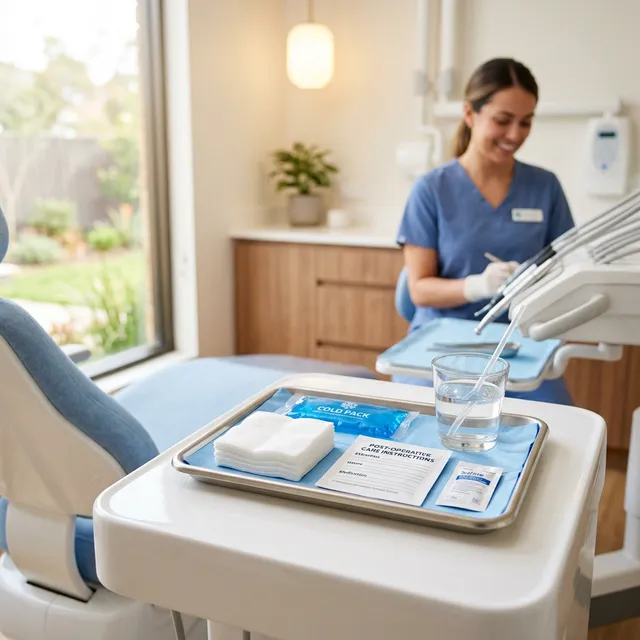
Following your procedure, our team will provide you with a comprehensive aftercare guide. Here is what to expect day by day:
Day 1 (Procedure Day)
- Bite firmly on gauze for 30–45 minutes to establish a blood clot.
- Apply an ice pack to your cheek (15 minutes on, 15 minutes off) for the first six hours.
- Eat only soft, cool foods, yogurt, applesauce, smoothies (no straw).
- Take prescribed pain medication before the numbness wears off to stay ahead of discomfort.
- Keep your head elevated, even while sleeping. Use an extra pillow to reduce blood flow to the surgical area.
- Avoid hot foods and beverages for the first 24 hours, as heat promotes bleeding.
Days 2–3
- Swelling typically peaks around 48 hours post-extraction. This is normal.
- Begin gentle warm salt-water rinses (half teaspoon of salt in eight ounces of warm water) after meals to keep the site clean.
- Stick to a soft food diet, mashed potatoes, scrambled eggs, pasta, soup.
- Avoid using a straw, spitting forcefully, or smoking. These actions create negative pressure that can dislodge the blood clot and cause dry socket (alveolar osteitis), a painful complication that occurs in roughly 2–5 percent of routine extractions and up to 30 percent of impacted lower wisdom tooth extractions, per the Journal of Oral and Maxillofacial Surgery.
Days 4–7
- Most patients report that discomfort is manageable with over-the-counter ibuprofen (400–600 mg every six hours) by this point. Alternating ibuprofen and acetaminophen provides more effective pain control than either medication alone, according to a 2018 study in the Journal of the American Dental Association.
- Swelling decreases noticeably. Light bruising on the cheek may appear and will resolve on its own.
- You can gradually return to a normal diet, avoiding hard or crunchy foods directly on the extraction site.
- Resume gentle brushing near the extraction site, being careful not to disturb the clot or sutures. Continue salt-water rinses after every meal.
Weeks 2–4
- The soft tissue over the socket closes. Sutures (if placed) dissolve or are removed at your one-week follow-up.
- Underlying bone remodeling continues beneath the surface for three to six months.
- Most patients feel completely back to normal within 10 to 14 days and can eat anything without discomfort.
Months 3–4 (If Bone Graft Was Placed)
- The graft matures enough to support dental implant placement. We confirm this with a follow-up CBCT scan before scheduling implant surgery.
- The new bone is evaluated for both density and volume. If the graft has integrated well, implant placement proceeds on schedule. If additional healing time is needed, we wait rather than risk implant failure.
We prescribe appropriate pain management medications and, if an active infection was present, antibiotics to ensure you heal safely. Patients from Hudson, Westborough, and surrounding towns appreciate that we provide a written aftercare sheet and a direct phone number for post-procedure questions. If anything feels off during recovery, increased pain after day three, a foul taste, or fever, call us immediately at (508) 481-0110.
Dry Socket: Prevention and Treatment
Dry socket deserves its own discussion because it is the complication patients worry about most. It happens when the blood clot that normally forms in the extraction socket is lost or fails to develop, exposing the underlying bone and nerve endings to air, food, and bacteria. The pain from dry socket is distinctive: a deep, throbbing ache that radiates to the ear and temple on the same side, typically beginning two to four days after the extraction.
Risk factors include:
- Smoking (the single biggest risk factor, smokers are three to four times more likely to develop dry socket, according to a 2011 meta-analysis in the International Journal of Oral and Maxillofacial Surgery)
- Oral contraceptive use (higher estrogen levels can interfere with clot stability)
- History of dry socket with a previous extraction
- Traumatic or difficult extraction
- Poor post-operative compliance (using straws, spitting, vigorous rinsing)
- Extraction of mandibular third molars (the blood supply to the lower posterior jaw is less robust than other areas)
If dry socket occurs, we treat it by gently irrigating the socket and placing a medicated dressing (typically containing eugenol) directly into the site. Pain relief is usually immediate. The dressing is changed every two to three days until the socket begins to heal on its own. Full resolution takes about seven to ten days from the onset of symptoms.
To minimize your risk, we apply a biocompatible hemostatic agent in every extraction socket, which helps stabilize the clot during the critical first 48 hours. We also provide detailed written instructions and ask patients to set reminders on their phones for the no-straw, no-smoking, and salt-rinse protocols.
Medications After Extraction: What We Prescribe and Why
Pain management after a tooth extraction has evolved significantly. The old approach of prescribing stronger prescription painkillers for every extraction is no longer standard of care. A landmark 2018 study published in JADA demonstrated that a combination of 400 mg ibuprofen and 500 mg acetaminophen taken together provides superior pain relief compared to stronger prescription pain regimens for most dental extractions, without the risks of dependence or side effects like nausea and constipation.
At Innova Smiles, our typical post-extraction medication protocol includes:
- Ibuprofen 400–600 mg every 6 hours as the primary analgesic (anti-inflammatory and pain reliever in one)
- Acetaminophen 500 mg every 6 hours, alternating with ibuprofen every 3 hours so you always have medication working
- Amoxicillin or clindamycin if the tooth was actively infected at the time of extraction (not prescribed routinely, antibiotics are reserved for cases with documented infection)
- Chlorhexidine 0.12% oral rinse starting 24 hours post-extraction, used twice daily for one week to reduce bacterial load at the surgical site
For patients who cannot take NSAIDs due to kidney disease, GI ulcers, or blood-thinner interactions, Dr. Fatima adjusts the protocol accordingly. We always review your full medication list before prescribing anything.
What Comes After an Emergency Extraction?
Once the immediate crisis is resolved, Dr. Fatima discusses replacement options to restore both function and appearance. Leaving a gap, especially in the back of the mouth, might seem harmless, but adjacent teeth begin to drift into the space within months, opposing teeth over-erupt, and bite alignment deteriorates. A 2020 study in the Journal of Prosthetic Dentistry found that measurable tooth movement into an extraction space can begin as early as six weeks after the tooth is removed. The most common replacement options include:
- Dental implant: The primary recommendation for single-tooth replacement. An implant preserves bone and functions like a natural tooth with a 95+ percent ten-year survival rate documented in the Journal of Prosthetic Dentistry. When a bone graft is placed at the time of extraction, the site is already being prepared for a future implant. Total timeline from extraction to final crown: roughly five to seven months. For patients who qualify, immediate implant placement (placing the implant at the time of extraction) can shorten this timeline significantly.
- Fixed bridge: A bridge uses the teeth adjacent to the gap as anchors for a prosthetic tooth. This is a good option when neighboring teeth already need crowns. The procedure requires two appointments and is completed in about two to three weeks. The downside: bridge preparation requires removing healthy tooth structure from the anchor teeth.
- Removable partial denture: A more affordable temporary solution while planning a permanent restoration. Partial dentures can be fabricated quickly and serve as a functional placeholder. Many patients use a partial for three to four months while their bone graft heals, then transition to an implant.
The timing of replacement depends on healing progress, bone graft maturation (if applicable), and your overall treatment plan. Most patients from Northborough and surrounding communities return for a follow-up evaluation within one to two weeks after extraction.
Cost of Emergency Tooth Extraction: With and Without Insurance
Transparency matters, especially during a stressful emergency. Here is a general breakdown of what emergency extraction costs look like in the MetroWest MA area:
| Procedure | Without Insurance | With PPO Insurance (typical) |
|---|---|---|
| Emergency exam + digital X-rays | $150–$250 | $0–$50 copay |
| Simple extraction (fully erupted tooth) | $200–$400 | $50–$150 after coverage |
| Surgical extraction (impacted or broken) | $350–$650 | $100–$250 after coverage |
| Socket bone graft | $400–$800 | $200–$400 after coverage |
| 3D CBCT scan | $150–$350 | $0–$100 after coverage |
| DentalVibe vibration anesthesia | $75–$150 | Typically not covered |
| Premium topical numbing | $25–$75 | Typically not covered |
These are estimates, your actual cost depends on your specific insurance plan, the complexity of the extraction, and whether additional procedures (grafting,) are needed. We provide a written estimate before starting any treatment so there are no surprises.
Most PPO dental plans cover emergency exams and simple extractions at 70 to 80 percent after the deductible has been met. Surgical extractions are typically covered at 50 to 80 percent. Bone grafting coverage varies widely by plan, some insurers classify it under oral surgery benefits, while others consider it a pre-implant procedure and exclude it. Our insurance coordinator verifies your specific benefits before we begin, so you know your out-of-pocket cost upfront.
If you do not have dental insurance, our membership plan provides 20 percent off all treatments, and we offer 0 percent financing through CareCredit and Cherry so you can spread payments over 6 to 24 months. A dental emergency should never be delayed because of cost concerns. Call us at (508) 481-0110 and we will work out a plan.
Frequently Asked Questions About Emergency Extractions
How long does a same-day extraction take? A simple extraction typically takes 20 to 40 minutes from anesthesia to completion. Surgical extractions involving impacted or broken teeth take 45 to 75 minutes. Including the initial exam, imaging, and post-operative instructions, plan for about 90 minutes to two hours total chair time.
Will I be awake during the extraction? Yes, for most extractions you will be awake but completely numb. With , you will feel relaxed and slightly euphoric. With you will be awake but drowsy and may not remember much of the procedure afterward.
Can I go to work the next day? For a simple extraction, most patients return to desk work the following day. For surgical extractions (especially impacted wisdom teeth), we recommend two to three days off from physically demanding jobs. Swelling peaks at 48 hours, so day two is typically the most uncomfortable.
What if my tooth was knocked out, can it be saved? Possibly. A knocked-out permanent tooth has the best chance of re-implantation when treated within 30 to 60 minutes. Keep the tooth moist in milk or saliva, handle it only by the crown, and get to our office immediately. If the tooth cannot be saved, we move straight to extraction and socket preservation.
Why Northborough Patients Choose Innova Smiles
Northborough families consistently choose Innova Smiles for urgent surgical needs, and the reasons go beyond proximity. Our Marlborough studio sits right off I-495, making it an easy drive from Northborough center, the Northborough Crossing shopping area, and neighborhoods along Church Street and Main Street. On a typical day, the drive takes seven minutes. Even during Route 20 rush-hour traffic, you can reach us in under 15 minutes.
Beyond location, patients tell us they come back because of:
- Same-day access. We reserve triage blocks in our schedule every day specifically for emergencies. You will not wait days or weeks in pain.
- Advanced imaging on-site. Our 3D CBCT scanner and 5D intraoral scanner are in-house, so diagnosis and treatment happen in one visit.
- Board-level credentials. Dr. Fatima holds fellowships from the International Congress of Oral Implantologists (FICOI) and the American Academy of Implant Prosthodontics (FAAIP), with over 13 years of experience in surgical extractions and implant placement.
- A genuinely calm environment. Noise-canceling headphones, a private operatory for surgical cases, and a team trained in anxiety management make the experience fundamentally different from a high-volume clinic.
- Complete treatment under one roof. From the emergency extraction to the bone graft to the final implant crown, everything happens in a single location with a single clinical team. No referrals to an outside oral surgeon, no repeating your medical history, no transferring X-rays between offices.
Patients from Southborough, Shrewsbury, and Grafton also make the short drive to our Marlborough office for the same reasons. When you are in pain, you want an experienced surgeon with the right technology who can see you today, not next Tuesday.
If you believe you need an emergency tooth extraction near Northborough, do not wait until the pain becomes unbearable. Infections can spread to adjacent teeth and surrounding bone within days.
Need an Extraction Near Northborough? Contact Innova Smiles today to book a same-day emergency evaluation and get out of pain, or call (508) 481-0110.
Related Articles
- Tooth Extraction: What to Expect
- Dental Emergency Guide for Marlborough
- Emergency Dentist Westborough MA