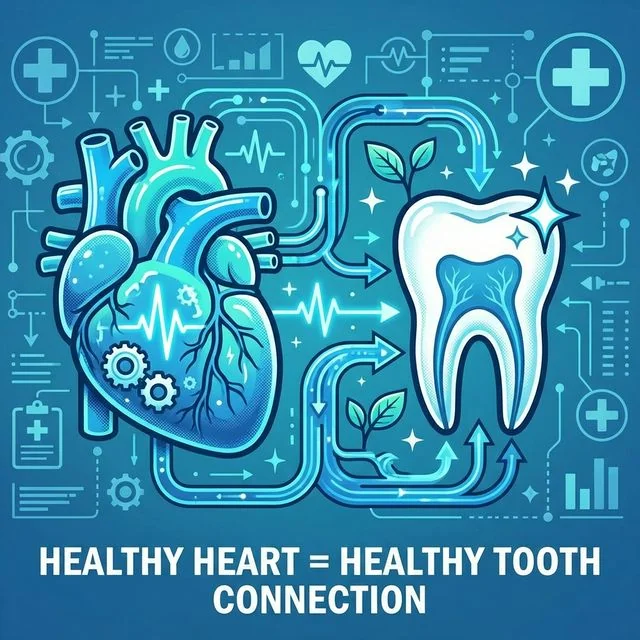

Featured Answer: Can gum disease affect my heart?
Yes, research suggests a link. Bacteria from infected gums can enter the bloodstream, potentially contributing to inflammation in blood vessels and increasing the risk of heart disease and stroke. Treating gum disease may help reduce this systemic burden.
The Oral-Systemic Link
We often treat the mouth as separate from the rest of the body, but they are deeply connected. Periodontal (gum) disease is a chronic inflammatory condition. Inflammation is a known risk factor for cardiovascular disease.
What the Research Says
While not a direct cause-and-effect, studies show:
- People with gum disease have 2-3 times the risk of having a heart attack, stroke, or other serious cardiovascular event.
- Oral bacteria have been found in the arterial plaque of heart disease patients.
- Treating gum disease can improve diabetes control and reduce systemic inflammation markers (C-reactive protein).
Signs of Gum Disease
- Red, swollen, or tender gums
- Bleeding while brushing or flossing
- Persistent bad breath
- Receding gums or loose teeth
Protect Your Heart by protecting Your Smile
- Brush and Floss Daily: It's the most effective way to remove plaque before it hardens into tartar.
- Regular Cleanings: Professional cleanings remove tartar that brushing misses.
- Know Your Risk: If you have a family history of heart disease, be extra vigilant about your oral hygiene.
- Quit Smoking: Smoking is a major risk factor for both gum disease and heart disease.
How Innova Smiles Helps
We screen for gum disease at every exam. If we detect issues, we offer non-surgical periodontal therapy (scaling and root planing) to stop the infection and restore health.
Internal Links
- Learn about gum treatment → Periodontal Therapy
- General wellness → Oral Health & Wellness
- Schedule a screening → Book Online
Your health is our priority. Partner with Innova Smiles in Marlborough for a healthier smile and a healthier you. Call (508) 481-0110.